Internet Connectz40 minutes ago3 Views
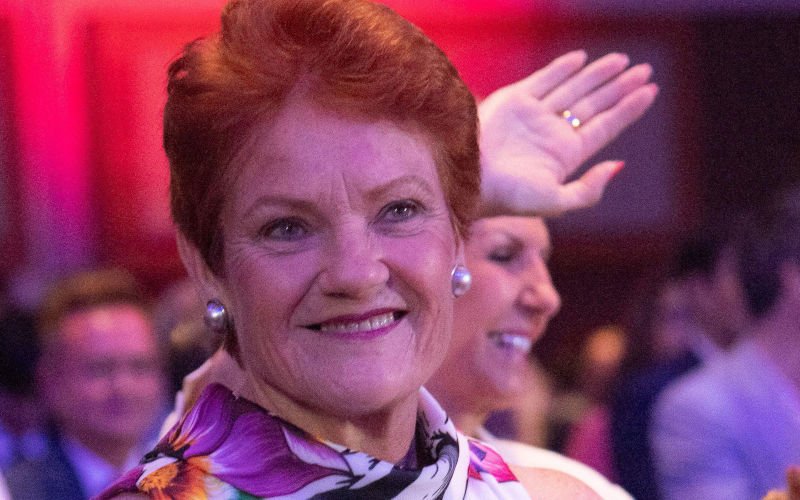
September 21, 2026 The rise of women within populist-right politics complicates assumptions about representation, showing that putting women in positions of power does not determine the politics or values they will pursue.For some time now, I’ve been writing about the need for more women in the rooms where decisions about war, peace, security and our future are shaped. I’ve argued that women need to be part of these strategic conversations because our experiences, perspectives and understanding of risk and security can be different. Decisions made without women at the table inevitably leave something important out.What’s changed for me is that watching the rise of women within populist and radical-right politics has made the argument more complicated and, I think, much more interesting.The numbers in Australia alone make it difficult to dismiss what’s happening as a fringe phenomenon. In April this year, RedBridge and Accent Research found that 28 per cent of Australian women voters nominated One Nation as their first preference for the House of Representatives, compared with just 9 per cent in June 2025. The Coalition’s support among women had fallen from 30 per cent to 22 per cent over the same period. The movement wasn’t confined to women, with dissatisfaction with the major parties, the cost of living and immigration featuring strongly across genders.By September, polling had become more mixed, but Pauline Hanson and One Nation had moved well beyond the political margins, including winning a lower-house seat in Western Australia this year.What interests me most is the response I hear from some women when I talk about Pauline Hanson. It isn’t simply an endorsement of every policy she represents, or necessarily a declaration that these women identify with the far right.The phrase I keep hearing is much more revealing: “She’s saying something I have never made public before.”There’s something important contained in those words because they speak to recognition before ideology.A woman can hear someone articulate an anger, frustration, fear or sense of being ignored that she has carried quietly for years and feel that someone in political life is giving voice to something she hasn’t felt able to say herself.That doesn’t mean the sentiment is benign or that the political answer being offered is right. It does tell us something about political leadership that we miss when we look only at policies and voting intentions. People sometimes move towards political movements because they feel seen, heard or understood, particularly when disillusioned with institutions and parties.We’ve seen this pattern across Europe as well. Women remain somewhat less likely than men to support populist radical-right parties; however, millions of women support, campaign for and lead them.More recent research complicates the idea that women are drawn towards these parties simply because they see a woman at the top. Female leadership on its own doesn’t appear to explain women’s support; greater alignment between women voters and a party’s substantive positions is more important.Gender can change how a political leader is perceived. A woman leading a movement traditionally associated with masculine political power can make it look different, with anti-immigration positions sometimes perceived as more socially acceptable when expressed by a woman than a man. Female leaders can soften the image of a movement that might otherwise be seen as overwhelmingly male, while retaining many of the same political positions.Research published this month by Rossella Merullo and Ana Catalano Weeks examined women-led and men-led populist radical-right parties across 15 Western European countries between 1988 and 2025. Their research suggests women-led parties broaden the issues they discuss, but that this alone doesn’t make them appear less extreme. How leaders communicate matters; communal communication can increase favourability and willingness to vote, while forceful language can reinforce perceptions of radicalism.I’ve never been entirely comfortable with the idea that women have some naturally superior political instinct that men lack, because it risks replacing one stereotype with another. We can easily create a new definition of what a ‘good woman leader’ looks like and then judge women who don’t fit it accordingly.Pauline Hanson complicates that idea, as do Marine Le Pen, Giorgia Meloni and Alice Weidel. These women demonstrate that women can operate effectively within movements associated with nationalism, cultural conservatism, anti-immigration politics and a harder conception of power. They don’t necessarily become softer versions of male leaders; they can expand their movements’ appeal by bringing a different political identity into the same space.This brings me back to the war room.I still think women need to be in those rooms.What I understand more clearly now is that getting women into the room doesn’t tell us what they will do once they get there.Women aren’t a political bloc. We don’t all understand security, immigration or economic uncertainty in the same way, and we certainly don’t all have the same ideas about what a fair society should look like.The presence of women can change a political institution, but it doesn’t automatically change the politics of that institution.A woman can represent people who feel ignored while advocating policies that exclude or marginalise others. She can challenge a male political establishment while reinforcing traditional ideas about national identity, authority or social order. She can speak authentically about economic insecurity while directing people’s frustration towards migrants, minorities or other groups rather than the structural problems producing that insecurity.None of this means the anger itself is imaginary.The cost of housing, stagnant living standards, pressure on household budgets, uncertainty about employment and distrust in political institutions are all very real.Across Europe and Australia, populist politics has grown within a broader environment of institutional, economic and geopolitical uncertainty. People are living through wars and genocide they can’t control, rapid technological disruption and political systems that often seem incapable of providing straightforward answers.When mainstream politics repeatedly fails to make people feel heard, movements offering certainty, identity and recognition can become increasingly attractive.The mistake would be to tell people they’re wrong for feeling angry.If a woman tells me that Pauline Hanson is saying something she has never felt able to say publicly, dismissing her as ignorant or hateful isn’t going to make that feeling disappear. It may deepen the alienation that brought her towards Hanson in the first place.The more useful response is to understand what lies underneath the political identification. There’s a significant difference between understanding someone’s frustration and agreeing with the political solution they have chosen.We need to stop assuming that the achievement is simply getting women into positions of authority. It’s important, but it can’t be the end of the conversation. We also need to ask what kind of politics women are participating in, whose voices they’re representing and who may be left outside the room.I started this work believing that the world needed more women in the war room and I still do. What’s changed is my understanding of representation.Having women in the room doesn’t guarantee better, more peaceful or more progressive decisions. It gives us the possibility of a different conversation, shaped by the values, experiences and political choices of the women sitting around the table.The future of women’s political leadership isn’t simply about whether women are powerful. We already know they can be – it’s about what we do with that power, whose stories we choose to amplify, how we respond to fear and anger and whether we use our place in the room to widen the circle of people who are heard or simply to secure our own place within an existing system of power.For me, that’s the more difficult and important conversation.The views expressed in this article may or may not reflect those of Pearls and Irritations.Meg Schwarz holds a Postgraduate Diploma in Counselling and Psychotherapy and brings over 35 years of experience championing social justice, advocacy and consumer engagement. Based in South Australia, Meg has dedicated her career to working alongside diverse communities, including refugees, people with disabilities and individuals with complex trauma backgrounds.With a strong passion for equality and human rights, Meg specialises in fostering meaningful communication, empowering voices through advocacy and creating inclusive spaces for dialogue. Her skills in stakeholder engagement, strategic communication and community development have earned her recognition as a trusted and compassionate leader in her field. Help keepP&I independentOur independence depends on you. Powered by readers.PEARLS AND IRRITATIONSJohn Menadue’s Public Policy Journal
source
0 Votes: 0 Upvotes, 0 Downvotes (0 Points)
Save my name, email, and website in this browser for the next time I comment.
Internet Connectz1 hour ago
Internet Connectz5 hours ago
Internet Connectz8 hours ago
World News Connectz38 minutes ago
2025 2026 American food connectz American recipe connectz apple Apple products betting connectz cheap world wide food recipes child rape cybertruck disney diy connectz Elon musk environment fashion connectz florida food connectz fox connectz gaming connectz grady judd health connectz hemp drinks law enforcement movie connectz online payments pedophilia publix ron desantis ron desantis connectz social media sport connectz surterra technology connectz tesla trenden music tv show connectz usa connectz usa food connectz usa food recipes world connectz world recipe connectz world wide food connectz world wide recipe connectz world wide recipes wwe
Signing-in 3 seconds...
Signing-up 3 seconds...
Not a member? Sign Up.
Have an account? Sign In.