
Now Reading: Tesla starts up first dedicated Semi truck mass production plant in Nevada
- 01
Tesla starts up first dedicated Semi truck mass production plant in Nevada

Tesla starts up first dedicated Semi truck mass production plant in Nevada
Tesla has opened its first dedicated plant in Sparks, Nevada, to mass-produce its Semi heavy-duty electric truck. CEO Elon Musk (일론 머스크) is moving to secure production capacity as Tesla expands beyond passenger EVs into the heavy commercial vehicle market.
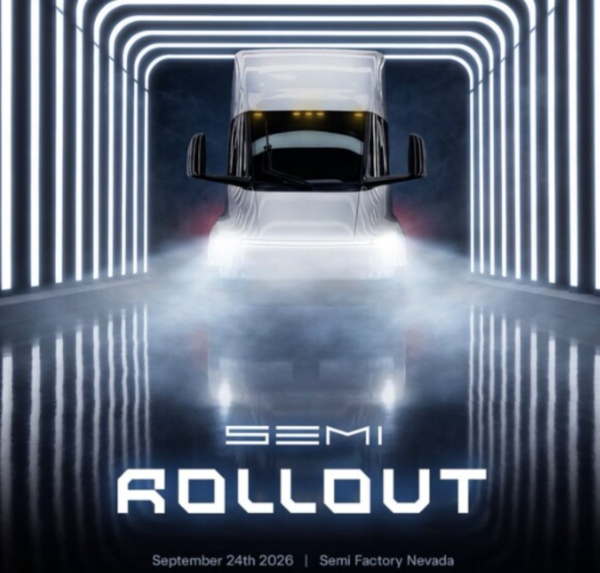
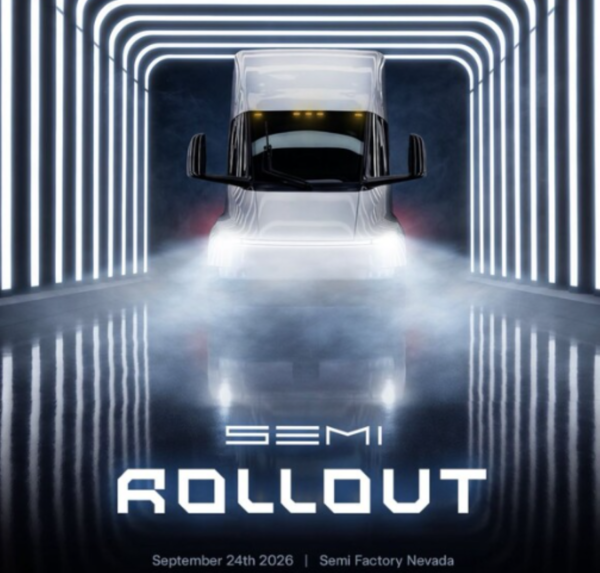
On Sept. 24, local time, Tesla held an opening event for the Semi plant in Sparks, Nevada, CNBC and other outlets reported. Tesla set the plant’s annual production capacity at up to 50,000 units. The Semi was first produced on the plant’s high-speed production line in April. The opening marks the official start of operations at the dedicated production facility.
Tesla first unveiled the Semi in 2017. Since 2022 it has supplied limited volumes to early customers including PepsiCo. The Semi is a heavy-duty electric truck aimed at long-haul freight. Tesla is expanding into commercial vehicles as competition intensifies in the passenger EV market. In the United States, electrification of commercial vehicles is also drawing attention as diesel prices remain high.
On the demand side, large orders are continuing. Zero-emission truck adoption coalition ZET Scale said on Sept. 22 it selected Tesla as a main OEM for an initial order of 2,500 electric trucks. Microsoft and PepsiCo participated in the order, and Kenworth, Volvo and RIDE will also take part in supply.
Swedish freight technology company Einride also decided last month to order 500 Tesla Semi trucks. Einride plans to deploy the vehicles in stages and expects to begin placing some of them from September.
Tesla cites range and charging performance as the Semi’s core strengths. According to Tesla, the Semi Standard Range can drive about 523 km on a full charge, while the Long Range can travel about 805 km. Both models support up to 800 kW of drive output, and Tesla explains that a 30-minute charge can provide up to 60 percent of the driving range. The range figures are estimates based on conditions including a gross vehicle weight of 82,000 pounds, a speed of 55 miles per hour, 20 degrees Celsius and flat terrain.
Autonomous driving technology is also a key variable for the Semi business. Musk said in a July earnings call that Tesla plans to apply its Full Self-Driving system to the Semi. He mentioned a shortage of truck drivers and said autonomous Semi trucks would be important to addressing the U.S. freight transport labor shortage. Musk said at the time he expected the Semi’s autonomous capability to be realized “around the end of this year or early next year.”
Still, other companies are also pushing commercialization in the autonomous heavy-truck market. Aurora Innovation is deploying driverless trucks in real freight operations, and Kodiak AI is testing autonomous trucks while also running real freight transport. Kodiak AI said on Sept. 24 it began transporting DTL Transport cargo in California using autonomous trucks. Aurora said, as of Sept. 23, it was using driverless trucks in commercial transport and plans to operate 200 driverless trucks by the end of this year.
The shift to electric commercial vehicles is also significant from an environmental perspective. The International Council on Clean Transportation said trucks and buses account for less than 10 percent of global on-road vehicles but emit about half of air pollution from the transport sector. The share of transport-related carbon dioxide emissions is about 25 percent, and the phrase “nearly half” in an earlier draft needs to distinguish between air pollution and CO2 emissions. The ICCT said shifting to zero-emission commercial vehicles can reduce air pollution and may also help cut vehicle operating costs.
Tesla is also pursuing entry into the European market for the Semi. Tesla unveiled a Europe-spec Semi at the IAA Transportation show in Hanover, Germany, this month, and the Europe-spec model presented a maximum range of about 550 km based on a 40-ton gross vehicle weight. In Europe, Volvo and Daimler Truck already sell battery-electric heavy trucks, and Tesla will compete with local companies.