
Now Reading: Illinois researchers look at how graphic design can transform the built environment – News Bureau
- 01
Illinois researchers look at how graphic design can transform the built environment – News Bureau

Illinois researchers look at how graphic design can transform the built environment – News Bureau
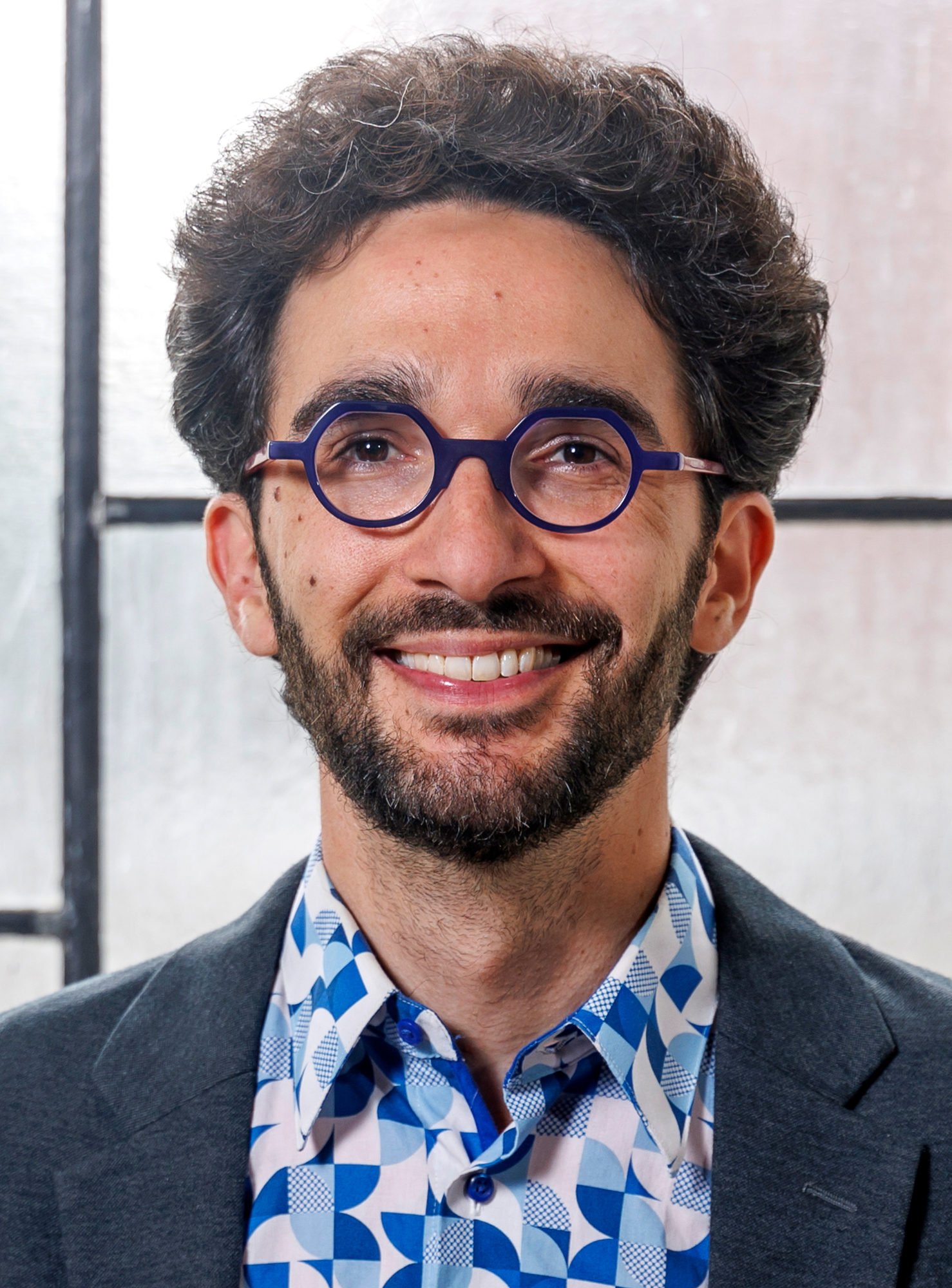
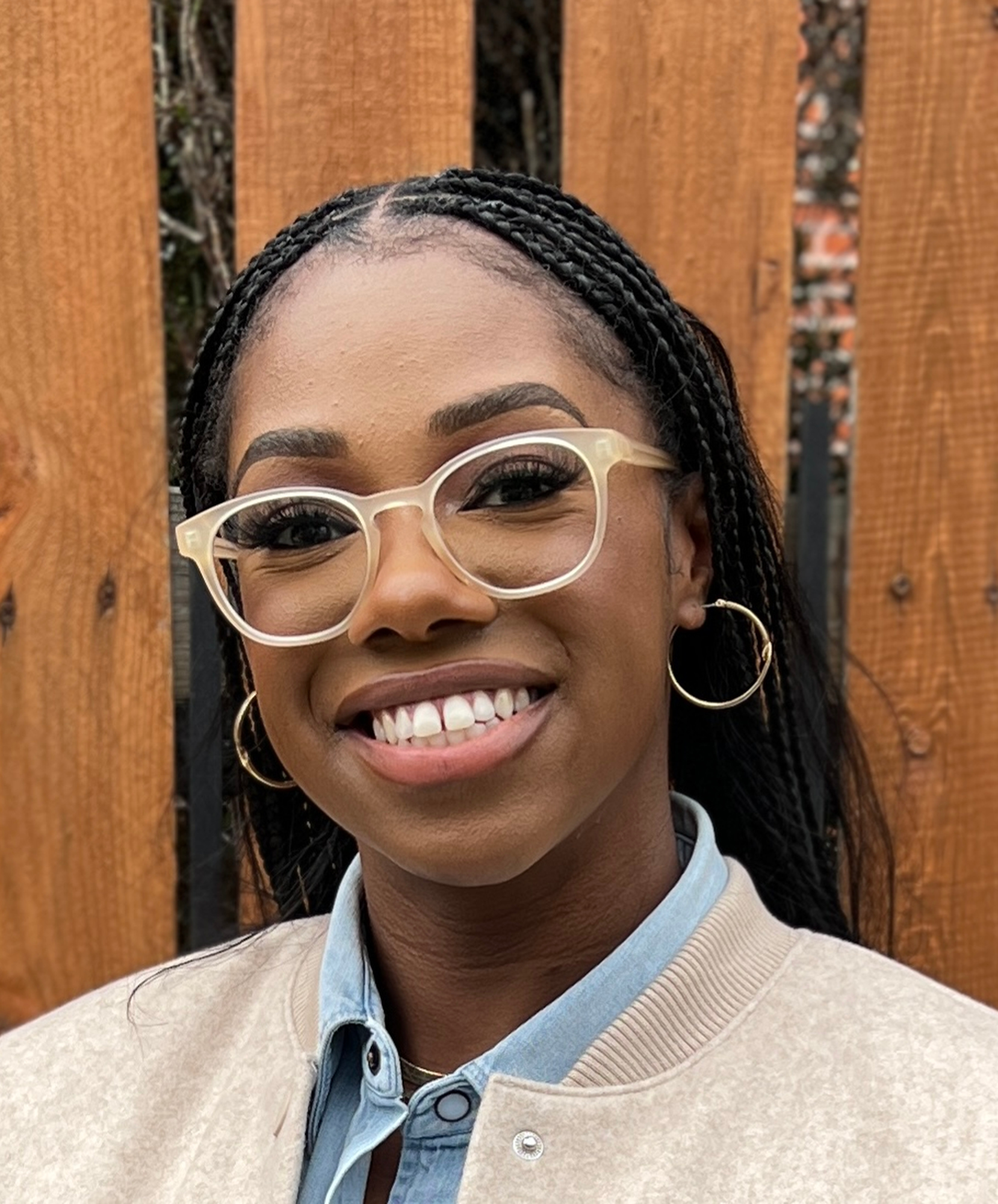
CHAMPAIGN, Ill. — Graphic design in urban spaces has the potential to invite community participation and signal belonging. University of Illinois Urbana-Champaign architecture professor Joseph Altshuler and graphic design professor Nekita Thomas examine how a reimagining of graphics in the built environment can transform public spaces in their new book “Supergraphic Landscapes: From Public Art to Urban Design.”
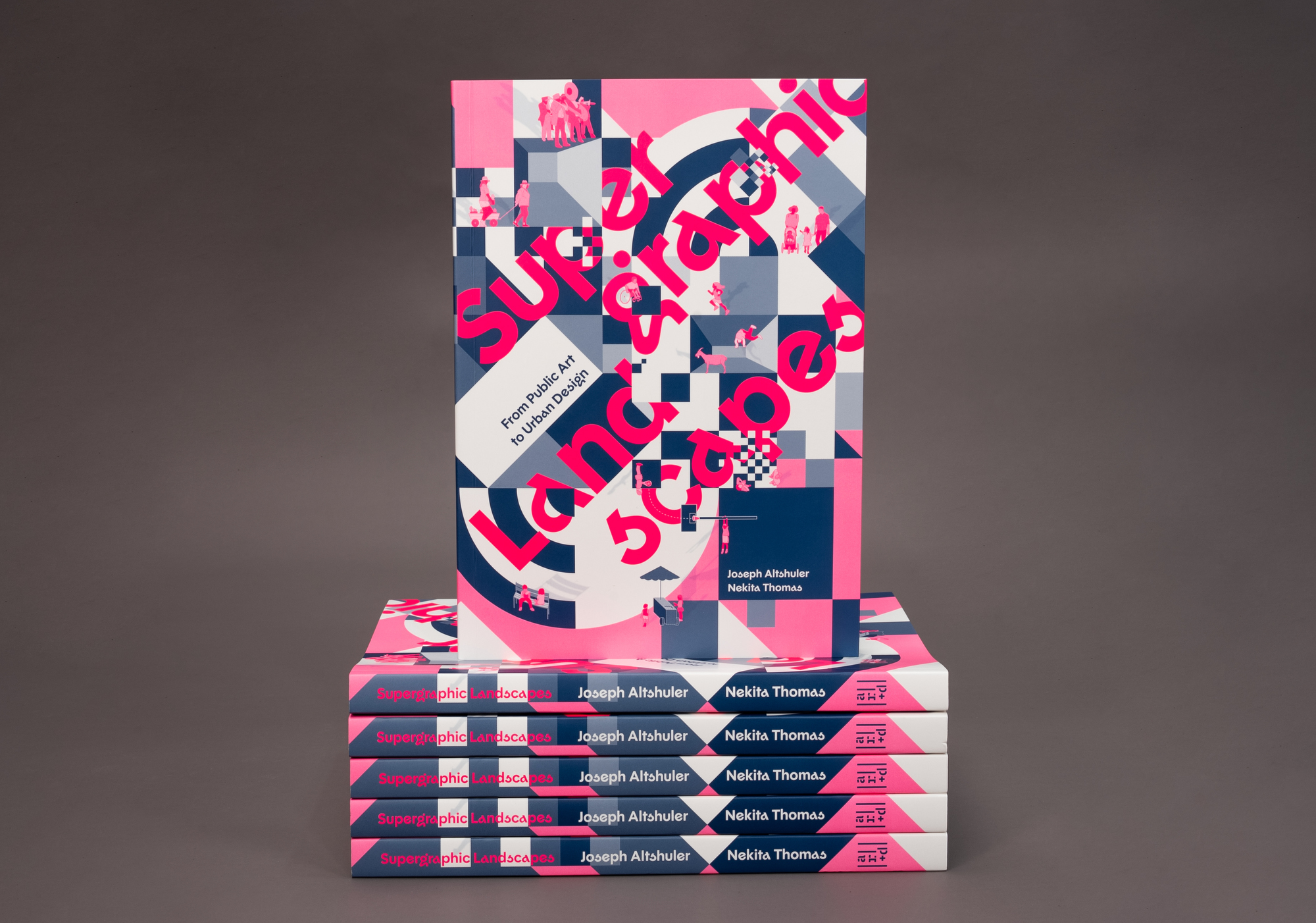
“Graphics do not simply convey information — they construct environments. They shape how space is remembered and felt, how belonging is established and how power is visualized,” the authors wrote.
Altshuler and Thomas first worked together on the Chicago Sukkah Design Festival, which was co-founded by Altshuler to create gathering spaces illustrating how temporary architecture and public art can generate long-term strategies for community development. Their book expands on the ideas they tested with the festival.
Traditional graphics, such as crosswalks, lane lines, murals or public art, are either informative or decorative, the authors wrote. They direct the ways in which people move and congregate, solve problems of orientation and enhance the visibility of brands. But they don’t reorganize our broader sense of public space, the authors said.
Altshuler and Thomas wrote that they see graphics as world-building tools. They are interested in how they can make public spaces more participatory and inclusive with graphics in everyday sites such as streets, bus stops, plazas, sports courts or playing fields, performance spaces, memorials and monuments, as well as less-defined, “in-between” spaces.
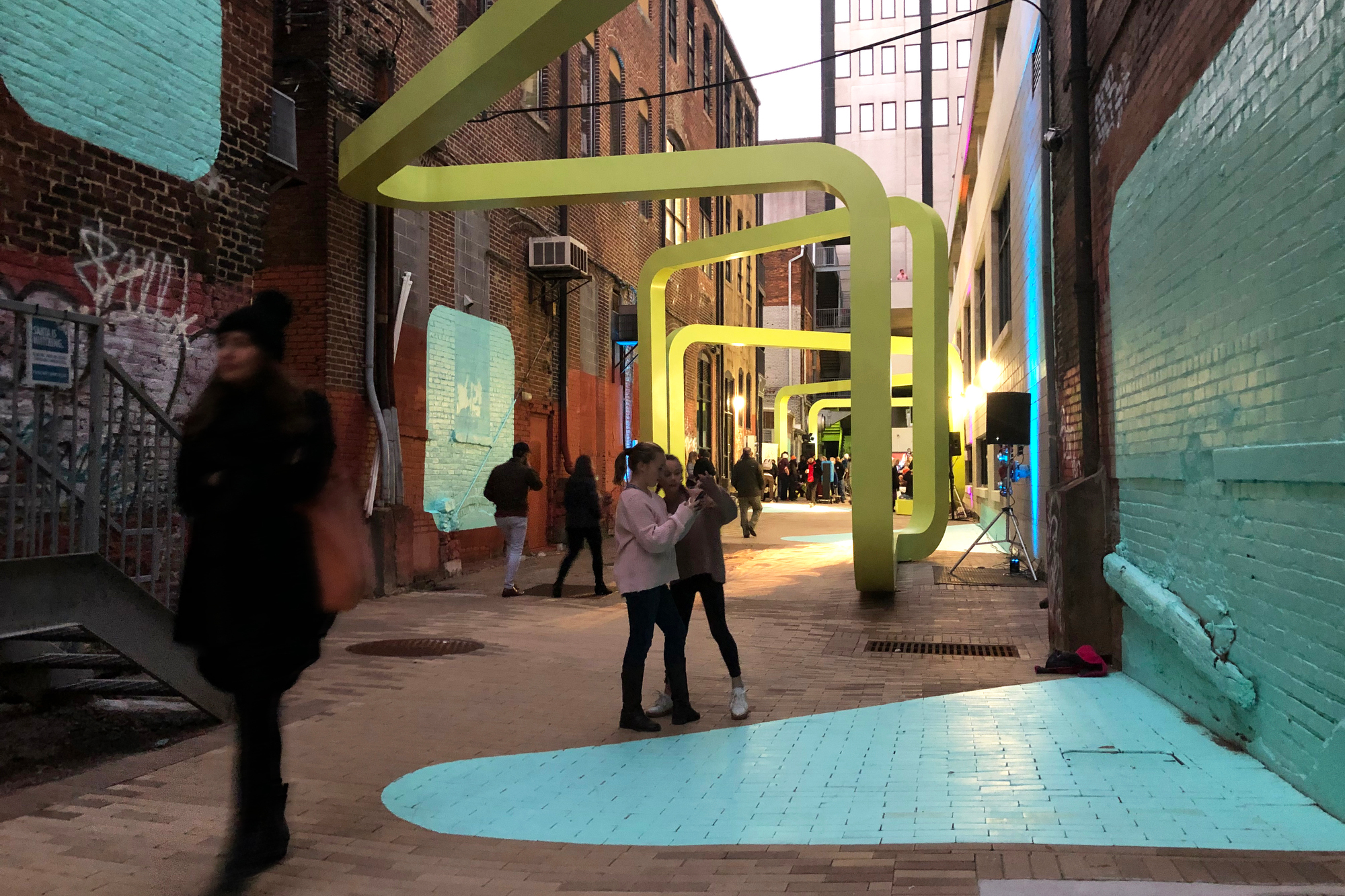
They described the “supergraphic” from the book title not as something just large in size, but rather as a graphic that goes beyond typical expectations, such as bleeding beyond the edges of a wall onto the ground.
Their inspiration includes the Black Lives Matter mural movement, which started with a street mural in Washington, D.C. The book’s introduction discusses how the mural prompted improvements to the site for a brief time, with a public plaza, new traffic patterns and enhanced pedestrian access, before the mural and its site were demolished in 2025.
“This was really influential in thinking about how graphics and communities participate in the transformation of the public realm,” Altshuler said. “Seeing words on the street in the public realm is really different to seeing them on a wall. To walk and tread and inhabit the letters rather than reading them on a wall, it’s something you can experience all around you. It’s a landscape, not a sign.”
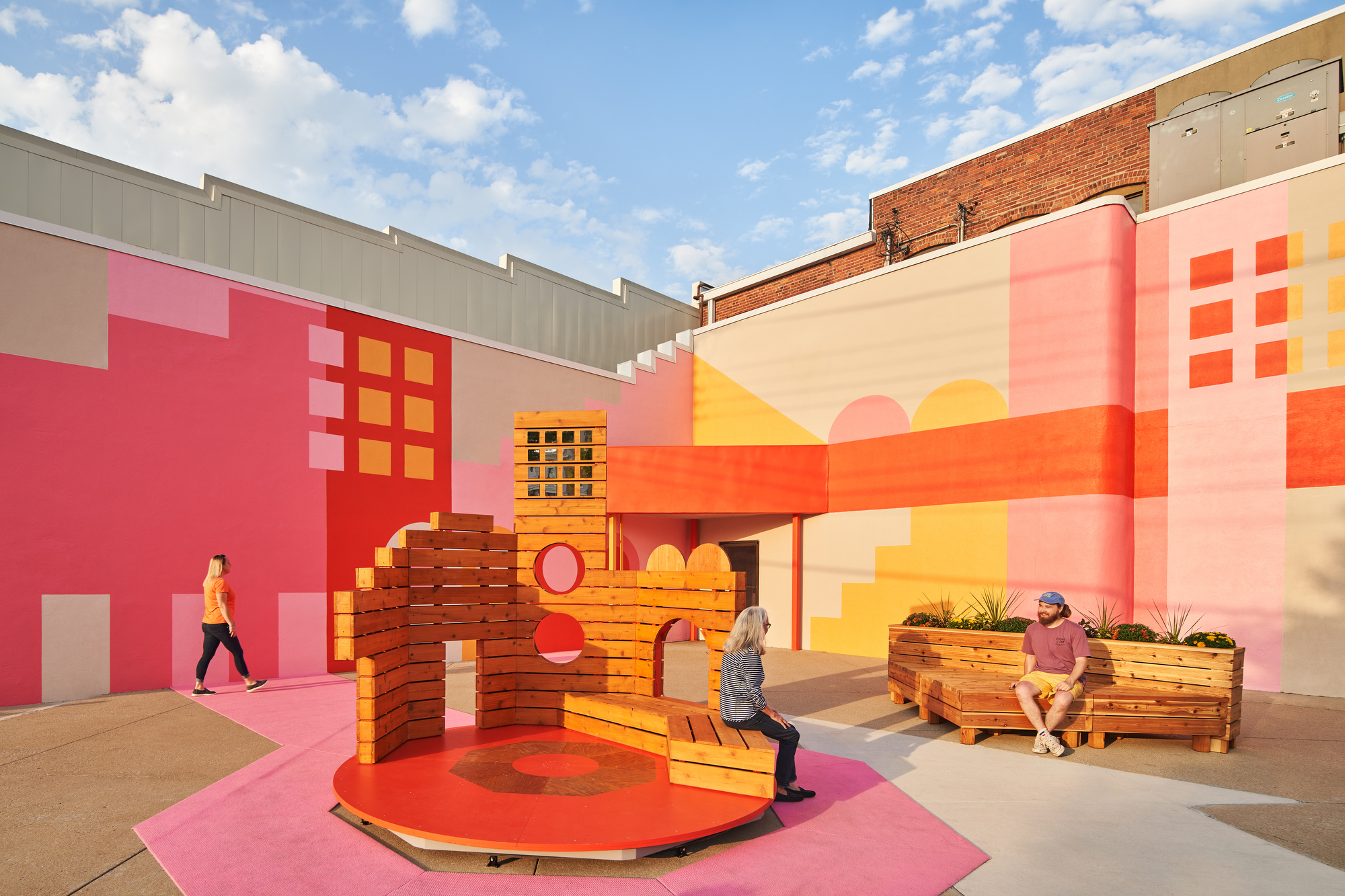
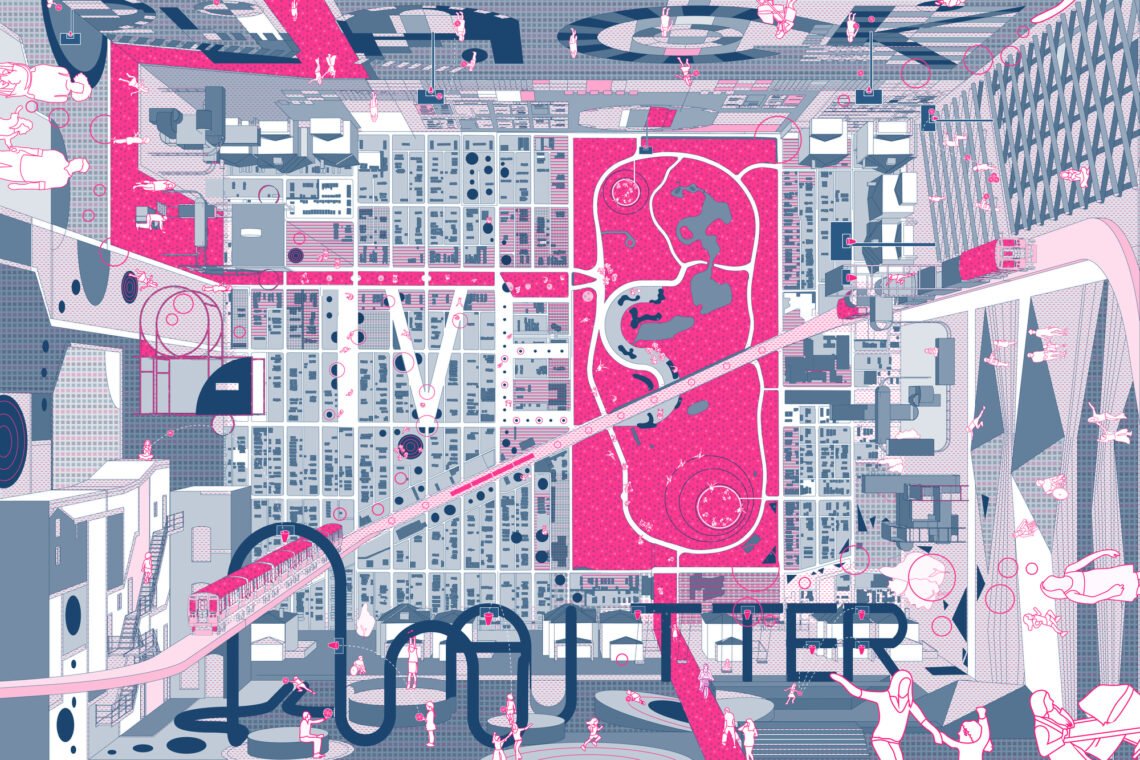
The book’s three thematic sections examine play or organizing movement; care or softening infrastructure; and action or challenging commemoration. Each section includes text from Altshuler and Thomas, a guest essay, a matrix of the different forms of graphic design and a map of a neighborhood with drawings featuring projects designed by their peers, as well as their own ideas about reinventing the areas. The book is intended more to provoke questions than to provide all the answers, the authors said.
The authors use Chicago neighborhoods — North Lawndale, Albany Park and South Chicago — as case studies for reinventing urban spaces. The North Lawndale site uses the lines on basketball courts and playing fields to change the way pedestrians behave in public spaces and ways the neighborhood’s infrastructure could encourage communal play.
“They communicate rules and allow us to role play and take on risks and engage with other people we don’t know. What if the lines of play were not confined to fields and courts but were more immersive? What if the whole city was playable?” Altshuler said.
The section on care considers how sidewalks can support the needs of residents and how thresholds can usher people from one activity to another in a more accessible way. A project from Gary, Ind., that used Pac-Man-style characters on the ground to make a dangerous pedestrian crossing safer, inspired the researchers to look at how an Albany Park street could be safer for cyclists and street vendors.
The authors examine how monuments and historical markers commemorate stories and history, and how graphics can offer strategies for inclusion and collective memory. Examples include the planting of flowers in a shape that references the practice of redlining, the AIDS quilt, scaffolding covered with posters and the dyeing of Chicago’s Buckingham Fountain as a protest against the war in Gaza.
“It’s a fundamental, classical piece of public infrastructure,” Altshuler said of the fountain. “Most people don’t think of it as a graphic. It’s a palpable reminder that graphics can take on many substrates, including water.”
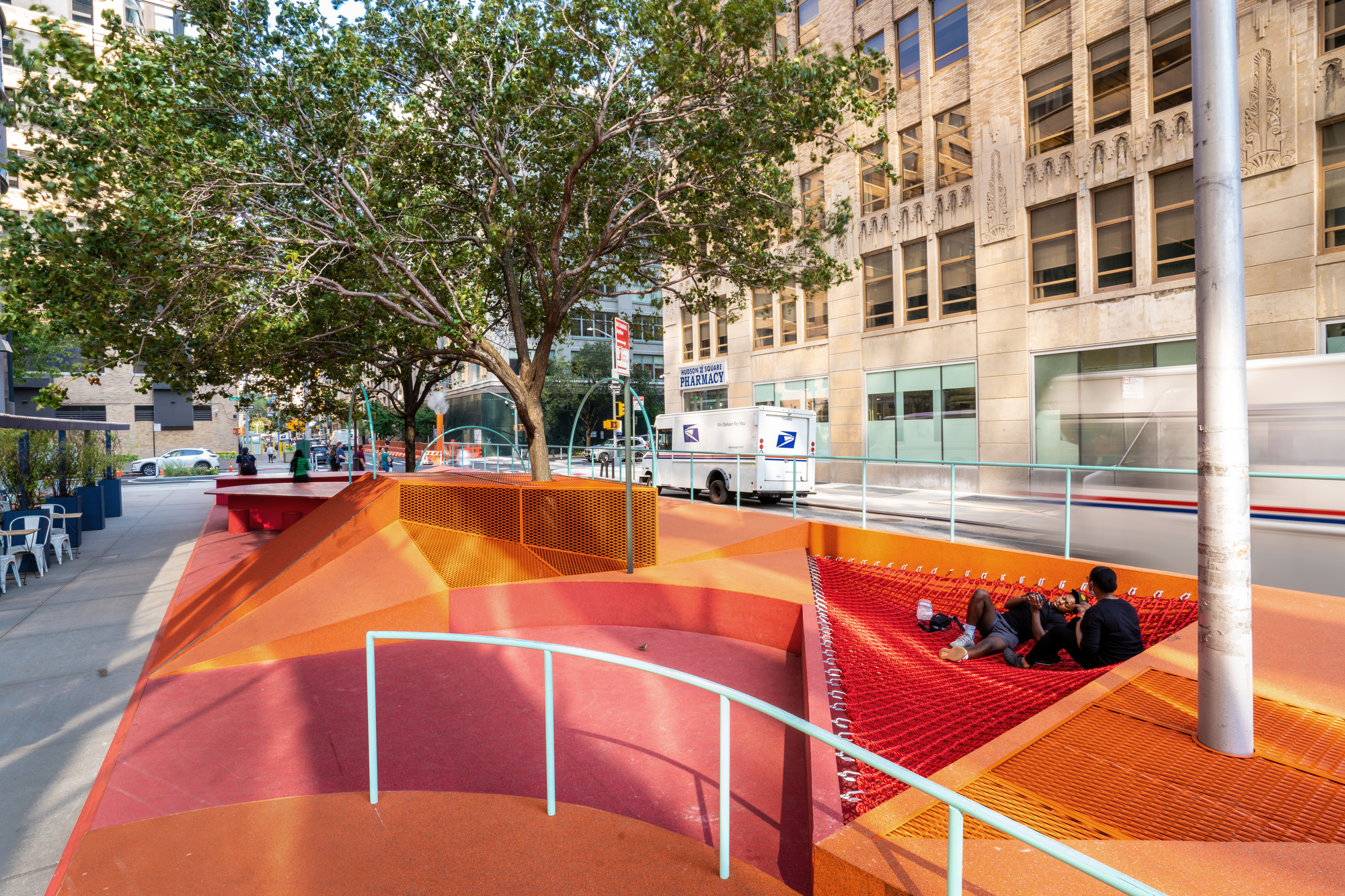
Thomas said thinking of graphic design as more than transactional or branding, particularly at a time of enormous technological advances, is crucial for activating imagination, empathy and critical thinking.
“We have to ask: What are our values? Are they working? What else can we do? It’s giving people different models to do those things,” she said. “It’s how to help people imagine new futures.”
Altshuler and Thomas will speak at a book launch at 5:30 p.m. Sept. 29 at Baker Space, 73 E. Chester St., Champaign. Their conversation will be moderated by art professor Jorge Lucero. The event will feature readings, the world premiere of a short animated film based on the book and a book signing.
Editor’s notes: To contact Joseph Altshuler, email jshuler@illinois.edu. To contact Nekita Thomas, email nthomas5@illinois.edu.