
You May Also Like

My wife, Carole, and I sat at a Parisian sidewalk café on Rue Lepic, the gateway to our Montmartre neighborhood. It was our granddaughter Hannah’s first trip to Europe. A woman at a nearby table fawned over her furry Pomeranian, while another took delicate drags on a cigarette. Around us, the neighborhood went about its day.
As we sipped our sparkling water and coffee, Hannah shared her first impressions.
“There’s a lot less stress here,” she exclaimed.
I smiled. In just a few days, Hannah had discovered something that has drawn me back to Europe for nearly 50 years. Yet I’ve never quite been able to put my finger on why I always feel so comfortable here.
Maybe Hannah had figured it out.
Why do we travel? Is it to capture that perfect selfie in front of the Eiffel Tower or the Colosseum in Rome? Do we head out with a checklist of museums, monuments and must-see attractions, measuring each day by how much we’ve accomplished? Or can we find just as much joy sipping a Sangiovese in Siena’s Piazza del Campo or quaffing a beer in Munich’s Marienplatz, watching the world go by for hours on end?
Spending three weeks in the Austrian mountain village of Zell am See, we had one standing objective each day: getting a pastry at the Unterberger bakery next to our apartment. Some days we took a cable car to the top of the Schmittenhöhe. Other days we hopped a train to a neighboring village to experience traditions like the Almabtrieb as decorated cows parade to symbolize their move down from higher summer pastures.
And sometimes the bakery was enough.
This trip wasn’t about how many museums, castles or mountain summits we could check off a list. It was about experiencing another lifestyle, finding a different pace, and discovering what makes our lives feel a little less frenzied.
On my first trip to Austria in 1979, I was struck by the open pastureland separating one small village from the next. Nearly 50 years later, much of that same open space remains. There seems to be an inherent respect for the land, not just as a place to build our lives, but as a place to let the world breathe.
Each morning, we watched the early light bathe the rich green hillside pastures across the lake. Later, from the windows of our ÖBB Cityshuttle train, we rolled past contented cows grazing peacefully, along with a few horses and goats, each serving its role in Mother Nature’s circle of life.
We spent a month navigating mountains and villages without touching a steering wheel. Sidewalks and train tracks, buses and bicycles, cafés and mountain alms linked our days together.
And the connective tissue through all of it was the value of lingering. European café culture isn’t just about coffee, or a beer after a mountain hike. It’s about the acceptance that time spent sitting and watching life unfold before you has value.
Back home, we often measure our days by what we’ve accomplished. We rush from one destination to the next, navigating traffic and checking things off our lists. There’s nothing wrong with our ambition or our pace of life. But while wandering European villages, I wondered what we might gain if we occasionally gave ourselves permission to slow down.
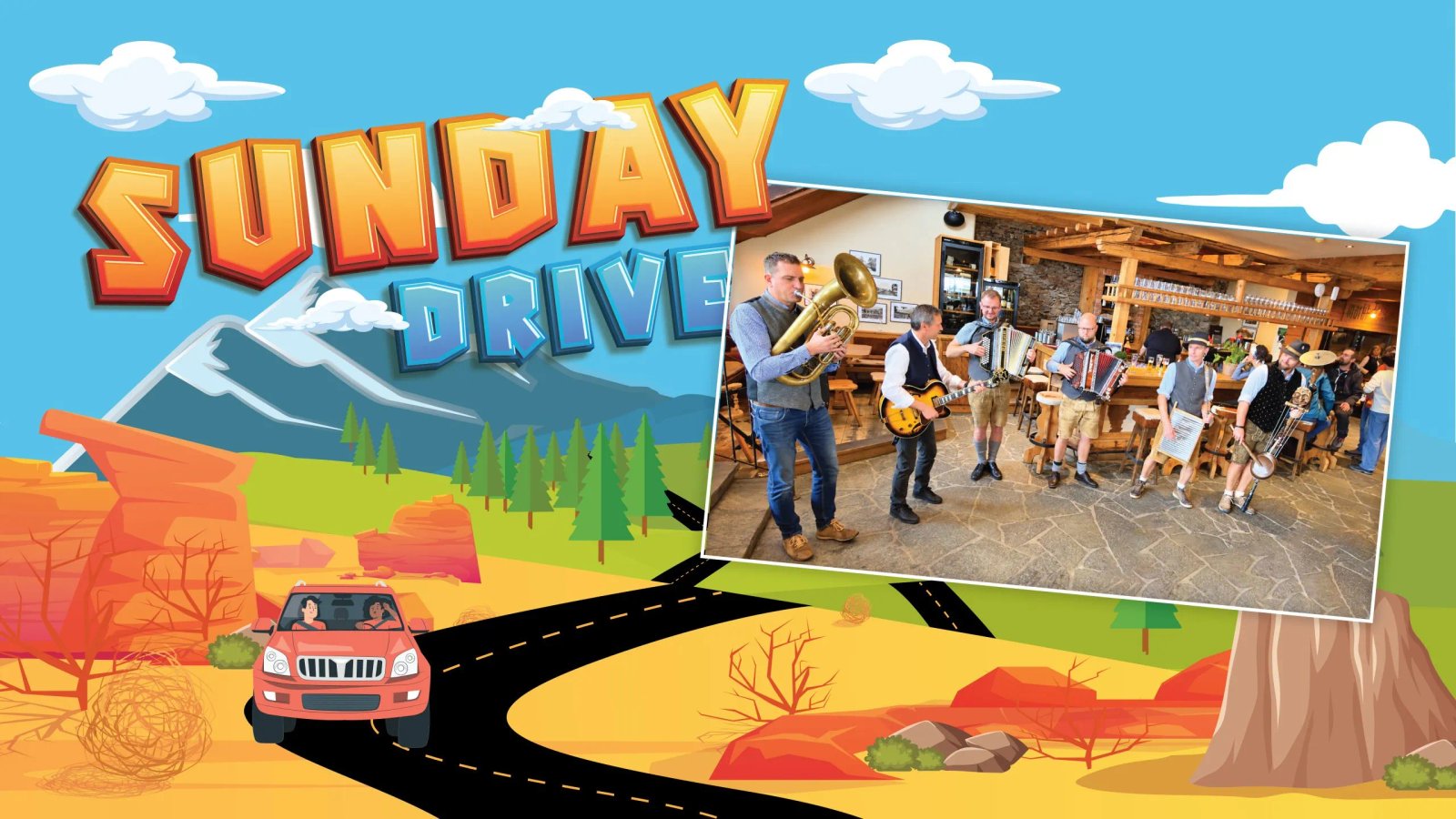
We found that same sense of connection in local traditions. There was the pride of a small town celebrating something as simple as fried dough at Krapfenfest. Why? Because it brought people together. And there was the spirit of young people dressed in lederhosen and dirndls, dancing to a local mountain band at the Wüd, Wüder, Wüderer festival, keeping generations of Alpine heritage alive.
Music seemed to follow us everywhere, from Mozart’s echoes emanating from the stone walls of Hohensalzburg Fortress to a lone violinist on Vienna’s Kärntner Straße. Or mountain man Jeremy, playing Edelweiss on handbells. Everywhere, colorful flowers spilled from window boxes, brightening even the simplest village streets.
On our final weekend, we sat at an outdoor table at a small restaurant on a darkened street in Vienna’s Spittelberg district. We lingered for hours, reliving our adventures and watching life unfold slowly on the cobblestones. Girlfriends heading to a Saturday dinner. Parents pushing babies in strollers. Couples out on a date. An older couple walking their dog. There was a comfortable sense of calm and peace all around us.
I thought back to Hannah’s observation a month earlier on Rue Lepic. In just a few days, she had sensed what has drawn me back to Europe for nearly half a century. Maybe the greatest gift of travel isn’t discovering new places. It’s discovering a different way to live.
