
You May Also Like

Will North Carolina’s U.S. Senate race be a Democratic pickup?
Duke public policy professors seem to think so, saying North Carolina could be part of a so-called “blue wave” with statewide and national implications in the 2026 midterms.
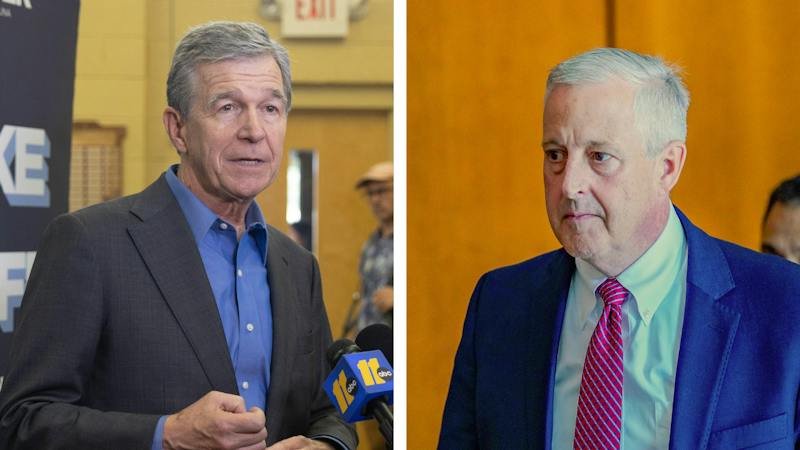
The race to replace retiring Republican Sen. Thom Tillis pits former Democratic Gov. Roy Cooper against Republican Michael Whatley, a former chairman of both the North Carolina Republican Party and the Republican National Committee. Cooper, who served as governor from 2017 to 2025, has campaigned on affordability, promising to lower the cost of housing, groceries and healthcare. Meanwhile, Whatley has focused on crime and immigration, pledging to advance President Donald Trump’s agenda if elected.
Though Democrats are widely expected to retake the majority in the U.S. House of Representatives, control of the Senate is less clear. With Republicans fighting to defend their Senate majority, the Tar Heel State contest is among the races that could help determine control of the chamber.
As of late October, polls show Cooper leading Whatley from anywhere from five to 15 points. In North Carolina, Cooper’s stark lead has played into the talks of a “blue wave,” a broader-than-usual Democratic victory that could help the party gain seats in Congress.
Several factors could explain Cooper’s lead, professors said, including his familiarity with North Carolina voters and record as governor.
“He’s just got a lot of credibility as someone who North Carolinians know; they know his story, they know his background, they’re familiar with him,” said Asher Hildebrand, professor of the practice in the Sanford School of Public Policy. “Whatley was coming in as somebody that very few North Carolinians knew … and whatever opportunity he had to really introduce himself to voters … is probably passed.”
Cooper’s experience campaigning in the 2016 and 2020 gubernatorial elections also gave him knowledge of statewide electoral politics, which some see as an advantage.
“When you’re campaigning, you’re pledging to work on these things to do the best you can. If you’re smart, you’re not going to promise to solve them overnight,” said David Price, Sanford professor emeritus and a former Democratic Representative for North Carolina’s 4th Congressional District. “Roy’s done a good job of that, but you’re not going to say ‘I’m going to go to Washington and fix this in the first month in office,’ because you can’t.”
Hildebrand echoed Price, hypothesizing that Cooper’s experience has helped him manage the campaign.
“He’s someone who’s been in politics a long time and has never lost a race. He knows how to campaign, but also knows how to, first, do no harm. So he’s stayed on message,” Hildebrand said.
If Cooper were to win, he would be the first Democratic U.S. Senator from North Carolina since 2008, when Kay Hagan defeated former Republican Sen. Elizabeth Dole, Woman’s College ’58. The state has voted Republican in every presidential election since 1980, except for a narrow 12,000 vote win by Barack Obama in 2008.
Negative evaluations of the Trump administration have also shaped the national political climate.
“Whatley has shown really no independence from Trump, and would just be a rubber stamp,” Sanford professor emeritus Pope McCorkle said.
Republican PACs have largely pulled out of the race. The move indicates low optimism among national Republicans for North Carolina this year, especially as Democrats have threatened Republican strongholds in other states.
“I think the Republicans are cutting their losses with the funding,” Price said. “There’s still some money coming in for [Whatley], but they’re not going to pour lots of money in here, especially when they’re worried about Kansas, Iowa and Texas.”
Democrats are aiming to ride the momentum from the Senate race and dislodge Republican majorities in both houses of the North Carolina General Assembly. They also hope to contest some of the state’s U.S. House seats, 10 of which currently belong to Republicans.
However, given North Carolina’s historically split electoral trends, Hildebrand argued that it isn’t appropriate to interpret the current momentum as evidence of a persistent statewide “blue wave.”
“I’m inclined, based on that history, not to overinterpret the results of 2026. I think North Carolina is going to remain evenly divided for some time,” Hildebrand said. “I think that political division is sort of core to [the state’s] identity.”
Still, Hildebrand acknowledged that a Cooper victory could mark a meaningful milestone for Democrats, even if its broader implications for the party remain uncertain.
“If the polls hold and Cooper wins, I think Democrats have a lot to feel good about,” he said. “This has been kind of a monkey on their back for some time now.”
He added that the party’s long-term prospects will depend on its ability to sustain momentum beyond a single election cycle.
“If I were advising Democratic candidates and parties … I would tell them not to rest on their laurels,” Hildebrand said. “I think there’s a lot of work to do to continue to broaden the Democratic coalition and to build a Democratic brand that is supported by a majority of North Carolinians.”
Regardless, the North Carolina race may still help shape the national political landscape, with the outcome potentially affecting which party controls the Senate and how much influence Democrats have in Washington.
“Control of the chamber means the ability to control the agenda and to bring up policy issues. Price said. “It also means the ability to investigate and to root out scandals and to call the administration to account.”
