
You May Also Like

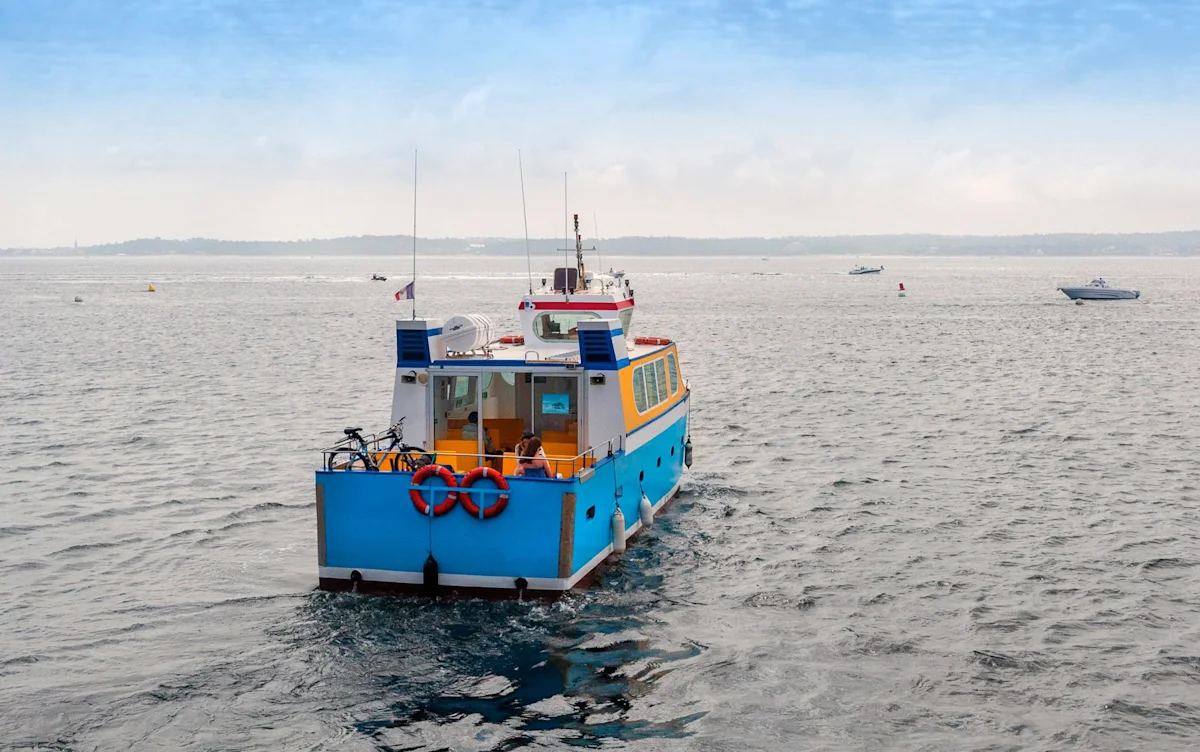
We had just arrived at Bélisaire Pier in Cap Ferret, and the boat to Arcachon was scheduled to depart in 10 minutes.
We were running late, because my son, aged three, had seen a merry-go-round on the walk to the pier. He was – how to put it – struck by the injustice that we didn’t let him go on the ride. This was the last day of our holiday, and therefore our last chance to visit Arcachon.
Anyway. There would be a merry-go-round in Arcachon, we assured our son, not knowing whether this was indeed true, but clutching at anything to calm him down.
Advertisement
Advertisement
First, we had to get across the water. There were two queues. One, around 20 people deep, was for a ticket office for boat tours. The other was longer, and snaked all the way up the pier.
Should we join the ticket office queue, and potentially miss the boat? Or join the pier queue, and hope to buy a ticket on board? With the sun beating down and no other shuttle scheduled for two hours, it was important we made the right decision.

The Bélisaire Pier in Cap Ferret, scene of our writer’s near-miss – Getty
At the Hay Festival this week, Ian McEwan voiced his fears that smartphones are stopping us from thinking our own thoughts. In this instance, I did not think my own thoughts, but instead deferred to the Meta AI feature built into WhatsApp.
“Can you buy a ticket on the boat from Cap Ferret to Arcachon?” I typed, the tantrum upgrading to a new, almost operatic tier.
Advertisement
Advertisement
“Yep – you can buy your ticket onboard the boat to Arcachon,” my AI assistant replied, explaining that the crew happily sell tickets on the boat, and that both card and cash are accepted. “Yep!” I relayed to my family, with relief, locking my screen.
We joined the queue on the pier and edged our way to the front as we watched the boat fill up. But then, as we reached the front, we faced a problem. We should have bought tickets at the ticket office, the man said, holding up his palms in surrender as I fruitlessly showed him my phone. He shrugged, in that way French people shrug, and we turned away.
High-stakes
I am not alone in turning to AI for my travel advice. According to a survey by Global Rescue, 24 per cent of all global travellers now use AI tools to organise their holidays. That rises to 40 per cent for under-35s.
“AI is transforming how travellers research and prepare for trips, and the next generation of globetrotters is embracing it fully,” said Dan Richards, the chief executive of The Global Rescue Companies and a member of the US Travel and Tourism Advisory Board. “But adoption still depends on trust and reliability, especially in high-stakes situations.”
Advertisement
Advertisement
That trust is hard to build when things can go so drastically wrong because of so-called “AI hallucinations”. In one incident, two tourists found themselves in a rural Peruvian town in search of the fabled Sacred Canyon of Humantay.
It was only when an experienced trekking guide overheard their plans that they learnt the canyon doesn’t actually exist, saving them from embarking on a potentially dangerous climb to high altitudes along unmarked paths.
In another instance, a couple ascended Mount Misen on the Japanese island of Itsu at 3pm for the sunset, informed by an AI tool that the last cable car down the mountain was at 5.30pm. As it turned out, the cable car station was closed at this time, meaning they were left stranded on the mountaintop.
Fallible technology
For all of their impressive strengths, AI tools are sophisticated language models, not travel guides. AI is adept at scraping the internet and giving a summary of the available information. It is usually reliable.
Advertisement
Advertisement
But it is not, nor will it ever be, as infallible as checking direct sources online or seeking the advice of travel experts who closely follow developments and know what they are talking about.
As it turns out, my AI mishap had one more twist. Seeing our disappointment, the ticketing chap took mercy. He called after us saying “it’s your lucky day” and ushered us on to the boat with a tilt of his head. As my family boarded the boat, I stayed back to thank him, and had one more question. I didn’t dare risk this one with AI.
“Is there a merry-go-round in Arcachon?” I asked.
“Yes,” he said. “Two.”
