
You May Also Like


How metabolic testing supports responsible use of performance technology in the NCAA (National Collegiate Athletic Association) while prioritizing student-athlete health and well-being.
Introduction
Collegiate athletics programs are rapidly adopting athlete monitoring technologies. These tools can provide valuable insights into performance, recovery, return to play decisions and training load.
Dr. Deena Caseiro, CMO of NCAA recently shared the updated guidelines emphasizing responsible use of performance technologies to protect student-athlete health and well-being. When used correctly, metabolic testing with the VO2 Master analyzer can support these goals by providing objective, evidence-based physiological data. This blog provides resources for the health professional working with student athletes who want to work with portable metabolic testing. Resources include published studies and more.
Understanding the NCAA Guidance on Performance Technologies
In 2025, the NCAA Sport Science Institute hosted a summit on the responsible use of performance technologies in collegiate athletics. The initiative was commissioned by the Committee on Competitive Safeguards and Medical Aspects of Sports (CSMAS).
The goal was simple: ensure technology enhances athlete health, safety, and performance without creating unintended risks.
The resulting consensus outlined three key pillars:
- Foundational statements
- Recommendations
- Implementation strategies
These guidelines help universities create structured policies for evaluating and deploying performance technologies.
Key Takeaways from the NCAA Guidance
- Performance technologies are tools, not solutions.
Their value depends on how they are used and interpreted. - Technology quality matters.
Programs should assess accuracy, reliability, and validity before adoption. - Student-athlete rights must be protected.
Informed consent, transparency, and data privacy are essential. - Multidisciplinary oversight is recommended.
Athletic departments should involve sports medicine, coaching staff, sport scientists, and IT teams when implementing technology.
Authoritative source: NCAA Sport Science Institute Performance Technology Summit (2025).
Why Student-Athlete Health Must Come First
The NCAA guidance emphasizes that athlete monitoring systems should never compromise student-athlete mental or physical well-being.
Performance technologies can influence training decisions, return-to-play protocols, and workload management. When interpreted incorrectly, they can also create unintended pressures.
Athletic departments should consider several health-related factors:
Physical Health and Safety
Objective physiological data can help identify training thresholds and fatigue levels.
Metrics such as: VO2 Max, ventilatory thresholds and energy expenditure provide insights into how athletes respond to exercise stress.
When these measurements are collected accurately, they help coaches design training programs that align with an athlete’s physiological capacity.
Mental Well-Being
Technology should empower athletes, not create additional stress.
Transparency around data collection, interpretation, and use is essential. Student-athletes should understand:
- What is being measured
- Why it is being measured
- How the data will be used
Education and communication builds trust and encourages athletes to engage positively with performance technologies.
Athlete Autonomy and Informed Consent
The NCAA guidance highlights the importance of informed consent and student-athlete rights.
Athletes should have clarity on:
- Data ownership
- Who can access their data
- How the information may influence performance decisions
Responsible programs prioritize these protections from the start.
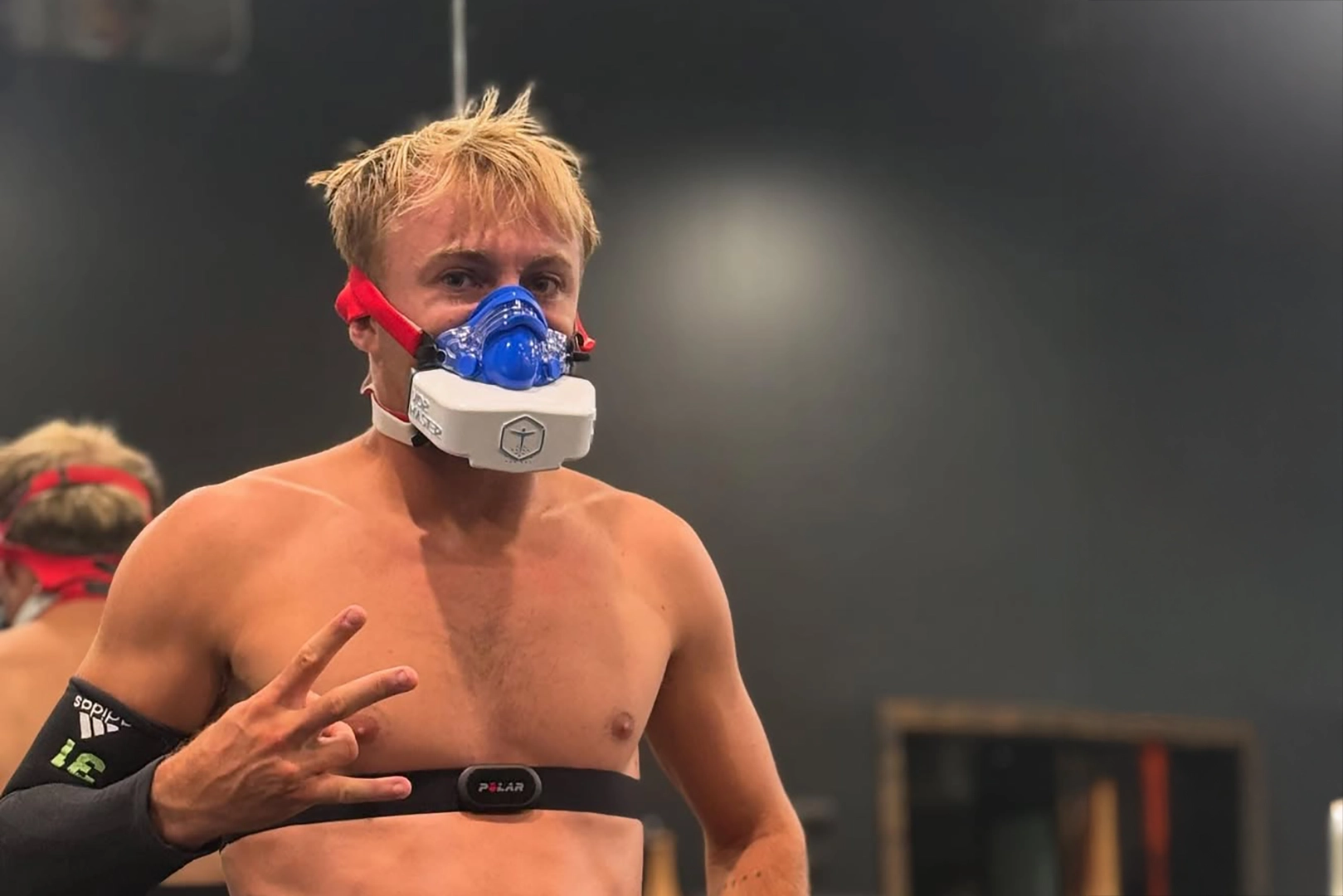
Metabolic testing is one of the most scientifically established methods for evaluating aerobic fitness and physiological efficiency. Testing began over 100 years ago with advancement into use in sports in the 1950’s and 1960’s.
Using indirect calorimetry, metabolic analyzers measure oxygen consumption during exercise. This provides direct insight into aerobic capacity and energy metabolism.
Common applications in collegiate athletics include:
- VO2 Max, submax and resting tests
- Ventilatory threshold identification
- Training zone optimization
- Limiter identification
- Return-to-play monitoring
- Endurance development
- Caloric balance and goal caloric intake
These insights allow performance staff to move beyond generalized training estimates and trends.
Instead, training programs can be built around individual physiology.
See full list of metrics at end of article: “What Insights will I Get?”
Why Metabolic Testing Matters for Athlete Health
Accurate physiological testing helps reduce guesswork.
Coaches can identify:
- When an athlete is approaching excessive fatigue
- Whether conditioning program changes are effective for the individual athlete
- How athletes respond to rehabilitation and recovery
This evidence-based approach supports smarter training decisions and safer performance progression.
Research published by the American College of Sports Medicine identifies VO2 Max as one of the strongest indicators of aerobic fitness and endurance performance.

Dr. Izumi Tabata is a professor at the Ritsumeikan University Graduate School of Sport and Health Science in Japan. He is a renowned exercise physiologist known for developing the “Tabata Protocol” (a form of HIIT) and is based in the College of Sport and Health Sciences in Kyoto. Formerly worked with the National Institute of Health and Nutrition.
Learn how you can integrate VO2 Master into your athletic programs responsibly and with success in your institution.
Ready to start testing with VO2 Master?
How VO2 Master Aligns with NCAA Recommendations
Portable metabolic testing aligns closely with the NCAA’s recommendations for responsible technology use.
The VO2 Master analyzer development began in 2013 and has been used internationally by academic institutions, pro and Olympic teams and fitness and wellness facilities for over 8 years.
Evidence-Based Performance Measurement
VO2 Master measures oxygen consumption directly during exercise.
This enables accurate evaluation of:
- VO2 Max, aerobic efficiency, ventilatory thresholds, energy expenditure and breathing mechanics.
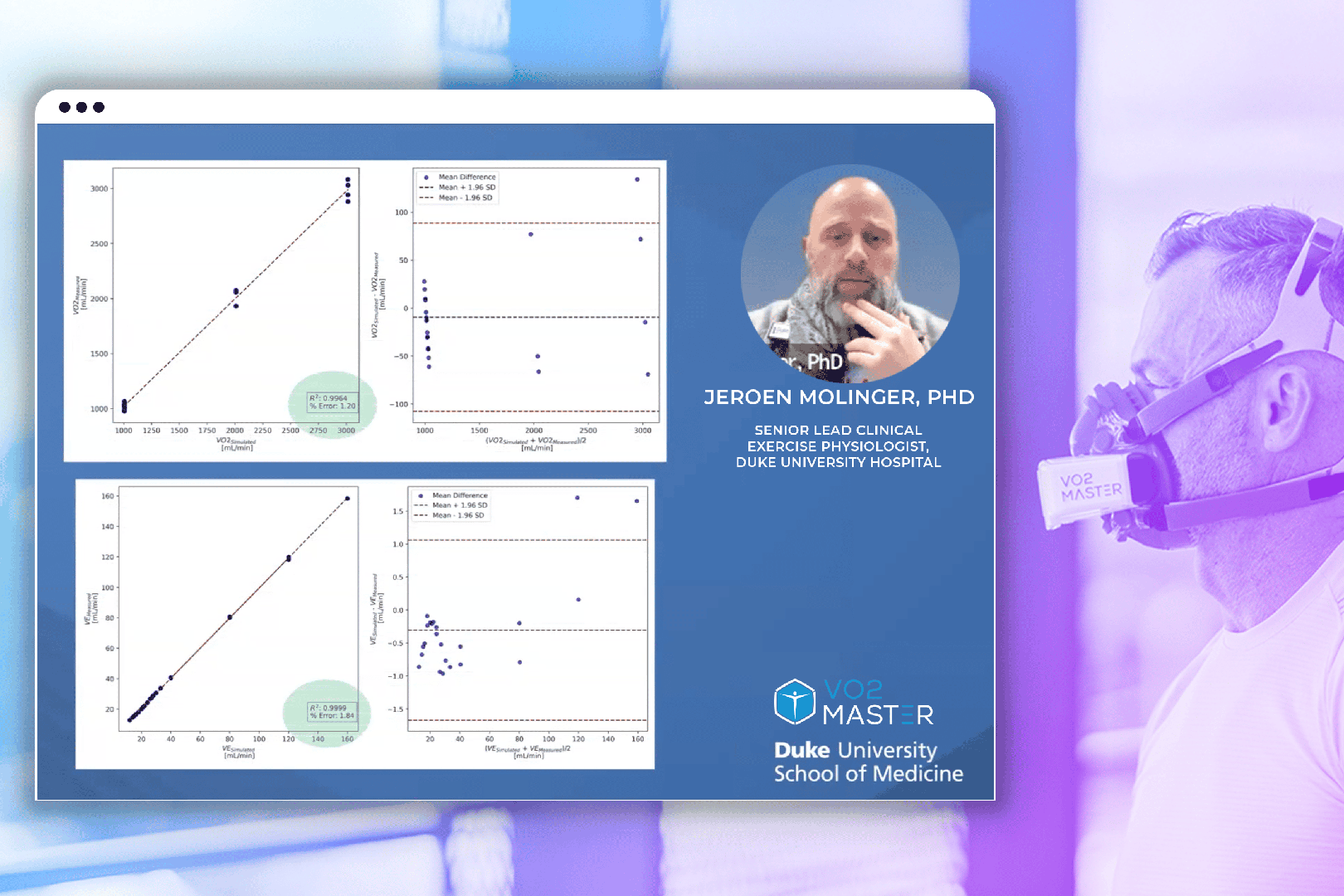
The device has been validated against laboratory metabolic carts in multiple research settings and published in peer reviewed journals.
This level of validation helps athletic departments meet NCAA guidance around evaluating technology accuracy and reliability.
Explore the recent studies published featuring VO2 Master here
Portable Testing in Real Training Environments
Traditional metabolic carts require laboratory settings, portability allows testing during more relevant, unencumbered sport specific movement to provide more accurate insights into athlete physiology.
The VO2 Master portable analyzer allows testing to occur:
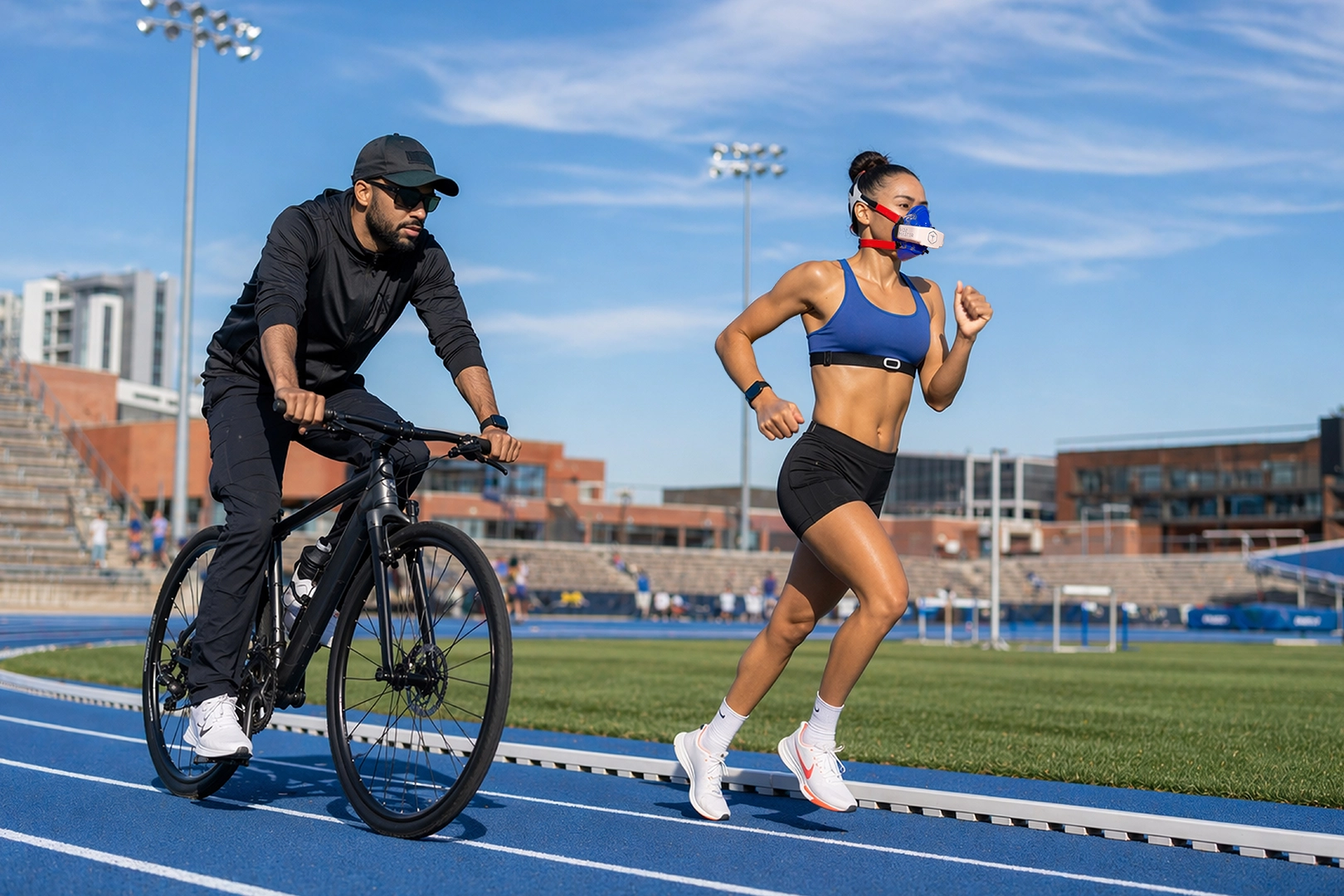
- On the field, track or court
- In the weight room
- At the end of the pool
- During sport-specific conditioning or race pace
This flexibility and use during natural athletic movement supports the NCAA recommendation that technologies should address real user needs.

Accuracy combined with relevant testing set ups are reasons why experts like Eva Piatrikova PhD, chose VO2 Master over other systems for her elite athletes. Dr. Piatrikova, featured in the 2026 APS webinar studied metabolic testing devices in sport.
Multidisciplinary Data Use
Metabolic data can be interpreted collaboratively by:
- Sports medicine staff
- Sport scientists and nutritionists
- Strength and conditioning coaches
- Athletic trainers
- Athletic directors
This multidisciplinary approach aligns with NCAA strategy recommendations for responsible data interpretation.
Data Confidentiality
The data is accessible only to the user and who they share the information with, the VO2 Master corporation can not access or share the data. The confidentiality and security of the data is a major reason why many military groups and medical facilities use the VO2 Master analyzer and app.
The data is shown live on iPad, phone or large screen during testing for athlete insight and motivation. The raw data and summary reports are available immediately upon completion of the test making efficient follow up discussions and decisions.
| Feature | Traditional Lab Systems | VO2 Master Portable Analyzer |
|---|---|---|
| Testing environment | Lab only | Field, track, court, gym or lab |
| Athlete movement | Limited | Natural athletic movement |
| Setup complexity | High | Minimal |
| Portability | None | Fully portable |
| Athlete comfort | Lower | Higher |
| Data accessibility | Lab-based | Mobile app integration |
Portable testing expands access to physiological data while maintaining high measurement quality and ecological validity.
Athletic departments considering metabolic testing should follow structured implementation strategies.
These align with NCAA recommendations.
Build a Multidisciplinary Implementation Team
Representatives can include professionals in:
- Sports medicine
- Strength and conditioning
- Sport science, physiology, kinesiology, physiotherapy
- Athletic therapy
- Nutrition
- Engineering
- Sports administration
This ensures balanced oversight and responsible use of athlete data.
Educate Athletes and Staff
Education should occur at least annually.
Topics should include:
- What metabolic testing measures
- How data is interpreted
- Limitations of physiological testing
- Athlete data rights and privacy
Clear education promotes informed participation.
Establish Data Management Policies
Departments should clearly define:
- Data ownership
- Storage protocols
- Who can access physiological data
- How long data is retained
These policies build transparency and protect student-athlete rights.
Collect Athlete Feedback
Student-athletes should be included in evaluating how technologies are used.
Their feedback helps programs identify:
- Positive performance impacts
- Potential stressors
- Opportunities for improvement
Continuous improvement is central to responsible technology use.
Conclusion
The NCAA’s updated recommendations highlight a critical shift in collegiate athletics. Technology must serve the health, safety, and well-being of student-athletes.
When implemented responsibly, metabolic testing provides powerful physiological insights that support smarter training decisions and multidisciplinary athlete care.
Portable systems like the VO2 Master analyzer expand access to these insights during actual sport movement with the biomechanical aspect making the athlete data more relevant allowing the sports team to make more informed training decisions. Athletic departments can collect accurate metabolic data while maintaining transparency, athlete education, and responsible data governance.
Learn more about how your program can use the VO2 Master analyzer responsibly and with success in your athletic program.
Ready to start testing with VO2 Master?
FAQ: Performance Technologies and Student-Athlete Health
What are performance technologies in collegiate athletics?
Performance technologies are devices or systems that collect biometric or performance data. Examples include GPS trackers, metabolic analyzers, heart rate monitors, and athlete management software.
Why is responsible technology use important?
Technology influences training decisions and athlete health management. Responsible use ensures student-athlete mental and physical well-being, data privacy, and evidence-based interpretation.
How does metabolic testing support athlete health?
Metabolic testing provides objective measurements of aerobic capacity, energy metabolism and physiologic limiters such as breathing mechanics. These insights help coaches design training programs that match an athlete’s physiological capacity.
Is VO2 Max testing safe for student-athletes?
When conducted by trained professionals using appropriate protocols, VO2 Max testing is safe and is currently used internationally for testing varsity athletes at universities and colleges.
How often should metabolic testing be performed?
Testing frequency varies by program goals. Many teams perform testing:
– pre-season
– mid-season monitoring during race pace training
– off-season or injury evaluation
Consistency in test-retest conditions helps maintain reliable comparisons and a valuable metabolic athlete profile over time.
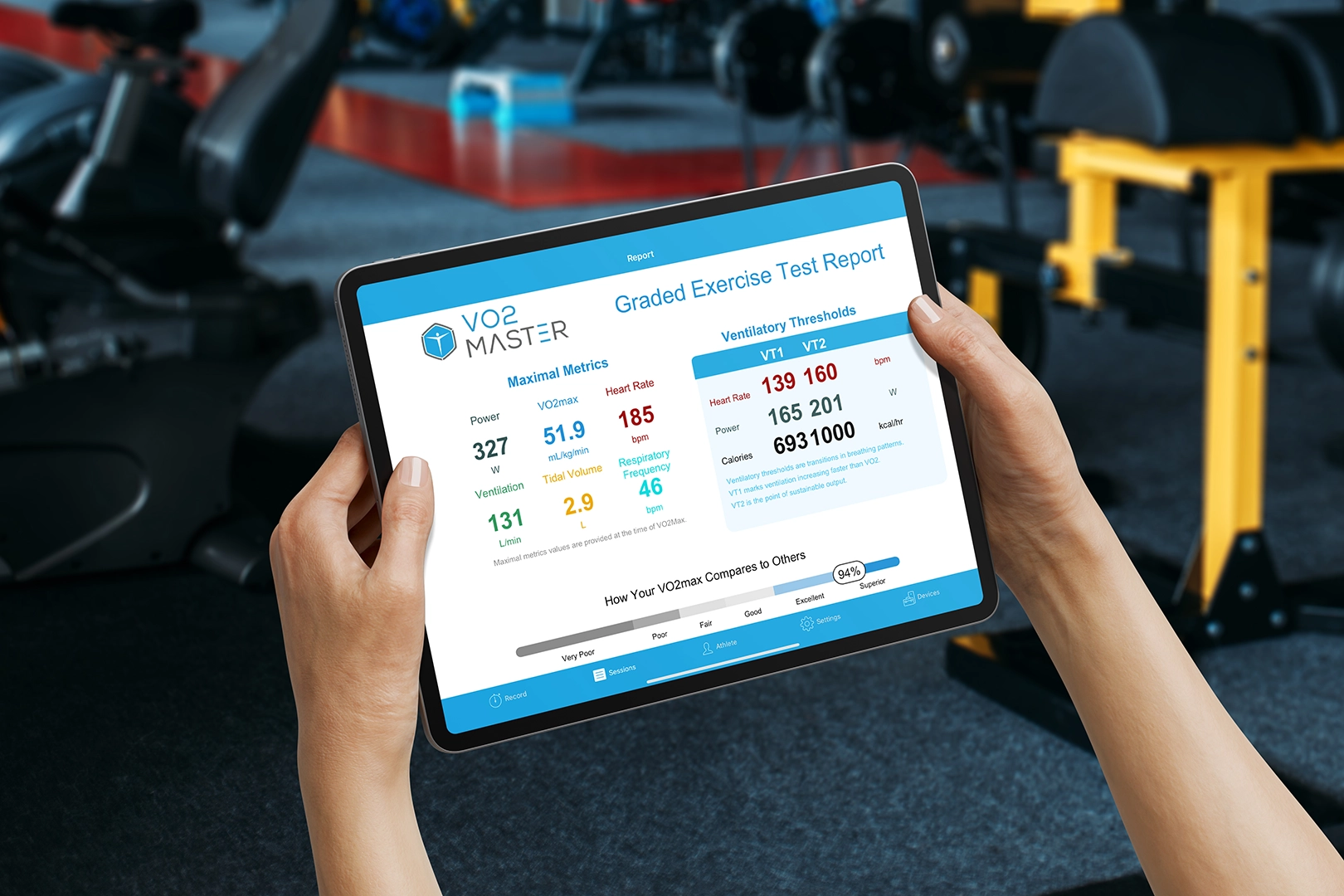
What insights will I get?
VO2 Master Core Metabolic Metrics
Live readings:
- VO2 (oxygen consumption)
- VO2 Max
- Ventilation (VE)
- Respiratory frequency
- Tidal volume
- Energy expenditure
- Ventilatory equivalents (VE/VO2)
- Heart Rate
Performance & Threshold Metrics
- Ventilatory threshold (VT1)
- Respiratory compensation point (VT2)
- Training zones
- Metabolic efficiency
- Running economy / cycling efficiency
Respiratory Metrics
- Respiration rate
- Breathing pattern analysis
- Ventilatory efficiency
Metabolic Health Metrics
- Resting metabolic rate (RMR)
- Total Daily Energy Expenditure
- Goal Daily Caloric Intake
- Metabolic flexibility trends
Biomechanical & Movement-Relevant Insights
Because testing with VO2 Master can occur during natural movement, exercise test metrics have improved ecological validity and practitioners can evaluate:
- Running, cycling, rowing, swimming economy and more
- Breathing patterns during sport-specific movement
- Efficiency at different workloads
- Accurate test-retest capability assessments of physiological response to training program modifications
These insights are provided in real time, this puts you in the know with powerful insights you don’t have to wait for.
