
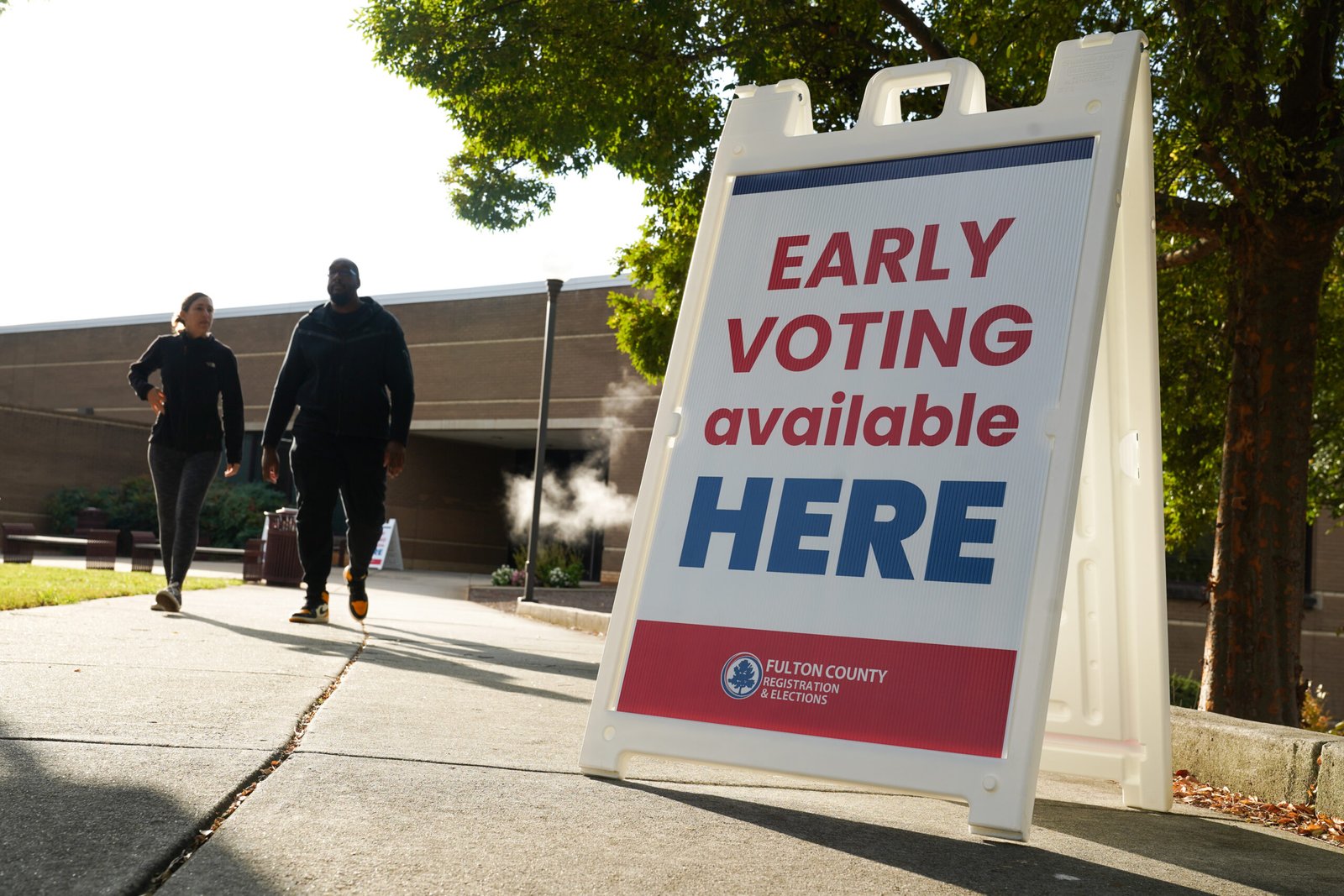
The Supreme Court’s rejection of the GOP’s attempt to upend mail voting Monday marked a major win not only for the millions of Americans who vote by mail but also for the millions of other people who cast their ballots in person at early voting sites.
If Watson v. Republican National Committee* (RNC) had gone their way, legal and voting experts feared that Republicans would use the ruling to next challenge early voting.
In fact, as Watson was being litigated, President Donald Trump and some of his top allies made it clear that they oppose ballots being cast before Election Day and want to take our election system back decades to the days when almost all voting happened in person on Election Day.
However, in ruling in favor of grace periods for mail ballots, the Court also soundly defended early voting — at least in the face of the RNC’s legal arguments in Watson.
In the case, the RNC argued that Mississippi’s law offering a grace period for late-arriving ballots mailed by Election Day violated the election-day statutes: a set of federal laws that designate “the Tuesday next after the first Monday in November… as the day for the election” for federal elections.
In a 5-4 decision penned by Justice Amy Coney Barrett, the Court disagreed, ruling that the states “do not set a deadline for ballot receipt” and therefore “do not prevent Mississippi from counting ballots postmarked after election day yet received afterward.”
Barrett added that if the Court adopted the RNC’s legal theory in the case, “early voting would also be at risk.”
“At bottom, plaintiffs’ theory is that because we are governed by 19th-century election-day laws, we are also governed by 19th-century voting practices,” she wrote.
Going further, Barrett warned that, “Carried to its logical conclusion, this theory would call into question the way modern elections work.”
Barrett noted in the opinion that the RNC and Department of Justice (DOJ) — which joined the RNC in challenging Mississippi’s law — both agreed in oral arguments earlier this year that the election-day statutes permit early voting.
“Although the election-day statutes refer to a particular ‘day’ for the election, plaintiffs do not contend that everything must occur on that day,” Barrett wrote. “For instance, they do not object to early voting or dispute that officials may count votes and certify a winner after election day.”
Though he dissented from the Court’s decision on late-arriving mail ballots, Justice Samuel Alito agreed with the majority that the election-day statutes permit early voting.
“No matter when a State receives voters’ individual ballots, the electorate’s choice is not made until all ballots have been cast and collected. So long as that occurs on the Tuesday after the first Monday in November, the election-day statutes are satisfied,” he wrote.
Despite the ruling, Republicans are unlikely to give up on challenging early voting and attempting to restrict voting to a single day.
For decades, they have tried to enact laws to ban or shorten early voting. Some have also challenged the practice in court. GOP concern about the practice spiked after former President Barack Obama’s victory in 2008 was boosted by high rates of early voting.
As part of their effort to restrict voting, the senior Trump DOJ officials, too, have made it their goal to limit voting to one day.
“Election Day means Election DAY!” Harmeet Dhillon, who heads the DOJ’s Civil Rights Division, said in a social media post after the Supreme Court said it would hear Watson earlier this year.
Currently, all but three states — Alabama, Mississippi and New Hampshire — offer early in-person voting. In 2024, over 46.7 million Americans voted early in person, according to the University of Florida’s Election Lab, which tracks and analyzes election data.
Trump has long opposed the widespread and exceptionally popular voting method, falsely asserting that it contributes to election fraud.
“No mail-in or ‘Early’ Voting,” Trump, who has routinely voted before Election Day using a mail ballot over the years, said last year in a social media post falsely characterizing the 2020 election as “Rigged and Stolen.”
*Intervenors were represented by the Elias Law Group (ELG). ELG Chair Marc Elias is the founder of Democracy Docket.
Leave a Reply