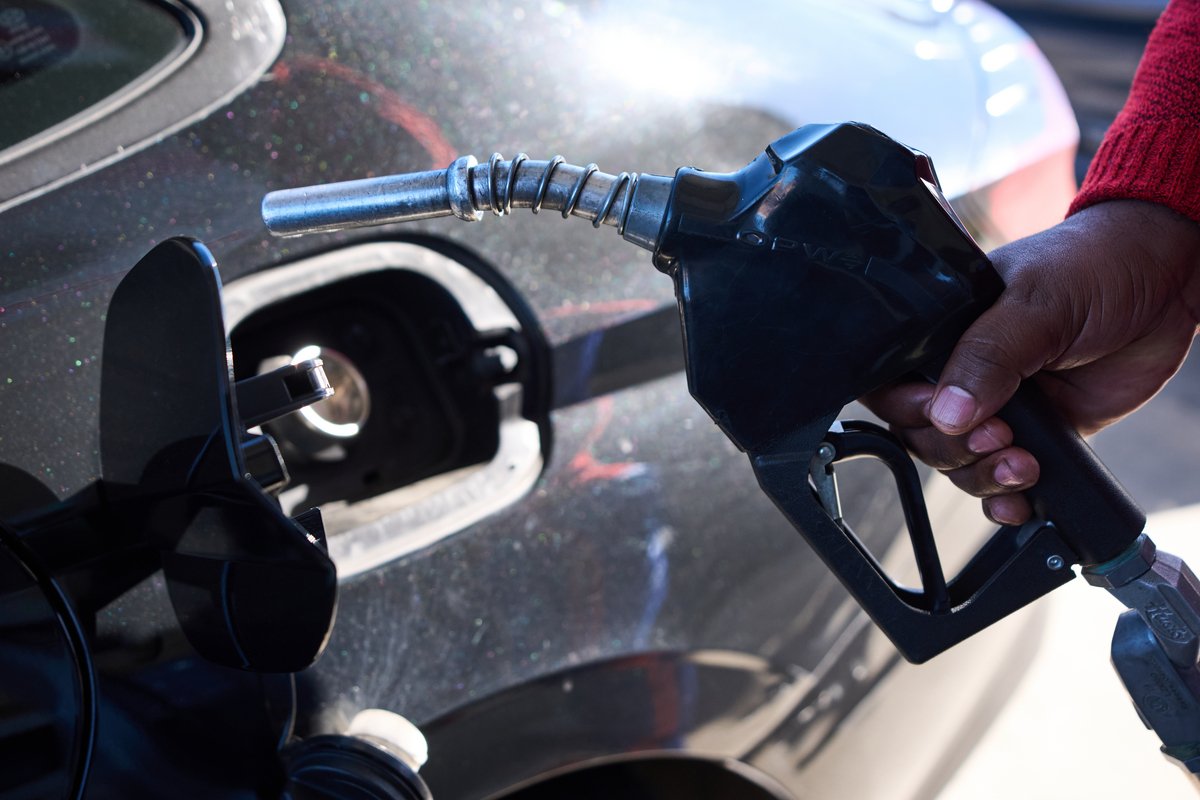
President Donald Trump’s focus on gasoline prices is a sign the White House is keenly attuned to a political reality: Prices at the pump are a key indicator for voters of the state of the economy heading into election season.
That’s just one of many reasons Republicans have privately stressed about gasoline price spikes ahead of the midterm election in November — concerns that are lingering as Trump ordered the Justice Department in a social media post Wednesday to investigate big oil companies he accused of gouging drivers.
There’s a history lesson in past midterm races: On average, the party in power stands to benefit when gas prices go down and faces a higher political risk when pain at the pump is more prevalent.
“In midterm elections, you are going to be driven a lot more by both someone’s personal economic experience and their attitudes toward leadership of the current president,” said Adie Tomer, a senior fellow at the Brookings Institution, on voter behavior. “It’s not the direct personality contest that you’re seeing in a presidential year.”
Gasoline prices are up nearly 90 cents per gallon nationally since the United States and Israel launched the war against Iran in late February, according to the U.S. Energy Information Administration — even with the drop of around 60 cents over the past month as crude prices have declined. The U.S. average retail price for gasoline increased 26 percent from the start of Trump’s second term to June of this year. And even with a tentative peace agreement between the U.S. and Iran shaving off more than 10 cents per gallon, depleted oil reserves could continue to have an impact on gas prices for months.
Those increases come as Republicans are hoping to protect narrow majorities in Congress this November — a goal that the spike in gasoline prices could make far harder to achieve, as historical political patterns illustrate.
Higher gas prices have not always meant worse outcomes for the president’s party. For example, elections in 2010 and 2022 both took place while drivers endured significant pain at the pump — but with very divergent outcomes for the president’s party, according to elections and gasoline price data.
The incumbent party typically loses House seats in the midterms regardless of whether gas prices increased or dropped, averaging a loss of 21 seats compared with the previous election cycle in races since 1978. But going back nearly 50 years, those losses have tended to be much less severe in election seasons when gas prices went down.
The political impact of higher gas prices could also hit Republican districts harder, Tomer said, since voters in these areas tend to drive more. According to Brookings, the average constituent of a Republican House member drives 26 percent more miles than a constituent of a Democratic member.
States that Trump won in the 2024 election also saw higher gas price increases during the beginning of the Iran conflict than those won by Democratic presidential candidate Kamala Harris, POLITICO found earlier this year.
And while the number of competitive districts this year is slimmer than in elections past, Tomer said the “risk factor is still considerably higher” given the rampant and heightened gas prices increases since the start of the war with Iran.
“That’s just naturally going to expose those Republican officials to a constituency that’s just far more sensitive to prices at the pump,” he said.
The Democratic Party suffered its most significant recent loss in 2010, losing 64 congressional seats compared with the previous election cycle. Gas prices had jumped 56 percent from President Barack Obama’s inauguration to the October before the midterms. The only election season with a higher gas price increase in modern political history was 2022 — yet the Democratic Party under President Joe Biden lost only nine seats. Gas prices rose 73 percent then, but fewer losses for the president’s party were likely due in part to the impact of the U.S. Supreme Court overturning Roe v. Wade several months prior.
Gas prices had reached record highs at the start of the summer above $5 a gallon nationally — but they fell by around a dollar from those peaks by the month before the 2010 midterms. A similar trend could continue to play out this year, as gas prices have slipped in recent weeks.
Even if gas prices reach near pre-war levels this fall, voters’ memories of the pain they’ve experienced at the pump tied to the war may persist, said Ron Bonjean, a Republican strategist who is co-founder of public affairs firm ROKK Solutions.
“How deep [the] gasoline prices cut into a voter’s budget will really dictate how well they remember,” Bonjean said. “The key for Republicans would be to remind voters that gasoline prices have come down.”
But the U.S. is potentially in for a “roller coaster” on gas prices this summer tied to whether the Trump administration can resolve conflicts over Iran’s nuclear program to reach a longer-term peace deal, he added.
“It feels like gas prices will go down, but they also can go up again,” he said. “As the Iranian peace deal ebbs and flows here, so does the attitudes of voters on Republicans regarding gas prices.”