
Now Reading: Georgetown Center to Track Infectious Disease for 2026 World Cup
- 01
Georgetown Center to Track Infectious Disease for 2026 World Cup

Georgetown Center to Track Infectious Disease for 2026 World Cup
On the third floor of the Medical Dental Building on the Hilltop Campus, students huddle at lab benches, writing reports and conducting research.
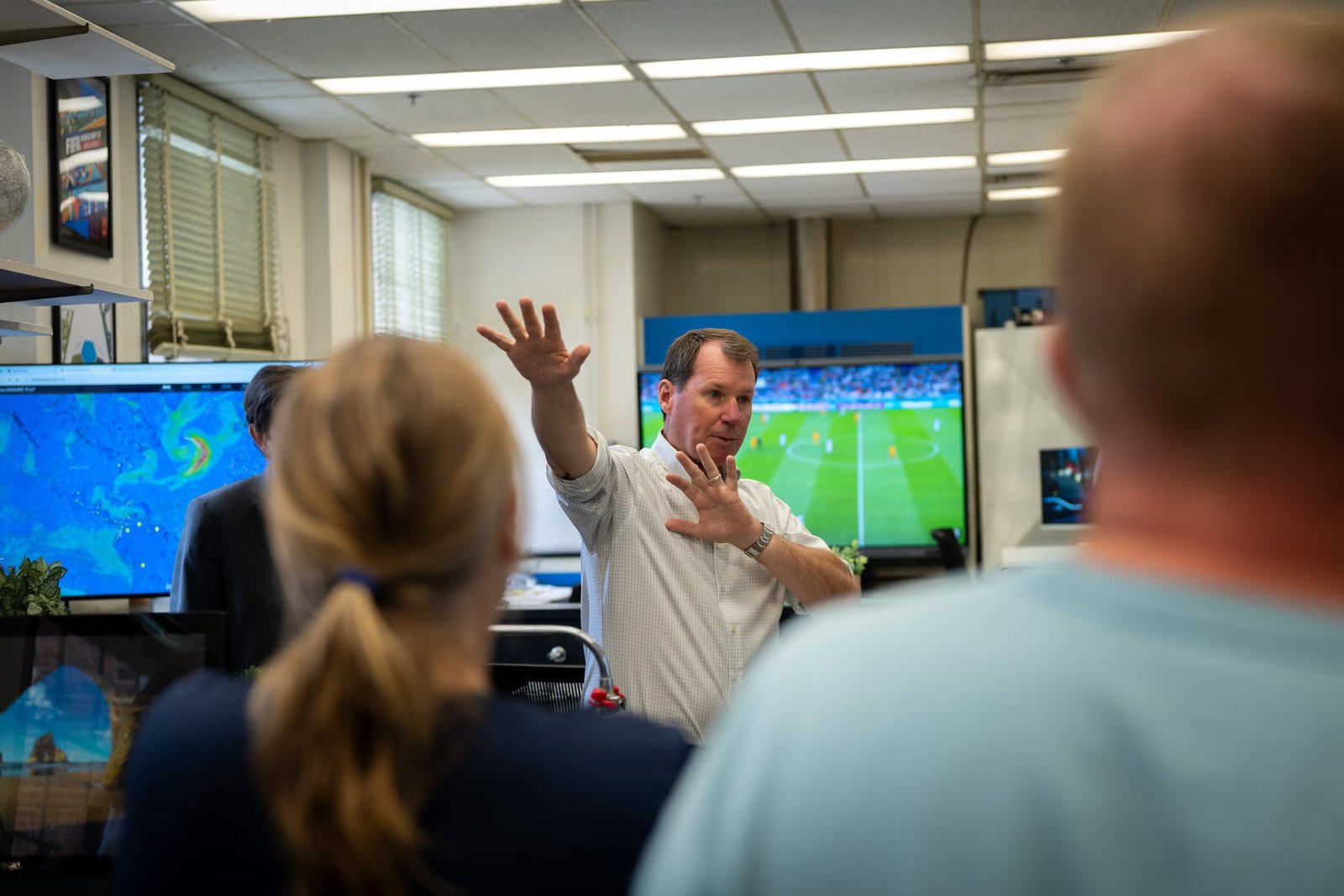
But they aren’t working in a typical lab. A soccer match plays on a massive TV in front of a chemical hood. Analog clocks display four different North American time zones. Data dashboards and maps of North America flash on other screens, while soccer posters cover the walls.
For the summer, the room tucked away in the northwest corner of the Hilltop Campus is no longer a microbiology lab, but a fully functioning public health emergency operations center.
With up to 6.5 million people traveling for the 2026 FIFA World Cup, the risk of disease outbreaks increases as people converge in dense urban areas.
Georgetown is hosting the Health Security Operations Center (HSOC), which tracks possible disease outbreaks in World Cup sites across the U.S., Canada and Mexico.
The operations center monitors infectious disease risks and delivers real-time reports to health officials and the public throughout the World Cup, which runs from June 11 through July 19. The center operates as part of the joint National Center for Health Security and Resilience, a collaboration between Georgetown University and MedStar Health, and is made up of Georgetown faculty and students, experts from MedStar Health and collaborators from around the world.
While a public health operations center for mass gathering events is usually sponsored by a government, the HSOC is breaking new ground as an independent organization to address an unmet need during this year’s World Cup.
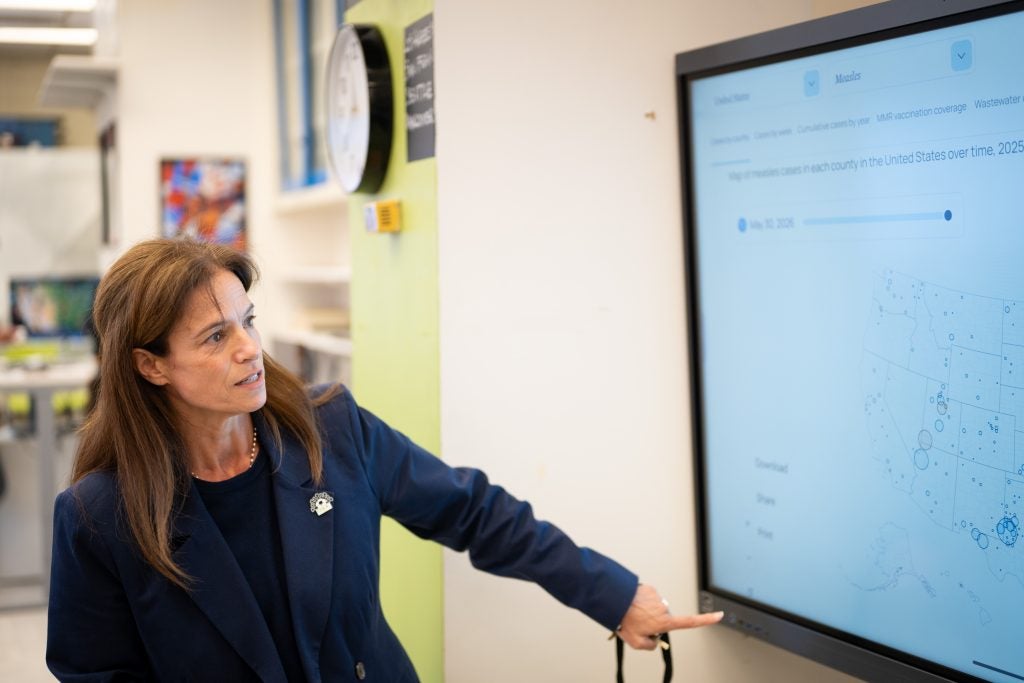
“What we are doing is standing up a non-governmental public health emergency operations center focused on infectious disease threats,” said Rebecca Katz, a professor in the School of Medicine and School of Foreign Service who is leading HSOC. “We’re doing something that’s never been done before because it’s never been done by a non-governmental entity.”
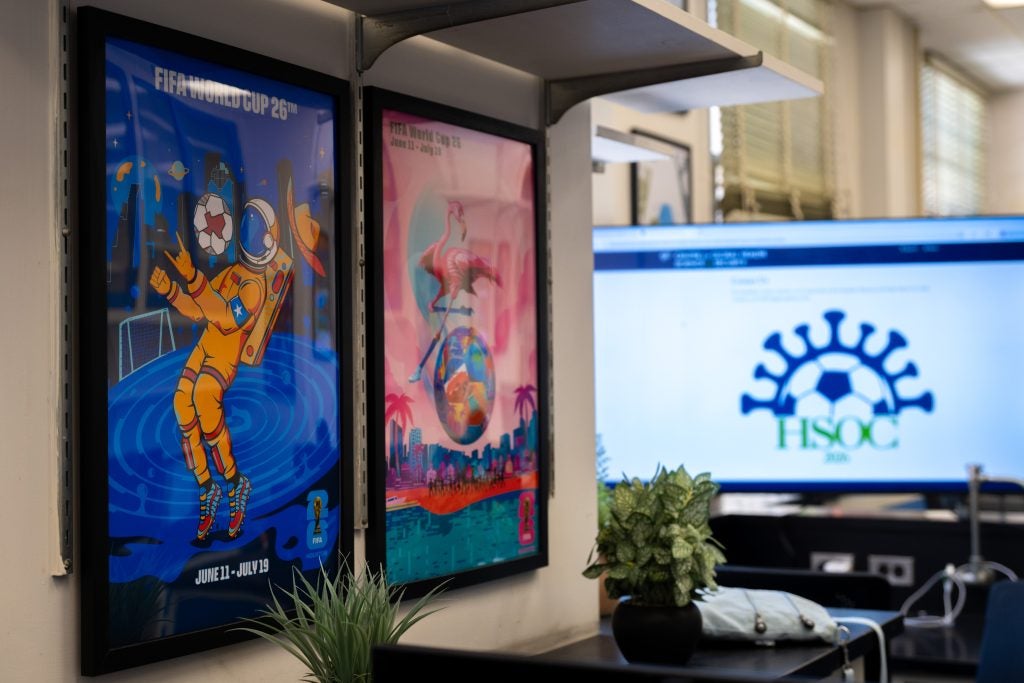
Tracking Infectious Diseases During The World Cup
Throughout the World Cup, the operations center will collect data from every jurisdiction associated with the competition, including each of the 16 tournament sites, every team’s base camp region and popular tourist spots.
“This effort reflects the long-standing commitments by MedStar Health and Georgetown to population health and strong public-private partnerships that make health systems more resilient,” said emergency physician Ethan Booker, vice president of care innovation at the MedStar Institute for Innovation and chief medical officer for telehealth at MedStar Health. “The Health Security Operations Center brings together the right people, the right data and the right partnerships to support innovative, collaborative approaches to health security.”
By pulling in data from across North America, Katz hopes HSOC can generate timely reports that can inform public health responses in case of disease outbreaks, especially as teams and fanbases travel between cities.
“If New York is seeing something, and we know the fan base is traveling from New York to Seattle for the next game, then we’ll connect the data of what we saw in New York to the Seattle jurisdiction so they can prepare,” said Katz, who is also director of the Center for Global Health Science and Security at Georgetown.
The team will pull data from multiple sources, from air travel data to social media monitoring, open-source communications and public health surveillance systems.
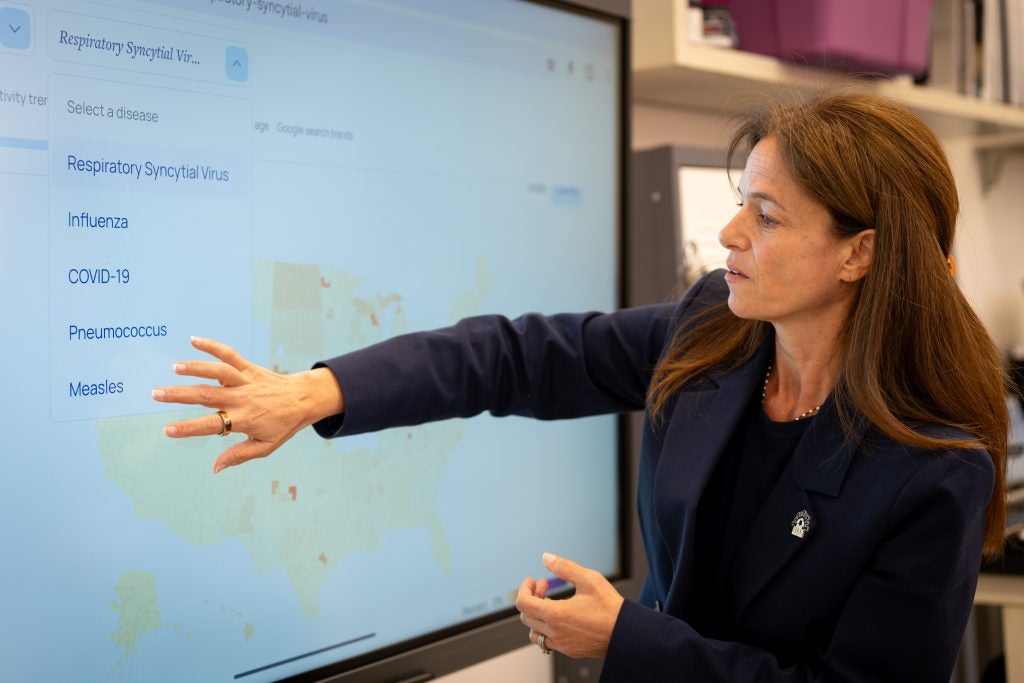
One of the most significant data sources comes from partnerships with wastewater surveillance programs around North America. Through wastewater, the HSOC can identify diseases like measles, COVID-19, mpox, and mosquito-borne viruses like dengue and chikungunya, about a week before hospitals receive infected patients. That data can give public health officials an important head start, Katz said.
“If they see something in the wastewater, the emergency departments can prepare, and they can know what they’re preparing for because there are slightly different approaches to what the clinicians need to be ready for,” she said.
To prepare for any potential public health response, Katz’s team has developed risk assessments for every local health jurisdiction associated with the tournament.
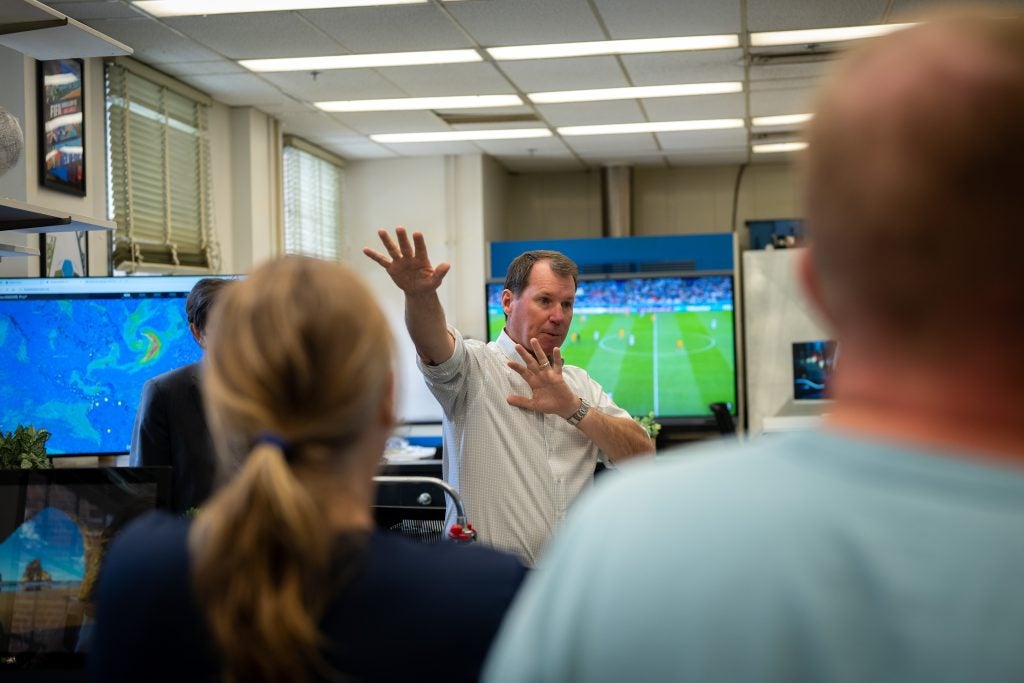
“If something does happen, we know what their capacity is, we know what outbreaks they’ve dealt with in the past, we know what their hospital system is,” Katz said. “We have it all at our fingertips.”
Every day during the World Cup, the HSOC will distribute a situation report to local health jurisdictions, public health officials, state governments, federal agencies and other nongovernmental partners.
While the HSOC isn’t designed to provide a boots-on-the-ground response team, Katz has assembled a team of volunteer infectious disease experts who can guide local health jurisdictions when requested if an outbreak were to occur.
“This is everybody who has ever written a book chapter on how to respond to an outbreak from all over the world,” she said. “If there is an outbreak of dengue in Kansas City, we can offer these folks to get on the phone with the Kansas City local health department. We will coordinate that group of experts to provide a security net for those health departments to talk them through.”
Real-Life Global Health Experience
Grace Brady (H’28) has been working with Katz as a research assistant at the Center for Global Health Science and Security since the spring of her sophomore year, completing data visualizations and infectious disease projects. When Katz offered the opportunity to continue working with her over the summer at HSOC, Brady was the first to raise her hand.
Brady is one of 17 analysts working at HSOC this summer, many of whom are students. Students have come from universities across the world to work here, including two students from the London School of Economics as part of the partnership between Georgetown and the British university.
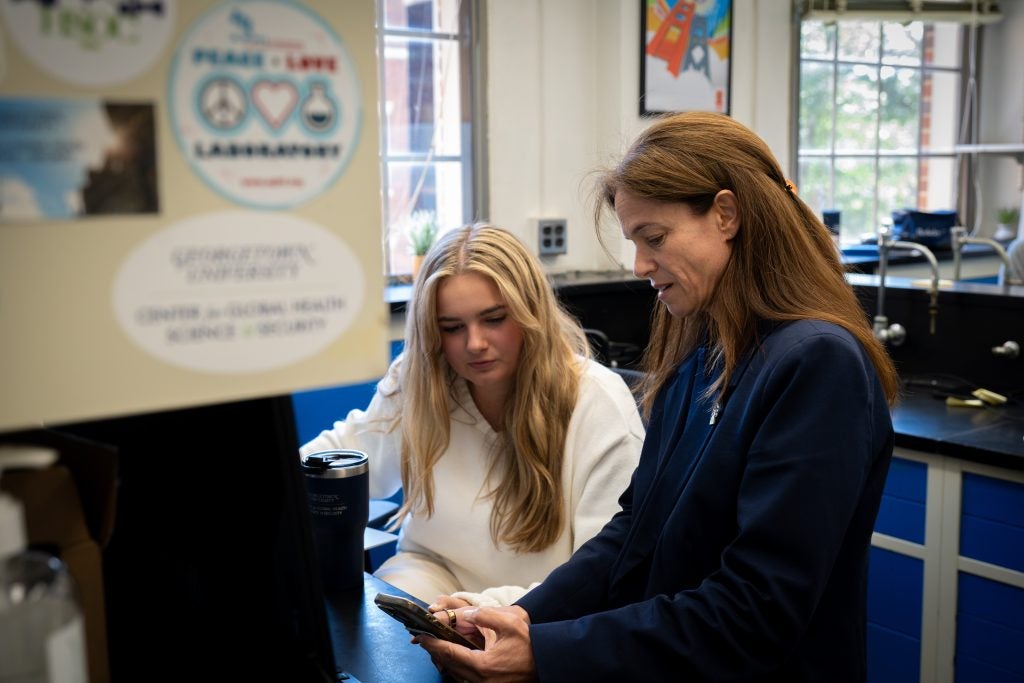
“This is a really cool opportunity for people, and they don’t usually get the opportunity to learn how to do it,” Katz said.
For the next few weeks, the analysts will work at a frenetic pace to keep up with the rigor of a public health emergency operations center. Each student has specific objectives to complete daily just like an incident command center, Katz said.
In their roles, analysts produce country profiles detailing prevalent diseases in each of the countries competing in the World Cup, providing useful intelligence for local governments hosting visiting teams and fan bases.
“If one country struggles with dengue, which is spread by a certain type of mosquito, and their base camp is somewhere in the South in the U.S. where that same mosquito is prevalent, that can become a potential issue,” said Brady, a junior in the School of Health. “These profiles are for people where the teams are staying. They want to see so they can be prepared and knowledgeable about what potential increases in diseases they might see.”