
Now Reading: AOC Says Democrats Are Ignoring a ‘Generational Tidal Wave’ Reshaping Elections
- 01
AOC Says Democrats Are Ignoring a ‘Generational Tidal Wave’ Reshaping Elections


AOC Says Democrats Are Ignoring a ‘Generational Tidal Wave’ Reshaping Elections
Representative Alexandria Ocasio-Cortez said Sunday that political analysts are overlooking the most important force behind a string of progressive Democratic primary victories—a massive generational shift among voters.
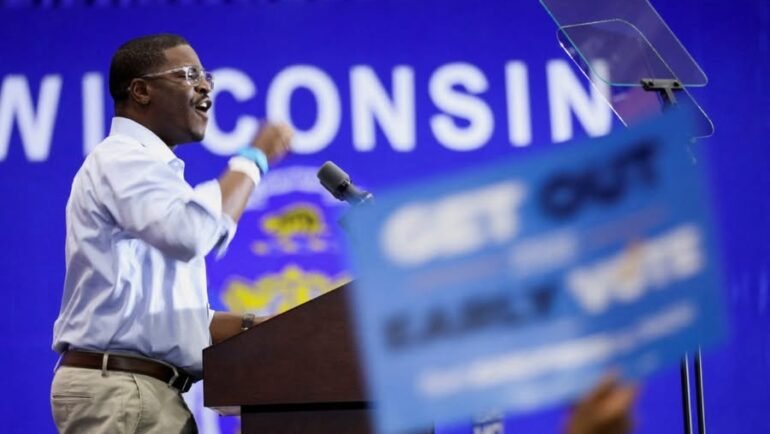
Speaking on ABC News’ This Week, the New York progressive Democrat said recent wins by such candidates, including Michigan Democratic Senate nominee Abdul El-Sayed, are being driven by a “generational tidal wave” that is reshaping the electorate and changing the balance of power within the Democratic Party.
“Even right now, when we look at this insurgent wave of what is happening, oftentimes when people are doing that Monday morning quarterbacking and what demographics voted where, the big one that’s being ignored is the generational tidal wave, a tsunami,” the congresswoman explained.
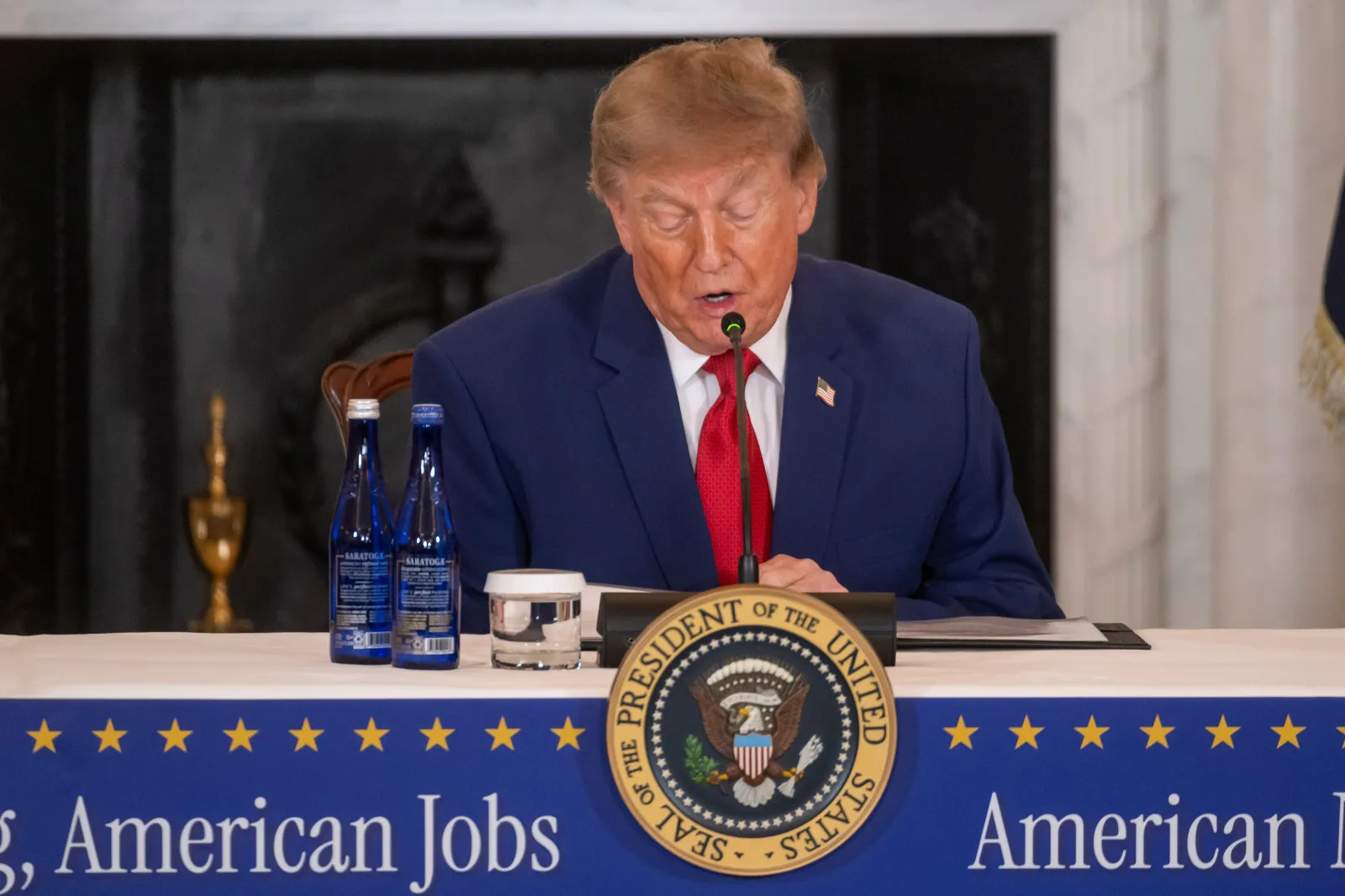
Ocasio-Cortez’s growing influence within the Democratic Party has drawn frequent criticism from Republicans, who often portray her and other democratic socialists as too far left for swing-state voters. President Donald Trump has repeatedly targeted progressive Democrats, arguing that their policies on government spending, healthcare and climate issues are out of step with mainstream Americans.
A University of New Hampshire Survey Center Granite State Poll that was conducted last month of likely 2028 Democratic primary voters found Ocasio-Cortez leading the hypothetical field at 22 percent, narrowly ahead of former Transportation Secretary Pete Buttigieg at 21 percent, and Arizona Senator Mark Kelly at 9 percent.
Ocasio-Cortez addressed presidential speculation in a conversation with David Axelrod, a former adviser to President Barack Obama, earlier this year.
“My ambition is to change this country,” she said in part. “Presidents come and go. Senate, House seats, elected officials come and go. But single-payer healthcare is forever. A living wage is forever, workers’ rights are forever, women’s rights, all of that…”

Testing the Map
The latest round of progressive primary victories has unsettled some moderates within the Democratic Party and prompted concerns among Republicans that the movement is gaining momentum ahead of the November midterms.
The biggest test came last week in Michigan, where El-Sayed defeated establishment-backed Representative Haley Stevens in a closely watched Senate primary in a critical battleground state. The victory challenged an argument frequently made by critics of the progressive movement—that left-wing candidates can win only in heavily Democratic urban districts.
Ocasio-Cortez said on Sunday the results show something broader is happening nationwide as younger voters become a more influential voting bloc.
“Millennials are not punk kids anymore,” she said. “We’re grown adults with mortgages and kids, and that generation is starting to be decisive at the polls.”
Ocasio-Cortez added that many younger voters are frustrated after feeling ignored and burdened by economic and climate challenges inherited from previous generations.
Her comments highlight a growing debate inside the Democratic Party ahead of the midterms and the 2028 presidential cycle. Some centrist Democrats have warned that democratic socialism could become a liability, while groups such as Third Way have pledged millions of dollars to counter the movement. Ocasio-Cortez dismissed those concerns, arguing that Democrats should focus less on ideological labels and more on improving voters’ lives.
A Party in ‘Renewal’
Ocasio-Cortez framed Michigan’s recent primary results as evidence that the Democratic Party is going through a period of transformation rather than division.
“I think that we are in a time of renewal for the Democratic Party,” she told ABC’s Jonathan Karl. “We have really an ascendance of a young, inspiring, exciting electorate, energizing wave of candidates that I think really inject a new energy to the Democratic Party.”
She also rejected suggestions that progressive victories signal a fractured party, saying Democrats are increasingly united around issues affecting working-class voters, including housing costs, healthcare and affordability.
“The party is unifying, and it is focused on the November elections,” Ocasio-Cortez said. “We understand that our priority is the working class of this country.”
According to the congresswoman, the rise of progressive candidates is fundamentally about demographic change and voter engagement rather than traditional ideological divides.
“There is anger at being ignored, sidelined, having our economic futures mortgaged by the generations that came before us on everything from the economy to climate,” Ocasio-Cortez said. “We’re taking the reins.”
Poll Shows Public Views DSA More Unfavorably Than MAGA
According to a Marquette Law School poll released last week, Democratic Socialists of America (DSA) are viewed more unfavorably than MAGA and Trump, but the most prominent Democratic socialist politicians are viewed more favorably.
DSA’s favorability rating stood at -30 points in the poll, with 24 percent of respondents saying they view the organization favorably and 54 percent viewing it unfavorably. Twenty-two percent said they had not heard enough to give their view on it. That marks a slight decline in favorability since April, when its net favorability stood at -28 points in Marquette’s polling.
Among independent voters, 13 percent viewed DSA favorably, compared to 46 percent who viewed it unfavorably.
Individual Democratic socialist candidates were viewed slightly less unfavorably, with 31 percent viewing them favorably and 53 percent unfavorably.
Meanwhile, MAGA’s favorability stood at -26 points, with 35 percent viewing the conservative movement favorably and 61 percent unfavorably, according to the poll. Its favorability has declined from -19 points in July 2025. Seventeen percent of independent voters said they view MAGA favorably, compared to 69 percent viewing it unfavorably, according to the poll.
Democratic Socialist Politicians Viewed Better Than MAGA Politicians
Despite poor views of DSA overall, some of its most prominent lawmakers are viewed less unfavorably than Trump and members of his administration, according to the poll, which broadly found all national politicians included in the survey underwater in terms of personal favorability.
Vermont Senator Bernie Sanders, an independent and Democratic socialist, was viewed favorably by 45 percent of respondents and unfavorably by 47 percent. New York City Mayor Zohran Mamdani’s favorability rating stood at -6 points, with 33 percent viewing him favorably and 39 percent unfavorably.
Ocasio-Cortez’s net favorability rating was -11 in the poll, with 32 percent viewing her favorably and 43 percent unfavorably.
Meanwhile, Trump’s favorability stood at -22 points, with 38 percent viewing him favorably and 60 percent unfavorably. Secretary of State Marco Rubio’s was -11 percent, viewed favorably by 34 percent of respondents and unfavorably by 45 percent. Vice President JD Vance was viewed favorably by 38 percent and unfavorably by 54 percent for a net of -16.
Defense Secretary Pete Hegseth was viewed favorably by 23 percent of respondents, with 45 percent saying they viewed him unfavorably for a -22 net.
The poll, which surveyed 1,076 adults nationwide from July 22-29 and had a margin of error of plus or minus 3.2 percentage points, sought to differentiate between how voters view the DSA as an organization versus candidates who describe themselves as democratic socialists but are not necessarily connected to the organization. The poll divided respondents into two random samples: half were asked about their view of the organization, while the other half were asked about candidates.
What Happens Next
The next major test for DSA will be Wisconsin’s governor’s race, where DSA candidate Francesca Hong is leading polls ahead of the August 11 Democratic primary against Milwaukee County Executive David Crowley. If Hong pulls off a victory, the race could become the most prominent test for the DSA in a battleground state.
Contact Newsweek editors for this story: Steve Mollman and Anthony Murray.