
Community transmission remains high. According to the Africa Centers for Disease Control and Prevention, 80% of new cases are being detected outside health surveillance, meaning most infections have not been tracked by authorities.
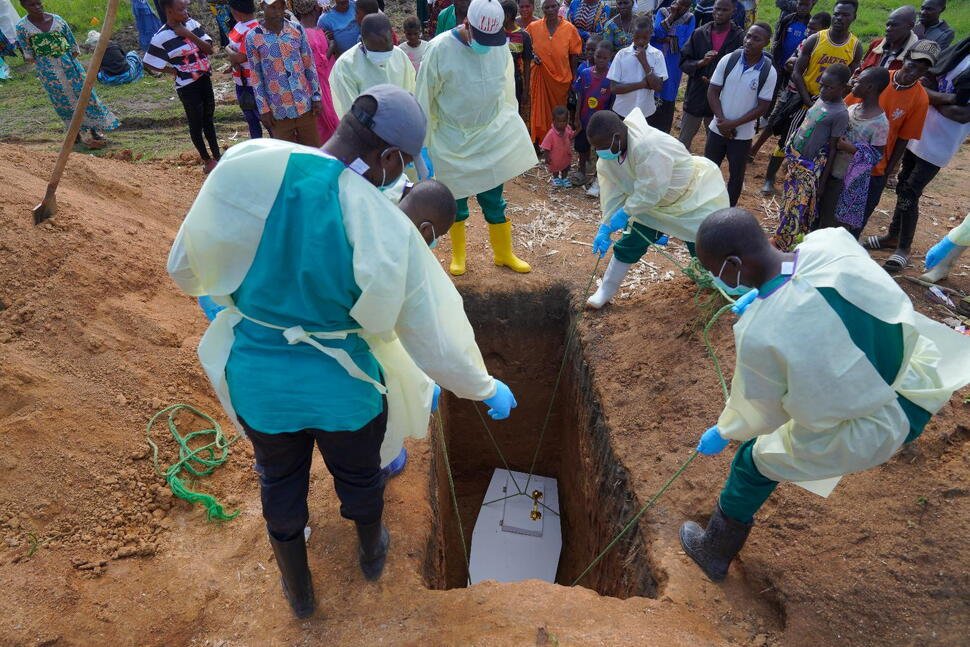
One-third of deaths occur at home or elsewhere in the community, where burials and other procedures are often conducted without specialist supervision, increasing the risk of transmission.
Health workers have repeatedly gone on strike over pay that is months overdue, sometimes leaving patients with confirmed infections without treatment.
Aid groups have also questioned how the response is being managed. Last month, the Africa CDC raised concerns about more than $700 million in Ebola aid that remains unaccounted for.
“A troubling disconnect between the considerable resources mobilised for the response and what is actually reaching patients, frontline workers, and communities continues,” said the humanitarian organization Doctors Without Borders, known by its French acronym MSF.
Children are particularly vulnerable to Ebola, especially those with preexisting conditions such as malnutrition, experts say.
Most children affected by the disease have not received specialized care, contributing to high death rates.
According to UNICEF, children accounted for 35% of deaths recorded through Nov. 4. Children under 5 accounted for 21% of all deaths, and nearly 72% of infected children in that age group have died.
Health workers face difficult conditions as Ebola prevention and containment measures clash with social and cultural practices.
Since the outbreak began, health workers have been attacked, some fatally, adding to the dangers of working in an already volatile region. Health facilities have also come under attack.
The outbreak has been concentrated in eastern Congo, particularly Ituri and North Kivu, where communities face both the epidemic and armed conflict.
Fighting between government forces and hundreds of rebel groups, including the Rwanda-backed M23, had already helped create one of the world’s most severe humanitarian crises. The Allied Democratic Forces, an Islamic State-affiliated rebel group, also attacks civilians.
The virus’s rapid spread has raised fears of wider transmission across Africa. Nigeria, Kenya and Uganda have confirmed cases, making this the most geographically widespread Ebola outbreak on record.
_____
For more on Africa and development: https://apnews.com/hub/africa-pulse
The Associated Press receives financial support for global health and development coverage in Africa from the Gates Foundation. The AP is solely responsible for all content. Find AP’s standards for working with philanthropies, a list of supporters and funded coverage areas at AP.org.
Copyright 2026 The Associated Press. All rights reserved. This material may not be published, broadcast, rewritten or redistributed.
