
You May Also Like


Robin Hood is one of the most enduring figures in folklore. He has appeared in every form of media imaginable. Michael Sarnoski, the writer/director of Pig and A Quiet Place: Day One, aims to deconstruct the legend of the outlaw.
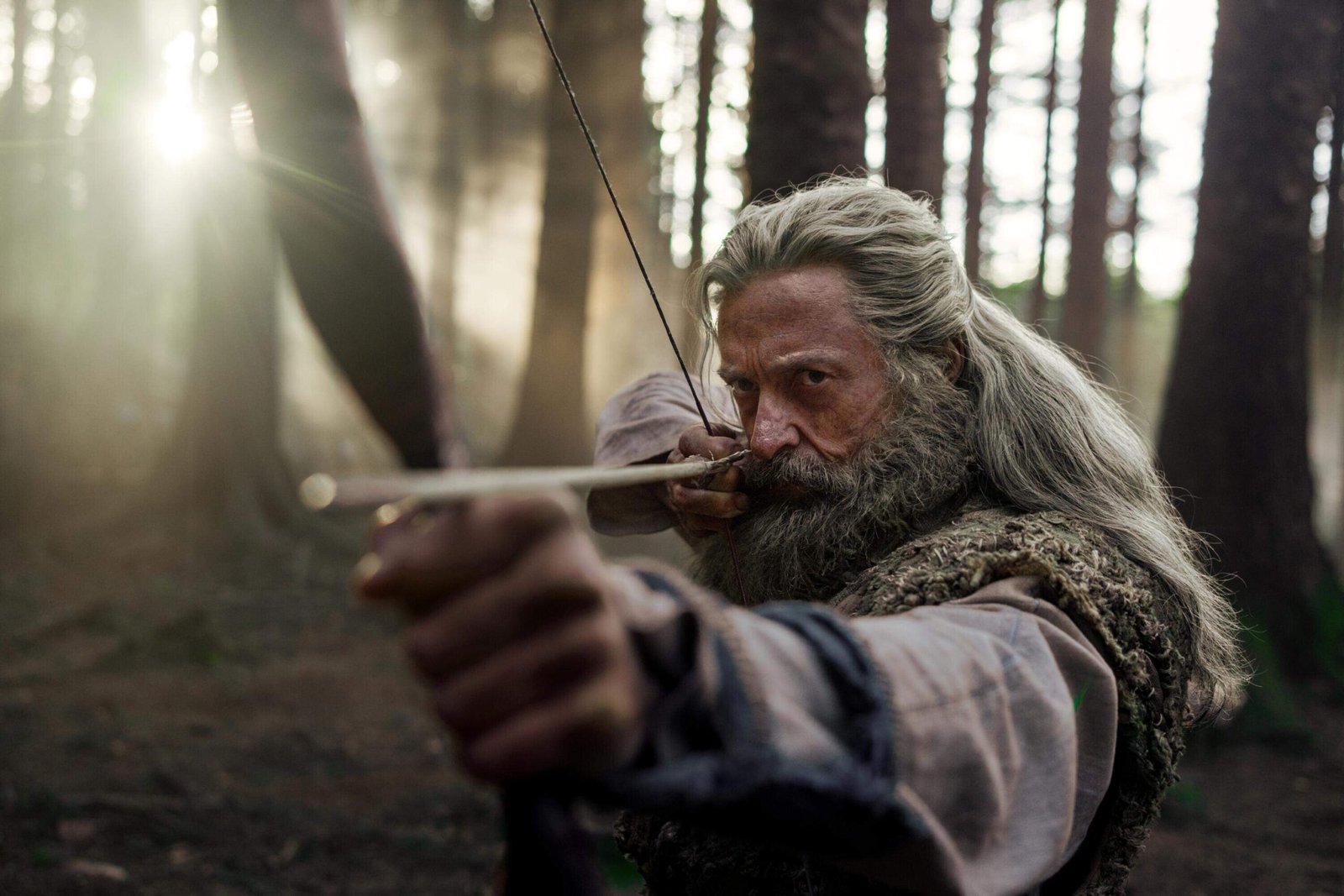
Robin Hood (Hugh Jackman) is an old outlaw who lives on the fringes of society. He has killed many people, and their kin seek revenge. Little John (Bill Skarsgård) seeks his old comrade’s help after his lands have been seized and his family held hostage. When Robin gets injured during the confrontation, Little John takes the man to a mythic nunnery renowned for their healing skills.
The Death of Robin Hood was a film that interested me. I liked Sarnoski’s previous film, his follow-up had an impressive cast, and Robin Hood was ripe for a deconstruction. The legend of Robin Hood has morphed over the centuries. Characters like Maid Marian and Friar Tuck were added over time; when the stories became more popular with nobility, they turned him into Robin of Locksley, a wronged nobleman. The film started with a lot of promise: it was dark and brooding as Robin fends off a young woman trying to settle a blood debt.
The first 30 minutes were terrific. It felt like a Robert Eggers tribute act, particularly to The Northman because of the cinematography, the action, and going to the roots of a legend. It shared elements of Unforgiven because it was about an old outlaw being forced into action for one last mission. The opening act set out the violent nature of this world where no one was spared, and there was a constant cycle of vengeance that meant nothing ever got resolved. It was wonderfully harsh.
Robin Hood was haunted by his past. He was always on guard and forced to kill if he wanted to survive. Jade Croot was just one of many people Robin Hood had to fend off. He scoffed at the idea of the stories of his heroic feats, similar to how Sandor Clegane felt about the virtues of knighthood in Game of Thrones.
Robin denied his past. He did so to protect himself, but also to escape from it. Even when Little John was reminiscing about his adventures with Robin, the old longbowman denied that it ever happened. It leads to the question: what was true? This was a film that was about myth-making because fact and fiction mixed together. This myth-making extended to the story about the nunnery because Sister Bridget (Jodie Comer) told Robin that people from all civilisations and religions have been drawn to the island. The Druids, Romans, and Christians all knew about the island’s healing powers.
Violence cast a long shadow over the film. The characters were affected by it in some way, whether as perpetrators or victims. The Leper (Murray Bartlett), who acted as the island’s protector, had a shady past, and Little Margaret (Faith Delaney) was so traumatised by her experience on the mainland that she became mute and defended herself with a knife. The island was more than a place for physical healing; it allowed for mental and spiritual repair. Robin grew close to Little Margaret; he got to act as a surrogate father. He taught the child how to use a bow, and she slowly opened up. It was a small act of redemption. The mix of violent past, surrogate fatherhood, and mythmaking did make The Death of Robin Hood feel like the medieval version of Logan. This was a film filled with talented actors who complemented each other. Delaney seems like she has a bright acting future.
However, The Death of Robin Hood was a film that was easy to admire but hard to love. After the violent first act, the film nearly grinds to a halt. Some of this was understandable because Robin needed time to heal and develop his connection to the nunnery. The film seemed like it was either going to be about Robin unable to escape his past or he was going to take The Leper’s place as the island’s protector and would need to take up the bow one last time. It might have been a little cliché, but it would have been more compelling if that actually happened. The story just dissipates. Sarnoski was trying to be subversive, but it ended up making an overly dull and dower film where narrative drive disappeared.
The Death of Robin Hood had a lot of potential to be a great reinterpretation of a legend, but it could not live up to the heights set by the first act, and the slow pacing lessened the impact of its ideas.


-
Direction -
Writing -
Acting -
Entertainment Value
Summary
There were plenty of things to like about the film but it was too slow and pondering for its own good.
