
Now Reading: Retirement doesn’t make your health benefits simpler. It makes them more complicated
- 01
Retirement doesn’t make your health benefits simpler. It makes them more complicated

Retirement doesn’t make your health benefits simpler. It makes them more complicated
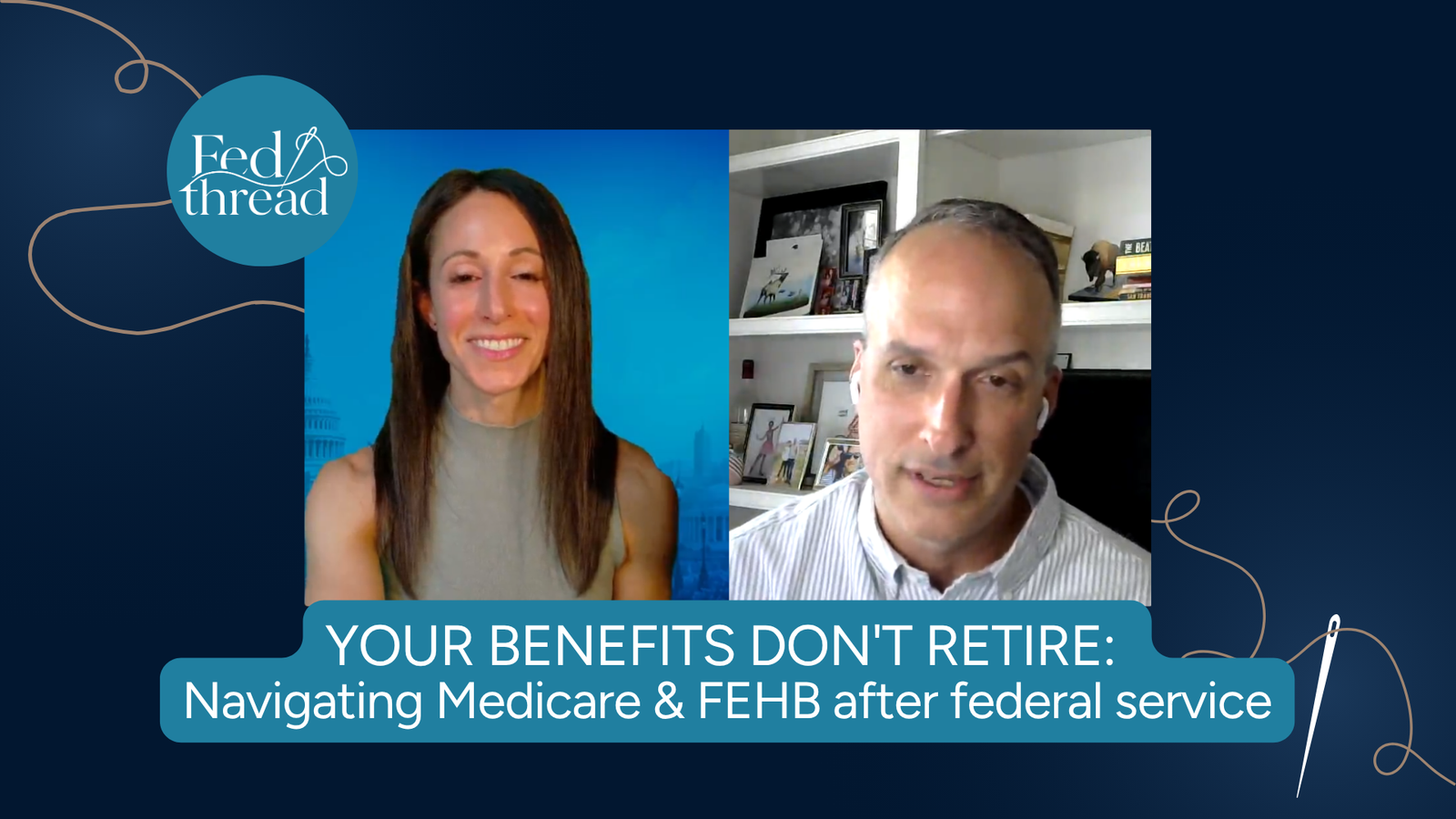
Many federal employees spend years researching the right FEHB plan before retirement, assuming the difficult decisions are finally behind them. But according to Kevin Moss, Director of Decision Support and Consumer Outreach at Consumer’s Checkbook, retirement introduces an entirely new layer of decisions involving Medicare.
The complexity doesn’t go away, Moss said. Instead, it gets harder.
On this episode of Fed Thread, we look at why that is, as well as how federal employees can better prepare themselves for these changes before they stop working.
Retirement affects more than your paycheck
One of the biggest surprises for new retirees has nothing to do with Medicare itself. It has to do with taxes. While employed, federal workers enjoy several tax advantages that reduce healthcare costs, many of which disappear after retirement.
For example, retirees no longer pay FEHB premiums with pre-tax dollars. Flexible Spending Accounts go away, because they’re tied to payroll deductions. And if you’re enrolled in a high-deductible health plan, your Health Savings Account becomes a Health Reimbursement Arrangement (HRA), limiting how you can use and grow those funds. These changes can make healthcare feel noticeably more expensive before Medicare even enters the picture.
The biggest retirement decision isn’t Medicare itself, it’s Part B
Although Medicare consists of Parts A through D, Moss says one choice generates more questions than any other: Should I enroll in Medicare Part B?
Unlike Part A, which is generally premium-free for people who’ve paid Medicare taxes for at least 10 years, Part B requires a monthly premium in addition to whatever you’re already paying for FEHB.
That leaves many retirees asking: Why pay for two health plans?
Well, the answer depends on your priorities, Moss explains. Adding Part B can dramatically reduce out-of-pocket medical costs, expand provider access, and open the door to Medicare Advantage options that reimburse part of your Part B premium. And for many retirees, the value isn’t purely financial.
“It’s peace of mind,” Moss says. Knowing you’re protected against catastrophic medical bills has real value, even if you don’t come out ahead on paper.
Waiting can be expensive
Timing also matters. On one hand, federal employees who continue working past age 65 generally don’t need to rush into Medicare. FEHB remains their primary insurance, and they’ll qualify for a Special Enrollment Period after retirement without late penalties.
But the situation is different for someone who retires before age 65. Once they become eligible for Medicare, delaying Part B beyond the enrollment window can trigger steep late-enrollment penalties that increase for every year they wait. And those penalties never go away, which can add up dramatically over the lifetime of an enrollee’s Medicare coverage.
Understanding your deadlines well before retirement can prevent an expensive mistake you’re unlikely to reverse.
Medicare Advantage isn’t just for private-sector retirees
Medicare Advantage, also known as Part C, has become increasingly popular among federal retirees, but not for the reasons many people assume.
Within FEHB, certain plans now offer Medicare Advantage options that can significantly lower overall healthcare costs by combining:
- Partial reimbursement of Medicare Part B premiums
- Minimal out-of-pocket medical expenses
- Additional benefits like over-the-counter allowances and wellness programs
While those savings can amount to thousands of dollars each year for some retirees, Moss cautions that lower costs come with tradeoffs.
Medicare Advantage plans typically rely more heavily upon prior authorization, meaning some services require plan approval before treatment. Though most requests are ultimately approved, the process can delay care or create additional administrative hurdles.
The encouraging news for federal retirees is that FEHB provides flexibility many Americans don’t have. Retirees enrolled in an FEHB-sponsored Medicare Advantage plan can generally opt back into their traditional FEHB coverage, if the arrangement no longer meets their needs. So they can try out Part C without closing the door on a solid fallback option.
Prescription drug coverage has changed, too
For years, Medicare Part D wasn’t especially relevant to most federal retirees, because FEHB prescription drug benefits were already considered strong. But recent reforms changed that.
Many FEHB carriers now offer integrated Medicare Part D prescription plans that cap annual out-of-pocket drug costs while preserving the coverage federal employees have come to expect, including access to many high-cost medications that would otherwise create significant financial exposure.
For retirees who rely on expensive specialty drugs, those changes can substantially reduce annual prescription costs. But there are exceptions: People living overseas, using manufacturer discount programs, or subject to Medicare’s income-related surcharges may decide Part D isn’t the right fit for their situation.
Every Open Season is still homework
If there was one message Moss returned to from our conversation the week prior, it was to not assume the best health plan this year will still be the best one for you next year. Premiums change. Provider networks shift. Prescription formularies evolve. New Medicare Advantage offerings appear while existing benefits change from year to year.
The same advice he gives active employees still applies in retirement: Review your options every Open Season, because the plan that’s saved you money for years may no longer be your best value. And for federal retirees, retirement doesn’t end complex healthcare decisions, it’s just when new ones begin.
Listen to the full episode of Fed Thread for Kevin Moss’s detailed walkthrough of Medicare Parts A through D, the benefits and drawbacks of Medicare Advantage, considerations for prescription drug coverage, enrollment timing caveats, and practical strategies to help federal employees make informed healthcare decisions before and after retirement.
Catch more conversations on podcast platforms, YouTube or on the Fed Thread hub page.
Copyright
© 2026 Federal News Network. All rights reserved. This website is not intended for users located within the European Economic Area.