
Now Reading: Recreational Boating Industry Showcases Marine Technology at NCSL Legislative Summit in Chicago
- 01
Recreational Boating Industry Showcases Marine Technology at NCSL Legislative Summit in Chicago

Recreational Boating Industry Showcases Marine Technology at NCSL Legislative Summit in Chicago

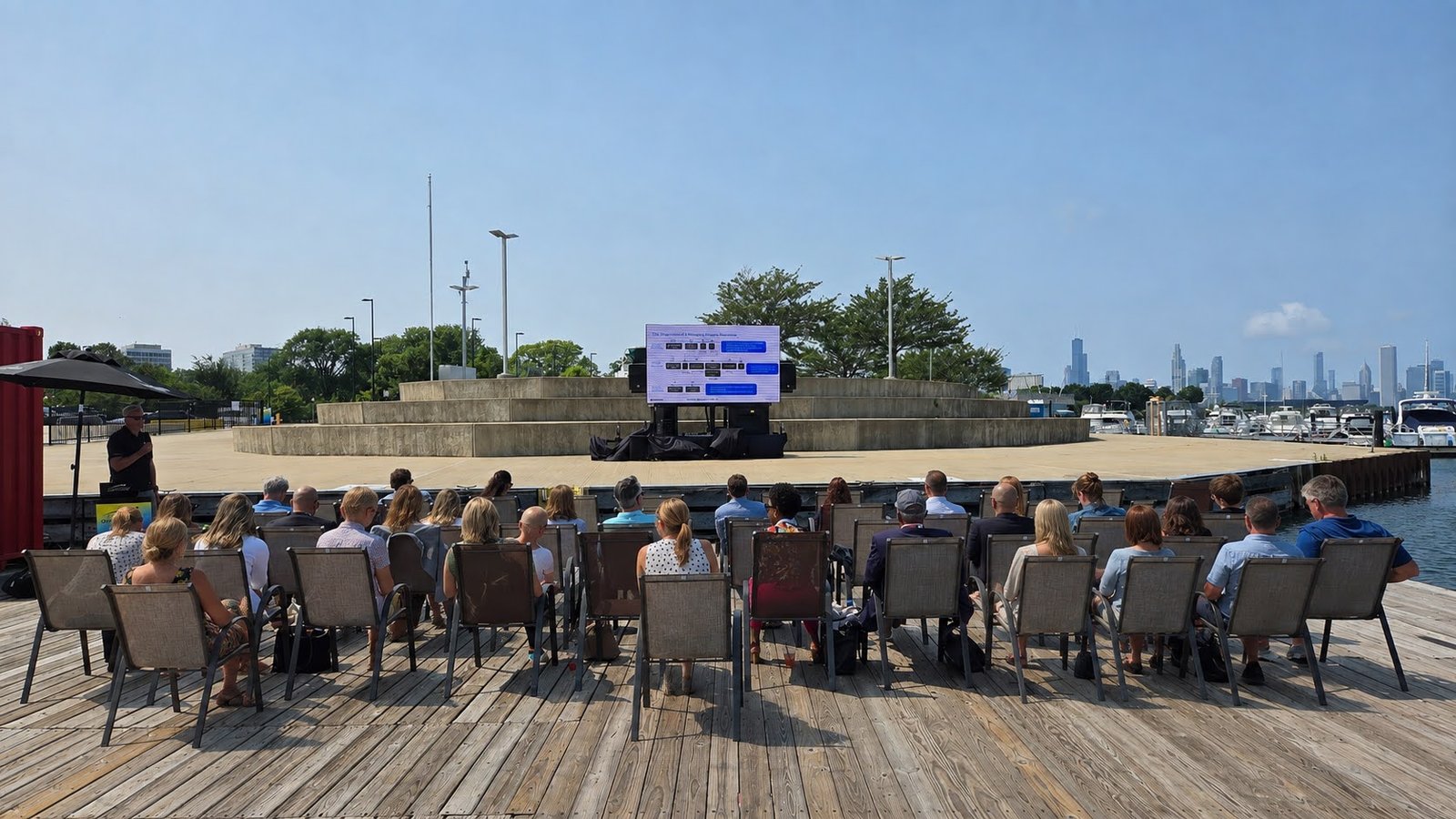
The recreational boating industry came together in Chicago, Illinois for a marine technology demonstration held during the National Conference of State Legislatures (NCSL) Legislative Summit for an industry-led event focused on the technologies and fuels that will help shape the future of boating.
Hosted at Suntex’s 31st Street Harbor, the event brought together state legislators from 10 states, as well as marine manufacturers, and industry leaders for an afternoon of presentations and on-water demonstrations. The program highlighted the many technologies that help reduce emissions from recreational boating while preserving the performance, safety, range, and reliability boaters expect.
The event featured a broad review of marine technology, including advanced propulsion systems and Strategic Maritime Fuels (SMFs), along with an examination of an all-of-the-above approach to reducing emissions within the industry. Following the presentations, guests experienced technologies firsthand through on-water demonstrations showcasing boats running on alternative fuel, such as renewable biobutanol.
Speakers included Kemba Solomon, Regulatory Affairs Manager, Yamaha Motor Corporation, USA; Eric Mueller, Director of Advanced Engineering, Mercury Marine; Gus Blakely, Sr. Advisor, Suzuki Marine USA; and Jeff Wasil, Vice President of Environmental Compliance and Marine Technology, NMMA. Together, they walked attendees through the range of technologies on display and the industry’s diverse approach to further lowering emissions and improving efficiency.

For recreational boating, this all-of-the-above approach is essential. Boats are different from cars. They operate in demanding marine environments, require high power over long periods of time, and often travel far from shore. That means the industry cannot rely on a single technology pathway. Instead, continued progress will depend on a mix of solutions, including cleaner fuels, electric propulsion, hybrid systems, hydrogen, advanced engines, and improved vessel design.
The event reflected the strength of the recreational boating sector and its commitment to responsible progress. Ninety-five percent of boats sold in the United States are made in the United States, and 93 percent of boat builders are small businesses. As a uniquely American industry, recreational boating is helping lead the way in developing technologies that support jobs, strengthen manufacturing, improve sustainability, and keep people on the water.
By bringing state legislators from across the country to the water for a firsthand look at these technologies, NMMA continues to demonstrate that the path forward is not theoretical. It is already underway on the water, powered by innovation, collaboration, and a shared commitment to the future of recreational boating.