
Now Reading: Will NHTSA Ground Cybercab?|Road to Autonomy — BigGo Finance
- 01
Will NHTSA Ground Cybercab?|Road to Autonomy — BigGo Finance

Will NHTSA Ground Cybercab?|Road to Autonomy — BigGo Finance
Technology Connectz2 hours ago7 Views
- Home
- Technology Connectz
- Will NHTSA Ground Cybercab?|Road to Autonomy — BigGo Finance
## The Self-Certification Gambit: Tesla’s Bid to Own the Robo-Taxi Supply Chain
On the eve of Tesla’s planned Cybercab rollout in Austin, Texas — with employee rides on public roads scheduled to begin as early as late August 2026, ahead of a public launch after an August 23rd promotional event — host Grayson Brulte and guest Rob Grant dissect what they call a “seminal moment” for the autonomous vehicle industry. Grant, who brings deep regulatory experience from his time at Cruise (where he worked on the T5 and Origin exemption petitions), frames the central question: Tesla is preparing to deploy a vehicle with no steering wheel and no pedals without seeking a federal NHTSA exemption, relying instead on the self-certification process that every conventional car on American roads already uses. If NHTSA accepts this, Tesla faces no production caps and no time limits — a structural advantage no competitor currently holds.
The stakes extend far beyond Austin. The episode argues that Tesla’s vertical integration — owning the vehicle design, the manufacturing line at Gigafactory Texas, the FSD software stack, the charging network, and the ride-hailing app — positions it to undercut every rival on cost per mile while outproducing them on volume. The conversation moves from the regulatory mechanics of self-certification to the political environment under the current administration, to the engineering advantages of Tesla’s “safety cocoon” design, and finally to the execution risks that could still derail the plan. The through-line is consistent: manufacturing is solved, software is the open question, and the NHTSA response to Tesla’s self-certification is the single signal that determines everything downstream.
## The Regulatory Chessboard: Self-Certification vs. Exemption
The core regulatory insight of the episode is that Tesla is pursuing a fundamentally different path than every other purpose-built AV competitor. Zoox, whose sedan also lacks steering wheel and pedals, was forced through the exemption petition process — a long, exhaustive review that was only granted in the weeks before this episode aired, and which carries built-in restrictions on production volume and vehicle usage duration. Tesla is attempting to bypass that entire apparatus.
Grant explains that America’s unique regulatory regime has no pre-approval or “type approval” mechanism. Instead, manufacturers self-certify — signing a sticker that declares the vehicle meets all Federal Motor Vehicle Safety Standards (FMVSS) — and NHTSA can only act after the fact if it has questions. This means Tesla can announce launch dates, throw events, and put vehicles on the road before NHTSA has any formal say.
> “NHTSA has no ability to stop Tesla from self-certifying its vehicle ahead of time… It’s only after the fact, if NHTSA has a question about it, could they take some action.”
The critical moment comes when the Cybercab actually enters service. Grant outlines three possible NHTSA responses: an investigation demanding evidence of FMVSS compliance, silence (which effectively green-lights mass production), or a request to slow down. The distinction matters because an exemption petition caps production; self-certification does not.
| Path | Vehicle | Regulatory Mechanism | Production Constraints |
|——|———|———————|———————-|
| Tesla Cybercab | No wheel, no pedals | Self-certification (planned) | None, if accepted |
| Zoox sedan | No wheel, no pedals | Exemption petition (granted ~Aug 2026) | Volume caps, time limits |
| Waymo Zeekr / Ioniq | Wheel and pedals present | Conventional self-certification | None, but not purpose-built |
Grant draws on his Cruise experience to illustrate how manufacturers can shrink their exemption asks over time. Cruise’s T5 petition (2018) requested 21 exemptions; by the time the Origin was submitted, that number had fallen to 11, as engineers and lawyers found ways to meet standards through alternative means. Tesla’s claim, by implication, is that it has found ways to meet all FMVSS standards without any exemptions — a claim NHTSA may or may not scrutinize.
## The Zoox Precedent: NHTSA’s Narrow Lens
A pivotal detail Grant surfaces from the Zoox petition — one he says “a few people have missed” — is that NHTSA explicitly declined to evaluate the autonomous driving system’s performance when assessing whether the Zoox sedan met an equivalent level of safety. The agency confined itself to the letter of the FMVSS standards: crash tests, electronic stability control, rearview mirror requirements, and similar mechanical criteria.
This is enormously consequential for Tesla. If NHTSA applies the same lens to a self-certification review, it will not ask whether FSD can handle a school bus or an unprotected left turn. It will only ask whether the vehicle physically meets the standards. Grant reads this as a signal that Tesla’s chances of successful self-certification “have just shot through the roof.”
> “There is nothing in the Federal Motor Vehicle Safety Standards that says I have to evaluate the ADS performance in order to determine either the Zoox petition… or the Tesla self-certification.”
Brulte adds a political dimension: by excluding ADS performance from review, NHTSA removes a vector for ideological bias — whether a reviewer prefers LiDAR over vision-only, or demands certain sensor configurations. Administrator Morrison’s NHTSA, in this telling, is sticking to a legalistic, standards-based review that happens to favor Tesla’s approach.
## The Political Wind: America-Made Advantage
Brulte raises the question of whether Tesla’s status as the maker of the “most American-made car” — citing JD Power data placing the Model 3 and Model Y at the top of that ranking — provides political cover. The timing is notable: 2026 marks the 250th anniversary of America, and Secretary Duffy has been touring the country promoting American manufacturing.
Grant’s assessment is nuanced. The “most American-made” framing “certainly helps” and “reduces the reasons for NHTSA to oppose,” but it is not the primary driver of a self-certification decision. The review, if it happens, will be legalistic — evidence against specific FMVSS standards. However, Grant acknowledges a secondary political layer: the current administration has been explicitly pro-AV, is rewriting regulations to accommodate new vehicle form factors, and may face political pressure not to interfere with Tesla’s rollout. The absence of Chinese LiDAR in Tesla’s vision-only approach also removes a supply-chain vulnerability that could otherwise invite scrutiny.
The risk of a future administration reversing course is real but bounded. Grant argues that once Cybercabs are operating safely for years, a new administration is unlikely to pull them off the road. However, new vehicle form factors introduced under a different administration could face fresh scrutiny, especially if NHTSA has by then adopted actual ADS performance standards — work it has already commissioned SAE to develop.
## The Manufacturing Moat: 125,000 Units and the Unboxed Line
Omega’s research, which Brulte cites, confirms that Tesla has installed annual Cybercab manufacturing capacity exceeding 125,000 units at Gigafactory Texas, with production already commenced as of Q2 2026. The unboxed assembly line tooling is not the binding constraint — a striking statement given that the line itself was a major engineering bet.
Grant contextualizes this number against the competition. Waymo’s contracted volumes with Geely and Hyundai, even combined, do not reach 125,000 units annually — and those are multi-year contracts, not annual capacity. Uber’s agreements with Rivian and others similarly fall short. Tesla can produce more purpose-built AVs in a year than its competitors have contracted for across their entire programs.
| Manufacturer/Operator | Vehicle Source | Annual Volume |
|———————-|—————|—————|
| Tesla | In-house, Gigafactory Texas | 125,000+ (installed capacity) |
| Waymo | Geely Zeekr, Hyundai Ioniq (contracted) | Below 125k combined |
| Uber partners | Rivian and others | Below 125k combined |
The cost advantage compounds the volume advantage. Grant notes the Cybercab’s bill of materials is estimated to be “considerably lower” than the Waymo Zeekr, which was itself considerably lower than the earlier Waymo I-PACE. Lower BOM plus higher volume plus full control of the manufacturing process gives Tesla pricing flexibility that no competitor can match — the ability to lower fares and reduce wait times simultaneously, which are the two consumer-facing metrics that drive adoption.
Brulte frames this as the completion of a vertical-integration strategy that even Apple doesn’t fully execute: Apple designs but Foxconn manufactures; Tesla designs, manufactures, writes the software, self-certifies, and operates the fleet. The Supercharger network — the largest in the United States — is an underappreciated asset that Tesla can leverage for depot and charging infrastructure, a point Grant flags as the next competitive battleground.
## The Software Bottleneck: FSD Maturity as the Real Gate
Omega’s risk assessment identifies the true constraint: not manufacturing tooling, but “unsupervised FSD software maturity, regulatory state and local approvals, and geofence expansion.” Grant agrees, noting that Tesla has “a little bit of a gap to close on the software side” relative to Waymo and Baidu, which he names as the current software leaders.
The specific challenges are enumerated: highway speeds, airport runs, multi-lane roads with unprotected left turns, school zones, and — critically for a vision-only system — camera occlusion, glare, and darkness. Tesla’s answer, per Grant, is to “out-compute” some of these issues, which is why the transition from the AI-4 chip to the AI-5 chip matters. The compute upgrade is not a luxury; it is the mechanism by which Tesla intends to close the software gap.
Grant also flags a category of risk that is easy to understate: state and local approvals. These are not just robo-taxi operating permits but also approvals for depots, charging infrastructure, and maintenance facilities. This is where the next phase of competition will move, and it is an area where Omega is building deep research coverage ahead of its fall launch.
## The Platform Question: Owning the App
The third leg of the stool, alongside manufacturing and software, is the ride-hailing platform. Grant is blunt about the competitive dynamics: most AV developers, including those currently partnered with Uber, ultimately want their own app. They do not want to split revenue with an aggregator or be subordinated within Uber’s priority system.
> “They all want to go with their own app. They do not ultimately want to have to split that take with Uber and become some part of Uber’s priority system.”
Grant concedes that building a successful aggregator app is harder than it looks — “if it was easy, everyone would have done it by now” — but he argues the moat is the least durable of the three legs. Tesla has set itself up to own all three: the platform (its own app), the software (FSD), and the manufacturing (Gigafactory Texas). Brulte adds the fourth operational leg — depots and infrastructure — where Tesla’s Supercharger network provides a head start.
## Execution Risk and Track Record
The episode closes on the question of whether Elon Musk can execute. Grant’s answer is grounded in history: Musk has faced this exact question before — with Tesla’s original vehicle production, with rockets, with satellites — and has answered it successfully each time. Brulte recalls the early Tesla days, when pre-Roadster prototypes were built on Mercedes platforms and one famously burned to the ground, seemingly ending the company. The pattern, in both men’s telling, is persistence through failure.
> “He is one of the men in history that you don’t bet against… The guy is fundamentally proven to the market time and time again. He is not going to give up until he solves it.”
The execution risk is real — Omega’s analysis is correct that software maturity and regulatory approvals, not manufacturing, are the binding constraints — but the track record of overcoming exactly these kinds of obstacles is strong.
## What to Watch
The single signal that matters most, per Grant, is the NHTSA response to Tesla’s self-certification once Cybercabs enter public service. Three scenarios:
1. **NHTSA investigates** — Tesla must produce evidence of FMVSS compliance; the process could slow or halt the rollout.
2. **NHTSA stays silent** — Tesla gains a de facto green light to scale production to whatever volume the Gigafactory can sustain.
3. **NHTSA asks questions but accepts** — A middle path that validates the approach with conditions.
Beyond that, the leading indicators to monitor in Austin are ride completion rates, vehicle fleet counts, and fleet utilization — the metrics Omega identifies as primary signals of robo-taxi disruption. If Tesla successfully expands beyond employee cohorts into general public commercial availability, Sunbelt municipal regulators and competing fleet operators will need to prepare for rapid operational scaling. The manufacturing capacity is already installed; the question is whether the software and the regulatory environment will let it run.
Tesla Cybercab launchNHTSA self-certificationRobo-taxi competitionAutonomous vehicle regulationManufacturing scale advantageFSD software maturityVertical integration strategyFleet operations and depots
The episode’s central finding is that the NHTSA audit query into Tesla’s Cybercab is a **compliance conflict, not a safety defect** — a narrow FMVSS self-certification review out of the Office of Vehicle Safety Compliance (OVSC), not a performance investigation out of the Office of Defect Investigations (ODI). Hosts Grayson Brulte and Rob Grant (both of Autonomy Markets / Omega) argue this distinction is the single most misread signal of the week, and that Tesla’s decision to self-certify rather than petition for an exemption — the route Zoox took — carries asymmetric upside (no manufacturing cap) against a moderate, non-zero downside (a forced retrofits or a Part 555 petition). Grant puts the odds of NHTSA rejecting Tesla’s self-certification at roughly 35%, i.e. more likely than not that Tesla prevails.
Two secondary signals anchor the episode. First, Waymo went live in Nashville with Lyft, the first market where a single Waymo-owned fleet is bookable through both the Waymo app and the Lyft app, with Lyft subsidiary Flexdrive running the physical operations layer out of an 80,000 sq ft facility. The structural novelty is the three-layer model — Waymo supplies AV stack and vehicles, Lyft supplies demand aggregation, Flexdrive supplies fleet ops — and the hosts flag an unanalyzed possibility that Waymo and Flexdrive could partner in future markets *without* Lyft. Second, Xpeng commissioned a dedicated humanoid robot production line in Guangzhou, with its Iron unit walking off the line under its own power — a manufacturing-readiness milestone, not a product reveal, signaling that humanoid competition is shifting from lab demos to automotive-grade mass production.
The through-line across all three signals is that **infrastructure and manufacturing capacity, not technical novelty, are becoming the deciding competitive variables** in autonomy — whether that is depot logistics, self-certification compliance staffing, or 80%-automated production lines.
—
## Signal 1 — NHTSA’s audit of the Cybercab is a certification question, not a safety verdict
NHTSA opened an audit query on **September 3, 2026**, covering an estimated **1,000 Cybercab vehicles**, hours after Tesla launched its commercial driverless Cybercab service and began charging for rides. Grant’s core correction to the week’s discourse: under **Title 49 CFR Part 571**, U.S. manufacturers have self-certified FMVSS compliance without NHTSA pre-approval for roughly 70 years — since NHTSA’s formation. The audit is the normal after-the-fact check, not an improvised response to being caught off guard.
The audit sits in the **Office of Vehicle Safety Compliance (OVSC)**, which handles certification and audit matters. Performance investigations — the kind that produce recalls over brakes or airbags — come out of the separate **Office of Defect Investigations (ODI)**. The question NHTSA is examining is *not* “is this car unsafe,” and it does not touch Tesla’s neural network perception testing or AV stack performance. It is whether Tesla’s self-certification depended on **unilaterally deciding certain FMVSS provisions simply don’t apply** to a vehicle with no steering wheel, no pedals, and no conventional mirrors — rather than seeking a formal exemption as Zoox did.
> “The question is whether Tesla’s self-certification depended on unilaterally deciding that certain federal motor vehicle safety standard provisions simply don’t apply to a vehicle with no manual controls, rather than seeking a formal exemption like Zoox did.”
Grant notes the audit will request extensive technical data and legal rationale: for each standard Tesla deemed inapplicable, why; where Tesla found alternative evidence to satisfy a standard, what that evidence is.
### Tesla’s route vs. Zoox’s route
| Dimension | Tesla (self-certification) | Zoox (Part 555 exemption petition) |
|—|—|—|
| Regulatory path | Self-certify FMVSS compliance under 49 CFR 571 | Formal exemption petition, granted |
| Manufacturing cap | None, if successful — can produce at Gigafactory volume | Subject to an exemption cap |
| Reporting burden | Lighter; no petition-style reporting requirements | Rigorous, frequent reporting to NHTSA |
| Precedent effect | If Tesla wins, Zoox could revisit self-certification to escape its cap | Zoox previously pursued self-certification ~3 years ago before pivoting |
| Operational status during review | No halt required; can continue commercial ops in Austin at current volume and geography | — |
Grant stresses this is **not unfair to Zoox** — Tesla made an affirmative choice to take a different route, and the arguments are not identical (Zoox’s audit queries were never public, though Grant has a sense of them from contacts). A different administration with different priorities is also a live variable.
### The risk register
Grant assigns roughly **35% probability** to the adverse outcome: NHTSA finding the self-certification unsupported and requiring a Part 555 exemption petition for the Austin fleet. If that happened after Tesla had produced, say, 4,000 Cybercabs, those vehicles could not be commercialized for fare — they might be usable for free under a special exemption (Grant cites **49 USC 30114**), as Zoox did for a period. Grant also notes Tesla could likely **retrofit** some vehicles with steering wheels and brake pedals, calling that a “nuclear option” rather than Plan A or B.
A second risk: **federal pedal-less and wheel-less rulemaking stays unfinished**, prolonging certification uncertainty. NHTSA has proposed rules including amendments to **FMVSS 111** (rear- and side-view mirrors) and **FMVSS 135** (braking standard, specifically to allow a vehicle without a brake pedal). If those rules finalize — Grant floats December 2026 — one of the audit’s questions dissolves because the vehicle becomes plainly compliant. Delay in rulemaking could delay the audit outcome, which is not fatal to Tesla operationally but is unkind to public-market valuation, since investors want certainty to project Cybercab rollout and margins.
“`mermaid
flowchart TD
A[“Tesla launches commercial driverless Cybercab service”] –> B[“NHTSA opens audit query AQ26002, Sept 3 2026”]
B –> C[“Office of Vehicle Safety Compliance reviews self-certification”]
C –> D{“Did Tesla unilaterally deem FMVSS provisions inapplicable?”}
D –>|”Supported by technical data and legal rationale”| E[“Self-certification upheld, no manufacturing cap”]
D –>|”Unsupported”| F[“Part 555 exemption petition required, fleet cannot charge fares”]
G[“Proposed FMVSS 111 and 135 rule changes”] –> C
G –>|”Finalized”| E
“`
### Why the engineering and commercial context matters
Brulte and Grant have both been inside the Cybercab and walked the factory. Brulte describes it as a **”safety cocoon”** built with gigacasting, and contrasts it with Zoox vehicles, which are **upfitted rather than factory-built**. Grant’s read: the audit is narrow by design and stated administration purpose, so it likely will not expand to weigh either the perception system’s occlusion behavior (a potential negative) or the manufacturing safety cocoon (a potential positive). He also cautions that a longer review is not necessarily bad news.
On the commercial side, Grant argues Tesla is deliberately getting the product into as many hands as possible — including **disabled and mobility-challenged riders and people relying on cheap transport as an economic ladder** — because it is very hard for regulators to unwind a beloved product. Brulte cites field reporting by **David Moss** (Autonomy Markets’ special field reporter), who rode a Cybercab in Austin with his blind father: the door did not close on him, the vehicle’s height lines up well for wheelchair-to-vehicle transfer, and the interior includes braille. Brulte notes Moss ended up on the front page of the *New York Post* for unrelated reasons.
Grant also reads Tesla’s public posture — the call for fleet owners to help grow the robotaxi network, the volume of inbound interest — as **confidence**, and says Omega has told clients since early 2026 that Tesla would self-certify. He expects the outcome to push NHTSA toward **more robust reporting requirements** for self-certified Level 4 vehicles, since the biggest practical gap between the petition and self-certification paths is reporting frequency and transparency, not just legal status.
> “The signal here is a compliance conflict, not a safety defect. AQ26002 is a narrow FMVSS self-certification audit on the control-free Cybercab, not a coordinated federal stand down or an autonomy architecture probe.”
Omega’s take further holds that Tesla will **freeze the Cybercab hardware roadmap** and address AQ26002 through expanded self-certification data and compliance staffing rather than manual-override retrofits.
—
## Signal 2 — Waymo and Lyft launch Nashville, and Flexdrive is the real story
Waymo went live in Nashville as the **first market where fully autonomous Waymos are bookable through both the Waymo app and the Lyft app**. Riders requesting standard Lyft options — standard, priority pickup, wait and save, extra comfort — are dynamically matched with a driverless Waymo at no extra cost if their route falls in Waymo’s service zone, with the ability to opt out. Grant, a former Lyft employee, notes the personal connection.
The structural signal is a **three-layer model**:
| Layer | Provider | Function |
|—|—|—|
| AV stack + vehicles | Waymo | Owns vehicles, supplies autonomous driving technology, retains core trip economics |
| Demand aggregation | Lyft | Consumer platform, dynamic dispatch across both apps |
| Physical operations | Flexdrive (Lyft subsidiary) | Fleet maintenance, cleaning, charging, depot logistics |
Flexdrive runs operations out of an **80,000 sq ft Nashville facility**, managing a fleet of **over 100 vehicles across roughly 60 square miles**, following Waymo’s independent Nashville launch in **April 2026**. Omega’s read on the economics: Lyft operates on a **dispatch and fleet management fee**, while Waymo retains vehicle ownership and core autonomous trip economics — Waymo captures fare minus a platform fee, Lyft retains a service-layer fee tied to Flexdrive’s fleet operations. No exact percentage split was disclosed in Lyft’s 10-Q or 10-K, which framed the deal as network expansion.
### Why this differs from Uber–Waymo
Grant’s core distinction: **Lyft is positioning itself less as a rival to Waymo and more as the central operations layer underneath it** — a hybrid network bet where AVs and human drivers coexist rather than one replacing the other. Uber and Waymo have had friction over economics and exclusivity; Uber has advocated for rules requiring hybrid human networks and has pushed AV stack developers onto its single app. Lyft, by contrast, is emphasizing Flexdrive, with CEO David Risher talking it up on X and Lyft publishing blog posts positioning it as a strategic asset — one Uber does not have. Grant’s analogy: Waymo is the manufacturer, Lyft is the tier-one supplier, a symbiotic relationship.
Brulte flags an unanalyzed possibility: did Waymo go to Lyft for Flexdrive specifically, and Lyft agree on condition that vehicles also appear on the Lyft app? He sees signals that **Waymo and Flexdrive could partner in new markets without Lyft** — something to watch. Grant agrees, framing it as Waymo running a **bake-off among fleet operators** (Element and Flexdrive among them), similar to how Uber is testing AV stack developers. Both hosts argue fleet operations uniformity correlates with better margins, and that too many operating styles across too many cities is a margin-compression certainty.
### Risks
– **Lyft–Uber competition commoditizes demand aggregation**, constraining Lyft’s logistics leverage. Grant’s read: both platforms lose leverage if aggregation commoditizes, but Lyft loses more because it starts with less leverage than Uber.
– **Waymo gets big enough to reset terms.** Grant: “Waymo will take any opportunity to reset the terms in its favor” and “drives a hard bargain with almost all of their partners.” Brulte adds that Waymo is the company everyone wants to dance with — more inbound questions than any company outside Tesla — and notes its bond offering will likely be oversubscribed.
> “The Lyft-Waymo signal is an operational scale through separation of stack and operations… This partner-absorbed CapEx plus dual app dispatch reframes the launch slip to September 2026 as the build-out is outpacing, not a structural failure.”
Brulte notes a Nashville Waymo field report is coming to the Autonomy Markets YouTube channel.
—
## Signal 3 — Xpeng brings automotive-grade manufacturing to humanoids
Xpeng commissioned a **dedicated humanoid robot production facility in Guangzhou**, and the first production-line **Iron unit walked off the line under its own power**. Grant describes the accompanying video as dramatically lit, Kubrick-esque, and notes this was **not a product reveal** — the Iron unit has been promoted before. The signal is the *how*, not the *what*: Xpeng is demonstrating it can build humanoids the way it builds cars, at automotive-grade quality and volume, with **80% of the build automated**.
Grant frames this as a maturation point for the whole sector: it is no longer satisfactory to have a prototype. Competitors will now be judged on manufacturing capability — how many units, at what quality, on what process, and whether they must spend capital to build a line. Xpeng’s implicit message: it can shift between its automotive line and its humanoid line, use humanoids to fill in some of the remaining 20%, and out-produce rivals before they can sign a letter of intent for a pilot.
### Iron unit technical specifications
| Spec | Detail |
|—|—|
| Degrees of freedom | 76 body-wide, 21 per hand |
| Compute | 3 proprietary Turing AI chips, up to 2,250 TOPS |
| AI model | Xpeng’s physical IAI foundation model, on-device |
| Implications | No teleoperation, very low latency, no reliance on external connectivity |
| Production timeline | Mass production by end of 2026, ramping 2027–2028 |
Omega uncovered that Xpeng’s robotics unit raised **$900 million on August 24, 2026**, at a **$6.3 billion post-money valuation** — the largest single-round private raise in the Chinese embodied AI sector to date. Brulte reads this as a message to the global stage: they have the money, the valuation, and the manufacturing base.
### Risk
**Vehicle margin pressure and a Q2 net loss of RMB 1.34 billion** constrain development capacity and capital spend for the robotics unit. Grant’s interpretation: when a company has two large growth curves and the mothership is losing money, it may have to choose which one to push — the outside raise helps, but the parent still has to keep the lights on.
> “The signal in this Xpeng release is a manufacturing readiness milestone, not a product reveal. The company is proving it can build humanoids the way it builds cars. Xpeng is betting that mass production quality control, not novelty, is what separates a lab demo from a real second business line.”
—
## Cross-theme synthesis and what to watch
All three signals converge on the same thesis: **the autonomy economy’s binding constraint has shifted from technical capability to industrial and operational capacity.** Tesla’s Cybercab question is about compliance process and manufacturing volume, not perception performance. Waymo’s Nashville launch is about depot logistics, fleet management fees, and who owns the operations layer. Xpeng’s humanoid milestone is explicitly about production lines and automation rates rather than robot specs. In each case, the winner is the party that can scale physical operations — and the loser is the party that can only demonstrate a demo.
Three unresolved tensions are worth tracking. First, **the reporting asymmetry**: if Tesla wins self-certification, it avoids the rigorous reporting regime Zoox operates under, and Grant expects NHTSA to respond by tightening reporting requirements for self-certified Level 4 vehicles generally — an information gap the agency “doesn’t like.” Second, **the Flexdrive question**: whether Waymo’s fleet-operator bake-off ends with Flexdrive as a default partner independent of the Lyft demand platform, which would restructure the economics of every future Waymo market. Third, **the rulemaking timing wild card**: if FMVSS 111 and 135 amendments finalize around December 2026, they could moot part of the Cybercab audit — but delay could extend certification uncertainty into Tesla’s public-market narrative. Grant’s closing odds stand at roughly 65/35 in Tesla’s favor, with the caveat that a longer review is not automatically a worse one.
NHTSA Cybercab auditTesla self-certification strategyWaymo Lyft Nashville launchFlexdrive fleet operationsXpeng humanoid productionRobotaxi infrastructure investmentFMVSS regulatory exemptionsAutonomous vehicle commercializationHumanoid robot manufacturing
The autonomous vehicle industry has reached an inflection point where regulatory strategy, manufacturing scale, and software maturity are converging into a decisive competitive race. In this episode, host Grayson Brulte and guest Rob Grant — a former Cruise regulatory executive who now co-leads the Omega intelligence platform — dissect three major signals: Tesla’s imminent CyberCab launch in Austin, Waymo’s expansion across California, and SoftBank’s $200 million bet on construction autonomy. The central finding: Tesla’s decision to pursue NHTSA self-certification rather than an exemption petition could give it an unprecedented manufacturing and regulatory advantage, while Waymo’s years-long accumulation of California permits has created a moat measured in years, not months. The episode’s deeper argument is that the competitive landscape is shifting from “who has the best software” to “who controls the full stack — vehicle manufacturing, software, and regulatory permission.”
## Tesla’s CyberCab: The Self-Certification Gambit
Tesla is preparing to launch its steering-wheel-free, pedal-free CyberCab in Austin, Texas, with deployment targeted as early as late August 2026. The operational plan follows a staged sequence: employee rides on public municipal roads first, then integration into the broader Austin robo-taxi service. Ground preparations include emergency response training with local first responders, public road test drives conducted since June, and a promotional event running through August 23rd. The company has also invited public submissions for ride access, with enthusiasts creating elaborate mail-in designs reminiscent of vintage Grateful Dead ticket requests.
The critical regulatory question centers on whether Tesla will self-certify the CyberCab under federal motor vehicle safety standards rather than seek an exemption petition like Zoox did. Rob Grant explains the significance:
> “If NHTSA doesn’t say a word, that’s the answer in and of itself. It says nothing — Tesla can go forth and produce as many cyber cabs as it feels comfortable to do. And that would be a transformational moment for Elon’s grand plans.”
The distinction matters because self-certification carries no caps on production volume or duration of use, whereas Zoox’s exemption petition — granted just weeks ago — subjects the company to restrictions on how many vehicles it can produce and how long they can operate. Grant notes that when he worked at Cruise, the company initially submitted a petition with 21 exemption requests for its T5 vehicle, then withdrew it and resubmitted for the Origin with only 11 exemptions after finding ways to meet standards through alternative means. This precedent suggests Tesla may have similarly found ways to meet federal standards without exemptions.
A key detail from the Zoox petition itself strengthens Tesla’s position: NHTSA explicitly stated it would not evaluate ADS (automated driving system) performance in determining whether Zoox’s vehicle met an equivalent level of safety. Grant interprets this as a signal that NHTSA will confine its review to whether Tesla meets each federal motor vehicle safety standard by the letter of the law, not whether the autonomous software performs well in real-world scenarios.
| Regulatory Path | Production Caps | Duration Limits | Precedent |
|—|—|—|—|
| NHTSA Exemption Petition (Zoox) | Yes — volume restricted | Yes — time-limited | Zoox sedan, granted ~August 2026 |
| Self-Certification (Tesla) | None | None | Standard for all US vehicles since 1968 |
Grant also notes that Tesla’s status as the manufacturer of the most American-made vehicles (Model 3 and Model Y, per JD Power) could provide political cover, though he emphasizes the primary review will be legalistic — examining whether Tesla’s evidence meets each standard’s specific parameters. The engineering advantage is real: Tesla has years of self-certification experience across its existing fleet, and the CyberCab’s reinforced steel design resembles a “safety cocoon” that should perform well in crash testing.
## The Manufacturing Moat: 125,000 Units and Counting
Omega’s research uncovered that Tesla has confirmed installed annual CyberCab manufacturing capacity exceeding 125,000 units at Gigafactory Texas, with production already commenced as of Q2 2026. This figure dwarfs what competitors have contracted for:
| Company | Vehicle Supply Strategy | Scale |
|—|—|—|
| Tesla | In-house manufacturing, unboxed assembly line | 125,000+ units/year |
| Waymo | Contracted with Geely and Hyundai | Multi-year contracts, below Tesla’s annual figure |
| Uber partners (Rivian, others) | Multiple agreements | Combined, barely exceeds Tesla’s annual number |
The unboxed assembly line tooling is not the binding constraint, according to Omega’s analysis. Instead, unsupervised FSD software maturity, regulatory state and local approvals, and geofence expansion are the primary bottlenecks. Grant emphasizes the strategic implications:
> “There are three legs to this stool — the platform, the software, and the manufacturing. If Tesla is able to do what no other manufacturer can do right now, it’s a huge victory. They have taken the unabashed lead on the manufacturing side over anybody else.”
Tesla’s vertical integration extends beyond manufacturing: it controls the software stack, the charging network (the largest in the US), and the app platform. Grant notes that most AV developers privately want to own their own app rather than split revenue with Uber, making Tesla’s platform control a significant long-term advantage. The estimated build cost for the CyberCab is considerably lower than the Waymo Zeekr, which itself was lower than the Waymo I-PACE — a cost advantage that compounds with scale.
## Waymo’s California Moat: Seven Permits, Two Regulators, Years of Lead
Waymo received approval this week to expand its commercial driverless ride-hailing service across 18 California counties, covering approximately two-thirds of the state’s 40 million residents — roughly 27 million people. The expansion extends from San Diego in the south to Sacramento in the north, including suburban and rural areas like Sonoma County wine country and the Central Valley agricultural region.
The scale of Waymo’s regulatory achievement is best understood through California’s byzantine permitting structure. The state requires seven separate permits across two regulators — the DMV (which reviews vehicle safety) and the California Public Utilities Commission (CPUC, which reviews passenger transportation services). Critically, these permits are not one-time approvals; companies must reapply as they expand geography. Waymo has been in front of these regulators 11-12 times since 2018, accumulating approvals incrementally.
| Permit Layer | Regulator | Focus |
|—|—|—|
| Testing permits | DMV | Vehicle safety |
| Deployment permits | DMV | Driverless operation authorization |
| Commercial permits | CPUC | Paid passenger service |
| Geographic expansions | Both | Each new county requires re-application |
Two notable features of this week’s approval: First, the CPUC granted a phased rollout framework, explicitly authorizing Waymo to expand into areas where it is not yet internally ready to launch — a departure from past practice where approval came only when launch was imminent. Second, the approval included authorization for Waymo’s new vehicle form factor (the Zeekr) to charge for rides across all previously approved territories, ending the free promotional rides California residents had been enjoying.
Grant’s assessment of the competitive implications is stark:
> “Waymo’s lead in California is measured in years, not in days, not in months. There is not a single operator doing any rides [besides Waymo]. All 1.4 million rides a month are Waymo rides. There is not a single operator doing any rides.”
Zoox, despite receiving its federal exemption, has not yet obtained state-level commercial deployment authority even in San Francisco. The company holds three or four of the seven permits but lacks the driverless deployment permit. Grant suggests Zoox should consider a strategic gambit: applying for San Francisco and Los Angeles simultaneously, accepting a 5-7 month timeline rather than sequential 4-6 month approvals totaling 12 months.
## The Political Risk: What a Change in Administration Could Mean
Both Tesla and Waymo face political uncertainty that could reshape their California positions. Grant walks through the institutional structure: CPUC commissioners are appointed by the governor but serve staggered terms that cross elections, making them less susceptible to immediate political turnover. However, the California legislature could override both regulators by passing a law requiring a safety driver in all AVs — a move that would effectively kill driverless operations regardless of CPUC rules.
The union threat is real, particularly in the heavy-duty trucking sector. Grant notes that the DMV recently issued two autonomous trucking permits to Kodiak and Aurora, and unions are likely to target this segment first. If successful there, they would likely pivot to light-duty vehicles.
> “If the legislature could easily tell the DMV, you know what, no more AVs, no more driverless vehicles. There has to be somebody in the car. And they could do that if they wanted to.”
For companies deciding where to invest, Grant offers a framework based on two questions: how important is near-term growth demonstration, and what is the financial runway? His advice:
– **Players without deep pockets** (most of Uber’s partners): Skip California entirely. Go to Arizona, Texas, or Florida where permitting is faster and costs are lower.
– **Players with patient capital** (Zoox, backed by Amazon): Invest in California’s two biggest markets — San Francisco and Los Angeles — but don’t chase the full state.
– **Tesla**: If self-certification succeeds, apply for the entire state at once, even if it takes 12 months. That beats Waymo’s seven-year incremental process.
The CPUC’s phased rollout framework may have inadvertently opened a door for faster entry. Grant observes that since the framework explicitly allows authorization before internal readiness, competitors could argue they should be permitted to apply for broad geographic coverage in a single application rather than piecemeal.
## SoftBank’s $200 Million Bet on Construction Autonomy
SoftBank’s Masayoshi Son invested $200 million in Gravis Robotics, an ETH Zurich spin-out, in the largest Series A transaction in construction robotics history. The investment values the Swiss company at approximately $1 billion, making it Europe’s newest robotics unicorn. Gravis develops a hardware retrofit system and co-pilot software that bolts onto legacy heavy machinery — excavators and other equipment from Caterpillar, Komatsu, Volvo, and John Deere.
The investment follows a $23 million seed round in November 2025 and values Gravis at a software multiple rather than an industrial hardware multiple. Grant interprets this as Masa signaling that the retrofit model is eminently scalable:
> “This valuation from Masa is basically Masa saying that this is a software multiple narrative for this industry, not an industrial hardware narrative.”
The retrofit model is architecturally significant because it monetizes the existing $1 trillion installed base of heavy machinery rather than requiring fleet replacement. This compresses the sales cycle and reduces capital intensity for customers — a critical advantage when replacing ten pieces of heavy mining equipment can cost $3-8 million, versus $300,000 for ten CyberCabs.
Gravis’s distribution strategy targets rental companies rather than direct deployment partnerships, allowing the company to demonstrate that its technology works across multiple OEM brands simultaneously. This approach also positions Gravis to potentially become a service network partner for larger customers or incumbents.
| Competitor | Funding | Approach |
|—|—|—|
| Gravis Robotics | $200M Series A (SoftBank) | Retrofit hardware + software, rental distribution |
| Bedrock Robotics | $350M+ total | Direct retrofit competitor |
| Built Robotics | Undisclosed | Direct retrofit competitor |
| Caterpillar, Komatsu, Volvo CE | Internal R&D | OEM-native autonomy, 800+ autonomous machines in field |
The competitive risks are significant. OEMs with 800+ autonomous machines already in the field could commoditize the retrofit wedge through native autonomy offerings. Legal battles over warranty and lease terms are likely, particularly around hydraulic system modifications — echoing the right-to-repair fights seen with John Deere tractors. Grant also flags a headcount bottleneck: scaling from 75 employees to a deployment-capable team across the EU and North America simultaneously will be a binding constraint on conversion speed.
## Zurich as an Emerging Autonomy Hub
The Gravis investment highlights Zurich’s growing importance as an autonomy center. The city hosts Google’s largest international engineering hub (second only to Mountain View), and Omega recently uncovered that Waymo filed to do business in Zurich. Baidu also maintains a presence there. The Swiss president’s recent visit to Mountain View signaled interest in attracting more autonomy companies.
Grant distinguishes Zurich’s role from other autonomy hubs:
> “Dubai and Riyadh are important signals for growth metrics and expansion possibilities. Zurich obviously has that, but it is also more of a technical hub to watch. It’s really about the talent that’s there.”
The concentration of talent in Zurich — spanning large language models, world models, and end-to-end models — creates conditions for new company formation. Grant predicts more companies like Gravis will emerge from the region as engineers leave established firms to start ventures.
## Cross-theme Synthesis
The three signals converge on a single insight: the autonomy industry is entering a period where regulatory strategy and manufacturing scale are becoming as important as software quality. Tesla’s self-certification gambit, if successful, would remove the last structural barrier to mass production — a position no competitor can match. Waymo’s California moat, built through years of patient regulatory accumulation, protects its dominant position in the largest US market but cannot prevent Tesla from entering if the federal path opens. And SoftBank’s construction bet signals that the retrofit model — monetizing existing assets rather than requiring replacement — is becoming the preferred path to scale across heavy industry.
The unresolved tension is political. A change in administration — either in Washington or Sacramento — could reverse regulatory gains. The unions’ focus on autonomous trucking may be a precursor to broader rollback attempts. For investors and operators, the metrics to watch are concrete: Tesla’s ride completion rates and fleet utilization in Austin, Waymo’s time-to-first-paid-ride in Sacramento and San Diego, and whether NHTSA investigates Tesla’s self-certification. The next 90 days will likely determine whether Tesla’s manufacturing advantage translates into market dominance or remains constrained by regulatory and software maturity gaps.
Tesla CyberCab launchWaymo California expansionAutonomous vehicle regulationSoftBank Gravis Robotics investmentConstruction autonomy retrofitNHTSA self-certificationRoboTaxi manufacturing scaleCalifornia AV permitting processZurich autonomy hubCompetitive AV landscape
# Cybercab Day Arrives as Robotaxis Become Bankable
## The Launch That Wasn’t Supposed to Happen Yet
On September 5, 2026, the hosts of Autonomy Markets — Walter Piecyk, a veteran telecom and technology analyst, and Grayson Brulte, who covers the autonomy economy — opened their episode with a striking observation: Tesla’s Cybercab launch party at Austin City Limits had happened, but the real story was not the event itself. It was that Tesla had put roughly 30 purpose-built, steering-wheel-less, brake-pedal-less vehicles into commercial paid service across Austin’s full operational design domain (ODD) — not limited to a handful of predefined locations like Zoox’s Las Vegas service, and without the intersection-stopping incidents that have plagued other launches.
The hosts framed this as a genuinely historic milestone for autonomy in the United States, even as they acknowledged the coordinated media pushback that accompanied it. Tesla disclosed that its fleet had accumulated one million unsupervised robotaxi miles — a figure the hosts noted is far below Waymo’s 200 million, but which represents a six-week surge of roughly 620,000 additional miles since safety monitors were removed. The Cybercab fleet is now open to the general public in Austin as of 2:00 PM CST on the episode’s publish date, with the hosts planning to ride in the vehicles themselves within weeks.
The episode’s central argument: Tesla’s entry into commercial robotaxi service — combined with Waymo’s accelerating expansion, Zoox’s airport breakthrough, and the debt markets opening for autonomy companies — marks the moment robotaxis became bankable. The competitive dynamics, regulatory responses, and capital flows described in this episode will define the next phase of the autonomy economy.
## Tesla Cybercab: Commercial Reality vs. Coordinated Skepticism
### The Launch Event and Its Context
Tesla held its Cybercab launch event at Austin City Limits, but neither Elon Musk nor Willie Nelson appeared. The hosts noted the absence with characteristic dry humor — Brulte had hoped Nelson would emerge as the first rider. Instead, the event featured influencer rides, including one taken by their colleague David Moss and his father, and a press-release cannon from competitors timed to the launch.
The hosts were emphatic that the event’s significance transcended the influencer spectacle. Piecyk observed that the Cybercab is operating across the entire ODD — “it’ll go wherever you want it to go” — unlike Zoox’s Las Vegas service, which is limited to specific locations. The vehicles are also visibly distinctive: gold-colored, two-seater cars that stand out in Austin traffic. This directly contradicts an earlier episode where the hosts discussed the benefits of autonomous vehicles blending in with regular traffic.
### The NHTSA Investigation Controversy
A significant portion of the episode addressed the NHTSA probe into Tesla’s self-certification of the Cybercab — specifically whether a vehicle without a steering wheel or pedals meets federal safety standards. The hosts were sharply critical of how this was framed in the market, particularly by prominent tech investor Gene Munster, who tweeted that “NHTSA needs a wake-up call” for “raining on the Tesla Cybercab launch.”
Brulte’s response was forceful:
> “NHTSA’s merely doing their job. NHTSA does not need a wake-up call, point blank. NHTSA is doing their job, and I commend Administrator Morrison and Secretary Duffy for putting autonomy front and center… Mr. Munster, if you go back three and a half years to the Biden administration, this vehicle would never be on the road.”
The hosts emphasized that NHTSA’s investigation is standard procedure for a new vehicle type and that Administrator Morrison has been publicly pro-innovation. They noted the investigation could take weeks or months with no public commentary, and that this is how the process is supposed to work. Piecyk added that NHTSA is effectively doing the entire industry a favor by ensuring safety standards are met — a single major accident at any autonomy company would set back the entire sector.
### The LIDAR Debate
The hosts engaged in a spirited debate about Tesla’s camera-only approach versus the LIDAR-equipped vehicles used by competitors. Brulte, responding to what he described as “outlandish emails” insisting that LIDAR is mandatory, made an emphatic statement that required an apology to Piecyk’s mother for language. Piecyk pushed back on Brulte’s absolutism, noting that he has 9,000 miles on his own Tesla FSD and that the debate should remain open:
> “For anyone claiming you can’t do LIDAR, or we can’t do without LIDAR… I’ve got 9,000 miles I think now on my FSD. Um, versus those with LIDAR where… No disrespect to Wayve but they have LIDAR and in the first ride that someone did, they had two interventions on one trip. I never had two interventions in any trip that we took in a Tesla.”
Piecyk offered a framework for thinking about the safety question: even if LIDAR hypothetically adds a marginal safety increment over cameras, the relevant comparison is whether the robotaxi is safer than a human driver — and both approaches clear that bar. He noted that people routinely put their children in cars that are not the highest-rated for safety, so the “would you put your child in it” argument is not dispositive.
### Fleet Ownership and the Franchise Question
Beyond the launch itself, Tesla posted a page on its website inviting individuals and companies to submit their names and express interest in purchasing Cybercab fleets, mobility hubs, or infrastructure. Brulte called this “a bigger moment than the influencer launch,” interpreting it as a signal that Tesla is exploring a franchise model for robotaxi deployment.
Piecyk offered a more nuanced read: rather than exclusive territorial franchises, Tesla is likely to allow fleet operators to own and operate 20-30 cars plugged into the Tesla network — but not into Uber or Lyft. The end state could be individual ownership, where a consumer buys a Cybercab for personal use during the day and puts it on the network at night. This addresses the peak-hour capacity problem without requiring Tesla to own every vehicle.
Brulte noted a critical financial distinction: Tesla has its own bank and underwriting capability, allowing it to finance fleets directly — something Uber drivers cannot access. He also mentioned that he personally filled out the interest form, and that Sergey at Koop has received 2,300 inquiries from individuals asking how to insure these vehicles.
## Waymo: The Leader Accelerates
### Expansion Across 14 Cities
Waymo’s announcement during Tesla’s launch week was notable for its timing and content. The company opened public rides in Denver, San Diego, and Tampa, bringing its commercial markets to 14 US cities. The hosts noted that Denver represents Waymo’s first cold-weather market — a significant test for the Ohi platform in snow and ice. Brulte plans to visit Denver this winter specifically to observe performance in inclement weather.
The hosts questioned Waymo’s stated fleet size of 4,000 vehicles, noting that the company had reported 3,800 vehicles as of May 2026. Piecyk suggested the actual number is likely higher, especially with the Hyundai plant in Ojai ramping production.
### The Debt Raise and Infrastructure Build-Out
Waymo is reportedly in the final stages of raising approximately $3 billion in debt — its first-ever borrowing, coming less than a year after a $6 billion equity round. Piecyk noted the significance: “You literally have today in this market more than a few cars throughout the entire ODD taking paid rides in a vehicle that has no steering wheel and no brake.”
Brulte, wearing his “Inspector Clouseau hat,” flagged a Waymo job posting for a head of logistics with international experience. His interpretation: Waymo is preparing to take delivery of Hyundai vehicles at scale, open more depots, and potentially expand internationally. The international experience requirement suggests preparation for markets beyond the US.
### The Infrastructure Challenge
The hosts discussed the operational complexity of robotaxi fleets, drawing on a recent podcast with the founder of Voltera. Key challenges include:
| Challenge | Description |
|———–|————-|
| Power access | Depots typically start with trucked-in generators, then gas hookups, then permanent power — a process taking up to a year |
| Zoning | Finding locations zoned for car washes is an incremental problem for true service facilities |
| Car wash infrastructure | Private equity is already rolling up car wash chains, which could become future robotaxi depot locations |
| Regulatory approvals | Even car wash zoning permits are surprisingly complex at the local level |
Brulte noted that Tesla’s Las Vegas depot has been approved for a car wash, located in an industrial area rather than near the Strip.
## Uber’s Regulatory Capture: The Ironic Turn
### The Financial Times Exposé
The Financial Times published a strategically timed article — which the hosts credited as “not really new news” but a rehash with additional quotes — about Uber’s lobbying efforts in New Jersey and Washington, DC. Uber is pushing for rules requiring human drivers to comprise 85% of rides during a three-year pilot period, which the hosts characterized as regulatory capture.
The hosts found Uber’s own policy paper revealing: it conceded that driver utilization and hourly earnings are already declining in San Francisco and Los Angeles. This contradicts Uber’s public narrative that autonomy has no impact on its markets. A Gridwise analytic study cited by the hosts found hourly wages dropping 3-6% year-over-year in San Francisco, Los Angeles, Austin, and Phoenix — cities with robotaxi presence — while rideshare markets without robotaxis saw slight pay increases.
### The Irony of Uber’s Position
Uber COO Andrew MacDonald acknowledged the stance “looked strange” — literally calling it “ironic” — given how Uber entered the market by fighting taxi unions and regulators. Brulte was blunt:
> “If I was Rip Van Winkle and I went to sleep and I came back, I’d be questioning everything that’s happening with Uber. First they wanted to fight the man being the taxis in the unions, now they wanna be the man.”
Brulte pointed out the inconsistency: Uber fought AB5 in California, which would have made drivers union members, but now courts unions to stop autonomy. He suggested Uber is “under siege from autonomy” and using regulatory capture as a defensive tactic.
Piecyk offered a more sympathetic read while still criticizing the approach: Uber’s argument is that gradual transition is necessary to avoid sudden job losses. But he noted the transition to autonomy will occur over time regardless, and that new economy jobs — like those Eli is hiring for in Texas — will emerge to service autonomous vehicles.
### Implications for Uber’s AV Partners
The hosts flagged a critical tension: Uber’s AV partners — Nuro, Wayve, AVride — are seeing their volumes capped at effectively 15% in markets where Uber’s lobbying succeeds. These companies still need to raise capital, and being limited by their primary distribution partner creates an untenable position. The hosts noted that Nuro’s planned launch with Uber in California by year-end 2026 is unlikely to achieve paid rides given the regulatory environment; Houston is the more probable first paid market.
## Zoox: Airport Breakthrough and Expansion Ambitions
### Harry Reid International Airport
Zoox announced it would begin driverless rides at Harry Reid International Airport in Las Vegas — the first AV service permitted at the airport, covering both terminals. This came less than a month after the August 10, 2026 paid launch. The hosts gave Zoox a “clappy hat” — their term of approval — for achieving curbside pickup and drop-off, which they noted remains a challenging problem for all robotaxi companies.
Brulte noted that Zoox will operate at 40 miles per hour on airport approaches, within its NHTSA speed limitation of 45 mph. He expressed curiosity about the experience, though he joked about the cost — The Sphere surcharge is $40, and he’s afraid to ask about the airport rate.
### Houston and San Diego Expansion
Zoox also expanded to Houston and San Diego, framing these as weather-validation markets. The hosts were skeptical of the framing — San Diego’s fog and freeway corridors are not a meaningful challenge, and Las Vegas is already scorching hot. Houston’s monsoon rains and flooding are a more genuine test, particularly given Waymo’s documented issues with heavy rain. Brulte noted that Zoox has done extensive rain testing at Magna Steyr’s plant in Austria, but real-world validation remains unproven.
### The Vehicle Question
Brulte revealed that Zoox has more vehicles in various states of production than the company is publicly acknowledging, suggesting capacity to scale beyond Las Vegas. However, he maintained his view that the Zoox vehicle is “overengineered.” Piecyk raised a practical question: with no trunk, what happens when two passengers arrive at the airport with large checked luggage? The hosts noted there is ample cabin space — similar to a London taxi — but the logistics remain untested.
## Wayve and the Honest Launch
### London’s First Hailable Robotaxi
Uber and Wayve launched the first hailable robotaxi service in London using Mustang Mach-Es with a small fleet. The hosts drew a sharp contrast between how the two companies announced the launch:
| Company | Framing |
|———|———|
| Wayve | “Supervised autonomous ride” — explicitly stated a trained, TfL-licensed private hire driver is on board for every trip; detailed the locations it can and cannot serve |
| Uber | “First ever autonomous rides in the UK” — no mention of the safety driver or operational limitations |
Brulte gave Wayve a “clappy hat” for its transparency:
> “Wayve did not try and manipulate video footage to show that there was no driver like their partner did, they said it straight. And to team Wayve, thanks for communicating the truth with the market and not trying to stretch it.”
The hosts noted the irony that Wayve — the technology company that likely needs to raise more capital — was more honest than Uber, which has a larger marketing apparatus. Piecyk suggested this reflects a broader pattern where Uber presents supervised autonomy as unsupervised to advance its narrative.
## Autonomous Trucking and the Global Landscape
### Trucking Developments
Secretary Duffy shut down 110 CDL schools, tightening the driver pipeline in the exact Sun Belt lanes where Aurora and Kodiak operate. The hosts framed this as regulation becoming an additional tailwind for autonomous trucking.
Plus.ai is attempting to go public again via a new SPAC — Texas Ventures Acquisition — marking its third attempt. The valuation trajectory tells a story:
| Attempt | Year | SPAC | Implied Valuation |
|———|——|——|——————-|
| First | 2021 | Hennessy | $3.3 billion |
| Second | ~2024 | Churchill | $1.2 billion |
| Third | 2026 | Texas Ventures | $800 million |
Piecyk noted Plus.ai posts meaningful revenue from its Amazon trucking operations, which provides driver data for autonomy development — a different model from Aurora and Kodiak’s more traditional autonomy revenue.
Kodiak announced it has hauled one million tons of sand fully autonomously and unsupervised for Atlas Energy. Aurora is approaching a major analyst and investor day in Dallas.
### Global Deployments
The “foreign autonomy desk” segment covered several developments:
– **Applied Intuition** partnered with Humain — a wholly owned subsidiary of Saudi Arabia’s Public Investment Fund — to deploy autonomous trucks and build an autonomous freight corridor in the Kingdom. Brulte called Applied Intuition “the most interesting company in autonomy,” noting its acquisition of Embark forms part of the stack.
– **Didi** began fully driverless service trials in Beijing with its next-generation R2 robotaxi, bookable on the DiDi app. Brulte framed this as a comeback — Didi’s technology was ahead of the field roughly eight years ago before an unexplained setback.
– **GSM**, Vietnam’s electric ride-hailing operator with 40% market share, is weighing US expansion. The hosts were skeptical, noting VinFast’s struggles in the US auto market.
– **WeRide’s** GXR robobus is operating in Singapore.
– **Waymo** announced plans to build and deploy in Munich in 2027, where it will compete head-to-head with Chinese company Momenta, which has a partnership with Uber.
Brulte emphasized two markets the audience should watch: Kazakhstan — “not the home of Borat, the home of manufacturing” — where GSM operates, and Singapore.
## Cross-Theme Synthesis: The Autonomy Economy Matures
The episode’s through-line is that the autonomy economy has crossed a threshold. Tesla’s Cybercab launch — despite the coordinated skepticism, the NHTSA investigation, and the absence of Elon Musk — represents the first time a purpose-built, vision-only robotaxi has entered commercial service across a full ODD. Waymo’s debt raise signals that capital markets now view robotaxi operations as bankable. Zoox’s airport access demonstrates that even the most operationally complex environments are opening up.
The competitive dynamics are shifting from technology validation to market competition. Austin will soon have Uber, Waymo, Tesla, and potentially Zoox all operating robotaxis — a genuine test of consumer preference and pricing power. The hosts noted that Tesla is pricing the Cybercab as a two-seater, making it even more affordable than four-seater competitors, which will pressure Uber’s economics as the fleet scales.
The regulatory battles are just beginning. Uber’s push for human-driver minimums in New Jersey and DC represents the first major attempt at regulatory capture in the autonomy era. The hosts’ view: consumers who experience robotaxis in Austin, Phoenix, or Las Vegas will eventually demand them in their own cities, creating a political tsunami that no amount of lobbying can hold back.
The unresolved tension: how quickly can Tesla scale from 30 cars in Austin to meaningful fleet sizes across multiple markets? The hosts tempered expectations — “it’s not gonna be all at once” — while acknowledging Tesla’s manufacturing advantage over Waymo’s upfitting model. The next few weeks of Cybercab operations in Austin, the NHTSA investigation’s trajectory, and the pace of Waymo’s debt-financed expansion will provide the data points that determine whether the autonomy economy’s promise becomes reality.
Tesla Cybercab launchRobotaxi market competitionNHTSA safety probeUber regulatory captureWaymo expansion and debtZoox airport and city expansionWayve supervised robotaxi launchAutonomous trucking developmentsGlobal autonomy deploymentsFleet ownership and franchise model
On July 25, 2026, Grayson Brulte and Walter Piecyk dissected a busy week in autonomy: Tesla’s Q2 earnings call revealed the crucial bottleneck for Cybercab deployment; Alphabet’s call barely mentioned Waymo; Mobileye’s founder-CEO of 27 years stepped down; and Zoox issued a software recall for failing to detect smoke. The central finding is that Tesla’s Cybercab ramp will be governed by validation miles on the new chassis, not by factory output — a reality that pushes meaningful commercial service into early 2027 at the earliest, and that undercuts the narrative of an easy transfer of the FSD stack to different vehicle form factors. Walter Piecyk, a financial analyst who covers both autonomy and telecommunications (and who asked questions directly on the Tesla call), and Grayson Brulte, founder of Road to Autonomy, argued that the gap between Tesla’s 380,000 unsupervised autonomous miles in Austin and Waymo’s vast operational history is a quantitative chasm that cannot be closed quickly, and that the industry’s “safety first” rhetoric now has teeth across the board.
—
## Cybercab Timeline: Validation Miles, Not Production, Are the Governor
On the Tesla earnings call, management disclosed that Cybercabs had accumulated 380,000 unsupervised autonomous miles in Austin with zero notable incidents. Elon Musk noted that outside actors had deliberately tried to provoke the vehicles — echoing known vandalism issues in the city. However, as Walter Piecyk emphasized, that mileage figure “pales in comparison compared to Waymo’s numbers,” and the critical takeaway was that Tesla’s own commentary implied the production line is being paced to match validation progress, not the other way around.
> “They’re gonna have to put miles… This is a new chassis, a new shape. They have to put miles that are specific to a new form factor.”
Grayson Brulte reinforced that the belief that one autonomous stack can be “deported” across vehicles is naive: transfer from Model Y to Cybercab is proving complex and slow. Piecyk estimated that a minimum of 250,000 miles per car or small fleet would be required before unsupervised operation, and that achieving the benchmark of 100 Cybercabs in a single market (e.g., Austin) would likely take until late 2026 at best, with early 2027 being more probable.
| Metric | Tesla Cybercab Status (as of Q2 2026) | Implied Challenge |
|—|—|—|
| Unsupervised miles (Austin) | 380,000 | Far below Waymo’s cumulative |
| Production start for Cybercab | Q2 2026, on schedule | Now pacing to validation, not demand |
| Miles needed per new chassis | ~250,000 (Piecyk estimate) | Unless many cars run simultaneously, timeline dilates |
| Target: 100-car commercial fleet | End of 2026 (best case) | Q1 2027 more likely |
| Elon Musk’s “safety first” emphasis | Explicit on call | Even a minor incident would be global headlines |
The hosts also flagged the appearance of more Cybercabs in multiple markets, visible in field photos on X, as consistent with a staged validation campaign rather than imminent deployment.
—
## Autonomous Trucking: Tesla Semi FSD and the OEM Risk Factor
Walter Piecyk managed to ask about autonomous Semi operations during the call. Elon Musk responded with an “aggressive timeline” — by the end of the year for autonomy on the Semi — while immediately qualifying that Cybercab remains the primary focus. Piecyk noted that this potential announcement creates an immediate overhang for every publicly traded autonomous trucking company, from Aurora (market cap ~$12 billion) to Kodiak and privately held Waabi, Plus, and Bot Auto. The structural advantage for Tesla? It owns the chassis. As Brulte put it:
> “Tesla with Semi eliminates one of the biggest risks: the OEM risk. They’re the OEM. They’re vertically integrated. They’re taking out that risk.”
The discussion contrasted Tesla’s position with that of Aurora, which is buying International trucks and working with an upfitter to get hundreds on the road, and with PACCAR, which is reluctant to remove the driver. Brulte pointed to a specific fine print in Aurora’s public blog post: “There may be a member of its roadside assistance team riding in the rear seat on some trips… to provide support like roadside assistance.” He posed four questions that remain unanswered:
1. Does that rear-seat team member hold a CDL and have access to an emergency stop while moving?
2. Do they take over during yards, docks, or incident recoveries?
3. Is the operation supervised if that human has any active safety duty?
4. Is the human required by insurance, OEM partners, or suppliers — or strictly optional?
Brulte also noted that Waymo’s former trucking depot is now controlled by Waabi, but that Daimler Truck still has a development agreement with Waymo in place, so a chassis relationship exists if Alphabet ever revives Via. Piecyk wondered: “Do we potentially see Waymo starting to indicate that they’re gonna revive their trucking business?” Brulte responded that there is “not even a whisper of a noise” in that direction.
On the question of sensors, Brulte predicted the Tesla Semi will rely on cameras only, not lidar, consistent with Musk’s public statements, but acknowledged “with Tesla, you never know.”
—
## Waymo, Alphabet, and the Earnings Call Silence
On Alphabet’s Q2 2026 call, Other Bets reported $380 million in revenue and a $1.8 billion operating loss — Waymo is presumably the largest component of that loss. Sundar Pichai was asked about a potential Waymo spin-off and gave a non-answer: “We’re really focused on scaling the business right now and executing to that extraordinary potential.” Brulte observed that Waymo received “far less profile on this call” than in any of the prior six quarters: no milestone announced, minimal commentary. This may reflect market focus on Google’s AI CapEx rather than a change in Waymo’s trajectory.
The hosts also flagged that Uber CEO Dara Khosrowshahi faces a potentially difficult earnings call of his own, given the ongoing regulatory battle with Waymo in San Francisco, which Piecyk wrote about earlier in the week.
—
## Zoox Software Recall: Lidar Cannot See Through Smoke
Amazon’s Zoox issued a software recall for roughly 100 vehicles because they could not navigate a smoke-filled emergency scene. Brulte called the vehicle “over-engineered” and noted the irony:
> “This gives more validation to what Elon is saying with camera.”
Piecyk questioned the timing given that NHTSA is simultaneously moving to remove pedal and steering wheel requirements — a tension he described as “not great timing.” Brulte also observed that CNBC has begun branding the company as “Amazon’s Zoox,” a subtle shift he suspects is due to insufficient brand recognition on its own.
—
## Mobileye: Amnon Shashua Steps Down, Strategic Pivot
Mobileye’s founder-CEO of 27 years stepped down as the company pivots from an “asset-light” model to full vertical integration. Piecyk noted: “That’s probably not a great sign on what the OEMs are willing to push forward.” Brulte speculated that the move might signal a sale:
> “It seems to me that perhaps Mobileye’s getting ready to be sold again. I don’t necessarily see a path for it to be a standalone operator on a robotaxi.”
The hosts highlighted the competitive pressure from Qualcomm and NVIDIA, and from Stellantis’s new relationship with Wayve. Mobileye has announced a capital markets day before end of 2026, but without an identified OEM partner for its integrated product, the market remains skeptical. Brulte recalled that even in the early days of autonomy, engineers did not use Mobileye’s technology — a historical weakness that now shows in the stock performance.
—
## Regulatory and Operational Nuances
**Airport Pickups.** Tesla was observed picking up passengers at San Francisco International Airport — a feat that seemed to leapfrog Waymo’s restrictions. Omega, the Road to Autonomy AI tool, surfaced the answer: Tesla has a state limousine permit, combined with a TNC (rideshare) permit, which allows curbside pickup with a human driver. In California, Tesla has no autonomous permit; the human driver is required.
**Statewide Scaling.** On the Tesla call, management referenced scaling to “the entire state” rather than city by city. Brulte noted that California allows region-based or statewide permits, so this could be a hint at a broader California strategy, but he was skeptical about rural areas: “Running a robotaxi service economically wouldn’t make sense.”
**NHTSA.** Tesla called NHTSA a “very good partner” as the agency moves to remove brake-pedal and steering-wheel requirements for autonomous vehicles. The hosts contrasted this with New Jersey’s push to mandate sensors — a move Brulte called “a crazy concept.”
—
## Foreign Autonomy Desk: China and London
Momenta, which just listed on the Hong Kong Exchange, received a permit for driverless robotaxi commercial operations in Shenzhen — a vote of confidence in its technology and data pipeline.
Attention now shifts to London: Waymo may launch in Q4 2026, and Wayve’s partnership with Uber is expected to materialize in Q4 as well. The hosts will watch both for early operational signals.
—
## Cross-Theme Synthesis
Three tensions run across all the themes:
1. **Miles are the hard currency.** Whether Cybercab, Aurora, or Zoox, every actor is buying trust with miles on specific platforms. Tesla’s 380,000 miles is a start but not a proof at scale; Waymo’s lead is measured in years and millions of miles.
2. **Vertical integration wins but can frustrate partners.** Tesla and Amazon can control their own destiny by owning hardware, but Mobileye’s attempt to integrate is angering OEMs, and Aurora must rely on an upfitter and tolerate rear-seat humans.
3. **Safety rhetoric is now binding.** NHTSA is removing regulatory barriers, but the market’s tolerance for any incident is near zero — especially for Tesla, as Musk acknowledged. The bar for deployment is extraordinarily high.
The most critical open question for late 2026: Will Tesla achieve unsupervised commercial service with Cybercab this year, or will validation miles push it into 2027? Based on the data disclosed on July 23, Piecyk and Brulte lean toward Q1 2027.
Tesla Earnings CallCybercab Timeline and ValidationAutonomous TruckingWaymo and Alphabet AutonomyMobileye CEO TransitionZoox Software RecallGlobal Robotaxi PermitsStarlink Integration
## Waymo’s Global Land Grab Meets Tesla’s Regulatory Waiting Game
This episode of *Autonomy Markets*, recorded Friday 2026-09-18 and published 2026-09-19, is hosted by Grayson Brulte and Walter Piecyk, who frame the week as a study in two contrasting autonomy strategies: Waymo executing a rapid, multi-continent expansion while Tesla holds its Austin robotaxi fleet deliberately small pending an NHTSA safety audit. The hosts open by revisiting the prior week’s guest episode with Jason Calacanis, then move through a dense news cycle spanning Waymo’s Las Vegas ODD expansion, its Tokyo and Singapore market entries, a European insurance partnership with Allianz, Bolt’s 25,000-vehicle Lucid deal, May Mobility’s SPAC transaction, and a cluster of foreign-market developments.
The central tension the hosts develop is between *visible expansion* and *regulatory permission*. Waymo is adding cities, countries, OEM partners, and insurance infrastructure at a pace the hosts describe as a locomotive that “keeps chugging forward,” while Tesla’s 40-vehicle Austin fleet sits in what Grayson characterizes as a respectful holding pattern — not expanding to new cities until NHTSA completes its fact-finding audit. Walter’s read is that a clean audit could unlock multi-market deployment before year-end 2026, potentially pushing Tesla past the hosts’ self-defined 100-car commercial benchmark. Running underneath both stories is a recurring methodological thread: the hosts repeatedly “put on the inspector hat” to interrogate press-release fine print, and in two cases (Einride’s “trucking route” and Pony.ai’s Zagreb “driver-out” run) they find the disclosed routes are far shorter or more constrained than the headlines imply.
## The Jason Calacanis Episode and the Uber Autonomy Question
Walter’s assessment of the Calacanis episode is that Calacanis “sees things very similar to how we do in terms of what needs to happen,” particularly on Uber’s autonomy strategy. The hosts note Calacanis holds positions across the sector — he invests in multiple autonomy players and is described as “buddies with Elon” — yet still models Tesla capturing the largest share of the robotaxi market. Walter defends this as a balanced view rather than a partisan one:
> “To say, ‘Oh, you’re a Tesla hater or an Uber hater,’ is kinda crazy when he’s got them each getting significant share.”
The substantive argument Walter extracts is about market size rather than market share. If Uber and Lyft currently account for roughly 2% of total US miles driven, and that figure grows toward 30%, the absolute expansion dwarfs any share-split debate. Under that scenario, whether Tesla, Waymo, or Uber ends up with 40% or 80% matters far less than the fact that the pie itself is multiplying. Walter concedes it is “reasonable to question” whether the market becomes winner-take-all at 80%, but argues that a split market is still “a healthy market for all of them.”
Both hosts credit Calacanis with one specific call: that shutting down Uber’s ATG (Advanced Technologies Group) was “one of Uber’s biggest mistakes ever.” Grayson explicitly concedes the point on air. The hosts also flag Travis Kalanick’s position — based in Austin, with access to Elon Musk and to Uber’s leadership — as a variable worth watching, and they commit to a six-month check-in with Calacanis to review these predictions. Grayson also references a standing steak bet with Calacanis, joking that Waymo’s Japan expansion might warrant ordering Kobe beef.
## Tesla, NHTSA, and the 100-Car Benchmark
The Tesla segment turns on a single question: why has the Austin robotaxi fleet stayed so small? Grayson cites the robotaxi tracker figure of 40 vehicles (correcting Walter’s “30”), and offers his interpretation — that Tesla is deliberately not expanding to other cities while NHTSA conducts its audit, out of respect for the process. He characterizes the NHTSA action as “a fact-finding mission” rather than enforcement, and frames Tesla’s posture as: “We launched this in a controlled environment. Austin is our home. The factory’s here. We are not expanding it to other cities until we get permission.”
Walter asks whether a clean NHTSA audit would also clear Tesla to deploy Cybercabs in permissive municipalities like Florida or Houston. Grayson confirms the logic — if Tesla passes the audit and receives approval, it is “free to deploy that anywhere in the 50 states that allow the operation of fully autonomous vehicles.”
The most concrete new evidence in this segment is NHTSA Administrator Morrison’s speech in Pittsburgh, delivered the same day as recording (Friday), with the transcript posted on NHTSA.gov. Grayson quotes the key passage directly:
> “Removing unnecessary barriers for driverless vehicles. NHTSA is carefully updating outdated federal motor vehicle safety standards to focus on overall safety performance rather than traditional design specifications that assumes a human driver.”
Grayson reads this as a signal that NHTSA is building a pathway that would apply not just to Tesla but to other companies, unlocking what he calls “American ingenuity to deploy this technology.” Walter adds context from the FCC, noting Chairman Carr “has moved through issues quicker than any chairman I’ve ever seen at the FCC,” and argues the administration’s overall posture on autonomy and AI fear-mongering suggests faster timelines. His prediction: NHTSA completes its process before end of year 2026, Tesla deploys Cybercabs in Austin, and the hosts finally clear their 100-car benchmark — possibly across multiple markets simultaneously.
Walter also pushes back on a common misreading of NHTSA: “You can be pro-safety and also want our technology to advance.” He notes that a single tragic accident would set back the entire industry, making NHTSA the right agency to handle the transition rationally.
## Waymo’s Domestic and Global Expansion
Waymo dominated the week’s news, and the hosts break it into domestic and international threads. In Las Vegas, the key change is the removal of prefixed destinations — riders can now go anywhere within the operating area, including the Cosmopolitan. Walter’s personal anecdote: he once waited an hour and a half for a ride after a Caesar salad at Topgolf, a problem the new ODD eliminates. No airport service yet.
Walter also cleans up a prior misreading about the Sphere. While Lyft signed a signage deal with Sphere, Walter now believes that does not grant exclusivity — Uber and Zoox are not blocked from dropping off customers there, though they may not get the same proximity or signage. He contrasts this with Zoox’s more limited hotel drop-off network versus Waymo’s broader coverage. Grayson raises an unresolved question about Zoox’s drop fee at T-Mobile Arena, noting he asked publicly on X and got “crickets.”
On the international side, the hosts treat Tokyo and Singapore as a package deal. Grayson claims credit for predicting Singapore (a “clappy hat” moment) and credits the OMEGA algorithm for surfacing a key detail: Waymo set up a holding company called **Amiga** on 2020-03-02 — “OMEGA backwards” — capitalized with $20.2 billion. Grayson’s thesis: Singapore is home to Hyundai’s innovation factory, where the IONIQ 5 is built, and the press release fine print states the Jaguar I-PACEs are for mapping only. His prediction:
| Market | Predicted Vehicle | Rationale |
|—|—|—|
| Singapore | Hyundai IONIQ 5 | Hyundai innovation factory located there; Jaguars designated for mapping only |
| Tokyo | Toyota (bespoke vehicle) | Waymo CPO’s Tokyo speech with Toyota executives, covered only in Japanese media |
Grayson’s broader point is that Waymo’s long-discussed vehicle constraint “is now going away. It’s dissipating.” He cites a Japanese-media-only report from roughly two and a half months prior (approximately July 2026) in which Waymo’s chief product officer appeared in Tokyo with Toyota executives discussing a bespoke vehicle and an accelerated partnership. Walter notes the earlier Toyota signal was “a letter of intent… very thin,” making the Tokyo prediction more intriguing, and flags Tokyo’s notoriously challenging traffic as the more interesting market.
The European thread centers on Waymo’s partnership with **Allianz** for European insurance claims and safety research. Grayson reads this as the final piece of launch readiness: Waymo already has Swiss Re publishing safety data, corporate filings and offices in place (surfaced by OMEGA), and now insurance mechanisms. His conclusion: “the regulatory environment in certain countries in the EU is ready to go,” making this “a very bullish signal on Waymo’s grand European ambitions.” He also predicts a public Waymo expansion to Madrid by Q2 2027.
“`mermaid
timeline
title Waymo Global Expansion Signals
2020-03-02 : Amiga holding company formed with $20.2B
~2026-07 : Waymo CPO Tokyo speech with Toyota execs, Japanese media only
2026-09 : Tokyo market entry announced
2026-09 : Singapore announced for 2028
2026-09 : Allianz European insurance partnership
2028 : Singapore deployment target
“`
## Bolt, Lucid, and the NVIDIA Stack Question
Bolt signed a deal with Lucid for up to 25,000 vehicles in Europe, which Walter initially misread as a Nuro expansion — Nuro and Lucid have a separate partnership to deliver vehicles with Uber. The hosts note Nuro appears nowhere in the Bolt release. Walter’s skepticism: “Does Bolt really have any technology to speak of? Is this some version of what NVIDIA is pushing? Is Lucid, like Rivian, gonna try and develop their own internal autonomy?”
Grayson’s read of the fine print: Bolt does have an internal autonomous driving division called **Bolt Autonomous Driving Solutions** — “their version of Uber’s ATG” — but its maturity is unknown. The release contains “open to partners” language that Grayson interprets as potentially referring to autonomous driving partners, though he stresses there is “no clarity” and “little insight.” He flags Bolt’s Estonian base as a market to watch.
Walter raises a technical distinction about NVIDIA: the release mentions **NVIDIA Hyperion**, but Walter argues Hyperion is “effectively the hardware stack and maybe some base model,” not a full software stack comparable to what Mercedes is doing with NVIDIA. He notes that since CES, expectations of OEMs signing on with NVIDIA have not materialized. Grayson adds that NVIDIA’s automotive segment is not discussed on earnings calls — “press release after press release, but then when it comes to earnings season, it’s crickets” — and recommends NVIDIA use the publicly verified Road to Autonomy Robotaxi Index rather than ranking only its own chip customers.
## May Mobility’s SPAC and the Unit Economics of Autonomy
May Mobility announced a SPAC transaction, and the hosts extract the disclosed financials as a rare window into autonomy unit economics. May Mobility has generated $10 million in revenue in 2025, raised roughly $450 million since 2017, and completed 550,000 rides across three cities with driver-out operation (which Walter characterizes as “relatively limited pilots”). The hosts are traveling to Texas the following week to ride with May Mobility, Aurora, and others.
The headline number is the bill of materials: **$270,000 per vehicle**, with half of that being the autonomy kit. Walter calls this “very pricey” relative to Tesla’s sub-$30,000 target and Waymo’s Ojai estimated under $100,000. May Mobility targets a 50% cost cut by 2028, bringing the BOM to roughly $130,000, with a next-gen vehicle in the second half of that period and further targets of $50,000–$70,000 and eventually $35,000–$50,000.
| Company | Current BOM Estimate | Target |
|—|—|—|
| May Mobility | $270,000 (half = autonomy kit) | ~$130,000 by 2028, then $50–70K, then $35–50K |
| Waymo (Ojai) | Under $100,000 | — |
| Tesla | Sub-$30,000 | — |
Grayson’s framing: “You get the technology to work first and then you get the economics and the scale up.” He notes the $270,000 figure reflects development costs at low volume and “makes the Jaguar look like a bargain for Waymo.” Walter’s counterpoint is that the BOM can be amortized over 500,000 to a million miles, softening the per-ride impact.
The segment closes on **Wayve**, which hired Waymo’s former CFO. Walter reads CFO moves as significant given the capital intensity of the sector. Grayson, who rode in a Wayve vehicle a few weeks prior on surface roads and found it “exceptionally well,” reveals he has a highway ride scheduled in two weeks and states for the record that he believes the CFO hire signals Wayve is “potentially looking at the public markets.”
## Hyundai IONIQ 5 Line Fit and the Motional Troll
Walter frames the Hyundai IONIQ 5 as critical to Waymo’s scale-up — the vehicle that could take Waymo from 4,000 cars today to his 10,000-car target within a year. The news peg is a Motional tweet claiming IONIQ 5s are now arriving line fit from the Singapore plant with no retrofit. Grayson credits “Alan Hall, sir, if it’s you running the Motional X account” for what he calls a well-executed troll, showing the vehicle coming off the back of a truck.
The substantive uncertainty: Waymo has publicly stated the IONIQ 5s will come from Hyundai’s Savannah Meta Plant in Savannah, Georgia, and Hyundai’s investor day (the prior week) formally announced this. But when Grayson asked Hyundai corporate communications whether the vehicles would be line fit or go to Magna in Mesa, Arizona for upfitting, he received **no comment**. He appeals directly to Hyundai’s leadership, who he says listen to the show, to clarify. Walter’s educated guess is initial upfitting in Q4 2026, with line fit as the eventual goal.
Grayson notes he has been granted access to the Singapore plant but not Savannah, and that Hyundai’s investor day speech confirmed Q4 2026 as the start of vehicle possession. He suggests watching drone photos out of Mesa for IONIQ 5s lining up. He also cites his Investor Business Daily interview where he estimated the all-in BOM for Waymo IONIQs at $55,000–$65,000 — and notes he received “a few likes” on X from Waymo employees, which he takes as a soft signal he is close.
## Trucking, Foreign Markets, and the Inspector Hat
The trucking segment opens with Uber continuing to sell down its Aurora position — what remains is essentially a debt position expiring in 2028, so monetization depends on Aurora’s stock price. The hosts will ride Aurora trucks the following week; Walter notes trucking passengers are cargo, not humans, so ride quality matters less.
The more interesting item is **Einride and Lidl** claiming the first cabless Level 4 truck in daily public road operations in Germany. Walter calls the vehicle “very intimidating” — “it looks like a Transformer” — and worries it could scare the public. Grayson then applies the inspector hat: the disclosed route is roughly **400 meters (a quarter mile)**, point to point. He invokes his friend Lee White, now deputy administrator of NHTSA, who taught him trucking: “400 meters, a quarter of a mile, is not a trucking lane.”
The same scrutiny applies to **Pony.ai, Uber, and Verne** announcing driver-out operation in Zagreb. Grayson’s inspection reveals a **13.67-mile fixed route** from Verne’s headquarters to downtown Zagreb to the airport — “basically… running in a circle.” Walter uses this to propose a new benchmark: beyond 100 cars and unsupervised operation, the hosts should define a minimum number of stops or destinations for a market to count as commercial. He proposes 100; Grayson counters with **zero fixed destinations**, citing Waymo’s 24-square-mile Las Vegas ODD as the standard. Walter reframes: even Waymo has designated safe drop-off points, so the benchmark should be whether a rider can enter 100 different addresses and reach 100 different locations. He invites listener feedback and notes that in China, some customers must drive 15–20 minutes to reach a pickup.
Other foreign developments:
– **Spain** issued its first SAE Level 4 permit to WeRide and Uber. Grayson predicts a public Waymo Madrid expansion announcement by Q2 2027.
– **Grab** is expanding its WeRide partnership 5x to 50 vehicles in Singapore within a couple of months, making Singapore a hot market.
– A friend of Walter’s in Germany conducted field work, spotting a Mercedes test vehicle with NVIDIA branding in Berlin — confirming the NVIDIA-Mercedes partnership is active.
Grayson also raises a practical Zoox complaint: he cannot get picked up at Harry Reid International Airport before 11:00 AM, even though East Coast flights land around 9:00–10:00 AM. “We gotta fix that if this wants to be a practical service.”
## Cross-theme synthesis and what to watch
The through-line across this episode is that autonomy’s bottleneck has shifted from technology to *permission and unit economics*. Waymo is assembling the full stack of prerequisites — OEM partners (Hyundai, Toyota), insurance (Allianz, Swiss Re), corporate entities (Amiga), and regulatory clearances — across multiple continents simultaneously, which is why the hosts treat its expansion as structural rather than promotional. Tesla’s constraint is explicitly regulatory: the NHTSA audit is the gate, and Morrison’s Pittsburgh speech on updating outdated FMVSS standards is the most concrete signal yet that the gate may open before end of year 2026.
The unresolved tensions worth tracking: (1) whether Hyundai’s Savannah plant delivers IONIQ 5s line fit or requires Magna upfitting, which directly affects Waymo’s scale timeline; (2) whether the hosts’ 100-car benchmark is the right commercial threshold, or whether destination count (Walter’s proposal) or zero-fixed-destination ODD (Grayson’s) better captures real service; (3) whether Bolt’s internal autonomy stack is substantive or a placeholder ahead of a partner announcement; and (4) whether Wayve’s CFO hire presages a public listing. The hosts’ methodological commitment — reading fine print, verifying route lengths, and distinguishing press-release claims from operational reality — is itself the episode’s most transferable takeaway for anyone evaluating autonomy claims.
Waymo global expansionTesla robotaxi rolloutNHTSA regulationUber autonomy strategyBolt robotaxi dealHyundai IONIQ 5 line fitMay Mobility SPACAutonomous truckingRobotaxi insuranceForeign autonomy markets
# Cybercab Is Coming, Waymo Isn’t Impressed — Episode Briefing (2026-08-30)
## Opening
This episode, recorded days before Tesla’s September 3rd Cybercab launch event in Austin, finds hosts Grayson Brulte and Walter Piecyk (co-founders of The Road to Autonomy, a research and media franchise covering the autonomous vehicle economy) returning from an intensive field-research trip through California. Brulte logged rides in the Waymo Ojai, the Jaguar I-Pace, a Zoox shuttle, and a Wayve test vehicle, toured Waymo’s Toland Depot, and inspected Tesla’s engineering headquarters — all while the competitive landscape shifted beneath him. The central tension of the episode: Waymo, on the eve of Tesla’s commercial robotaxi debut, published a pointed 10-point manifesto arguing that camera-only, end-to-end AI cannot deliver safe full-scale autonomy — a direct shot across Tesla’s bow that the hosts read as a sign of defensiveness, not confidence.
The episode’s core finding is that the autonomous vehicle industry has bifurcated into two camps with fundamentally different scaling philosophies. Waymo’s approach — multi-sensor fusion, geofenced operations, and a growing multi-OEM vehicle fleet — is capital-intensive but demonstrably operational at scale. Tesla’s approach — vision-only, end-to-end neural networks, self-certification — is capital-efficient but unproven at commercial scale. Brulte’s field observations suggest Waymo’s vehicle-constraint narrative may be overblown, while his infrastructure analysis of Tesla’s Austin operations suggests the Cybercab launch will be far more modest than the hype implies. The episode also covers autonomous trucking’s looming disruption of legacy OEMs, the Uber-Lyft pricing battle as a proxy for AV competition, and the accelerating global expansion of Chinese robotaxi operators into Europe.
## Waymo’s California Expansion: Field Evidence of Scale
Brulte’s field research in the Bay Area produced a striking conclusion: Waymo’s operational footprint has expanded dramatically beyond its San Francisco core, now stretching down the peninsula to San Jose and eastward. The longest wait time he experienced across all his rides was 12 minutes. More significantly, he observed substantial operational infrastructure — depots, energy systems, and vehicle staging — that contradicts the narrative that Waymo is severely vehicle-constrained.
> “If Waymo adds roughly another 1,000 to 1,200 cars in the Bay Area, they will have a significant market share of the ride hail.”
Piecyk pushed back, noting that those additional vehicles would likely be allocated to new markets rather than concentrated in California. Brulte countered that the capital investments in infrastructure and energy only make sense if vehicle volume is coming — “You’re not making the capital investments in the infrastructure and the energy… if you’re not going to add those additional vehicles.”
The Ojai (Waymo’s Geely-built vehicle, formerly branded Zeekr) received a detailed first-ride review from Brulte. His assessment was mixed but ultimately strategic:
| Attribute | Ojai | Jaguar I-Pace |
|—|—|—|
| Ride feel | “Light,” like a Matchbox toy | Heavy, luxurious, Cadillac-like |
| Wind noise at 45 mph | Noticeable | Minimal |
| Front seat recline | Not available | Available |
| Back seat space | Exceptional — “somebody’s gonna make a San Fernando Valley movie in that Ojai” | Standard |
| Speaker quality | Superior | Inferior |
| Sensor placement | High-mounted pods, easily replaceable | Embedded behind bumpers |
| Crash repair cost | Lower — sensors not in impact zones | Higher — rear-end collisions damage expensive sensors |
The sensor placement insight is the most strategically significant. Waymo moved sensors from behind the bumpers (Jaguar) to high-mounted pods (Ojai), dramatically reducing insurance payouts and repair costs from rear-end collisions. Brulte noted this design choice mirrors what Don Burnette did with sensor pods at Kodiak. “Nobody’s talking about this. It is cheaper to operate just purely on where they put the sensors.”
Brulte’s verdict: the Ojai is a stopgap vehicle. “I believe that this is a gap step measure to getting to the Hyundai.” The Hyundai IONIQ 5, he argues, will be the massive ramp vehicle for Waymo, coming off the line at scale. He also revealed that Waymo “didn’t have a choice but to do the deal with Geely” — a comment he left deliberately cryptic.
## Tesla’s Cybercab Launch: Modest Expectations, Strategic Ambiguity
Tesla announced its Cybercab launch for September 3rd in Austin, with a separate Semi event scheduled for September 24th in Sparks, Nevada. The hosts’ expectations for the launch are deliberately restrained. Brulte predicts fewer than 30 Cybercabs will be operational in Austin on launch day, despite Tesla having registered nearly 300 robotaxi vehicles in Texas (79 new Model Y registrations were reported the week of the episode).
> “I am going to go on the record and say a smaller amount. I would not be surprised to see dominoes fall. Week one, Austin. A week later, Dallas. Two weeks later, Houston.”
The infrastructure evidence supports this caution. Tesla Robotaxi LLC has been acquiring real estate and installing energy assets in Texas, but that infrastructure is not yet operational. Brulte also flagged a critical regulatory hypothesis: Tesla will likely self-certify its vehicles under NHTSA rules rather than seek formal approval. If NHTSA does not object within a waiting period, Tesla can legally charge for rides. This self-certification path explains the cautious launch — Tesla wants to establish a safety record before scaling.
Piecyk noted that the market has already priced in these modest expectations — related stocks have pulled back. He also observed that Waymo will likely expand its Austin ODD in advance of the Cybercab launch, a competitive response pattern seen before. The hosts agreed that 100 vehicles per market is the benchmark for meaningful competition, and Tesla is unlikely to reach that in any single market by year-end.
## The Waymo-Tesla Ideological Battle: End-to-End vs. Hybrid
Waymo published “10 AI Lessons from Driving 200+ Million Fully Autonomous Miles” on the eve of the Cybercab launch, authored by its head of AI foundations. The hosts read this as a direct attack on Tesla’s approach, with three lessons standing out:
1. **”Cameras alone can’t deliver full-scale autonomy”** — Waymo argues the AI can only make sense of what it sees, and cameras have fundamental blind spots. Piecyk noted the irony: a video surfaced of a Waymo hitting a car it didn’t see, though it wasn’t necessarily the Waymo’s fault.
2. **”You can’t build trust with a black box”** — Pure end-to-end raw pixels-to-steering cannot meet Waymo’s safety bar. Brulte connected this to insurers, who want access to algorithm weights to underwrite policies — data Tesla will never share.
3. **”Simply improving a driver assist system for full autonomy is a false summit”** — The most pointed jab, aimed squarely at Tesla’s FSD evolution.
Piecyk’s analysis: “When companies do this, it shows a defensiveness… It just shows fear, in my view, more than confidence.” He also noted the manifesto catches strays — WeRide, Wayve, and NVIDIA all use driver-assist-to-autonomy evolution models.
Brulte’s counter-argument is fundamental: “E2E, end-to-end, is highly scalable… it is capital efficient to scale E2E. That’s the future.” He cited Waymo’s own EMMA research paper (available on Waymo’s website) as evidence that even Waymo is exploring end-to-end approaches. The real battleground, he argues, is not the software layer — “the autonomous driving is solved” — but everything below it: infrastructure, energy, maintenance, service operations, and manufacturing.
> “There’s too much focus on the software layer. That’s solved. Point blank… It’s everything that goes below that, from the infrastructure to the energy to the maintenance to the service, the operations. That’s where the battle’s gonna be fought.”
Tesla’s manufacturing advantage — the Cybercab line at Giga Texas that the hosts toured — is the “monster advantage” that explains Waymo’s nervousness.
## Autonomous Trucking: Legacy OEMs at Risk
The Tesla Semi event announcement triggered a broader discussion of autonomous trucking’s competitive dynamics. Brulte reported seeing Tesla Semis attached to refrigerated trailers (“reefers”) at Tesla’s engineering headquarters — a significant data point given the different power requirements of refrigerated versus dry freight. A 30-year trucker with a Peterbilt was quoted praising the Semi’s ride quality over his own truck.
The hosts’ analysis of legacy OEMs was blunt:
| Company | Autonomy Investment | Electric Investment | Verdict |
|—|—|—|—|
| Tesla Semi | Yes (cameras, no lidar) | Yes | “The future” |
| Daimler Truck | Yes | Yes | “Doing a phenomenal job” |
| Volvo | Yes | Yes | “Doing a phenomenal job” |
| International | Yes | Yes | “Investing heavily” |
| PACCAR | No — treated Aurora “shabbily” | Minimal | “Screwed, any which way to put it” |
Piecyk predicted PACCAR will eventually come back to Aurora “begging” to restart their partnership, only to find Chris Urmson has moved on to Volvo and other partners. “There’s consequences for their actions,” Brulte added, noting the industry has a long memory — PACCAR’s problematic treatment of Silicon Valley partners goes back over a decade.
The broader argument: the American supply chain cannot survive without autonomous trucking. “The future of trucking is autonomous. Without autonomous, the American supply chain for trucking is in fundamental trouble.”
## The Uber-Lyft Pricing Battle and Uber’s Strategic Dilemma
The episode featured a public spat between Lyft CEO David Risher and Uber CFO Balaji (last name not given in transcript). Risher reposted an a16z/Gridwise analytics chart showing Lyft cheaper than Uber, crossing out “ridesharing” and writing “the other guys.” Balaji countered that the comparison was a mix issue — Lyft appears cheaper because of ride composition, not pricing parity.
Brulte’s field evidence: Uber is aggressively discounting in San Francisco, with special offers appearing every time he opened the app. “Uber’s clearly discounting to try to eat into Waymo… they’re worried about the threat of Waymo.” Lyft remains cheaper than Uber in most comparisons, returning to the incentive-war dynamics of the pre-IPO era.
The deeper strategic issue: Uber’s regulatory playbook — lobbying for hybrid human-plus-AV models in DC, New Jersey, and now Nevada — is not working. Brulte reported a growing consensus in Silicon Valley:
> “Uber is going to have to make an acquisition and bring an autonomy program in-house, ’cause the playbook’s not working.”
Piecyk disagreed on timing — “way too early to say their playbook’s not working” — but agreed Uber will eventually need ownership of autonomy technology. Wayve emerged as a potential acquisition target, though its OEM-licensing focus may not fit Uber’s model. The hosts noted Uber’s Nevada lobbying for hybrid models mirrors its previous regulatory capture attempts, and that fragmentation of AV operators across Vegas hotels (Zoox at The Sphere, Waymo at The Venetian) is exactly what Uber wants — a fragmented market where its aggregation layer retains value.
## Global Autonomy: Chinese Expansion and European Entry
The foreign autonomy desk covered several developments:
– **Waymo Munich**: The hosts’ OMEGA algorithm uncovered the corporate filing on June 28th, 58 days before the public announcement. Waymo’s first European city will launch with approximately 100 Jaguars for testing. Brulte predicted Hyundai will eventually become the European vehicle, and speculated about Mercedes (unlikely — its Momenta partnership and reluctance to be a contract manufacturer), VW (a start-stop-start partner that may finally commit), or no European OEM at all.
– **WeRide in Denmark**: Chinese robotaxi expansion into Europe continues, with WeRide partnering with Green Mobility in Denmark.
– **Kazakhstan truck manufacturing**: Kazakhstan will begin manufacturing Chinese trucks, which Brulte and his partner Rob interpret as evidence of an “autonomous Belt and Road Initiative.”
– **David Moss field testing**: The friend of the show is in China with a Chinese driver’s license, testing NIO vehicles — a global testing expansion the hosts praised.
– **Gatik funding**: $200 million raised, led by Qatar Investment Authority with Koch involvement. Gatik claims $600 million in contracted revenue and 85,000 driverless orders completed. Brulte’s caveat: “Love to get some more clarity and more transparency on how much of the operations is driver-out.”
## Food Delivery Robotics and NVIDIA’s Ambiguous Position
Serve Robotics CEO’s podcast appearance produced a memorable quote: the platform (Uber Eats) “brings you no value. All it brings you is a toll tax.” Brulte explained that restaurants and QSRs struggling with minimum wage increases cannot afford delivery platform fees, and consumers are increasingly ordering direct to avoid fees. Serve has validated that it can operate without paying Uber’s demand-generation fee.
Coco, a Serve competitor, signed a new deal with Uber for Helsinki operations. Brulte confirmed Coco’s robots handle snow and darkness — “Zach has shown me videos… It goes through the snow no problem.” He will have Coco’s CEO back on the podcast to discuss the supervised-versus-unsupervised ride mix and cost dynamics.
NVIDIA’s earnings call contained no mention of the Mercedes-Benz autonomy partnership despite the hype at CES and subsequent conferences. The CFO mentioned $8 billion in trailing-12-month automotive revenue, but the Mercedes relationship — which has working prototypes on the road — remains unaddressed. Brulte observed an NVIDIA-Mercedes test vehicle on the 101 with hands on the wheel, not hovering. NVIDIA’s acquisition spree (including a reported $12 billion Hugging Face deal) raises the question: will they buy an AV company to accelerate their ambitions? “The car’s a big robot,” Brulte noted, connecting Jensen Huang’s physical AI narrative to automotive.
## Cross-Theme Synthesis
The episode’s through-line is that 2026 marks the transition from autonomy as a technology demonstration to autonomy as an infrastructure business. Waymo’s sensor-placement optimization for insurance costs, Tesla’s energy infrastructure investments in Texas, and the trucking OEMs’ capital allocation decisions all point to the same conclusion: the winners will be determined not by algorithm quality but by operational economics — vehicle cost, repair cost, energy infrastructure, and manufacturing scale.
The unresolved tension is the end-to-end versus hybrid debate. Waymo’s manifesto argues that pure end-to-end cannot meet safety bars, while Brulte argues end-to-end is the capital-efficient path to scale. Tesla’s September 3rd launch will provide the first real-world data point on whether vision-only, end-to-end autonomy can operate commercially. The hosts’ expectations are modest — fewer than 30 cars — but the trajectory matters more than the launch day count.
**What to watch:**
– Cybercab launch day (September 3rd) — actual vehicle count and ride availability in Austin
– Whether Waymo expands its Austin ODD pre-launch as a competitive response
– NHTSA’s response to Tesla’s self-certification filing (comment period extended one month)
– SFO airport approval for Waymo — Brulte predicts October/November, which would “dramatically eat into” traditional rideshare market share
– NVIDIA’s next move — acquisition or organic build-out of its autonomy ambitions
– Uber’s acquisition strategy — whether Wayve or another autonomy player gets bought
– PACCAR’s response to Tesla Semi momentum and its fractured Aurora relationship
Waymo Ojai expansionTesla Cybercab launchAutonomous vehicle field testsTesla Semi eventWaymo vs Tesla competitionUber Lyft pricing battleAutonomous trucking industryGlobal robotaxi expansionFood delivery roboticsNVIDIA autonomous driving
# Waymo’s Tri-City Land Grab, UBTECH’s Bespoke Humanoid Economics, and the Industrial Autonomy Safety Case
On the eve of Tesla’s Cybercab event, hosts Rob Grant and Grayson Brulte — both veterans of the autonomous vehicle industry, with Grant having previously served at Cruise and Lyft — deliver a dense survey of the autonomy economy across three distinct verticals. The episode, recorded September 3, 2026, and published the following day, opens with Waymo’s simultaneous commercial launch in Denver, San Diego, and Tampa, a move the hosts interpret as a deliberate preemptive flex timed to blunt Tesla’s Cybercab narrative. From there, the conversation pivots to UBTECH’s explosive humanoid revenue growth, which the hosts dissect as commercially real but structurally immature, before closing on Sandvik’s SAMI autonomous drill as evidence that industrial autonomy is monetizing faster than either robotaxis or humanoids. The central through-line: autonomy is no longer a question of technical feasibility but of operational playbooks, supply chain leverage, and who owns the orchestration layer — and the competitive dynamics differ sharply across each vertical.
Grant and Brulte bring complementary expertise to the analysis. Grant, drawing on his operational experience at Cruise, offers granular insight into depot infrastructure, fleet management, and the regulatory friction points that constrain AV expansion. Brulte, who conducts on-the-ground field inspections of AV operations, contributes observational detail from recent visits to Waymo’s San Francisco depot and the Bay Area. Their rapport is evident throughout, with Brulte’s pop-culture references (Pat Riley’s “three-peat” trademark, Led Zeppelin’s “Ramble On”) leavening what is otherwise a data-dense technical discussion.
## Waymo’s Tri-City Launch: The Repeatable Multi-Market Playbook
On September 1, 2026, Waymo opened commercial robotaxi operations to the general public in Denver, San Diego, and Tampa simultaneously — a first for the company, which had previously sequenced city launches one at a time. This brings Waymo’s active city count to 14, with a fleet exceeding 4,000 vehicles across a mixed lineup of Jaguar I-PACE hatchbacks, Zeekr-based Ojai minivans, and the forthcoming Hyundai IONIQ 5. The company is currently delivering approximately 500,000 paid weekly trips, targeting 1 million weekly paid rides by the end of 2026. Cumulative rider-only miles stand at 220 million — a figure Grant emphasizes represents fully unsupervised autonomous driving, not miles with safety observers behind the wheel.
The Denver launch carries particular significance as Waymo’s first deployment into a major cold-weather market. The Ojai minivans deployed there use sixth-generation software and specialized sensor-cleaning hardware designed to handle Colorado winters. Grant flags this as a live question: whether riders will trust autonomous vehicles in heavy snow and ice, and what environmental thresholds will govern service availability.
| Metric | Value |
|—|—|
| Active cities (post-launch) | 14 |
| Active fleet size | 4,000+ vehicles |
| Weekly paid trips (current) | ~500,000 |
| Weekly paid trips (year-end 2026 target) | 1,000,000 |
| Cumulative rider-only trips | 10 million+ (as of Aug 31, 2026) |
| Cumulative rider-only miles | 220 million |
Brulte’s field observations from a recent visit to Waymo’s Toland Depot in San Francisco reveal a critical operational advantage: vehicles arrive and depart the depot fully autonomously, navigating to open chargers or autonomous waiting areas without human jockeying. Grant confirms this capability was absent during his Cruise tenure, where vehicles required human drivers for depot calibration and launch — sometimes lining up “two by two down a street” NASCAR-style. This autonomous depot orchestration, Brulte argues, is an underappreciated ingredient in Waymo’s scaling speed.
> “That maturity in operational process as well as the technical ability to do that certainly helps Waymo get to launch faster in cities and launch with more mature operations and even launch at potentially bigger scale.” — Rob Grant
Grant identifies a structural moat that extends beyond technology: physical infrastructure. While state preemption laws prevent municipalities from regulating robotaxi services directly, cities retain control over land acquisition, zoning changes, and permits for maintenance facilities and car washes. This creates a two-tier regulatory landscape where opponents — whether neighbors concerned about noise (as happened in Santa Monica) or unions and competitors with pretextual objections — can slow expansion through public hearings and conditional-use challenges. Waymo’s pre-built depot infrastructure in cities like San Francisco thus functions as a competitive barrier that newcomers like Tesla, Zoox, or AVride must overcome from scratch.
## The Tesla-Waymo Competitive Dynamic: Tampa as the First True Head-to-Head
The hosts frame Tampa as the first genuine competitive laboratory between Waymo and Tesla’s robotaxi operations. Tesla launched in Tampa in early July 2026; Waymo followed approximately five weeks later in September. In most other markets, one player has held a significant head start — but Tampa represents a near-simultaneous entry point.
Waymo’s operational design domain (ODD) in Tampa is “astronomically larger” than Tesla’s, per Brulte, and covers a genuinely useful geographic area for residents and visitors. Tesla’s ODD, by contrast, is described as “a little bit out of the way.” Waymo’s market-entry doctrine has evolved from the early 7–8 square mile pilots to 30–50 square mile deployments with 30–50 vehicles initially, ramping quickly to 100–200.
Grant draws on rideshare history to explain the stakes: first movers in Uber-Lyft market battles retained dominant sticky market share even after competitors arrived. The same dynamic could apply to robotaxis, making early market entry strategically decisive.
“`mermaid
graph TD
A[“Tesla Cybercab event
September 2026″] –> B[“Waymo preemptive launch
Sept 1, 2026: Denver, San Diego, Tampa”]
A –> C[“Tesla narrative: event-driven,
promotional timeline”]
B –> D[“Waymo narrative: verified commercial
metrics, rider-only miles, fleet counts”]
C –> E[“Tesla approach: many markets,
small scale, fast entry”]
D –> F[“Waymo approach: fewer markets,
deep ODD, infrastructure moats”]
E –> G[“Tampa: first true head-to-head
(Tesla July 2026, Waymo Sept 2026)”]
F –> G
“`
Grant identifies a fundamental asymmetry in scaling constraints. Waymo’s throttle is vehicle supply — the company is limited by monthly Ojai deliveries from China and upfitting capacity in Mesa, Arizona. Tesla’s potential throttle is regulatory, specifically NHTSA approval for its Cybercab platform. If Tesla receives approval, it claims effectively unlimited fleet supply, which would represent “a very loud shot across the bow of Waymo.” The hosts note that Waymo’s vehicle supply issue could be partially alleviated by the Hyundai IONIQ 5 production ramp at the Savannah, Georgia plant, though they flag the absence of public clarity on delivery timelines.
The episode also surfaces a risk analysis from Omega (the hosts’ proprietary AI research model) regarding Waymo’s expansion. One flagged risk — that trip volumes in new markets remain subscale for 18+ months, compounding fixed depot costs — is dismissed by Grant as less concerning than it appears, given that Waymo’s smaller initial fleets typically achieve high utilization. A second risk — that multi-operator convergence in cities like Miami or Las Vegas overwhelms local permitting capacity — is taken more seriously, with Grant noting that cities may simply lack the physical and administrative infrastructure to accommodate four or five AV operators simultaneously seeking depot sites, electrical upgrades, and zoning changes.
## UBTECH’s Humanoid Revenue: Bespoke Integration Masquerading as Product Sales
UBTECH’s first-half 2026 results show total revenue of 1.27 billion yuan (~$190 million USD), with full-size humanoid robot sales surging nearly 1,500% year-over-year to become the company’s primary revenue driver — rising from 6% to 46% of group sales. The company delivered 921 full-size humanoid robots in H1 2026, up 2,000% year-over-year, with total humanoid shipments across all categories reaching 16,000 units.
The hosts are careful to distinguish signal from noise. Nine hundred units is small in absolute terms, but the growth trajectory and use cases matter more. Commercial volume concentrated in automotive manufacturing and smart factory assembly lines — logistics, sorting, and assembly assistance — for customers including Foxconn. This validates what Brulte describes as a 16–18 month pattern of Chinese automakers (Chery, BYD, Xpeng, and others) investing in humanoids for their own factories.
| UBTECH H1 2026 Metric | Value |
|—|—|
| Total revenue | 1.27 billion yuan (~$190M USD) |
| Humanoid revenue growth (YoY) | ~1,500% |
| Humanoid share of group revenue | 46% (up from 6%) |
| Full-size humanoid units delivered | 921 (up 2,000% YoY) |
| Total humanoid shipments (all categories) | 16,000 units |
| Gross margin on Walker S units | 66.8% |
| Revenue from bespoke customization | 96% |
Omega’s analysis cuts to the structural weakness: 96% of humanoid revenue comes from bespoke customization contracts with named OEMs, not repeatable product sales. Grant elaborates on the distinction, noting that UBTECH’s sales are “very bespoke, non-repeatable product sales” requiring customizable system integration rather than standardized products that customers plug into varied environments. This positions UBTECH less as a humanoid robotics company and more as a high-margin systems integrator wearing a humanoid label.
> “The business is best understood as a high-margin systems integrator wearing a humanoid robotics label. UBTECH has won the first commercial battle decisively, but the war for durable, scalable unit economics has not yet begun.” — Omega (via Brulte)
The hosts identify this as the central unresolved question for the humanoid industry: will value accrue to customizable, high-end solutions (the UBTECH/Atom’s path, the latter backed by Travis Kalanick) or to generalized, repeatable products (the Figure and Tesla Optimus path)? Grant notes that the majority of UBTECH’s 16,000 shipments remain in non-full-size form factors, suggesting the generalized use case has not yet found mass demand.
## Humanoid Supply Chain Geopolitics: China’s Hardware Monopoly and the West’s Software Dilemma
The UBTECH results open a broader geopolitical analysis. Grant argues China is “directionally winning” on hardware manufacturing and factory deployment velocity for humanoids, driven by a near-monopoly on core components — motors, actuators, sensors, and batteries. Western software developers, including Figure and Tesla, remain dependent on Chinese hardware supply chains.
Brulte identifies a strategic signal in Mark Zuckerberg’s Meta acquiring Loral Pinto’s humanoid software company, which was building the software layer atop Unitree humanoids. The acquisition suggests Meta sees the future value in the intelligence layer rather than the hardware — a bet that aligns with the hosts’ concern that the West may be pushed into a software IP licensing role while China dominates physical manufacturing.
> “The question is whether this lead on hardware is surmountable, or whether the West is going to be almost uniquely pushed into a software IP licensing role when it comes to humanoids. That’s scary. It’s scary and it’s plausible.” — Rob Grant
This dynamic creates an emerging government relations category. Grant draws parallels to the connected-vehicle rule from the Biden administration and active Congressional bills seeking to restrict Chinese vehicle manufacturing in the US. The same concerns — data privacy, national security, supply chain dependence — would apply with greater force to humanoids operating in American factories. The hosts note that China’s approach allows multiple domestic players to compete until dominant winners emerge, at which point the state consolidates support behind them for internal and external promotion.
## Sandvik’s SAMI Drill: Industrial Autonomy as the Fastest-Monetizing Vertical
On September 1, 2026, Sandvik introduced SAMI, a cabin-less, fully autonomous battery-electric surface drill at its Future Mining event in Finland. SAMI carries and self-replaces its own consumables — drill bits, collar pipes, and down-the-hole hammers — via an onboard robotic manipulator. It measures hole depth and deviations, navigates the mine site, and classifies dynamic versus stationary obstacles, all coordinated by a mine-wide natural language AI agent.
The safety case is immediate and quantifiable. Surface drilling involves dangerous combinations of sparks, pressurized gases, and the physical demands of changing heavy drill components. Removing humans from this blast-zone work eliminates known hazards while reducing the manual tooling bottlenecks that constrain machine utilization cycles.
“`mermaid
graph TD
A[“SAMI Autonomous Drill”] –> B[“Eliminates operator cabin”]
A –> C[“Onboard robotic manipulator
self-replaces consumables”]
A –> D[“Measures hole depth,
navigates site, classifies obstacles”]
B –> E[“Removes humans from
blast-zone hazards”]
C –> F[“Eliminates manual tooling
bottlenecks”]
D –> G[“Coordinated by mine-wide
natural language AI agent”]
E –> H[“Safety ROI immediately quantifiable”]
F –> I[“Higher machine utilization cycles”]
G –> J[“Multi-asset AI orchestration
(digital twin layer)”]
“`
Omega’s analysis positions SAMI as confirmation that industrial autonomy is transitioning from single-vehicle automation to multi-asset AI orchestration. The ROI case for removing a human from a blast-zone hazard is immediately quantifiable, and closed-site environments (unlike public roads) face fewer regulatory and municipal constraints. Brulte notes that mining automation is also a labor-market necessity in places like Western Australia, where 60–70% of workers do not return after initial assignments, forcing automation regardless of preference.
The hosts flag two risks to SAMI’s trajectory. First, the concept-to-commercial gap: SAMI is explicitly a concept vehicle, and technology migration timelines are unconfirmed. Brulte recounts a recent conversation with a third-generation miner describing the harsh environmental realities of deployment sites. Second, commodity price downturns could cause tier-one miners to defer capital expenditure on autonomous fleet upgrades — though Grant notes that public mining companies’ 90-day reporting horizons often conflict with the long-term investment logic that autonomy requires.
> “Domain-specific industrial autonomy will monetize quickly at a pace that is faster than robotaxis or humanoids, and the real value capture is shifting towards whoever owns the orchestration digital twin layer, not just the hardware.” — Omega (via Brulte)
## Cross-Theme Synthesis: The Orchestration Layer as the Universal Prize
Across all three verticals — robotaxis, humanoids, and mining — a consistent pattern emerges: value is migrating from hardware to the orchestration layer. For Waymo, this manifests as autonomous depot management and the operational playbook that enables simultaneous multi-city launches. For humanoids, it appears in the competition between bespoke integration and generalized AI models, with Meta’s acquisition signaling where the intelligence value concentrates. For mining, SAMI’s significance lies less in the drill itself than in the mine-wide AI agent coordinating multiple assets.
The hosts also surface a recurring tension between first-mover advantage and scaling constraints. Waymo’s vehicle supply throttle, Tesla’s potential regulatory throttle, and UBTECH’s bespoke-customization dependency each represent different bottlenecks on otherwise promising trajectories. Grant’s rideshare history lesson — that first movers retain sticky market share — suggests these constraints matter most in the early months of market entry.
For professionals tracking this space, the episode offers several concrete watch items: whether Waymo exceeds its 1 million weekly rides target by year-end 2026 (the hosts believe it will, based on their proprietary models); Hyundai’s public statements on IONIQ 5 delivery timelines to Waymo; Denver’s winter performance as the first cold-weather test; Tampa as the first true Waymo-Tesla competitive laboratory; and whether UBTECH can transition from bespoke integration to repeatable product sales. The hosts also flag an upcoming field trip to Denver this winter to test Waymo’s snow performance firsthand, and Brulte signals an intention to inspect Zoox’s new curbside pickup operations at Harry Reid International Airport in Las Vegas.
Waymo Tri-City ExpansionRobotaxi Market CompetitionUBTECH Humanoid Revenue GrowthHumanoid Supply Chain GeopoliticsSandvik SAMI Autonomous DrillIndustrial Autonomy SafetyAutonomous Vehicle InfrastructureMining Automation Economics
Two robotaxi strategies are crystallizing in mid-2026: Tesla is racing to light up small operational domains in new cities at unprecedented speed (three weeks from first mapping to unsupervised service in Tampa), while Waymo slowly builds deep maps, supervised validation, and large fleet deployment over nine months per market. Meanwhile, Zoox — with only 105 vehicles globally and a recent NHTSA recall for driving into a smoke-obscured fire scene — appears stalled, and a formal Amazon endorsement remains conspicuously absent. In Eurasia, China is embedding autonomous trucking manufacturing in Kazakhstan, creating a low-friction compliance buffer for the entire Eurasian Economic Union and potentially routing restricted AI compute to Russia. The episode, hosted by Grayson Brulte and Rob Grant of Autonomy AI, surfaces these competitive dynamics through on-the-ground intel, original OMEGA risk models, and direct reading of regulatory signals — all anchored to a single thesis: deployment velocity, fleet transparency, and geopolitical manufacturing strategy now separate the leaders from the laggards in the autonomy economy.
## Tesla’s Florida Expansion: Conservative Velocity vs. Narrative Dominance
On July 23, 2026 — one day before Tesla’s Q2 earnings — the company launched unsupervised robotaxi service in Tampa and Orlando. This followed a Miami launch a few weeks earlier and brought Tesla to seven of the eleven U.S. markets where Waymo operates. The speed from first mapping vehicle to public service is striking: in Tampa, ground truth vehicles were spotted just three weeks prior. Waymo’s comparable timeline, as observed in Charlotte (mapping began February 2026, driverless public expected December/January), is roughly **10 months**.
Yet fleet sizes remain minuscule. Grayson counted license plates in Miami: “over 10” vehicles. Tampa and Orlando likely 2–3 each. The operational design domains (ODDs) are deliberately small, avoiding high-traffic areas such as Tampa International Airport, South Tampa (home to the Lightning arena, Riverwalk), and the tourist core of Orlando. The northeastern ODD in Orlando backs up to the airport, while Tampa’s ODD includes the sports corridor near George M. Steinbrenner Field and Raymond James Stadium but not the airport itself.
| Dimension | Tesla | Waymo |
|———–|——-|——-|
| Time from mapping to driverless | ~3 weeks | ~9–10 months |
| Fleet per market (initial) | 2–10 vehicles | Hundreds to low thousands |
| ODD coverage | Small, avoids airports and high-density areas | Larger, often includes city center and airport after ramp |
| Total fleet (U.S.) | ~25–30 vehicles (Florida) + ~100+ Texas | ~3,800 vehicles |
| Markets | 7 | 11 |
Rob Grant argues this is **conservative safety strategy disguised as a narrative win**: “Their ability to get to these markets and open them up is 10X faster than Waymo. But they are also deliberately small. One severe fatality could cause not only their aspirations to falter, but extinguish altogether.” Elon Musk acknowledged on the earnings call that any Tesla robotaxi incident would trigger global international headlines — a reality that forces internal caution despite external perception of reckless speed.
Grayson adds a historical observation: “Tesla is deploying the lessons-learned playbook. They’re looking at every incident from Elaine Herzberg to Cruise, saying, ‘We can’t make these same mistakes.’ To me, that says you have a disciplined organization rolling out robotaxi.”
OMEGA’s risk assessment flags the possibility that Tesla’s fleet remains **sub-20 vehicles indefinitely** due to regulatory or operational constraints, capping revenue in each market. Rob Grant judges this plausible and concerning but not imminent — the market will demand growth in fleet density and utilization within about a year. Tesla has not yet disclosed vehicle utilization or trip metrics, and third-party estimates are unavailable due to the tiny scale.
## Zoox: Smoke, Scale, and Strategic Opacity
Zoox’s situation is best captured by a single number: **105 vehicles** worldwide. That is 1/40th of Waymo’s fleet and 1/15th to 1/20th the size of Baidu’s, and it comes from a company that has been developing purpose-built robotaxis for nearly a decade. In Miami, Grayson’s field report counted nine “toasters” (Zoox’s custom vehicles) operating in a “few blocks” with minimal commercial utility. The company still cannot charge for rides because its NHTSA FMVSS exemption petition remains pending.
A June 2026 incident crystallizes the technical and regulatory vulnerability: an **unoccupied Zoox robotaxi drove into a smoke-obscured fire scene** in Las Vegas. Its sensor suite was blinded. A remote teleoperator had to manually reverse the vehicle. Zoox voluntarily recalled all 105 vehicles, pushed an OTA patch, and the fleet returned to service within weeks. But the timing is dangerous — NHTSA administrator Adam Morrison has just sent a letter to all AV developers demanding meetings on emergency-scene recognition, with mandatory sessions concluding by July 31, 2026.
Rob Grant, former Cruise operations executive, reads the regulatory implications precisely:
> “Recalls during the exemption petition process are not helpful. It adds delay. It adds more reason for the career staff to have concerns. I think NHTSA will likely attach very specific conditions on reporting how Zoox will handle emergency scene atmospheric classifications.”
OMEGA identifies three stacked risks: (1) NHTSA delays or conditionally denies the exemption citing this recall as evidence of unresolved edge cases; (2) Amazon’s internal capital allocation confidence erodes, slowing fleet expansion; (3) a second incident during the post-patch validation window would be devastating, compounding reputational and commercial damage.
Perhaps the most revealing silent signal: Zoox vehicles carry **no Amazon branding** — not on the website, not in the Las Vegas rider lounge, not on the Miami depots. Grayson asks directly: “Does Zoox not want to be associated with Amazon, or does Amazon not want to be associated with Zoox?” Rob contrasts this with Rivian’s prominent “Amazon” livery on delivery vans, calling the absence a missed trust-building opportunity. He notes that from the outside, Zoox appears to have “proved itself internally” as a necessary step to justify further investment — and this incident works against that.
| Zoox Fleet | Count | Notes |
|———–|——-|——-|
| Total vehicles | 105 | 40x smaller than Waymo |
| Miami | ~9 | Operating in low-traffic zone |
| Las Vegas | Small but undisclosed | Recall incident occurred here |
| NHTSA exemption petition | Pending | 2,500 driverless vehicles requested |
| Amazon branding | None | Publicly invisible |
## China’s Autonomous Belt and Road: Kazakhstan as Eurasian Hub
In the episode’s most geopolitically charged segment, Grayson and Rob analyze a recently formalized government-level agreement between China and Kazakhstan: **domestic assembly lines for autonomous CITRAQ heavy commercial trucks** in Kazakhstan. The project moves from importing Chinese autonomous trucks to embedding factory-level L4 drive-by-wire systems and navigation stacks directly into Kazakh manufacturing. It accompanies broader initiatives: cross-border driverless freight corridors from Astana to Moscow, deployment of L4 mining trucks rated for -40°C, and municipal robotaxi partnerships between Freedom Holding and Baidu’s Apollo Go.
Rob explains the strategic framing:
> “This is China saying, ‘We own this region.’ Everything — from building the truck to its operations to what it moves — will be Chinese-owned, Chinese-funded, but built in Kazakhstan to deploy in the EA-EU states. West: we have just taken off this huge region of the globe. You are not welcome here.”
Grayson coins the term **Autonomous Belt and Road Initiative** — a deliberate upgrade of Xi Jinping’s infrastructure push, now centered on manufacturing autonomy hardware and software inside partner states. Building factories creates sticky, long-term jobs and embeds Chinese technology into host-country industrial policy.
The geopolitical edge: the Eurasian Economic Union (EAEU) includes Russia, and Kazakhstan borders Russia. Rob flags a secondary risk channel: “restricted AI compute and autonomous driving hardware could inexplicably move from Kazakhstan northbound into Russia.” OFAC and EU secondary sanctions monitoring of this corridor is likely to escalate. China gains a “low-friction compliance buffer” — manufacturing in Kazakhstan finesses direct export controls.
OMEGA’s risk assessment includes:
– The CITRAQ stack lacks **publicly verified validation data** for extreme Eurasian climates. No telemetry, disengagement reports, or third-party audits exist. Commercial viability claims are unsupported.
– However, if the stacks work, they will **undercut Western OEM pricing** in EU border markets (Poland, Germany) via spillover from the autonomous Belt and Road — and there is currently little Western competition in those corridors.
– Even if the trucks never achieve true L4, the **narrative and political win** is already secured: China has established manufacturing relationships, digital infrastructure, and trade-corridor control in Central Asia.
## Cross-theme Synthesis: Velocity, Transparency, and the Putin-Mao Corridor
Three threads converge. **Deployment velocity** separates Tesla from Waymo, but both are outrunning Zoox by orders of magnitude. Tesla reaches markets in weeks; Zoox has been in Las Vegas for over a year with perhaps a dozen vehicles. But velocity without fleet transparency and safety validation is a high-wire act — as Tesla’s own post-earnings narrative admitted.
**Fleet transparency** emerges as an undervalued competitive asset. Waymo’s 3,800 vehicles and Zoox’s 105 are both known. Tesla’s true fleet size is opaque — “over 10” in Miami, 100+ in Texas, but no official count. OMEGA’s risk models penalize opacity because investors cannot verify commercial revenue or safety trends.
**Geopolitical manufacturing** adds a dimension that most autonomy investors overlook. China is not waiting for Western markets; it is securing the Eurasian interior through industrial policy, autonomous hardware, and trade-corridor lock-in. The Kazakhstan deal is a “noise event masquerading as a signal” — the real signal is Beijing’s patience: building factories, building relationships, and waiting for Western capital to either compete or cede the region.
### Open questions for Q3 2026
– Will Tesla disclose fleet utilization and trip numbers in its next earnings or safety report? If not, distrust of its narrative will grow.
– Will Zoox secure the NHTSA exemption by year-end, and on what conditions? A denial would be existential; a conditional approval with mandatory emergency-scene compliance would be manageable but costly.
– Can Western AV trucking developers (Aurora, Torc, Kodiak, Waabi) establish any presence in the EAEU region, or will China own it by default?
– How will NHTSA’s emergency-scene enforcement letter shape industry-wide standards? OMEGA predicts a mandatory “atmospheric obscurant classification standard” eventually, raising compliance costs across all operators.
This episode quietly undermines the West-centric assumption that autonomous driving leadership will be determined in North America and Western Europe. The real competitive frontier may be the Eurasian steppe.
Tesla Robotaxi ExpansionZoox Recall and NHTSAChina Autonomous Trucking KazakhstanAutonomous Vehicle Deployment VelocitySafety and Regulatory ChallengesGeopolitical Implications of AutonomyWaymo vs Tesla StrategyOMEGA Risk AnalysisAutonomous Belt and Road InitiativeAV Fleet Size and Commercial Viability
The Financial Times story that landed the Friday before this recording put a legal frame on a year of speculation: Waymo will operate its own app in Austin and Atlanta in January 2028, and its partnership contract with Uber ends in May 2028. The disclosure — confirmed by both companies, not rumor — knocked 5% off Uber’s stock, a move Walter Piecyk, the LightShed TMT analyst, read as investors finally pricing in the relationship’s irreversibility. The same news week brought the NHTSA grant that lets Zoox charge for rides for the first time in its 12-year history, Aurora’s earnings call with a sharply back-end-loaded trucking roadmap, and Qualcomm’s announcement that BMW made it the lead compute silicon provider for next-generation ADAS and digital cockpit. Piecyk and his co-host Grayson Brulte, founder of Road to Autonomy, had opened the week with a Piecyk research note (gated at lightshedtmt.com) that walked through each of Uber’s autonomy partners, examined NVIDIA’s role, and delivered four recommendations for how Uber should respond.
The episode’s central claim: the Waymo–Uber relationship is terminally broken and will end well before the contractual dates. The battle that matters is scale. Piecyk’s arithmetic — Waymo at 10,000 vehicles across 30 markets within a year, versus fewer than 1,000 vehicles in aggregate across all of Uber’s US partner ecosystem (Motional, AVride, Nuro, Rivian, Waabi, Zoox, May Mobility), even counting safety-driver operations — frames every other discussion. Brulte pushes the Waymo projection to 15,000 and computes a 14,000-vehicle lead. The analytical gate both hosts apply throughout: supervised is not autonomous.
## The Waymo–Uber split is terminal; only the exit date is in question
The FT report gave the break-up a timeline, but Brulte does not believe the timeline will govern. He went on the record: “It is my belief that the game of autonomous roulette will end sooner than the date that the FT reported.” He set his own marker — a Waymo One app live in Austin and Atlanta by June 2027 — and Piecyk took the under. The logistics of a Waymo app launch (depots, charging infrastructure, permits) take months, so the question is strategic, not operational: does Uber hold on until a replacement partner is ready? Brulte flags AV Ride — whose vehicles are visibly ramping in Texas, per Texas DMV filings — as the plausible successor in Austin.
The complaint lists read like a pre-litigation discovery docket, and Brulte notes Alphabet’s lawyers have data on their side: every vehicle is covered in cameras and sensors, so if Uber is routing or maintaining cars badly, the evidence exists to trigger whatever out-clauses the contract contains. The resolution is a choice, not a constraint.
| Side | Complaints (per FT, company-confirmed) |
|—|—|
| Waymo | Dirty cars (a Brulte pet peeve); bad routing — the viral mainstream-media clips of Waymos circling cul-de-sacs were routes sent by Uber |
| Uber | Waymo doesn’t work in weather; weather no-shows; unsustainable financial terms |
> This relationship is going to terminate sooner rather than later. — Brulte
The scale gulf explains Uber’s incentive to hold on. Piecyk’s report contrasts Waymo’s trajectory with the partner portfolio’s near-term ceiling — sub-1,000 vehicles in a year’s time, even with safety drivers, while Waymo is already at roughly 3,000–3,800 vehicles per Bloomberg and heading toward an order of magnitude more. The strategic asymmetry:
| | Waymo | Uber US partner ecosystem |
|—|—|—|
| Fleet, 2026 | ~3,000–3,800 vehicles (Bloomberg as cited) | Sub-scale; Nuro constrained to a single California market |
| Projection, ~1 year out | 10,000 in 30 markets (Piecyk); 15,000 (Brulte) | <1,000 aggregate, including supervised operations |
| Tech/regulatory gap | Global benchmark (“everybody is striving to meet” it) | ≥3 years behind on technology and regulation, per Brulte (Nuro’s California timeline as the example) |
| Named OEM relationships | Hyundai: “deepening relationship”; Toyota: “deepening relationship” per Waymo CPO Tokyo speech | None at comparable depth |
Piecyk resists the “insurmountable” framing — “10,000 or 15,000, in my mind, is not scale,” against a US Uber/Lyft base of 2 million drivers — and argues a good OEM relationship plus line manufacturing can close gaps faster than the linear math suggests. His illustrative scenario: if Nuro reaches even a couple hundred cars in one market by mid-2027, that alone is a fundraising catalyst. Brulte concedes nothing: “Supervised is not autonomous. Supervised doesn’t count.”
The OEM flank, however, is moving Waymo’s way. About two months before the recording, Waymo’s chief product officer gave a speech in Tokyo — covered by Japanese media and surfaced by the outlet Omega — citing a “deepening relationship with Toyota,” a statement no US outlet covered. Four days before the episode, the chairman of Hyundai gave a Silicon Valley speech (July 27, 2026) that also cited a deepening relationship with Waymo. Two world-class OEMs signaling depth is, in Brulte’s words, “very interesting very quickly.”
## Zoox’s golden ticket, and the federal machinery that decides how fast anyone scales
On the recording day, NHTSA Administrator Adam Morrison granted Zoox the right to charge for rides — the first revenue permission in the company’s 12-year existence. Brulte framed it wryly: after 12 years and billions of dollars, Zoox can finally make $1, and he wondered whether Andy Jassy would give Zoox a shout-out on Amazon’s earnings call. The grant structure: 2,500 vehicles per year for two years, up to 5,000 — a number Brulte set against Bloomberg’s Waymo fleet count of 3,800. Piecyk’s caution: permission to charge is not willingness to pay. If Zoox’s service is still a handful of stops per market (six, seven, eight), revenue will trail technology.
The Tesla read-through is the sharper debate. Piecyk’s worry: Zoox needing a cap doesn’t matter, but if Tesla — whose Cybercab is approaching its validation milestone (roughly 250,000 miles per vehicle in the hosts’ prior discussion) — gets handcuffed to a 2,500-unit annual ceiling, the bulls’ “when it’s on, it’s on” thesis breaks. The Austin Gigafactory can obviously crank out multiples of 2,500 Cybercabs. Brulte reads it as phase one: a spring-training or minor-league structure, not a ceiling. “Once the safety case is validated, that number evaporates.”
The mechanism that makes the cap evaporate is the episode’s quiet centerpiece: the A2CEN consortium run through SAE ITC, led by Pete Doughty. This is explicitly a best practice, not a published standard — Grayson’s distinction: ITC issues best practices; SAE International issues standards through working groups. The sequence, as Brulte lays it out:
“`mermaid
flowchart TD
A[“NHTSA grants Zoox the right to charge for rides, 2,500 vehicles per year for two years”] –> B[“Zoox books its first robotaxi revenue after 12 years”]
B –> C[“A2CEN consortium with SAE ITC drafts a national safety best practice”]
C –> D[“Federal government recognizes the best practice”]
D –> E[“Per-year vehicle caps evaporate industry-wide”]
“`
Once industry buys into the best practice and the federal government recognizes it, the 2,500-per-year cap goes away — for Zoox, and presumably for anyone else subject to it. Brulte’s timing: 12 months optimistic, realistically 16 months, with a less-than-10% chance of faster. Piecyk’s retort — the technology is moving faster than the consortium will — landed with an appeal to accelerate. Piecyk’s verdict on the A2CEN track: “It’s gonna have a, frankly, huge impact, huge impact on the future of robotaxis in America.” Brulte’s more specific instruction: watch the work of Doughty and the ITC team, “it’s gonna be really, really important.”
## Aurora’s 1,000-truck target runs through OEMs it does not control
Aurora’s roadmap is aggressive and back-loaded: 25 trucks in service by the end of Q3 2026, 200 by end of 2026, 1,000 by end of 2027 — about 300 of them Volvo (mostly driver-as-a-service, capital-efficient for Aurora) and the remainder upfits of existing trucks via Continental/Imovio hardware. Piecyk’s reaction to the 1,000-truck target: “It seems aggressive. Are there enough International trucks to go around?” The constraint stack is real — Roush upfitting capacity, International truck availability (with Plus holding a public partnership that muddies availability), and a supply-chain hiccup already visible: the miss on the planned 20-trucks-per-week run-rate in Q3 traced not to Roush but to a stack-supplier transition (FiberNet to Imovio, the ex-Conti unit).
| Target horizon | Trucks in service | Notes |
|—|—|—|
| End of Q3 2026 | 25 | Below the 20/week run-rate; stack supplier transition (FiberNet → Imovio) |
| End of 2026 | 200 | — |
| End of 2027 | 1,000 | ~300 Volvo, mostly driver-as-a-service; balance Conti/Imovio upfits |
The near-term numbers matter beyond operations: they are the currency of capital raises. Aurora issued shares through an ATM program at $7, holds cash into early 2028, and — in Piecyk’s 30-year Wall Street framing — every announced milestone lowers the cost of the next raise. This is why unit KPIs have outsized importance even when the units are 25 trucks.
The structural risk is the OEM question. PACCAR’s CEO came out flatly against driver-out (“No way, Jose — we’re not letting anybody go driver-out”), and the body language on PACCAR’s earnings call was, per Brulte, “thanks, next question.” Aurora’s public line is that future sensor-stack generations bring PACCAR back into the fold in 2027, but Brulte notes the contradiction: competitor Stack has a very public PACCAR partnership and says it will go driver-out, and PACCAR says it won’t. The hosts’ conclusion:
> The OEM risk is real. The question is, how big of a risk is the OEM? — Brulte
>
> Probably bigger than people give it credit for. — Piecyk
The counterweight: Volvo Autonomous Solutions, whose head Sasko is “our friend” and, in Piecyk’s view, a destined major player. If VAS cranks out service and forces other OEMs to reconsider their slow-walk, competition breeds innovation. Aurora’s alternate route — buying trucks from dealers rather than OEM contracts — is what “eliminates the PACCAR risk,” though it is proof-of-concept, not the end-state model in which trucking companies buy the stack and pay per-mile service. Brulte also issues a communications demand: Aurora must state precisely how many trucks are on the road, when, with whom, and under what revenue structure — and must distinguish supervised from driverless miles, because “when there’s a human in the driver’s seat supervising it, it is a different mile.”
One signal he did not expect: not a single question on Aurora’s earnings call about the Tesla Semi. Piecyk calls it striking and draws the parallel to telco calls four or five quarters ago, when no one asked about SpaceX’s cellular ambitions — a topic that now dominates those calls. The one analyst who spoke up on Aurora offered congratulations twice, prompting Brulte’s riff on the analyst habit of opening calls with “great quarter, guys” — a warm-up he says the LightShed earnings-call scorecard exists to track.
## ADAS is the Trojan horse into autonomy
Qualcomm’s BMW win is the clearest validation yet of the ADAS-first strategy — the phrase Piecyk coined, “with a hat tip to Odyssey and perhaps the Trojan horse into becoming the chip guy for autonomy,” is this episode’s title. The backstory strengthens the case: BMW ended its L3 Personal Pilot in April 2026 — a MobilEye-based system with Innoviz LIDAR. The public reason was cost; Automotive News reported it wasn’t selling; insurance-world contacts told Brulte the real issue was liability. Limited, expensive, mapped L3 flopped. Qualcomm now steps into the next-generation ADAS and digital cockpit slot, and on the earnings call called ADAS “a significant portion of the design pipeline,” pivoting quickly when autonomy came up — “it’s kinda creeping in,” per Piecyk. The playbook mirrors WeRide’s: get in the door with ADAS, grow toward full autonomy. Qualcomm’s field now includes NVIDIA, Mobileye, and Arm, with Brulte’s prediction on record: a Mobileye architecture will eventually power an L4 vehicle — “the question is when, not if.”
GM’s Super Cruise had its best-ever quarter, is going standard on high-end Silverado trims (~160,000 incremental units), and carries 30–40% attach rates. GM’s stated path is eyes-off, hands-off by 2028, with Sterling Anderson — quiet since GM’s technology day (where he led the presentation) and the president’s visit to GM — as the key figure. Brulte gives GM credit for the L2 strategy but lands his objection: pre-mapped, predefined routes are not the future. “Tesla is clearly proving with FSD supervised that you don’t need to pre-map.” The user experience of geofenced ADAS is the problem.
> If you’re gonna go visit your mom, you don’t wanna just get on 95 and use it, and when you get off 95, uh-oh, I can’t use it. That’s not a good experience. That is a half-baked experience. — Brulte
He then offered Anderson an on-air rematch — end-to-end versus maps, previously fought by Raquel and Anderson — at CES, conceding the risk that they’d agree with each other too much.
Ford’s BlueCruise drew the episode’s harshest verdict. Reported traction: paid subscriptions up 20%, now about 50% of integrated services revenue, with 840M cumulative miles driven. Piecyk’s field experience (he owns a Ford alongside his Tesla, on which he’s approaching 7,000 FSD miles): “It’s garbage. I mean, it’s literally just garbage” — worse than conventional cruise control because it demands hands-on-wheel while doing little. Brulte’s test-drive of a press car ended after two outings; it “sat in my driveway, it was completely unusable.” Piecyk’s worry: bad ADAS gives the whole category a bad name.
| Program | Key 2026 facts | Host read |
|—|—|—|
| Qualcomm Snapdragon Digital Chassis / BMW | BMW names Qualcomm lead compute silicon for next-gen ADAS and digital cockpit; ADAS = “significant portion of the design pipeline” | Trojan horse into autonomy; a win over NVIDIA, Mobileye, Arm |
| GM Super Cruise | Best-ever quarter; standard on high-end Silverado (+~160k units); 30–40% attach; 2028 eyes-off/hands-off target | Credible L2 strategy; pre-mapped routes are “half-baked” |
| Ford BlueCruise | Paid subs +20%; ~50% of integrated services revenue; 840M miles | “Literally just garbage”; glorified cruise control |
## Baidu goes West: dual London pilots and full driverless in Hong Kong
Baidu announced it is testing the RT6 robotaxi in London with both Uber and Lyft — simultaneously — but the rollout has the texture of a PR teardown. Uber’s X post used a mocked-up Photoshop image with a dead URL on the vehicle; Baidu PR had to correct it publicly on X. Lyft’s photo lacked a Baidu logo; Baidu PR again supplied the correction. And Uber disclosed no test area, while Lyft is testing out by Wembley Stadium.
| | Uber pilot | Lyft pilot |
|—|—|—|
| Vehicle | Baidu RT6 | Baidu RT6 |
| Test area | Undisclosed | Wembley Stadium area |
| Public-statement quality | Mocked-up Photoshop photo, dead URL on vehicle; corrected publicly by Baidu on X | Photo initially missing Baidu logo; Baidu PR supplied corrected image |
The strategic question: these are tests on the outskirts, not in the heart of London — which raises whether Baidu deploys in central zones or follows the Tesla pattern of city-outskirt operations. Same week, Baidu received a permit to operate fully driverless in Hong Kong with right-hand-drive vehicles, and China resumed issuing robotaxi permits in the post-Wuhan-review environment. Brulte’s phrase for the pattern is the “Autonomous Belt and Road Initiative,” and the Road to Autonomy Robotaxi Index supports the framing: Baidu is the only operator keeping pace with Waymo globally. There is field work pending: two companies have invited Brulte to ride in London, one has not, and Piecyk has extracted a promise of an Anfield visit alongside the London inspections.
## What to watch
– **Uber’s Q2 earnings call.** The wager is how many questions land before the Waymo question — and whether “great quarter, guys” precedes it.
– **The NHTSA deadline of July 31, 2026.** The hosts planned to see who files by the close of the day after recording.
– **The rest of the earnings wave:** Lyft, Kodiak, Serve, and a set of LiDAR names reporting after the episode.
– **Whether the Waymo–Uber split accelerates** toward Brulte’s June 2027 marker, and whether AV Ride’s Texas ramp is the replacement Uber needs.
– **Whether A2CEN beats its 12–16 month best-practice window** — Piecyk’s explicit challenge to the consortium.
The connective tissue across this episode is that scale is the only currency that matters, and it is gated by three variables: OEM relationships (Toyota and Hyundai deepening around Waymo while PACCAR blocks its trucking partners), federal process (the Zoox grant and the A2CEN best-practice track that could dissolve the caps), and the supervised-versus-driverless accounting that separates marketing miles from real ones. The unresolved tension is the OEM itself: the same alignment that makes Waymo look unstoppable in robotaxis is the structural drag on autonomous trucking. The parting line, from Brulte, is the thesis in miniature: “The future is bright, the future’s autonomous. The future is no pedals, no steering wheel, and scaling.”
Waymo-Uber DivorceZoox Golden TicketTesla Cybercab CapNHTSA Safety ConsensusAurora Autonomous TruckingQualcomm BMW PartnershipGM and Ford ADASBaidu London Hong KongRobotaxi Competition Landscape
Jason Calacanis joins hosts Walter Piecyk and Grayson Brulte for a 97-minute dissection of the robotaxi endgame, and the conversation is less a bull case than a negotiation over *how* autonomy arrives — and who captures the value when it does. Calacanis, an early Uber angel (third or fourth investor at a $4M valuation, a position he says returned 6,000–7,000x) and a Tesla owner with five vehicles at his Texas ranch, frames the episode around a single structural claim: the technology is close, but the rollout will be throttled by regulators, unions, and local politics in ways the stock-promoter class refuses to model. His headline prediction — Tesla takes the gold medal, Uber the silver, Waymo the bronze — is paired with a concrete market-share estimate (40% Tesla / 35% Uber / 15% Waymo) and a warning that the “everywhere all at once” narrative pushed by Tesla bulls is a stock-manipulation artifact, not an engineering forecast.
The episode’s most valuable content is the collision between three worldviews. Calacanis channels *negotiation* — AVs will be licensed and capped like Airbnbs, and the industry must manage job displacement deliberately or face outright bans. Walter Piecyk channels *reality* — New York has already capped AVs at zero, and the fear factor, not the math, drives policy. Grayson Brulte channels *hope* — federal preemption will strip local control, as it already has in Texas, Florida, and Arizona. The three place a literal steak-dinner bet on whether local communities or federal preemption win in the US. Along the way: a detailed teardown of Uber’s 20-partner AV strategy and the “partnership to purchase” thesis, a prediction that Waymo buys a car company (Rivian, Lucid) after a 2028 IPO, the economics of a $2–5 trillion global AV fleet build-out, and a recurring theme that safety obsession — not cost — is the binding constraint on deployment speed.
## The safety standard is the real bottleneck, not the technology
Calacanis opens with a personal FSD assessment that anchors the whole episode: on his Hardware 4 Model Y, he uses FSD roughly 90% of the time, avoiding it only for unprotected lefts, parking, and edge cases. He rates it “98, 99%” of the way to Level 4 — up from “like 90%” a year earlier. He explicitly disclaims inside knowledge despite his 30-year friendship with Elon Musk, noting people “conflate” the relationship with information he does not have. The substantive point is that Tesla’s deployment constraint is not capability but consequence: a single fatality under Tesla’s banner would be a “showstopper” in a way it is not for Waymo.
The episode catalogs the incidents that define the regulatory memory. Waymo killed a cat (prompting protests over a “bodega cat”), hit a child in Santa Monica, and clipped a car at roughly 30 mph and kept driving. The Cruise incident — a pedestrian struck by another car, ricocheted in front of a Cruise vehicle, dragged, then covered up — led to a ban and shutdown. The Uber ATG fatality in Arizona involved safety driver Rafaela Vasquez playing Candy Crush while Elaine Herzberg crossed an eight-lane dark highway; the program was shut down. Calacanis’s framing: “The only thing that matters is safety, and the second thing that matters after safety is safety, and the third thing that matters is safety.”
> “There’s probably 100,000 cats that get run over by cars, you know, a year in the United States. It’s only an issue when it’s a self-driving one.”
The hosts note that Tesla’s safety obsession — which they observed firsthand touring Giga — extends back to SpaceX’s “no problem losing a rocket, never lose an astronaut” culture, and that it goes largely unrecognized because headlines favor grandiosity. Calacanis credits Florida Governor DeSantis for “calling bullshit” on the promotional narrative.
## The gold/silver/bronze framework and the 40/35/15 share split
Calacanis’s central market-structure prediction is that Tesla wins the US gold medal on manufacturing scale, Uber takes silver by aggregating demand across 20+ partners, and Waymo lands bronze despite being the only company with genuine driver-out operations at scale today. The share estimate — 40% Tesla, 35% Uber, 15% Waymo — implies that even if Uber’s share falls from ~70% to 35%, total industry booking growth overwhelms the share loss, because the addressable market expands 10–15x.
| Player | Predicted share | Core advantage | Core vulnerability |
|—|—|—|—|
| Tesla | 40% | Manufacturing scale (1.7–2M cars/yr today), full stack, Elon’s earned-media distribution | Regulatory caps, safety-event risk, no purpose-built fleet vehicle yet |
| Uber | 35% | Demand aggregation, 20+ AV partners, Uber One, Eats half of business, $10–12B FCF | No owned fleet; partner capital risk; may be forced into caps by unions |
| Waymo | 15% | Only scaled driver-out operator; Google distribution (Maps); 10,000 cars vs. competitors’ hundreds | No car company; contract-manufacturing dependency; rocky Uber relationship |
The math behind the bull case: ridesharing is ~1.5–2% of global miles driven today (including DiDi, Grab, Uber, Lyft). Calacanis’s bullest case takes that to 30% in 10 years — a 15x expansion. A more conservative 15–20% still represents a 10x TAM increase. At 25–35 rides/day per AV, serving that market requires 100M+ AVs globally. At $30–40K per vehicle, that is a $5 trillion fleet build-out; even at a Chinese-driven $20K, it is $2–3 trillion — “bigger than the AI build-out now that we’re talking about for data centers.” The financing implication: nobody can fund this from balance sheets, so financial markets will need to create underwriting vehicles, as they did for insurance and homes.
## Uber’s 20-partner strategy and the “partnership to purchase” thesis
Calacanis coins and defends the term “partnership to purchase” — a pattern he says he has watched repeatedly in 12 years of angel investing. Uber has placed bets on or partnered with roughly 20 AV players, owns 10–25% of many, and has already placed vehicle orders. The thesis: Uber’s $10–12B annual free cash flow makes acquisitions like Nuro ($2–3B) “a pittance,” and the Saudi PIF — which backed both Uber and Lucid — provides a plausible consolidation path. Calacanis’s dream scenario is Travis Kalanick returning to Uber and vertically integrating an “ATG 2.0,” this time not based in Pittsburgh and not accused of stripping Carnegie Mellon’s engineers.
The infrastructure angle is where the conversation gets specific. Uber is leasing, not owning, its depots: a 50,000 sq ft facility for Nuro in Hughes Switchability, a 20,000 sq ft site for AVride in Irving, and a planned one for Wayve in London. Calacanis predicts Uber hands the entire depot/charging/cleaning business to Atoms (Kalanick’s post-CloudKitchens vehicle), then acqui-hires it. The CloudKitchens precedent matters: Kalanick spent six years buying the cheapest, most rundown buildings in unwanted locations, gutting them, and installing kitchens — meaning Atoms already holds properly zoned commercial real estate with parking lots and energy access. Big-box stores (Walmart, Target, H-E-B, Buc-ee’s) are flagged as alternative depot hosts with ample unused parking.
A related investment thesis surfaces: Autolane, a traffic-control software company for AV pickup/drop-off zones at properties like The Domain in Austin, where both Waymo and Tesla already operate. Calacanis and Piecyk’s LightShed Ventures are both investors; Brulte committed $5K on air.
## Regulatory capture, preemption, and the steak-dinner bet
This is the episode’s sharpest disagreement. Brulte argues federal preemption — citing USDOT guidelines published the prior week, Secretary Duffy’s and NHTSA Administrator Morrison’s stated direction, and existing state-level preemption in Texas, Florida, and Arizona under Ducey — will strip local control and eliminate caps. Calacanis rejects this flatly: “You ever try to stay in an Airbnb in New York City? Doesn’t exist. The local communities will win this battle.” He predicts licensing regimes modeled on Airbnb caps in Lake Tahoe and the medallion-style limits Las Vegas has already announced, and argues the money-flow politics are decisive — when driver income stops flowing to local families and instead “goes up to the cloud, and then it goes back to Silicon Valley,” communities will revolt.
> “I think there’s no world in which drivers are not gonna be the first group of mass unemployment due to AI. That will be the number one group.”
The concrete bet: Calacanis wagers a $200 Westholme Australian steak dinner that local communities win “writ large” in the US; Brulte takes the other side, conceding that top-down markets like the UAE and UK may differ. The loser wears a hat — Calacanis an inspector hat, Brulte an Uber hat with clappies. Piecyk, who lives in New York, sides with reality over hope: “Right now it’s capped at zero.” He notes that Governor Hochul’s administration went from open-for-business to shutdown, and that the fear factor — not the arithmetic of 2.2M US rideshare drivers — drives policy. Calacanis’s counterpoint: at 50,000 cars/year manufacturing capacity, at most 100,000 jobs are lost nationwide, and the lives saved from reduced drunk driving (offset by phone-distracted driving keeping road deaths at ~30,000/year) are the real story.
The China comparison cuts both ways. Calacanis argues China will slow AVs for “harmony and employment” reasons, not technical or safety ones, and that Chinese society views individual fatalities differently. Brulte corrects the record: the Wuhan license pause was specific to Apollo Go’s below-market pricing, was subsequently ameliorated, and Pony and WeRide were unaffected — Apollo now does 300,000 driverless rides/week across 20 Chinese cities. The broader point stands: if China slows for jobs, so will Boston, New Jersey, New York, and DC.
## Waymo’s endgame: IPO, a car company acquisition, and the Toyota question
Calacanis predicts Waymo spins out of Google within 1–2 years and IPOs around 2028 — “very surprised if they weren’t public by the end of 2028, very surprised if they were public in 2027,” placing the bogey at Q2–Q4 2028. At that point he expects 50,000 cars on the road and $1–2B in revenue. He floats a $100–150B IPO valuation as achievable given public-market appetite for Tesla- and Palantir-style story stocks, while calling $130B “massively overpriced” for a company making ~$250M/year (roughly 50x sales). The strategic logic for going public traces to Google’s internal rationale for external investment in X Lab projects: management teams need public equity and must “sing for their supper” rather than answer only to Sergey, Larry, and Eric Schmidt.
The structural problem Calacanis identifies: Waymo does not own a car company. His prediction is that post-IPO, Waymo buys Rivian or Lucid, acquires a factory, and produces 100,000–500,000 purpose-built AVs/year at sub-$50K with LIDAR integrated into bumpers rather than bolted on. He mocks the implied alternative — that Google, “the stupidest company run by the stupidest people,” is incapable of building a two-seat purpose-built taxi — as an absurdity the promoter class has convinced itself of. Piecyk offers a competing theory: OEMs may be “circling the wagons” out of fear of Google, refusing to partner and forcing Waymo to contract-manufacture (Geely/Zeekr, Foxconn, VinFast named as candidates).
The Toyota relationship is flagged as the single most important thing to watch, with Brulte predicting concrete details by Q1 2027. Toyota — an early Tesla investor — can out-produce anyone including Tesla if a dedicated line in Japan materializes. Calacanis is skeptical: “I saw that press release three years ago… it was a complete bullshit release… an intent of intent.” Piecyk agrees it “felt like BS.” The alternative endgame Calacanis sketches: Musk licenses FSD to Toyota or another OEM at $50/month each, with network participation required — raising antitrust questions but representing a plausible path to scale.
## The ownership question: does autonomy kill rideshare demand?
Piecyk raises the thesis-threatening scenario: if a $40,000 autonomous vehicle sits in your garage and can fetch your food, take you to the airport, and return home, why would you ever use rideshare? At $300–400/month all-in with cheaper insurance, the economics are compelling. Calacanis’s bull case caps at 30% of rides precisely because he believes a large cohort — especially over-30s — will always prefer owning: “They wanna leave their kids’ stuff in it. They don’t want anybody else puking in it.” The renter-vs-owner analogy holds: many affluent people prefer renting apartments despite being able to buy.
The generational split matters. Young people increasingly don’t get driver’s licenses and don’t care about car ownership. The Uber X tier historically demonstrated the substitution effect: Cox Automotive and Experian data showed two-to-three-car households dropping to one-to-two cars, and DUI rates fell despite public-data caveats. Calacanis predicts the same dynamic with AVs. The puking anecdote — Uber’s $150 cleaning fee that spawned a cottage industry of drivers trolling bars at 3–4 AM hoping for the bonus — illustrates the operational realities that fleet management must absorb.
## M&A consolidation and the first domino
Calacanis expects massive M&A now that Lina Khan has left the FTC, citing SpaceX’s $60B acquisition of Cursor and NVIDIA’s $12B purchase of Hugging Face as evidence the environment has shifted. His prediction for the first autonomy domino: Uber pulls the trigger on something. Lyft is dismissed as “buying an anchor” with no asset, though Piecyk notes the option value of a tiny market cap — the Leap Wireless lesson, where AT&T’s acquisition made a seemingly worthless asset valuable. Named acquisition targets: Wayve, Nuro, Lucid, Rivian, AVride, and potentially Zipline (drone delivery, where Calacanis and Uber are both investors and the product “actually works” for sub-10-pound suburban delivery). DoorDash’s European tuck-ins and Uber’s Delivery Hero/Postmates deals are cited as the template.
The NVIDIA commoditization risk is flagged: NVIDIA is giving away the world model and technology stack to sell chips, which could make self-driving software less differentiated within 24 months. Calacanis predicts 10–20 providers reaching full autonomy in the same 24-month window. The counterargument: NVIDIA still needs an OEM that deploys it well — Mercedes is first, Stellantis next — and faith in Ford, GM, or Stellantis executing is low.
## What to watch
“`mermaid
timeline
title Robotaxi milestones and predictions
section Near term (2026-2027)
Q1 2027 : Waymo-Toyota details expected
H2 2027 : Wayve driver-out in Tokyo with Nissan
Ongoing : Uber hits 100 unsupervised cars via Nuro/Lucid
section Medium term (2028)
Q2-Q4 2028 : Waymo IPO window
Post-IPO : Waymo acquires car company (Rivian or Lucid)
2028 : US election cycle drives AV virtue-signaling
section Long term (2030-2036)
10-year horizon : Rideshare grows from 2% to 15-30% of miles
36 months : Uber full-stack vertical integration predicted
“`
The unresolved tensions are worth tracking explicitly. First, the preemption question is genuinely open — Brulte’s federal-framework argument and Calacanis’s local-control argument cannot both be right, and the steak dinner will settle it. Second, the Waymo-Uber relationship is described as “rocky”: Waymo wanted exclusivity in markets like Dallas, Houston, and New Orleans; Uber refused, and Uber’s willingness to throttle in Northeast markets and work with unions “pissed them off.” Calacanis gives a 30% chance they conclude they need each other — Waymo keeps its own app while also being bookable through Uber. Third, the safety-event risk is asymmetric and binary: the first fatality under Tesla’s banner changes the entire narrative, and Calacanis’s repeated admonition of stock promoters pushing deployment pace is a direct warning that the industry’s biggest threat is its own cheerleaders. Fourth, the CEO question at Uber — Dara Khosrowshahi’s eight-to-nine-year run, his $10M stock purchase (largest ever), and the persistent “Return of the King” speculation about Kalanick — remains the wildcard that could reshape the silver-medal thesis into a gold-medal one.
Robotaxi deployment timelinesTesla FSD and CybercabWaymo expansion and IPOUber AV partnership strategyRegulatory capture and preemptionAV safety standardsChinese EV competitionDriver job displacementAutonomous fleet economicsM&A consolidation in autonomy
Two hosts share a recurring anxiety this week, and it is not about technology. Grayson Brulte, host of *The Road to Autonomy* and co-publisher of the OMEGA research service (with his analyst partner Rob), and Walter Piecyk of LightShed Research spend 48 minutes on a single question: now that the money is real and the permits are landing, who actually controls the rider — the AV operator, the aggregator, or the regulator? The episode is anchored by Uber’s Q2 earnings, which Grayson frames as a “Waymo hangover”: the stock sold off to the low-$60s, Uber bulls are out on X “trying to give you a Pedialyte and Gatorade to get over the hangover,” and the underlying issue is structural, not quarterly. Across the tape run three parallel races: Zoox launching paid rides in Las Vegas with 105 vehicles, Lucid/Nuro racing a year-end robotaxi deadline that Brulte says California’s regulators will block, and London’s permit stack quietly deciding whether Waymo, Wayve, or Baidu owns the passenger relationship.
The episode’s central finding is that autonomous-vehicle scale in 2026 is gated less by software than by vehicles, permits, and corporate control. Zoox holds an NHTSA restriction capping it at 45 mph in a market where airport traffic averages 55. NVIDIA is giving away an open autonomy model while no full-stack NVIDIA Level 4 robotaxi operates anywhere on earth. The Teamsters are suing the California DMV to repeal trucking rules, and a House preemption bill is waiting in the wings. The most durable line of the episode is Brulte’s warning about Uber specifically: AV brands are getting strong enough to realize “they don’t need Uber because it’s not hard to build an app.”
## Uber’s autonomy hangover: the $10 billion commitment and the distribution-moat argument
Uber’s Q2 report was not soft because of autonomy — bookings were fine, and the miss was a take-rate issue, with too few AV cars in market yet to move the financials. But as Piecyk notes, “if you’re a little light on revenue now, before autonomy’s really hit, it’s not necessarily ideal.” The more consequential moment: Uber finally owned the Financial Times’ $10 billion number. Piecyk unpacks it as a combination of equity investments in AV companies — some of which will need more capital — plus contractual commitments to purchase cars. The car purchases, he stresses, will take time: “They’re not buying thousands of cars soon.”
Brulte’s view is that $10 billion is insufficient for the stated goal of roughly 100,000 robotaxis on the network by 2028–2030, and that the market structure will shift before then. He argues the risk is not that AV companies can’t scale with Uber, but that they won’t need to: as their brands strengthen, direct-to-consumer apps become the obvious play. Dara Khosrowshahi said on the call the Waymo relationship continues next year contractually, but the hosts flagged the contract-exit language they examined in their prior episode, and note Zoox’s positioning as the tell — Dara now concedes Zoox will live on both the Uber app and its own app, and Zoox has painted Las Vegas’s Harry Reid International Airport green with “download the app” ads.
| Uber AV partner | Status on the Uber app | Near-term catalyst | Structural risk to Uber |
|—|—|—|—|
| Waymo | Active in multiple markets; contractually continues through 2026 | Extending its lead in cars on the road over the next 12 months | Contract may contain exit language; Waymo can go direct |
| Zoox | Launching in Vegas at Comfort-tier pricing | Paid rides debut August 10, 2026 | Own app + airport ad blitz signals direct ambitions |
| Nuro (with Lucid) | Not yet launched; year-end 2026 target in California | “Must-win project” for Lucid; 35,000-unit program | If the launch slips to a free-only service, no revenue impact |
| AVride | Live in Dallas, with safety driver | DBS earnings next week; likely focused on NeoCloud, not AVride | Quality/incident risk, as seen in Dallas |
| Motional | Live in Vegas | Already on the Uber app without fanfare | Same category as Zoox but lower profile |
> “At some point, the brand will get stronger, some of these AV companies than Uber, and they’ll realize that they don’t need Uber because it’s not hard to build an app.”
The correct frame, per Brulte: the stock’s information flow for the next 12 months is not friendly — Waymo will simply extend its fleet lead — even if Uber’s fortunes turn in 2028–2030 at the promised 100,000-car scale.
## Las Vegas: Zoox gets paid, and the 45 mph ceiling
Zoox launches paid rides on August 10, 2026 — approved in Vegas while a string of constraints remains unresolved. The sharpest finding comes from Rob at OMEGA pulling the public NHTSA filing: Zoox vehicles are restricted from operating above 45 mph. That collides with the airport route Aicha Evans told Bloomberg is “coming soon”: AAA data cited in the episode puts average traffic speed leaving Las Vegas Airport at 55 mph, with access roads at 45–60 mph. Driving below the flow of traffic, Brulte argues, is itself a safety hazard, and the airport is the trip that anchors the premium-use case.
The numbers behind the launch are thin against the branding:
– **Fleet:** 105 Zooxmobiles as of June 2026, per NHTSA data.
– **Approved cities:** 7 — five named in NHTSA filings, two redacted.
– **Wait times:** a friend of the show tried for a Zoox in Vegas the day before recording and got “service unavailable”; Brulte corrects Piecyk that the quoted wait was 75 minutes, not 15.
– **Pricing:** Zoox representatives have said on the record they will price 20–40% above average rideshare; on the Uber app it sits at Comfort tier (base fare plus time and distance, no reroute penalty).
– **Production:** Evans says US manufacturing is ramping, now counted in vehicles per day rather than per week — but Brulte flags California unionization as a timeline-and-cost risk.
Brulte’s verdict is blunt: this is not luxury pricing, it is tourism pricing. Aicha Evans has admitted the waits are long. When a premium product lets you neither choose your destination nor get a car quickly, pricing power evaporates. Piecyk pushes back only mildly — early-stage pricing is overanalyzed, and the real pricing game starts at thousands of cars per market — while conceding there simply are not enough cars: “It stays as a Disney World attraction.”
The competitive context in Vegas is about to get crowded. | Operator | Fleet and status | Pricing position | Key constraint |
|—|—|—|—|—|
| Zoox | 105 vehicles, 7 approved cities, paid rides from Aug 10 | 20–40% premium, “tourism pricing” | NHTSA 45 mph cap; airport speeds 55+; long waits |
| Waymo | Announced Vegas launch via blog post | Established premium | Freeway access just restored after a two-month construction-zone pause |
| Motional | Live on the Uber app in Vegas | Rideshare-competitive | Low profile, limited scale |
| Tesla (robotaxi) | Elon says Vegas next on X | Unpublished | No fleet data, no pricing |
The Waymo freeway return matters beyond Vegas: after a two-month pause tied to construction zones, Waymo can again take highways, which Piecyk calls “the airport unlock.” Brulte reinforces it with the SFO example — the airport route to the Peninsula or the city requires the highway, and surface-street punishment rides are a reason riders defect. On the quiet Waymo front, Brulte teases that OMEGA is picking up new corporate filings from Waymo around the world: “OMEGA thinks something’s cooking.”
## The Lucid–Nuro–Uber countdown: a California miss and a Texas escape hatch
Lucid’s Q2 report was brutal — the stock got crushed, gross margin came in at roughly negative 100%, the company burned over $1 billion in the quarter, and deliveries underwhelmed. The offset: Lucid has formally designated autonomy its top strategic priority, placed the Uber/Nuro robotaxi work inside a new “Lucid Technologies” entity, and called the project a “must-win.” Piecyk remains wary that the structure shields the robotaxi business inside a “protected entity” while the rest of the company struggles. The scale contrast is stark: Lucid delivered about 4,000 cars in the quarter against a 35,000-unit Nuro program target.
Can the trio deliver a paid robotaxi launch in the Waymo market — California — by year-end? Brulte’s answer is a flat no. The holdup is regulatory: Brulte gives “high likelihood and high probability” of a free-service launch by year-end, because the permit path (which Rob tracks in OMEGA) allows unpaid testing but the paid-service approvals will not clear in time. His broader point is a two-decade conviction:
> “Your first launch market for a robotaxi service should never be California.”
The counterfactual that matters for investors: a Texas pivot. If California blocks the paid launch, Brulte posits an Uber/Nuro launch in Houston by year-end, where the regulatory path is clear — assuming the technology is ready. A 25–30 car paid launch anywhere, even with safety drivers, would read as a win for all three companies; Piecyk adds that for Uber specifically, “launched” means on the app and paid, even with a driver, citing AVride’s Dallas precedent.
| Scenario | Conditions | Expected market reaction |
|—|—|—|
| Paid SF launch, year-end 2026 | Regulatory approvals clear; unlikely per host analysis | Positive but priced-in; Waymo scale gap remains |
| Free-only California service | Permits allow testing, not revenue | Mixed — “you put all this money in and you can’t charge?” |
| Houston pivot | Regulatory environment forces relocation | Very positive for Uber, Lucid, Nuro — “get something on the tape” |
Brulte closes the arc with an open question: at some point, does Lucid simply become a contract manufacturer for robotaxis and shut down the sedan and Gravity consumer business? That is the investment-relevant question to track alongside the production ramp.
## NVIDIA’s open-model ecosystem play and the missing Level 4 milestone
On August 4, 2026, Jensen Huang released Alpamayo 2 Super, NVIDIA’s open autonomy model, which has already seen 500,000 downloads on Hugging Face. The Mercedes partnership is the more instructive architecture: NVIDIA’s open model plus its full stack, with an arbiter layer that sits between the two — the traditional stack proposes one trajectory, the open model proposes another, and the system decides. Piecyk’s point: that dual-trajectory arbitration is what Uber should want more OEMs to adopt.
Brulte reads the open-model release through a CUDA lens — the strategic goal is locking companies into the NVIDIA developer ecosystem early, because “once you build on that platform, it’s very hard then to go swap into a TI, to a Qualcomm.” Piecyk is skeptical that the lock-in works for the OEMs that matter. GM and Ford would still have to build their own full stack, and he doubts the cultural DNA exists — “no offense, Sterling [Anderson], but you’re one guy at GM within a massive infrastructure of people.” The Mercedes timeline is the test: rides on Uber with safety drivers in the first half of 2027, driver-out likely 2028.
Brulte sets the milestone the industry should demand:
> “To my knowledge, there is not a SAE Level 4 robotaxi operating anywhere in the world that is full stack NVIDIA.”
The distinction between supervised and unsupervised miles, he says, is “completely different,” and until an NVIDIA full-stack car runs driverless at real scale, the OEM pitch remains theoretical. The sleeper in the stack war is Qualcomm: the Snapdragon Digital Chassis developer documentation is, per Brulte, genuinely impressive, Qualcomm holds a healthy L2/L2+ business, it already has the BMW deal, and it is positioned to “knock out a big chunk of Mobileye business” before eventually licensing an L4 system. NVIDIA as service provider and critical infrastructure player, yes; NVIDIA as deployed full-stack competitor, unproven.
## Delivery is the quiet autonomy market
DoorDash reported this week, and its analyst call exposed a strange gap: a company that invested in autonomy last year and saw its stock challenged by that investment now seems to be selling the autonomy upside short. Piecyk was struck by “the lack of optimism or potential that I saw for autonomy for food.” The hosts disagree with the market’s skepticism on substance — delivery autonomy is a realistic market within five years, for reasons beyond the obvious.
– **The regulatory point (from Rob via OMEGA):** delivery use-case reduces deadhead miles, and that cuts in your favor with local regulators — an underappreciated dimension of the economics.
– **The consumer point:** Brulte likes not talking to anyone, no cash, no tipping — “America has tipping fatigue,” and fee fatigue is real, which creates room for cost-efficient autonomous fulfillment.
– **The vehicle point:** beyond Serve and DoorDash’s DoorDots robots, the Waymo partnership already puts orders in car trunks; the future includes purpose-built goods vehicles and, eventually, personally-owned vehicles sent out to fetch food or groceries.
The structural asymmetry: in moving people, Waymo, Tesla, or Zoox can cut the aggregator out entirely, because building an app is easy. In delivery, DoorDash and Uber hold the restaurant and retailer relationships, which is why autonomy is more likely to be an accelerant than an existential threat for them. Brulte’s caveat — if a rider’s own Tesla gets dispatched to Whole Foods and returns with groceries, that is a win for Amazon, not the aggregator — and the bigger long-run risk is large restaurant chains refusing aggregator fees once autonomous fulfillment exists. His leave-behind: “Do not discount big box retail.”
## The regulatory map: California closes for business, London’s APS permit decides the winner
Two regulatory fronts frame the episode’s politics.
**California trucking.** The Teamsters of California sued the DMV in Alameda Superior Court to repeal newly proposed autonomous-trucking regulations, with Aurora reportedly cited in the complaint around its thousand-mile driverless run. If Attorney General Becerra wins the gubernatorial election in November 2026, Brulte notes, the DMV rules get reversed anyway. His reaction is volcanic: “California’s closed for business,” the state is a nanny state running on regulatory capture and favors to political donors — and he jokes that Paramount’s David Ellison should relocate to Texas. Piecyk flags a substantive counter: someone in his mentions used Grok to explain the Commerce Clause, pointing to a federal preemption argument, and there is a House bill in the pipeline that would preempt state AV restrictions. Expect years of litigation, Piecyk concludes — but Texas (“open for business,” site of Tesla’s coming Terra fab) benefits immediately.
**London’s APS permit.** Wayve’s new TfL for-hire license lets it carry paying passengers with a safety or test driver — reported permits for 15 vehicles. The decisive document, per Brulte, is the APS (Automated Passenger Service) permit, because it “controls who controls the service.” Key attributes: a five-year term, renewals open six months before expiry, and it functions as an off-ramp — any holder can launch a service without any aggregator. Brulte’s deep-dive is in *The Road to Autonomy* and the Autonomy Economy newsletter, but the podcast predictions are clear:
“`mermaid
flowchart TD
A[“TfL for-hire license: 15 vehicles, paid rides with safety driver”] –> B{“Who holds the APS permit?”}
B –>|”Waymo”| C[“Operates fully on its own, own app and fleet”]
B –>|”Uber with Wayve as licensor”| D[“Wayve supplies tech, Uber owns the rider relationship”]
B –>|”Baidu”| E[“Off-ramp from FreeNow, Apollo Go launches independently”]
“`
Waymo gets the APS and operates alone. Wayve wants to be a pure licensing company — its marketing (per Brulte) says so — so expect Uber to hold the permit while Wayve licenses the stack. Baidu is the kicker: FreeNow currently holds the operating license (not Lyft), but if Baidu holds the APS, it can exit the FreeNow relationship entirely and launch Apollo Go in London. “Watch who owns the APS layer” — and if Uber loses that layer in London, the hangover travels.
## Trucking and corporate maneuvers: Pony.ai’s targets, Tesla Semi, and the SpaceX question
Pony.ai formally put numbers on its robotruck ambitions in a briefing this week: 500 to 1,000 Generation-4 trucks in two to three years, with CATL as partner — but with no disclosed mileage and no supervised-versus-unsupervised split, operating in mainland China, where labor and insurance economics are unattractive. Brulte spotted a “foreign ports” clause and speculates Rotterdam. Piecyk’s ranking is blunt: Aurora and Kodiak are ahead of that curve, and he is more optimistic about Tesla Semi than about Pony.ai hitting 1,000 trucks in three years.
| Player | Current claim | Target | Open question |
|—|—|—|—|
| Aurora | Cited in Teamsters complaint re: thousand-mile driverless run; Texas-focused | Driver-out at scale | California regulatory reversal risk |
| Kodiak | Texas-focused operations | Ahead of Pony’s pace | Reporting tonight, Aug 8 |
| Pony.ai | 500–1,000 Gen-4 trucks in 2–3 years, CATL partner, mainland China | Foreign-port expansion (Rotterdam?) | No miles, no supervision data disclosed |
| Tesla Semi | Tested by Covenant Logistics’ Matt McClellan and David Moss — “worked great” | Reno production ramp | Brulte calls it a sleeper; host trio wants a Reno factory visit |
The WSJ report that Tesla is preparing to separate its China business ahead of a SpaceX merger — “fake news” per Elon — is, as Piecyk frames it, a string worth pulling regardless, because Giga Shanghai builds roughly half of all Tesla vehicles while SpaceX carries heavy government and defense revenue. Elon’s pattern, Piecyk notes, is to call things fake news and then make them true by refusing to do them (“screw this, I’m just not gonna do it”). Brulte, who says he owns both a Tesla and a Starlink and is a happy customer, defers the telco-angle analysis to Piecyk’s LightShed podcast.
## What to watch
The immediate calendar is dense. Zoox paid rides begin in Las Vegas on August 10; friend-of-the-show David Moss is already in Vegas posting Zoox rides, and Brulte’s field-report advice is cautionary — he and Rob read the Zoox terms of service, which contain video and content-ownership clauses (recorded material becomes Zoox property), so read the terms before you ride. DBS (AVride’s owner) reports next week with expected attention on NeoCloud rather than robotaxis; WeRide also reports; Lyft reports the evening of August 8 (Nashville update to come); Kodiak reports the same evening. The host roadshow targets Dallas, London, Las Vegas, California, and Reno — an open invitation to any operator that wants an on-the-ground field report.
“`mermaid
timeline
title Selected autonomy milestones from the episode
2026-08-08 : Episode airs, Lyft and Kodiak report
2026-08-10 : Zoox paid rides debut in Las Vegas
2026-12 : Uber-Nuro-Lucid target for a California robotaxi launch
2027-H1 : Mercedes-NVIDIA robotaxis on Uber with safety drivers
2028 : Mercedes-NVIDIA driver-out target
“`
The cross-theme synthesis is that every headline this week traces to the same friction: deployment is regulated and physical before it is digital. One hundred five Zooxmobiles, 15 Wayve permits, a 45 mph NHTSA cap, 4,000 Lucid deliveries against a 35,000-unit ambition, a two-month Waymo freeway pause — the bottlenecks are vehicles, permits, and politics. Whoever resolves those three fastest decides who owns the rider. As Brulte closes: “Autonomy is becoming an economy. The future is bright. The future is autonomous. The future is unsupervised.”
Uber Waymo HangoverZoox Paid RidesWaymo Freeway ReturnLucid Nuro RobotaxiDoorDash Autonomous DeliveryNVIDIA Alpamayo EcosystemCalifornia Autonomous TruckingTesla SpaceX MergerLondon Wayve PermitPony.ai Robotruck Plans
Related Posts
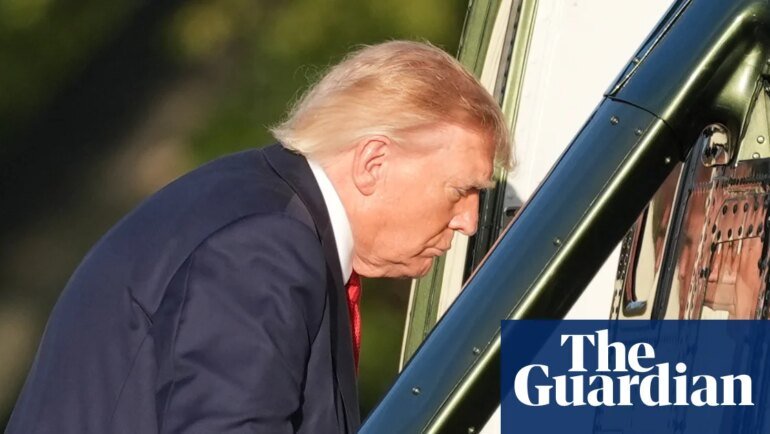

Previous Post
Next Post
Previous Post

Next Post
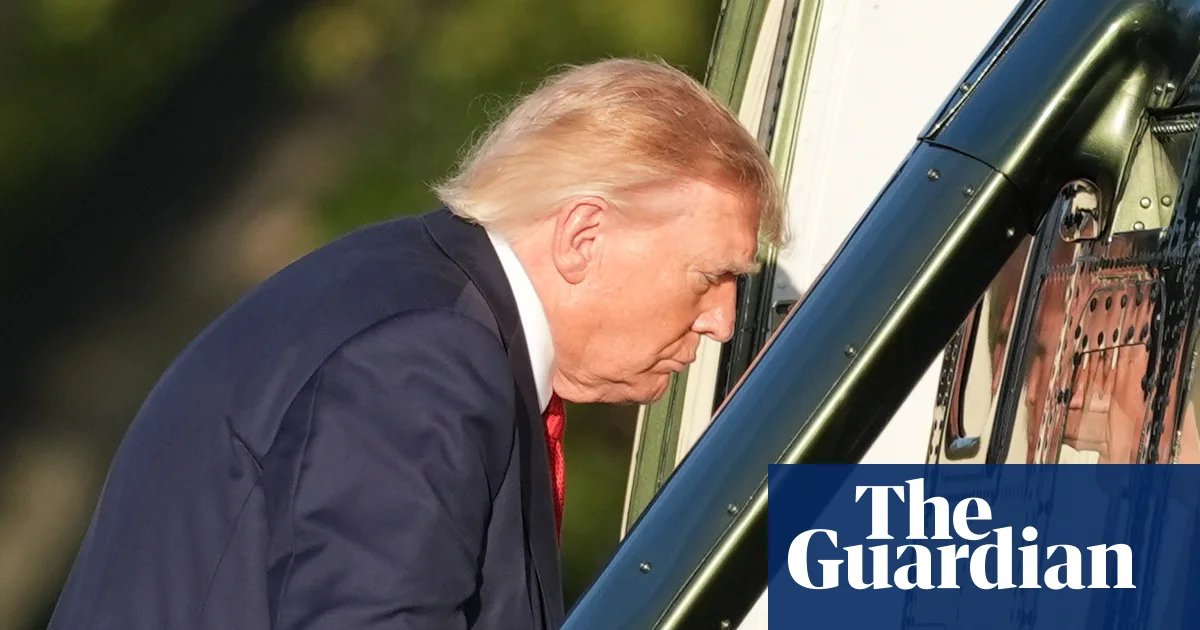
2025 2026 American food connectz American recipe connectz apple Apple products betting connectz cheap world wide food recipes child rape cybertruck disney diy connectz Elon musk environment fashion connectz florida food connectz fox connectz gaming connectz grady judd health connectz hemp drinks law enforcement movie connectz online payments pedophilia publix ron desantis ron desantis connectz social media sport connectz surterra technology connectz tesla trenden music tv show connectz usa connectz usa food connectz usa food recipes world connectz world recipe connectz world wide food connectz world wide recipe connectz world wide recipes wwe