
Now Reading: BYD probes distrust of Tesla FSD with promise of full compensation for self-driving accidents
- 01
BYD probes distrust of Tesla FSD with promise of full compensation for self-driving accidents

BYD probes distrust of Tesla FSD with promise of full compensation for self-driving accidents
The wait to see Tesla’s next-generation sports car Roadster remains long and difficult. Tesla delayed its plan to unveil the Roadster, which had been set for early this month, again to after August. The demonstration schedule was also delayed, as development applying SpaceX thruster technology to maximise vehicle performance takes longer than expected.
• Tesla delays Roadster demonstration again… due to SpaceX thruster development
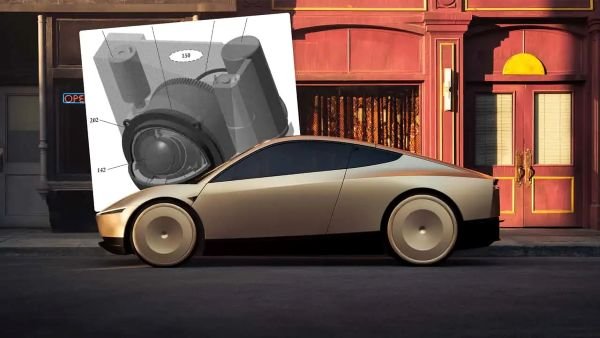
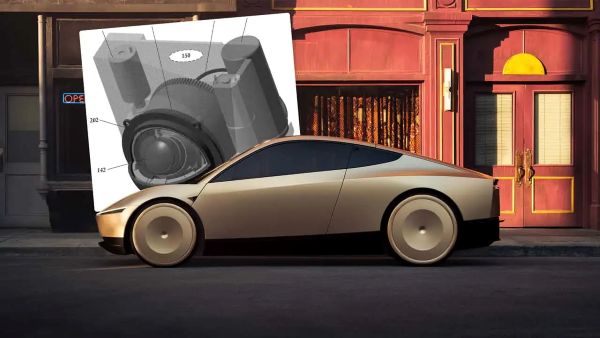
The Roadster is delayed, but development of future technology continues. Tesla filed a patent for a self-driving camera that cleans its own lens by mimicking the blink of a human eye, as it moves to strengthen sensor reliability.
At the same time, shipments from its Shanghai plant increased sharply, benefiting from a recovery in China’s electric vehicle market. With technological innovation and expanded production coming together, it is accelerating its push into the China market.
• Blinking like a human eye… Tesla files patent for a self-driving camera that wipes its own lens
• Tesla Shanghai plant shipments up 39 percent… recovery in China’s EV market
Controversy over the reliability of Tesla FSD continues. As even former developers raise questions about the safety of unsupervised driving, comparisons are also becoming more active over the scope of liability for self-driving accidents and compensation systems.
Along with this, competitors such as BYD, XPeng and Rivian are speeding up efforts to advance self-driving technology and build responsibility systems, as they move to chase Tesla. In particular, XPeng is putting about 300 million yuan a month into self-driving AI training and said its current performance has reached a level comparable to Tesla FSD v13, drawing attention.
• Former Tesla FSD developers: “We still can’t trust unsupervised driving”
• Why BYD can take responsibility and Tesla cannot… differences in compensation systems for self-driving accidents
• Rivian sees ‘Level 3 within 18 months’… Tesla FSD distrusted even internally
• XPeng ‘300 million yuan a month for self-driving AI training’… claims parity with Tesla FSD v13
As competition in self-driving technology intensifies, more people are also looking back at its history. Waymo and Tesla are cited as key players that opened the self-driving era, but it was reported there was already a pioneering case that succeeded in self-driving at 180 km per hour in 1995.
As attention returns to where the roots of today’s self-driving technology began, interest is also focusing on the automotive industry’s long challenge and evolution process.
• There was one before Waymo and Tesla… ‘this car’ succeeded in self-driving at 180 km per hour in 1995
Chinese electric vehicle maker BYD is rapidly expanding its influence in the global auto market beyond China. As exports surged in May and growth in overseas markets begins in earnest, the possibility of acquiring an Italian luxury brand is also being mentioned, drawing market attention.
As it pushes export expansion and strengthens its brand strategy at the same time, BYD is emerging as a new variable in the global auto industry.
• BYD exports jump 80 percent in May… ‘global growth engine’ beyond China begins full operation
• BYD Maserati acquisition rumours spread… a new variable that could shake up the European market
Competition in electric vehicles is also active outside China. As the global auto industry presents different solutions for electrification strategies, BMW unveiled a new electric SUV with enhanced driving range and price competitiveness, and Volvo said it would maintain a fully electrified stance despite a market slowdown.
Audi, by contrast, unveiled a high-performance internal combustion supercar as it moves to adjust the pace of electrification. Amazon is also accelerating commercial vehicle electrification by expanding its fleet of electric delivery vans. Strategies around the shift to electrification are becoming more diverse.
• BMW unveils new electric SUV iX3 as a key bet… drives 700 km and costs less
• After saying it would make only EVs… Audi brings out a 1,001-horsepower V8 monster supercar
• Volvo CEO declares it will continue ‘full electrification’ despite EV market slowdown
• Amazon electric delivery vans surpass 50,000… reaches half of its 2030 target
Uber is strengthening both future mobility technology development and user service operations. It is operating a large fleet of data-collection vehicles to support robotaxi development, and it also drew attention by releasing unusual cases of items left behind during trips. From advancing self-driving technology to running a day-to-day platform, Uber’s business scope is widening.
• Uber operates 500 high-precision data collection vehicles… supports robotaxi development
• From dentures to a wedding dress to a live fish… Uber’s 50 most absurd lost items
South Korea’s mobility platforms are expanding beyond simple navigation into services that manage travel records. TMAP Mobility introduced a ‘movement log’ feature that automatically records driving routes and places visited, as it moves to enhance user experience.
As attempts expand to connect mobility data to personalised services, navigation services are also evolving into record- and sharing-centred platforms.
• TMAP introduces ‘movement log’ that records driving and place check-ins
As electric mobility devices spread, interest in their management and use is also growing. As police deploy drones in crackdowns on illegal electric scooters and off-road electric motorcycles, electric bicycles are drawing attention as an alternative means of transport by highlighting maintenance cost savings.
• Police launch drones to crack down on illegal electric scooters and off-road electric motorcycles
• Rode an electric bicycle instead of a second car and saved 1.4 million won a year… bigger difference than fuel costs