

Now Reading: Health Wanted: Data Centers | Emory University
- 01
Health Wanted: Data Centers | Emory University

Health Wanted: Data Centers | Emory University
The Episode
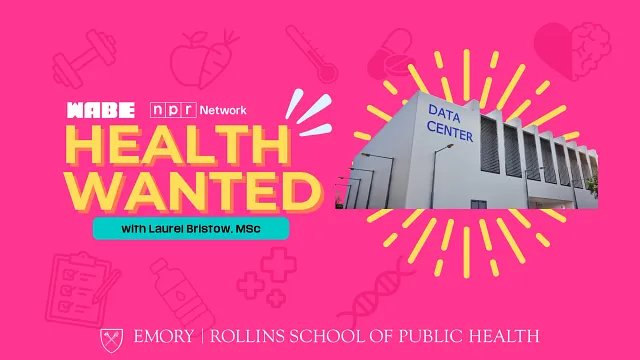
Sure, the thousands of new data centers cropping up around the country are expensive eye sores that seem to be for the sole purpose of destroying creativity and independent thought in the pursuit of capitalism. But they’re also probably a threat to your health. This week on Health Wanted, we ask the chat (GPT) if data centers have us cooked.
The Listener Questions
What is going on with the cyclosporiasis outbreak?
Cyclosporiasis is having a moment. The parasitic infection happens every year, but this year there have already been over 3,000 cases (the majority being in Michigan) that have sent dozens of people to the hospital.
It’s hard to know the exact number since there tends to be a lag between states identifying cases and reporting them to the CDC, which is already understaffed. That makes it harder to confirm cases and get a timely case count out during such a fast moving outbreak.
So what should you know?
- It’s spread via contaminated food or water. The parasite gets into a body, multiplies, and is shed in the stool.
- The parasite needs time outside of the body to advance its life cycle. It’s not like other fecal-oral infections where, if you come into contact with someone who is sick, you’re going to get sick too.
- The incubation period ranges from two to 12 days, which can make it hard to find a common source, because, at that point, people have a hard time recalling products or items they may have consumed that could be the culprit.
- Outbreaks have previously been tied to items like packaged berries, loose leaf salad, cilantro, and other fresh produce.
We don’t yet know if there is a shared source in this outbreak, so there are some precautions you can take to reduce your risk.
The parasite is very robust, so things like produce cleaning solutions, bleach or vinegar won’t kill it. Studies have found washing produce under running water and rubbing them can lower the amount of parasite on the produce, theoretically lowering the likelihood that you get a dose that your immune system can’t handle for you. But produce like raspberries can be really hard to clean well because of their texture. A better option is smooth fruits and items with peels that can be washed and removed.
Bagged salad is also a big culprit, so stick to whole heads of lettuce and remove the outer layers and discard. Also, historically, most outbreaks have come from food imported from areas where cyclospora is endemic, so buying produce locally can reduce your risk, too.
The only way to completely eliminate risk is cooking food to an internal temp of 158 degrees, but who wants a hot salad?
If you do happen to get infected and have symptoms like frequent watery diarrhea, bloating, cramping or weight loss, go see a provider who will likely order a stool sample to be tested. It can be treated with antibiotics. While infections can resolve on their own, there’s a risk of it persisting for longer and possibly relapsing and having symptoms return.
We still don’t know what exactly the source is, but Michigan (where the majority of cases are clustered) suspects it might be bagged lettuce (though other foods can’t be ruled out).
Does oil pulling actually work for dental health?
Oil pulling involves swishing an edible oil, usually coconut oil, around your mouth for several minutes. It’s a traditional practice that has been around for centuries in areas like India and southern Asia. Now, thanks to social media, it has become more widespread.
Oil pulling has been touted to provide you with benefits ranging from whiter teeth to reducing the risk of cavities, gum inflammation, and bad breath. But when it comes to actual evidence supporting these benefits, oil pulling begins to fall short.
Currently, there is no robust scientific evidence to confirm that oil pulling effectively reduces cavities, whitenes teeth, or improves overall oral health. And, while there are numerous hypotheses, the mechanism through which oil pulling might work remains unclear. Without an understanding of the exact way that it would possibly work, it is hard to know if oil pulling causes the observed effect. Most evidence supporting the health benefits of oil pulling was anecdotal.
While oil pulling may help remove loose debris around the gums and teeth through its swishing actions, it is still less effective than brushing and flossing. Once a biofilm or plaque has formed in your mouth, oil pulling is no more effective in removing it than rinsing with water, because it can’t disrupt plaque like mechanical methods like brushing or flossing can.
Because of this lack of scientific evidence, the American Dental Association does not recommend oil pulling as a dental hygiene practice.