

You May Also Like

Here’s the bottom line: The assertion that a depressed environment is restricting private fund exit activity has outlived its usefulness. A broad set of indicators show an exceptionally accommodative environment for assembling the equity and debt to facilitate transactions. Instead, the view on exits should be framed around sponsor timing preferences: Sponsors seeking to sell are holding to anchored IRR expectations that are difficult to achieve in the current interest rate environment, resulting in the decision to wait it out. This seller-buyer disconnect can only be resolved by transactable asset values moving higher or return targets resetting lower. Reframing the “challenging exit environment” as a timing preference matters to lenders because it more cleanly isolates the borrower motivations for financing rather than selling assets.
If Not Now, Then When?
Private fund exits continue to be depressed, illustrated by debt-to-paid-in ratios sitting at post-GFC lows. To facilitate an exit, a buyer has to assemble both the equity and debt components to finance the purchase at an agreed-upon price. If external market factors are constraining exits, equity and debt market indicators should be flashing it’s-hard-to-get-a-deal-done signals. The message instead coming back across equity and debt markets is that all channels are open for business.
Exhibit 1: Where Is the Challenge?
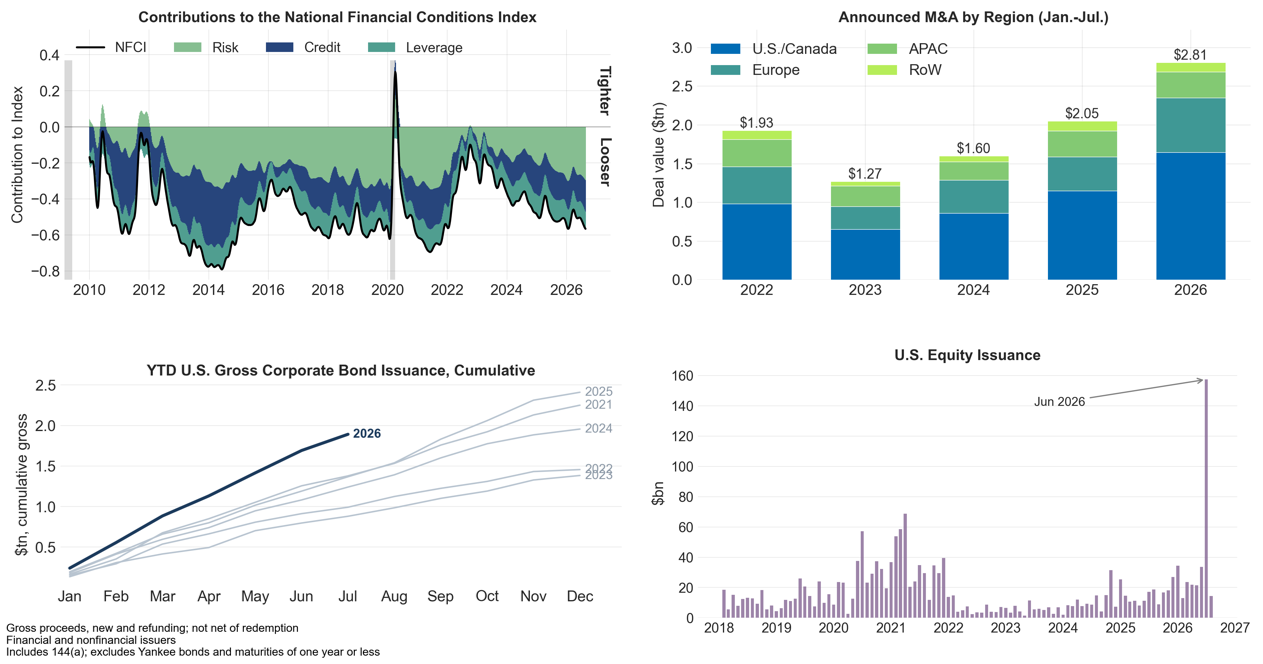
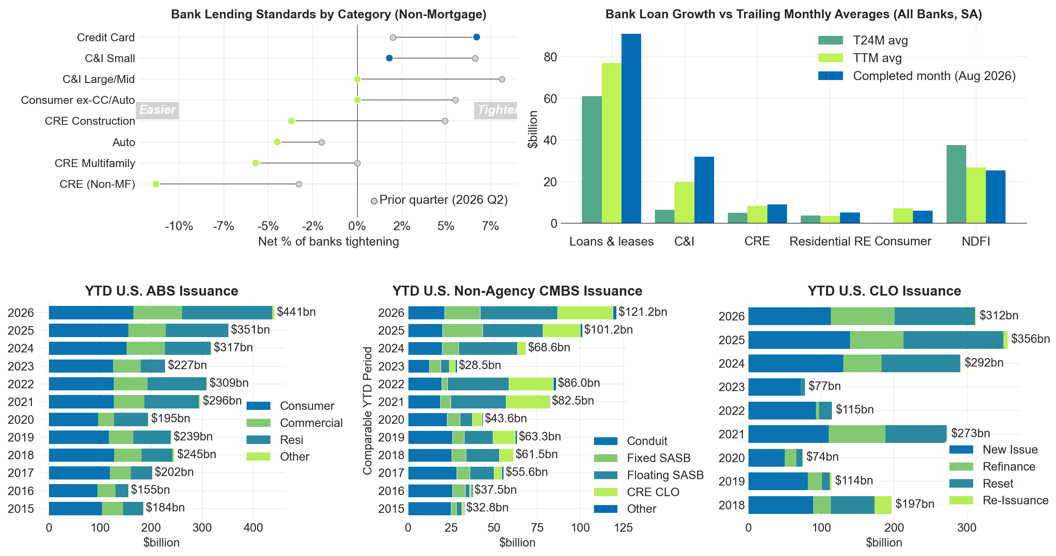
Source: Capital IQ, Federal Reserve Bank of Chicago, Board of Governors of the Federal Reserve System, JP Morgan, and Hogan Lovells Cadwalader.
Eliminating M&A, IPO, and debt capital market access as sources of restraint on exits leaves debt cost of capital as the likely explanation for the lull in exits. Higher yields across markets lowers the price a buyer is willing to pay for an asset to preserve it’s target IRR. And this happens before considering whether the higher returns achievable in public fixed income flow through to return requirements of buyers.
While yields are breaking noticeably higher in government benchmark bonds, credit spreads have absorbed a significant portion of the move. On the whole, the cost of debt funding remains attractive by historical standards, consistent with robust issuance across markets shown above.
Exhibit 2: Debt Costs Remain Contained Despite Higher Benchmark Yields
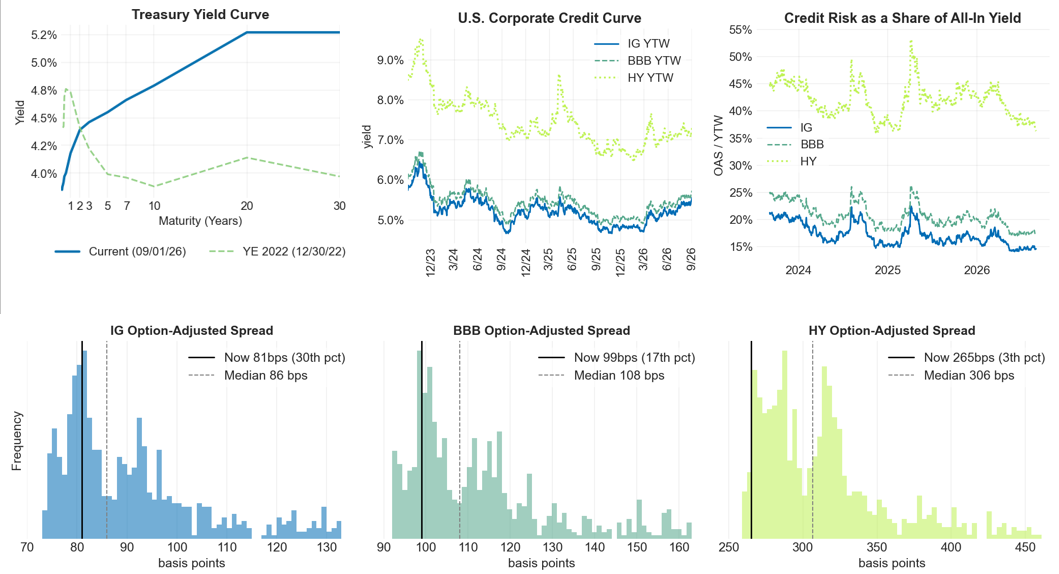
Source: U.S. Department of the Treasury, ICE Data Indices, LLC, and Hogan Lovells Cadwalader.
Time Preference: Delays Buy Time, Not Outcomes
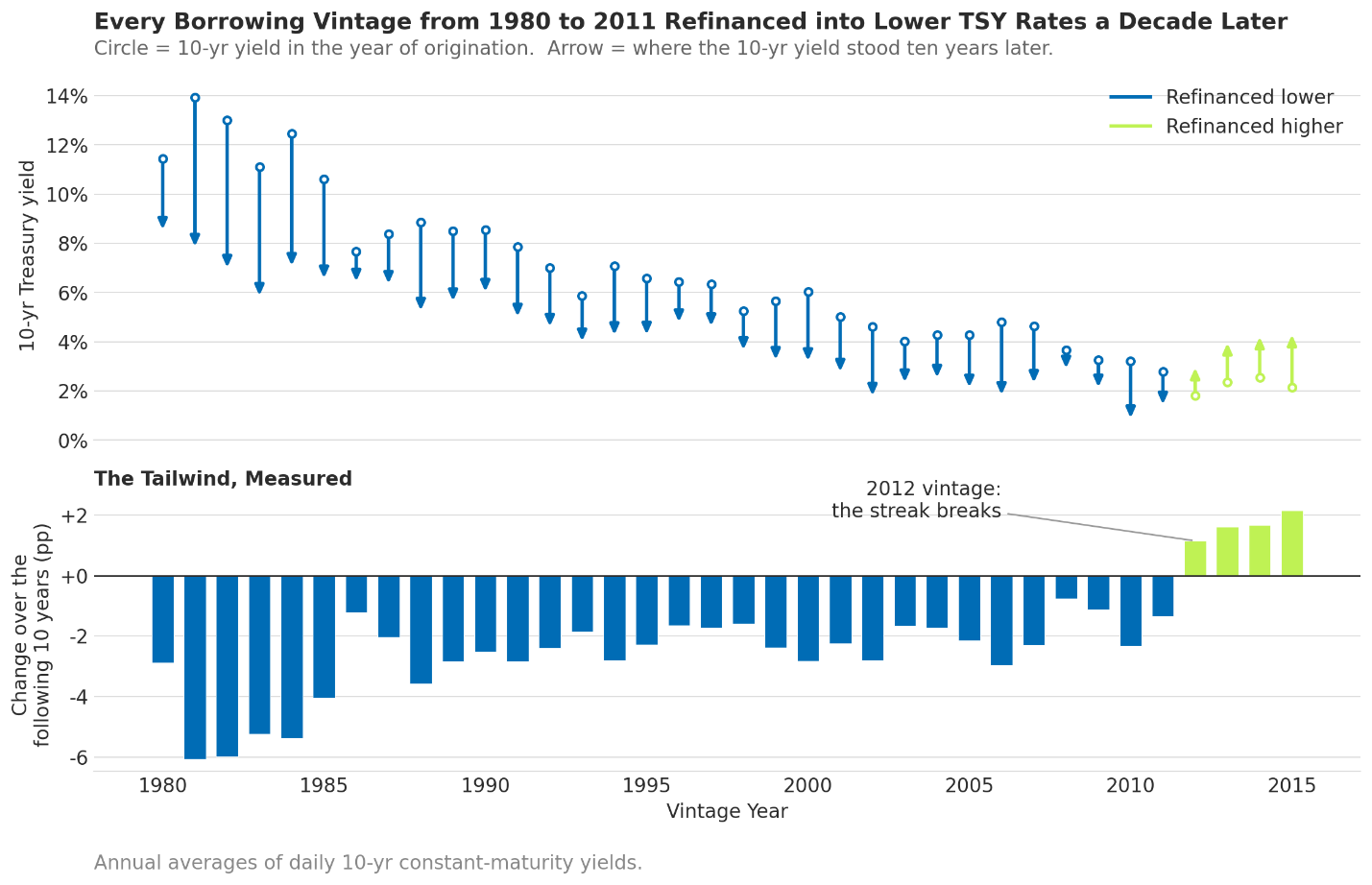
In sum, it’s difficult to point to meaningful market restrictions to exits in the current environment, suggesting that the decision to hold assets is largely discretionary and influenced by IRR goals. The impulse to wait for better conditions has been reinforced over decades. Dating back to the 1980s, declining Treasury yields meant that exit interest rates (here, the 10-year yield) were lower than at inception for every vintage until 2012.
Exhibit 3: History Rewarded Delay
Source: U.S. Department of the Treasury and Hogan Lovells Cadwalader.
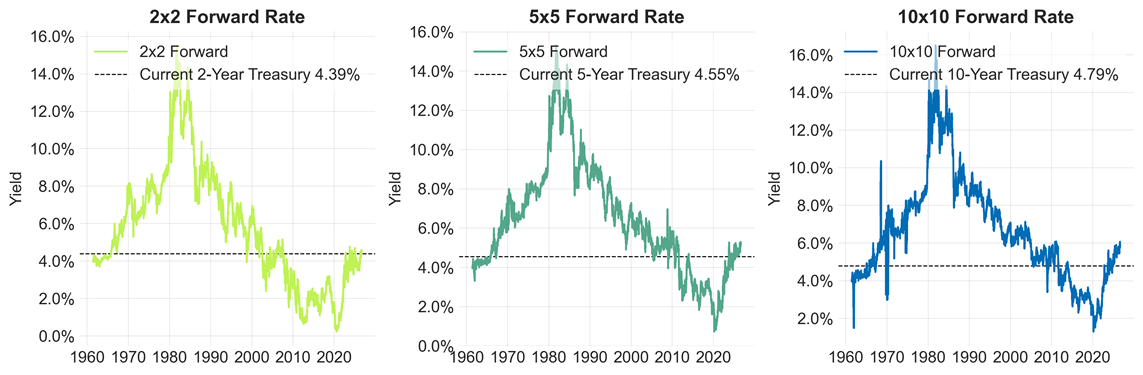
The key question is whether deferring realizations will be rewarded going forward. Two variables come into play: (1) the interest rate outlook, and (2) the credit cycle. An expectation of lower interest rates is out of step with market projections, with forward rates pricing in continued drift higher. Credit metrics in many markets are coming off post-Covid lows but also showing rising delinquencies across a number of asset classes.
Exhibit 4: No Sign of Relief in Forward Rates
Source: Board of Governors of the Federal Reserve and Hogan Lovells Cadwalader
Conclusion
Rather than being driven by “a challenging exit environment,” the deferral trend in realizations appear largely to be discretionary and likely a call on future revenue growth versus interest rates. Past decades have rewarded patience as term assets have consistently had the opportunity to exit at benchmark rates below rates at acquisition. The question is whether this continues to be a viable long-term strategy. In the meantime, it may be past time to retire the “depressed IPO and M&A markets” narrative as an explanation for slow exit trends.
[View source.]
