


Jewish Democrats found themselves on defense at the Texas Democratic Convention in Corpus Christi last week.
Now Reading: Texas Democratic convention shows shifting stance on Israel-Gaza
1
- 01
Texas Democratic convention shows shifting stance on Israel-Gaza
Texas Democratic convention shows shifting stance on Israel-Gaza

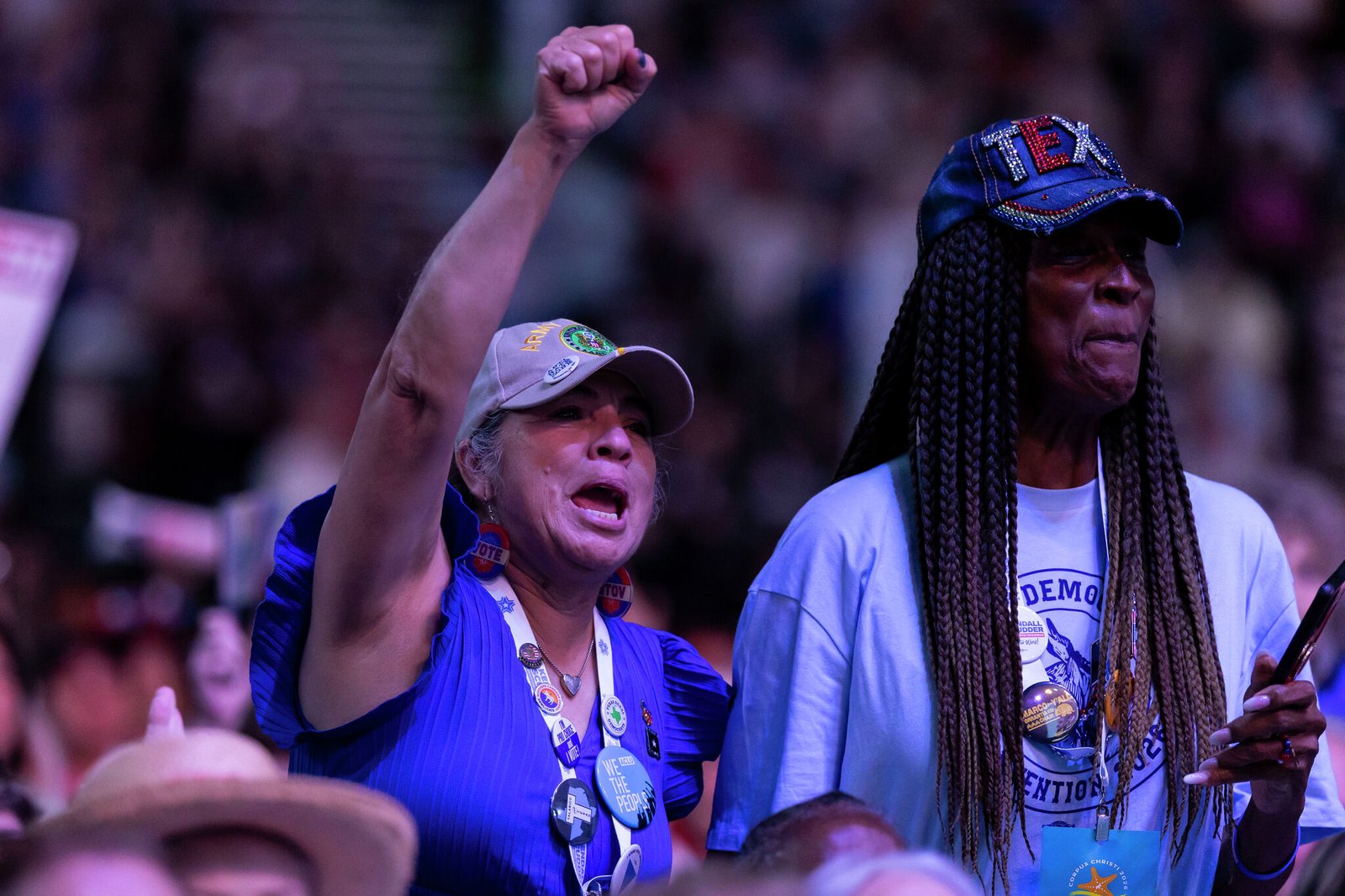
Maricela Alvarado and Sandra Prince listen to speakers during the Texas Democratic Convention at the Hilliard Center in Corpus Christi on Friday, June 26, 2026.
While some party delegates
While many Texas
Article continues below this ad
“I’m relieved,” said Arthur Pronin, president of the Meyerland-area Democrats.
The final platform closely mirrors the one adopted during the party’s 2024 convention in El Paso. But
The party also added a line that would have been unheard of just a few years ago, jabbing — by name — at the American Israel Public Affairs Committee, which has long been one of the most prolific fundraising arms in U.S. politics.
The platform now
Article continues below this ad
It’s a shocking statement compared to just a few years ago, when the safest position for Democrats was to express unconditional support of Israel and take donations from AIPAC. But primary elections in New York City last week showed the shifting political ground.
Progressives, who ran hard against the war in Gaza and used AIPAC contributions as a weapon against incumbents, swept a trio of congressional primaries in America’s most heavily Jewish city. The also openly accused Israel of
An NBC News poll from earlier this year found that 57% of Democrats nationwide had a negative view of Israel, up from 35% in 2023. Two-thirds of Democrats said their sympathies were more with Palestinians than with Israelis in the Middle East.
At the Texas Democratic Convention, many delegates wore scarves to symbolize their support for Palestinians.
The changing nature of Democrats’ views toward the Israeli government and AIPAC was on full display at the event during a Friday
Article continues below this ad
Booker, who ran for president in 2020, was repeatedly interrupted by pro-Palestine protesters during his speech. Afterward, in an interview for the Texas Take Podcast, he acknowledged the issue had presented challenges for Democrats, but
“There are definitely people who have strong views on this, but the number one thing people are bringing up to me is ‘I cannot afford health care, I cannot afford housing,’” he said.
Related Posts


Previous Post
Next Post


Loading Next Post...