
Now Reading: ‘I Felt Like I Was There 90% of the Time’: An Oral History of the Dinkytowner Café
- 01
‘I Felt Like I Was There 90% of the Time’: An Oral History of the Dinkytowner Café

‘I Felt Like I Was There 90% of the Time’: An Oral History of the Dinkytowner Café
While doing interviews for this oral history of the short-lived, long-shuttered Dinkytowner Café, I heard a constant refrain: “Wait, have you talked to . . . ?” inevitably followed by names. Names that I had talked to, names I hadn’t yet talked to but knew I should, and—every single time—names that nobody else had mentioned, or would.
You can see how this might be an issue, especially considering that I spoke with, yep, 56 people for this. Reporting (or even just researching) the history of the Dinkytowner—a University of Minnesota-adjacent basement hub of music, free pool during happy hour, some two-dozen vodkas, and a kitchen that slung honey-mustard chicken wings and chocolate-chip pancakes until 4 a.m.—was less like a Venn diagram than a spiderweb.
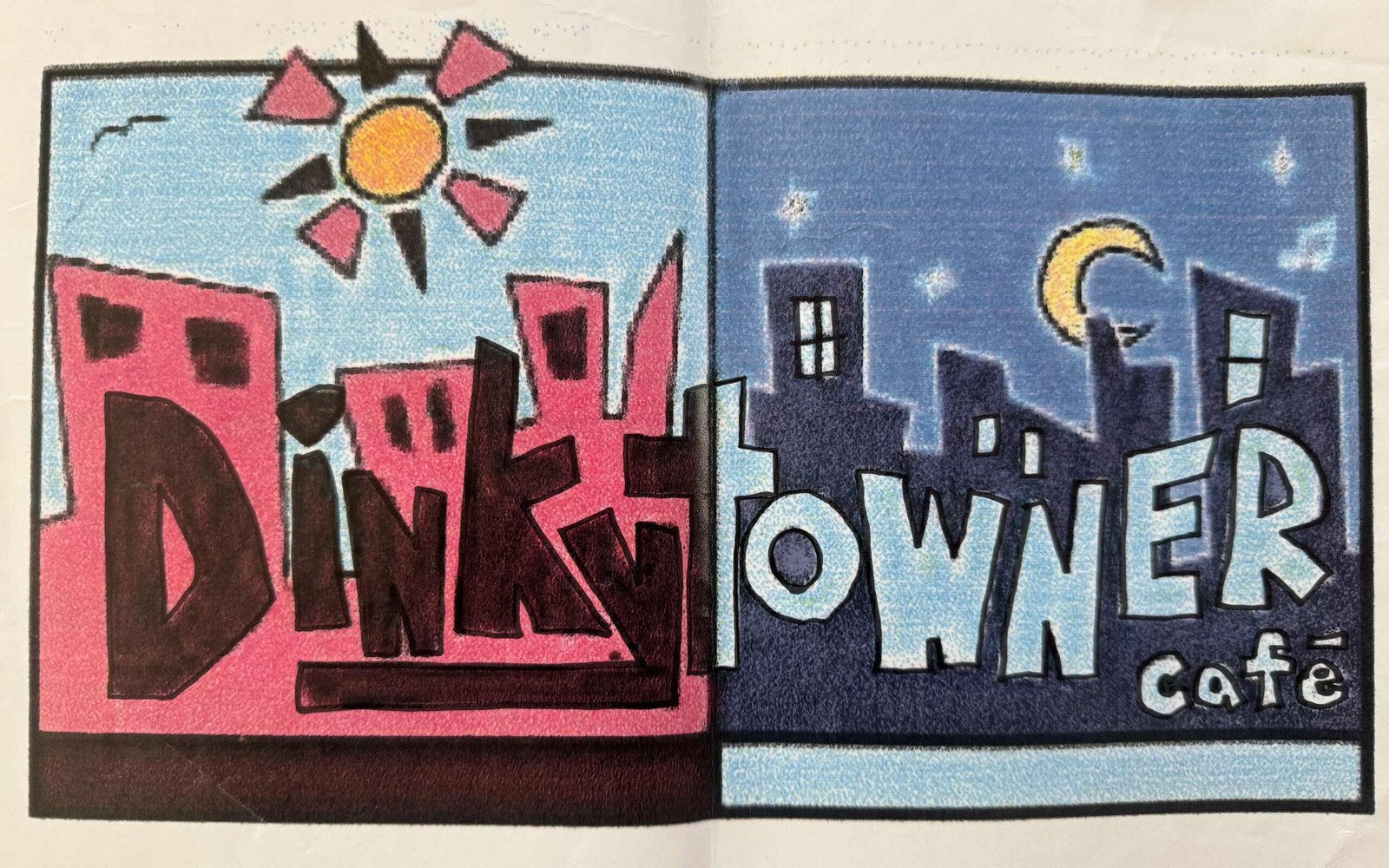
The Dinkytowner Café opened in September 2000 and closed at the end of May 2009, a decade-spanning run almost too neat to believe. But that’s about all that’s neat about it. The calendar sprawled: karaoke, comedy, spoken-word poetry, rare films, DJs playing global grooves, in-house bands playing jazz-rap-electronic fusion jam sessions. Who didn’t hang out there in the 2000s? Future Twin Cities institutions like Sound Unseen and Trivia Mafia were hatched in the ’Towner’s janky, hole-ridden dining booths.
And that doesn’t even account for the big stuff. The Dinkytowner stage and DJ booth had three heavy concentrations—indie rock, dance music, and especially hip-hop—all during a heavily active decade in the Twin Cities for each. The Dinkytowner was both a launching ground and a place where the people motoring those scenes could mingle and eat, as well as check out music every night of the week. From Atmosphere to Tapes ’n Tapes to DVS1, a wide array of Twin Cities artists played landmark shows there.
Not to mention that the Dinkytowner Café underwent lots of staff turnover—including two separate ownerships, one of which inspired rumors of illegal activity. (False, they respond—see below.) So much went on at the Dinkytowner Café, then, that 56 people (whose quotes have been edited and condensed), as well as occasional secondary sources, barely scratch the surface, even at close to 9,000 words. (Dinkytowner employees are ID’ed by job title, band members by band, all from the era depicted.)
With the Cedar hosting a sold-out screening of the new documentary Dinkytown: A Tale of a Legendary Village this Saturday, it seemed like a good time to look back at this hive of musical (and other) activity. Let’s head down those dangerous stairs together one last time. Tex-Mex, anyone?
David Safar, booker: You know, I don’t think I had anticipated there’d be a point in my life where someone would call me and start asking me questions about the Dinkytowner.
Chuck Terhark, co-founder, Trivia Mafia: Everybody’s got some fuzzy Dinkytowner memories.
Kevin Kane, promoter, 10K Breaks: It was like a micro-culture, its own living and breathing thing—the people within it, the regulars, the stale smoke smell, the abnormally large breakfast burritos.
D.P. Cortez, DJ: It’s a speakeasy of a time warp of a venue with sticky carpets, and everyone had some sort of experience down there.
Danielle Hartell, server: You’re going to be talking to people that have had such different experiences that this place may feel as if it was 10 different places.
Desdamona Ross, MC: It was a place to be seen, even though it wasn’t this upscale place.
Ian Traas, DJ: It was a place to go when you wanted to both be seen and not be seen.
Katie Marshall, bartender: I am hesitant about how candid I should be.
Safar: Two corporate chains were in Dinkytown at the time: McDonald’s and Hollywood Video. Otherwise, every other business was an independently owned, local operation.
Joe Holland, sound: The Kitty Cat Klub was Ragstock, still. The Loring Pasta Bar didn’t exist. The Varsity was closed. All the real action was just on that block, on 14th Avenue between Fourth and University, for a long time.
Michael Todd Grey, musician, Mercurial Rage: It started as this brunch restaurant that had pool tables—a drinking establishment that was something other than your run-of-the-mill jock sports bars that dominated the area.
Franz Diego, DJ: Aside from the shows, that was just the local bar.
Adam Larson, door: The best part about that bar is no college kids showed up. It was all people from the neighborhood.
Grey: Anybody that’s in Dinkytown that’s a service worker or a musician in the area, they’re all downstairs drinking. It was like you couldn’t leave.
Jen Boyles, writer/editor, City Pages: It was never “The Dinkytowner.” It was the ’Towner.
Carnage the Executioner, MC: You knew that if somebody was there that you wanted to see, you better hurry up and get there, because you might have to park four blocks away.
Safar: The other thing about the Dinkytowner that I remember so clearly was that awning. It was always part of the landscape. We used to tell bands, “Just look for the awning, and walk downstairs, and you’ll be there.”
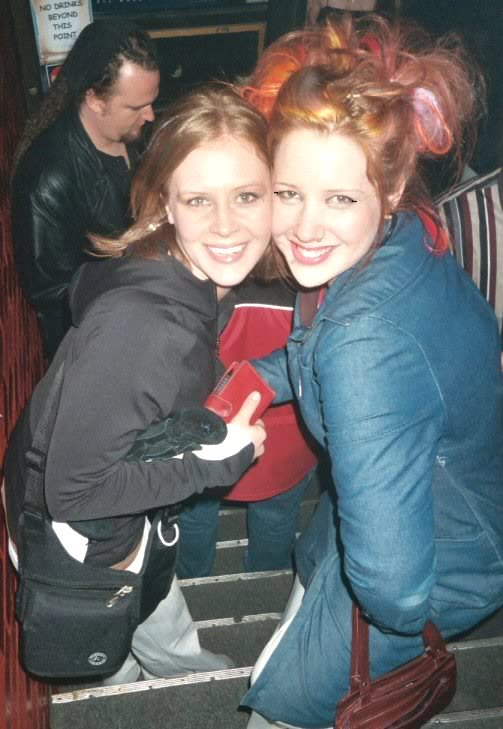
Traas: It was really steep.
Ant, musician, Atmosphere: I never had any problems with the stairs. But I definitely seen some people have problems with them.
Hartel: Those stairs were brutal.
DJ Stage One, resident DJ: I’ve seen people fall down the stairs before. I’ve seen fights where people fell down the stairs before.
Kyle McCarty, co-owner, 2004-09: One of the first weekends we took off after two years—the guy in charge called me: “Yeah, this guy fell down the stairs, he’d been drinking all day while cooking, cracked his head open.” You always had to deal with that—the kegs getting brought down, because I think we had 20 taps—it just ruined our steps. We were constantly getting [the stairs] fixed.
Martin Dosh, musician: Carrying a Rhodes electric piano down those stairs—it’s 200 pounds, you’d have two people, and it’s at a 45-degree angle, so you’d have to get the four doors propped. Loading in wasn’t the bad part, but getting it out after the show at two in the morning? That was not the best.
Mark Baumgarten, editor, Lost Cause: The lighting was forgiving down there.
Martin Devaney, musician: It was a dirty little room.
Marshall: It was really gross. It was the kind of place where the floors were always sticky. You’d mop, but you can’t.
Hartel: It was dark, stinky, probably moldy. The carpet—oh, the carpet. Oh, the carpet.
Diego: It was melted into the floor.
Gregory Scott, writer, Vita.MN: A punk drummer friend referred to it as the “Stinky Browner.”
Sean McPherson, musician, Heiruspecs: I was definitely on a get-in-and-out when I went to the bathroom at the Dinkytowner.
Boyles: The red booths—they were ratty and torn up. And then there were leather couches strewn around that were also torn up. You’d sit and just sink into it, and then you’d get half-scraped by the upholstery.
Kevin Kane: In theory, it doesn’t sound good: “I’m going downstairs into an abysmal, dark, low-hanging, no-door-on-the-bathroom venue.” Nobody’s writing a good Yelp review for that. But you get in there and it’s like Pandora’s Box opens.
Zach Combs, musician, Kanser: There was, not exaggerating, thousands of shows at the Dinkytowner over the 10 years it was open.
Larson: If you played in Minneapolis, you played in the Dinkytowner at least once. Everybody played there.
Ross: You could look on any given night of the week and see that they would have this really broad spectrum of music.
Carnage: People were saving the booth seats so that when they got there, they could go and eat and then watch the show.
Ross: I loved to play there, because it was so intense. People were just so supportive in that space.
Jon Hester, resident DJ: Around the dance floor, two steps down—that’s where you’d get the best sound.
Matthew Schindler, musician, Faux Jean: You’re in the pit and we’re experiencing this together—the people who were there for the music got in close, and there was an intimacy, where you felt like you were playing for people who were appreciating it.
Diego: The size was awesome. Even if you had the smallest crowd, it was still so full.
Devaney: I remember playing in a horn section, usually in front of the DJ booth, left of stage—you were just kind of wherever you could fit.
UnicusHarry, musician, Kanser: It wasn’t the best sound. When you’ve got 200 people in front of you, vibing to whatever you’re doing, sometimes it didn’t matter.
Combs: If you got 50 girls in the Dinkytowner and 20 of them are dancing in the pit, it feels good.
Mike 2600, DJ: I don’t remember much out of control hecticness down there.
Jacob Grun, sound: Just the intensity—the smoke, the pent-up aggression of everyone in there at times. It felt like it was going to explode in that basement at any moment. It rarely did. We had a security guard, James. He was this giant guy. He was really scary looking—dreads and stuff. But he wouldn’t lay a hand on anybody.

Ant: The staff was always nice to me—you know, first drink was free.
King Otto, resident DJ: Ant forever would come out. He was still working a full-time job.
Ant: I worked at a clinic as a janitor, 9 p.m. to 5 a.m., in Roseville. Between midnight and 2 a.m., I would go down there for last call, on my lunch break. I could leave my job for a while, and no one would even know I was gone, so I just started getting kind of good at it. Then, once the last call got pushed to 2 a.m., I would just be there.
Joe Silver, bartender: Ant would come in and have a beer at the end of the night—have his two Budweisers.
Ant: I was newly single at 30. I could meet a girl. Anything was possible on my lunch break as a janitor.
Traas: Every now and again you would go through and see Ant slumped over.
Ant: The corner of the bar: I remember specifically where I would always be, and I felt like I was there 90 percent of the time.
Boyles: He definitely was. I saw him there more than my actual friends.
Ant: Why, you heard my name mentioned a few times?
Dosh: I was there all the time, even if I wasn’t playing a show—playing pool or eating food or getting free drinks, or just watching whatever show was there.
Steven Centrific, DJ: I would walk up and they’d already be making me a drink or handing me one, for better or worse. I definitely had some raging nights there.
DJ Stage One: As far as drinks, they would always push Jäg bombs on people.
Ali Elabbady, DJ, Radio K: I will also say, the bartenders there really took good care of the folks that were not drinking. They’d do a two-for-one for me on soda.
Joel Stitzel, programmer, Cinema Slop: I met a lot of interesting people there, like Bill Grimes or Mustache Jim, a couple of Dinkytown characters who used to hang out there all the time. They’re friends of mine to this day.
Marshall: I remember Double Long Island Guy. He had a huge afro, and I swear to god, he was dressed like a ’70s pimp. It was amazing, this guy. He’d walk in and he’d always order two Long Islands.
Billy Bison, bartender: [instantly] Yeah, Bill. Always had a smile on his face. Always had a peacock feather in his hair. And a writer. He was always writing, and he released at least one book when I was there. Bill.
Ant: You know what’s funny? I drank there plenty until the wee hours of the morning all the time, but I never ate there, never once.
Carnage: The food was really good—very fattening, just the way we liked it back then.
Devaney: It was late-night, putting-it-away, college-student cuisine, right out of the farmer’s breakfast.
Vlad Fogel, co-owner, 2000-03: Breakfast was served 24 hours, lunch was served all hours, and we did not really have a formal dinner menu.
Scott: I took my parents there for brunch. My dad liked it for how drunk and divey it was.
McCarty: The boozy brunch. People really loved it.
Christina “C-Rocka” Rimstad, photographer: Rarely would I be there for breakfast; I was more of a Triple Rock fan. However, the Tex-Mex plate was fire!
McPherson: Tex-Mex was the go-to at the time.
Larson: I slanged so many of those things to hungry college dudes. On Saturday, open until four in the morning, slinging out Tex-Mexes.
McCarty: I remember Laurence Maroney: He played in the NFL. He would come and get a Tex-Mex every now and then.
Marshall: You’d get football players ordering Tex-Mexes and just housing the whole thing. It was a giant breakfast burrito. I would get them, and it’d be three meals for me.
Baumgarten: The breakfast burrito—which had, I swear, 10 breakfast sausages inside of it. I mean, the thing was the size of an infant.
Danny Sigelman, DJ: Chocolate-chip pancakes.
Sharolyn Hagen, photographer: I never ate a chocolate-chip pancake before the ’Towner’s existence. I don’t think I’ve ever eaten them since. But they were just so satisfying at that time of the morning.
Carnage: They had the best chicken wings in the city at that time. My sister used to be like, “Yo, you got to bring some of them Dinkytowner chicken wings home.” I ate a lot of chicken wings, and I weighed 340 pounds because of it.
King Otto: The wings were just stock restaurant-supply wings. But whatever they did to them was good.
Larson: It was because of the honey mustard. Our mustard came from Russia. It was just the spiciest, hottest mustard. The best part: there were no seeds. You mixed it with the honey in the bar. We brined the chicken wings, then tossed them in. People loved that.
DJ Stage One: Mine is the chicken strips and fries with the weird dipping sauce. I’ve never had anything like that; it had that kind of after-smoke that horseradish has.
Boyles: I would get so hammered, and then I would order chicken strips at the end. It was this luxury: golden chicken fingers at the end of a drinking night.
Marshall: There was a point where we suddenly had some higher-end, fancier stuff. There were these panko-crusted fries with an aioli dipping sauce. Those were incredible. I still crave those.
Silver: The prep on the panko fries—they didn’t want staff getting them unless they were paying from their own pocket, because we would hand-bread those in breadcrumbs.
Hartel: Individually!
McCarty: It was tedious, but it was a cult favorite, so we kept it on the menu.
Traas: 1,000 percent Cajun breakfast. Hollandaise. I didn’t care if I suffered or not.
Boyles: You didn’t make the best choices.
Traas: I mean, no one made the best choices at the ’Towner. Come on.
McPherson: The first booking person at the Dinkytowner was James Everest from Sensational Joint Chiefs.
Alex Margolin, co-owner, 2001-03: James was my roommate for a number of years. I introduced him to Vlad.
J.G. Everest, booker: Vlad had just bought this new place in Dinkytown, but it wasn’t open yet. They were gonna throw this Russian birthday party in the basement of the club. It wasn’t a club, sorry—it was a diner.
Fogel: We met with James Everest. The local music scene was booming at the time in Minneapolis.
Everest: Vlad wants me to turn it into a club. He was like, “Well, what would you need to do?” Everything I said—like, in my wildest dreams—he kept saying, “OK.”
Margolin: Once James came in, it was more of, “Tuesday is this night, Monday is this night, Wednesday is spoken-word, and then shows on weekends.” It became a venue.
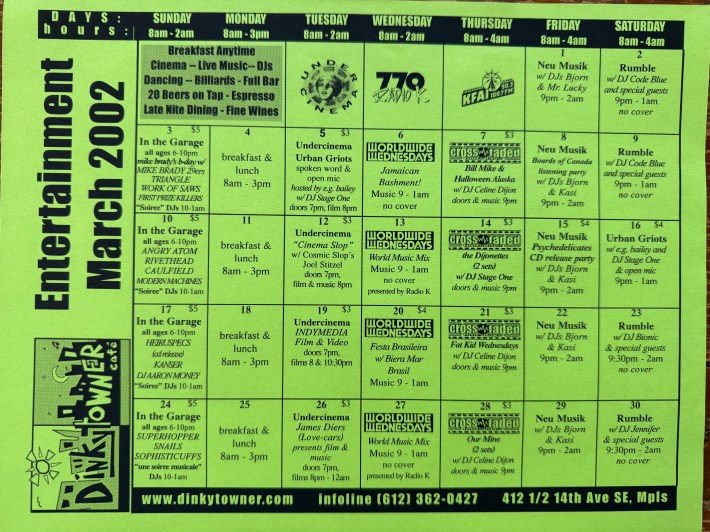
Everest: We got it up and running fall 2000, and then it officially launched in January 2001, with those [weekly] series happening: Crossfaded [on Thursdays] and Worldwide Wednesdays and Under Cinema on Tuesdays. In the Garage is what we called the Sunday thing. Saturday nights started out being a night of all female DJs. It was Code Blue, DJ Jennifer Downham from Groove Garden, and Bionic House, so it was house, jungle, and hip-hop. Eventually, Stage One took that over. Mondays was a house night for a while, too, with Sharin’ Beatz and some of the other DJs.
Dosh: It was an extension of stuff James was doing at The Front, combining the hip-hop scene with the jazz scene with the experimental electronic scene.
Devaney: It would be DJ Stage One, a horn section, Dosh, Jeremy of Old Slacker, sometimes Slug, members of Sensational Joint Chiefs, in this kind of improvisational two-hour set: jazz- and hip-hop-adjacent improv.
Everest: On Wednesdays we started a happy-hour open-mic that Jacob Grun was running for a while. That’s where I remember seeing Dessa for the first time. She was just coming to an open mic with her poems.
Miako Ushio, booker: 2003 was the first time I had a cell phone. James Everest went on tour, and he gave me his flip phone and a list of musicians and bookers in Minneapolis. It was summer, and I was teaching sailing on Lake Harriet. Then I would sit in the shade and try to catch people on their lunch break. A lot of us had night jobs, and [I was] waking people up at 11 in the morning, saying, “Who’s going to be playing next month?”
Larson: After J.G., Miako took over for a year. Then David Safar took over for a year. And then there was the 10K Breaks.
Safar: I was at Radio K. I was coming up on graduating—I’d better figure out what I do next. I met with the Dinkytowner, and they said, “You can have the job,” and handed me a cellphone and the calendar. It was very informal.
McCarty: Dan Kane was more of a hip-hop music director. I think if you compared Dan Kane to J.G. Everest, they’re probably into completely different music styles.
Kevin Kane: 10K Breaks started out in Boulder, Colorado. Our first ever big show was at the Fox Theater, and it was all musicians from Minnesota: Kanser, Unknown Prophets, Heiruspecs.
Dan Kane: We moved out there for a year and realized that around campus everybody liked the Minneapolis hip-hop scene. When we came back, we started saying, “We should just start doing this.” Then Brian and Kyle pulled me aside and said, “Do you want to just handle all the booking?”
Fogel: I came not from Russia, but from Soviet Union. There used to be a country that was called Soviet Union, and it fell apart. So, right before it did, I came to United States with my wife, and we came to Minnesota. It was in 1990s. We won the green-card lottery. I started washing dishes at Uptowner first, at $6 per hour. Then I moved up to be a grill cook, hot line cook. While learning English at the same time, I was learning restaurant business.
McCarty: My family’s always been in the restaurant business. My father owned the Uptowner Cafe on Grand and Lexington since the late ’70s. My dad, when he left the Uptowner in ’85, leased it to my uncle Bodie. Then my dad wanted to lease it to somebody else in the early 2000s. Vlad and Alex were running the Uptowner Café in the early 2000s, and they were getting pushed out by my dad. They pivoted and opened the Dinkytowner.
Fogel: The doors were closed at the time I saw the basement. I had to remodel the kitchen. We had to replace the carpet—that was not in good shape. We replaced some panels on the walls because they look not only like 1960s but probably 1930s or ’40s.
Baumgarten: The only thing I remember of him, honestly, was that he loved to do vodka shots and eat small pickles.
Larson: People, when we first started, were afraid of the Russian dudes. Everybody thought they were gangsters, and they were.
Margolin: [Laughs.] I guess “Russian gangsters” sounds pretty cool.
Hartel: They were nice guys. I think it was just a known thing, that they were probably criminals. You knew it was really sketchy and probably a front. There was a lot of vodka drinking.
Larson: The whole thing was fake, man. The whole thing was gangster money.
Margolin: [Laughs.] No. I’ve heard that too. And why would you change people’s minds? But no, no gangsters. [Pause.] I wouldn’t tell you if we was, anyways. If I did, I’d have to kill you, right?
Fogel: OK, here’s the deal. I don’t necessarily think it’s a bad thing for business to spread rumors like that: “Hey, I know this underground Russian mafia place.” Like, literally, how do you comment on something like that?
Grun: They weren’t the mafia, it was a joke, but they were hard-ass. Vlad mostly camped in the office. And he was kind of chill. He had a stoic personality—very-business minded. He wasn’t aggressive in any way.
Nate Johnson, founder, Sound Unseen: Did anyone actually know Vlad? I never understood the man, but he gave me complete freedom to do whatever I wanted and in that way was probably the easiest person to work for I have ever had.
Vogel: Alex became my partner later.
Grun: The other two, Alex and Boris [a manager], they bartended. We’d wear all black, but their shirts would be buttoned down halfway through their chest. They were tough and mean.
Marshall: There was a lot of cocaine. That was just part of the culture of working there—you’d go in the back office, you do a bump, you do shots of vodka, every hour on the hour.
Bison: [Asked about above] I’m gonna leave that one alone.
Fogel: I guess it is one of those urban legends to create the image of this place, so it would be even more underground than it was. Yeah—just no… Imagination is a good thing. Let’s try to remember that, as well.
Dan Kane, promoter, 10K Breaks: I remember seeing an article in City Pages about the different attendees of the Dinkytowner, and they had sketches: “Here’s the emo kid smoking a cigarette out front,” “here’s the hip-hop kid,” “here’s the punk rock kid.” You would find a very blended mix of people that I think was pretty unique to the Dinkytowner.
Dosh: Everybody in Minneapolis kind of knew each other. The hip-hop people would go to punk rock shows, and the punk rock people would go to electronic shows.
Brian Elias, co-owner, 2004-091: Young or old, gangsta, grunge—on any given night, every one of them was in here.
Safar: You look back at those calendars, and it really was the intersection of the music community coming together.
Hagen: It was a bunch of different people from different aspects of my life that were going there, and it felt very organic.
McCarty: On a Saturday hip-hop night, we’re selling Hennessy and however you make an Incredible Hulk. On Friday: deep vodka-Red Bulls.
Boyles: The hip-hop kids played pool way more than the techno kids.
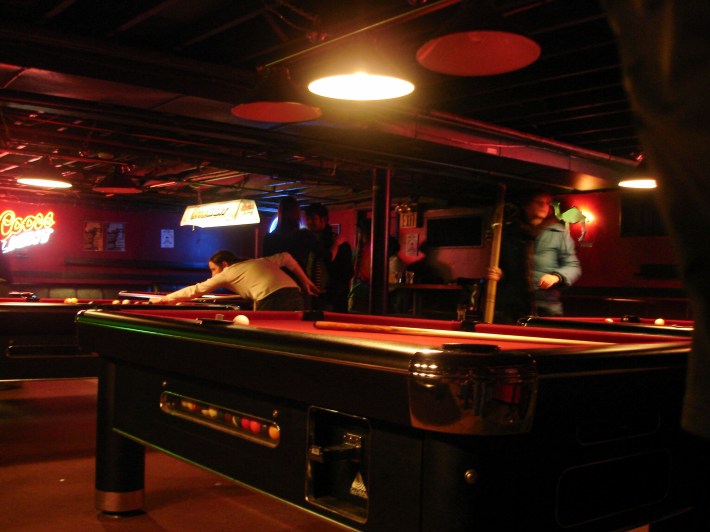
UnicusHarry: You like playing pool? Go play some pool. You like to drink? You want some good food at three in the morning? You want to hear some interesting music? Monday to Sunday, it was a place you literally find who you are as a young person.
McPherson: Staraoke was a big thing. It would be packed, and it’d be a whole lot of fun.
Arzu Gokcen, Staraoke: I started doing a happy hour at the Dinkytowner. I met [bartender] Eric Odness that first evening. We went on a failed date to the Triple Rock, and decided to start a band—So Fox—together instead!
Mark Erickson, door: I don’t think the waitstaff was mostly musicians, but the bartenders were, for sure.
Ushio: All the bartenders were extremely good looking, and the servers were extremely good looking. They made sure it was a vibe.
Marshall: I remember a show that I played there. It was my last show that I played before giving birth to my oldest daughter. And I remember it because I couldn’t reach the strings. I was like, “It’s time to stop now, because the guitar is too far away from my body.” The baby was in the way, and that was my cue to hang it up for a little bit.
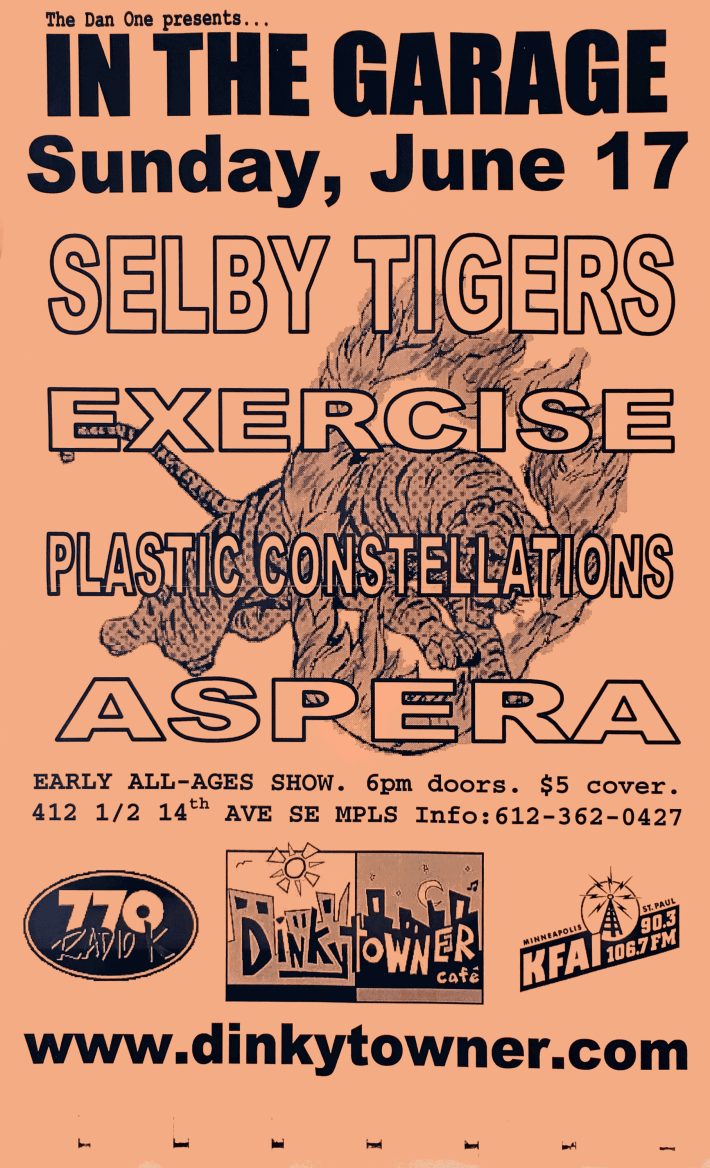
Dan Haugen, booker, In the Garage: James reached out to me. I’m guessing it was because of my association with the Foxfire. We got coffee, and he asked me if I would be interested in booking an all-ages night at the Dinkytowner. April 1, 2001, was the first In the Garage all-ages Sundays. I would have been 21 or 22 then. Nate Johnson did sound for some of the nights, I think.
Ushio: There was a whole period of time where someone had blown out the high end on our speakers. It was maybe a couple weeks, maybe one week. But it was enough time where you come in, you book someone, and you think, “OK, how am I possibly going to make this sound OK?”
Haugen: People who used to get their music at Foxfire could now get some of it at the Dinkytowner. The first show that I booked there was Decembers Architects with Malachi Constant and Darren Jackson of Kid Dakota doing a solo set. Decembers Architects were one of the Foxfire bands, for sure.
Baumgarten: Hockey Night was fantastic. They went on to become Free Energy in Philadelphia. Strangers were always good. Mark Mallman—he’s just such a showman. There was this guy from Duluth named Jamie Ness, whom Dan and I were in love with, who I feel was a proto-MJ Lenderman: singer-songwriter, wry wit, just a fantastic songwriter. He was in a band called ATF, as well. But I don’t think you’re gonna find him on Spotify.
Peter Lansky, Too Much Love: I saw 12 Rods play their last show there, and that was one of the best shows I’ve ever been to—a hundred people, maybe.
Grey: You just felt so happy to be there and to be in the presence of those folks. Dave King was their drummer. I also remember Dave King would do a lot of the talking: give Dave a microphone, and he has some funny shit to say.
Holland: Kelsey [Hanson] and Keri [Kranz] ran the door, and they were both Radio K DJs. Keri was one of the last bookers of In the Garage.
Everest: I have such distinct memories of Tapes ’n Tapes. I think their first gig was as part of the Sunday-night In the Garage series.
Grun: In the Garage was wild. There were nights where I saw Tapes ’n Tapes, it was just me, Keri, and Kelsey—and Tapes ’n Tapes. [Laughs.]
Jeremy Hanson, musician 2: Josh [Grier, of Tapes ’n Tapes] saw me play [at the Dinkytowner] and dug it. I went in and auditioned, and he had given me a copy of the EP, but we ended up playing some new stuff that ended up on The Loon, and I came up with some parts on the spot . . . I didn’t know what a blog was, and had never heard of Pitchfork, but Josh kept telling me that some cool stuff was happening with the record.
Christopher Matthew Jensen, DJ, Radio K3: Tapes ’n Tapes signed to XL, and it felt like the Minneapolis scene was on the come-up.
Erickson: What that scene started, that’s when the group Fog—who I all met at the Dinkytowner—was touring more.
Ushio: We had Kimya Dawson from the Moldy Peaches come through. And there was a tornado warning. I remember at some point she stopped, and she said, “Let’s go upstairs and watch the tornado,” and we went up, and the sky was green. It was windy. It was very exciting.
Baumgarten: Dan Haugen was the reason I was hanging out at the Dinkytowner. Around that time, I was running the nascent arts section at the Daily and freelancing for the Pioneer Press, writing about music. So we were in that space, and we wanted to collaborate.
Tom Loftus, Modern Radio Records: There was that short-lived local-focus zine, Lost Cause. Those guys hung out there all the time.
Sigelman: I played in a band with this guy named Mike Brady. Mark Baumgarten was at the U, and he reviewed our show. He wrote one, maybe it was two pages on the night, and maybe he drew some pictures. He pressed a zine out of it and brought the review back to us by the time we were unloading.
Johnson: I remember Mark telling me about his magazine idea and thinking: “Yeah, make it happen! This town needs a good music zine.”
Devaney: When Lost Cause came on the scene, it was this gift: Somebody thinks we’re important enough to devote an entire publication to.
Baumgarten: I gave In the Garage the back page of Lost Cause every month, which shows you my business acumen, that I was giving away the best real estate I had to myself.
Devaney: There was so much coverage, it probably inflated all of our egos a bit. Living in the eternal shadow of the supposed heyday of Minneapolis music, it felt really important for our age group.
Baumgarten: Lost Cause winds down in the summer of 2003. We had a wake at the Dinkytowner. It was one of the most wonderful nights of my life. People showed up who loved the magazine—and who I didn’t know. It really was clear that people were reading it. We had a Lost Cause banner that we would hang up during those In the Garage shows, and everybody signed it.
McPherson: I like hip-hop. I want hip-hop music playing when I’m having an omelet. The Dinkytowner catered to that.
Prof, MC 4: Atmosphere is most responsible for creating a scene . . . but second to that, I think the Dinkytowner was the biggest overall reason for this culture. It was where we all went to go, and almost every night of the week you could see people freestyling.
Johnson: Kevin Fitzgerald came to town showing his documentary Freestyle: The Art of Rhyme. We got Rhymesayers involved, and after the showing, everyone showed up to freestyle while Kevin filmed them. Slug was there and was like, “Don’t put me on the poster next time.” But he went off on the mic. Buddha Tye went hard. I remember Kevin saying, “Damn, this guy is legit.” The Dinkytowner was jam-packed, it was wild.
McPherson: I went to that, and I remember being the only person watching Muja Messiah and Raw Villa rapping up on stage. I was like, “These dudes are incredible.” And then one of the dudes started rapping about me. He wasn’t like, “This is an excellent human being who’s well dressed.” I was like, “Are you about to start dissing the one person who’s fucking listening to you rap?”
Elabbady: You would see heads from Rhymesayers trying to catch whiffs of who’s up and coming.
Larson: Guys on the Rhymesayers label had a place they could play anytime they wanted to on a Saturday that gave them training to go on the road. It gave them all stage time and practice time.
McPherson: Rhymesayers did a monthly event there, and one of those landed on New Year’s, so Heiruspecs played New Year’s Eve as Atmosphere’s backing band, with Murs joining. We covered Alanis Morissette’s “You Oughta Know.” This is 2002 going into 2003.
Ant: I wasn’t playing live then; I was just producing the records. That was the first time I’d seen Atmosphere with a line like it, in the cold outside, around the block.
Holland: Eyedea and Abilities were there all the time. I saw Eyedea many times, but I didn’t know he was going to become Eyedea, you know?
Erickson: That’s where I became friendly with Eyedea, because he was there enough to do that.
Holland: You’ve never seen anybody on the mic like that guy. It was just so obvious. But he was not an ego guy. He seemed to have a lot of real good friends around him all the time. And then they’d get on the mic and they’d battle, and they would insult each other, but then they would hug afterwards.
Carnage: It was such a developed scene. Not too many places had a scene that was developed that much in the hip-hop realm, to compare to the Dinkytowner, because Minnesota was so cutting-edge when it came to indie hip-hop.
Larson: DJ Stage One’s residency started there that first year. He was over there every Saturday for damn near 10 years.
McPherson: Stage is now my good friend. But at the time, he thought my name was Heiruspecs. He was like, “What’s up, Heiruspecs?”
King Otto: I got my first actual residence DJing, for the Fifth Element’s Essential Elements night, at the Dinkytowner one Tuesday a month for a year or two. And then me and my homie, DJ Superbrush, started a beat battle there called Run Ya Jewels for two years. Rap producers would get on stage, and whoever had the best beat won. Zach and Kevin Beacham took it over and gave it a different name: The Last of the Record Buyers.
DJ Stage One: I hooked up with Unicus and we started the Hook-Up. We brought national acts. We brought local acts. We created a platform where there really was none for certain artists. A lot of people got their first performance at the Dinkytowner.
UnicusHarry: I did a song called “Dinkytowner” with Capaciti. It’s a breakdown of my experience going there. When you told me about this interview, I’m like, “Man, just listen to that song.”
Grun: We had crazy Saturday nights there. I remember Dessa had just a crazy show—it’d be definitely 400 people. It was just chaos.
Sean Anonymous, MC: Just to be able to go and share space with some of these folks that I’ve been looking up to for years. You would see Slug or Ant chilling there. Eyedea was one of the reasons why I started rapping in the first place. Prof would be on stage, Dessa, Brother Ali.
Larson: I remember watching Unknown Prophets, I think it was December 2006. There was a blizzard. We got eight, nine inches. They showed up. Two, three people in the audience. No one could get there. Those two guys? The best set I’ve ever seen them do. It was great.
UnicusHarry: Mac Lethal was definitely one person I brought in.
Combs: The Crest, from Madison. The Mission, who later became Crown City Rockers.
UnicusHarry: Akil from Jurassic 5. Alkaholiks—that was a New Year’s Eve show. That was very good.
Diego: That was a pretty crazy show. Tash from Alkaholiks had a big bottle of Hennessy, and he was just pouring shots into the mouths of anybody that was in the crowd.
Carnage: One time, Wise Intelligent from Pure Righteous Teachers did a show. That was pretty insane, to have a rapper of that caliber, that we all grew up listening to, at the Dinkytowner.
Boyles: I saw Z-Man there, who is a Bay Area rapper, and it was amazing. He just, like, got crazy in the crowd. I remember he had super-long dreadlocks and was just going hype.
Kevin Kane: You start working with more national talent, talking to their agents and figuring out what color Skittles they want in the green room, which didn’t exist.
Elabbady: Most of the venues around that time had a backstage area or a green room of sorts, but not the Dinkytowner, which allowed for a lot of celebrity veneer to fall by the wayside.
Safar: We signed this multi-page contract and agreed to do this event. Biz Markie gets there, and they’re like, “Take us to the green room.” I just started sweating: “We don’t have a green room.” We took him into the kitchen.
Hartel: The soda room.
Terhark: It’s where all the syrup for the soda gun is stored, so it’s always got the stickiest floor.
Hartel: Biz Markie was just sitting in there on some boxes of soda. In this little closet, huge Biz Markie. There was nowhere else to put him. I said, “Can I get you anything?” He said, “I’ll take some apple juice.”
Chaz Kangas, MC: The Twin Cities Celebration of Hip-Hop was something that would happen every summer. There would be an MC battle. The final in 2007 at the Dinkytowner wound up being the last one of that magnitude, so I am the last reigning defending champion. I still have the trophy on my wall—a spray-painted gold microphone, written in Sharpie and white paint pen. It’s really cool.
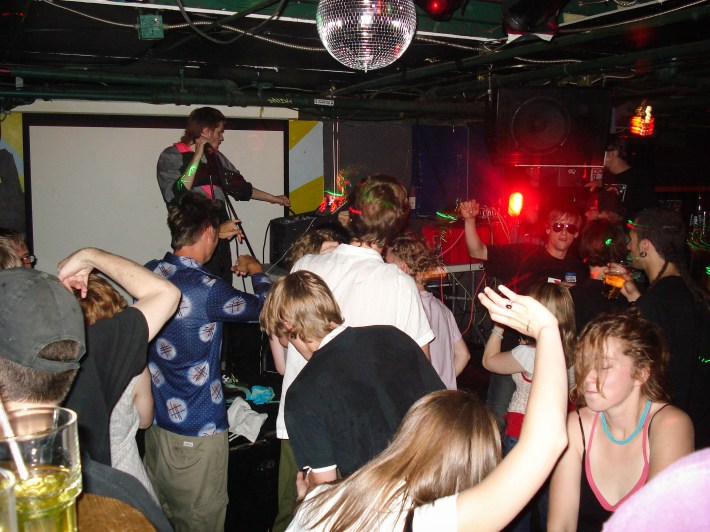
Scott: I saw Mr. Dibbs win an epic DJ battle there. Also, a lot of really seedy techno events.
Boyles: If there was ever a bar for the grown-up rave kids that was like Cheers, it was the Dinkytowner on the weekends.
James Patrick, resident DJ: I was dating Casey Engler, one of the record buyers at the Electric Fetus. I was a manager at Vital Vinyl in Loring Park, the record store. She was DJing on Friday nights at the Dinkytowner. She was like, “Do you want to play sometime?” So I started DJing there. She pretty quickly was like, “Why don’t you just take over? People love your music,” so I started playing minimal techno. That was really, I think, where the Dinkytowner started transforming from a place to get pancakes to a place to go party.
Zak Khutoretsky, DVS1: From 2002 on, I stopped throwing big parties. I just said, if I can’t do it the way I want to do it, I’m not doing it at all. We started doing this night at the Dinkytowner, in the basement—like, 150 people.
Safar: Any of the dance nights that got to overcapacity, that was always when we were a little bit stressed out: “We can’t let any more people into the club.” Those were the nights, and there were many of them.
Christian James, DJ: All those nights were heavy with me just because, you know: That’s the scene.
Patrick: Everyone had flasks and pills and partied all night there.
Grey: It was an established place to play. Artists that are big right now played in that room. Like Claude VonStroke [in July 2006]—he’s a huge DJ.
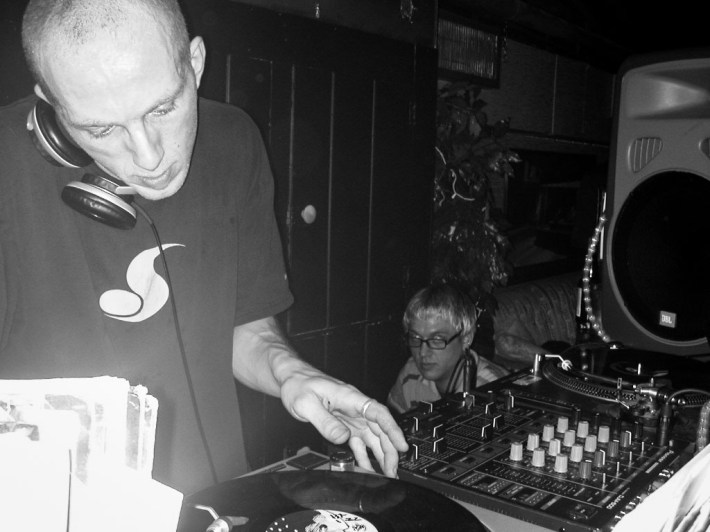
Centrific: I would say the most historic thing that I ever went to at the Dinkytowner was probably the DVS1 live PA in 2005. There have only ever been three. The summer of 2005 at the Dinkytowner was the first one. The tunes, or the foundation of the tunes, that he had in that set became the Transmat record and the Enemy/Timefog record, and the Klockworks records. Basically, all the stuff that put Zak on the map [as a producer] was made for that set in 2005.
Patrick: On my 28th birthday [in 2004], Jack Trash and I booked Richie Hawtin at the Quest. I had asked Richie in advance, like, “Yo, it’s my birthday. Can we please do an after-party? I have the perfect venue.” Richie was like, “No, no, no.” Then he looked at me at midnight, when we were playing, and was like, “Let’s do the after-party.” He had been drinking a lot of vodka.
Hester: JP had made the effort to set that up so that the club could be open all night, no closing time.
Patrick: We needed extra sound. Christian James went over to where we were doing another residency at the time, a nightclub called Taboo. The sound [system] was actually outside, behind a big metal fence. Christian—this is major Purple Heart status—climbed the fence and stole his own sound system from the back patio and hoisted it over the metal fence. They just got it plugged in right as Richie and Magda and I were walking in.
Centrific: I don’t remember Richie playing there. I remember him being there.
Patrick: He was sitting at the bar and begging for vodka. And they were like, “No, it’s after bar time.” As they walked away, he just was like, “I’m grabbing that!” And he took it and had it at the bar, drinking straight out of it.
James: I think that was Mike [Gervais, DJ] and Steve, maybe JP. I remember a bunch of us walking him out together. I mean, we were all kind of a mess.
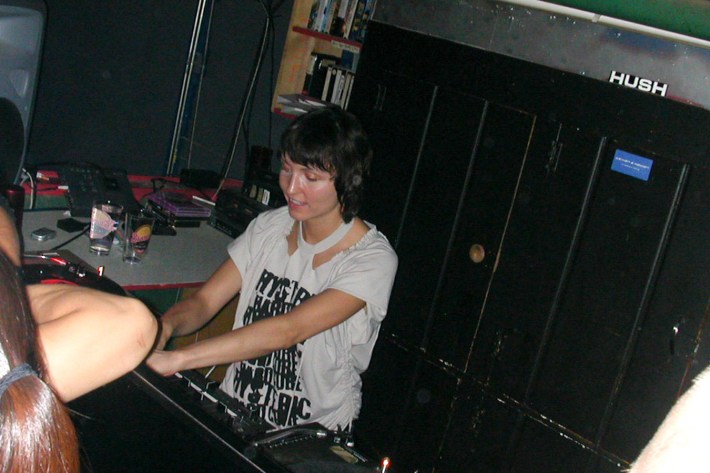
Hester: Magda basically played all night.
Patrick: It was a great birthday party.
Khutoretsky: In 2006, I opened up my club in the basement of the Lumber Exchange Building, called Foundation. It only lasted about 18 months.
Elabbady: Some people also moved over to Foundation when it opened up. The booking at Foundation was second to none.
Boyles: People were supporting Zak.
Traas: People were chasing individuals and scenes, rather than venues, necessarily.
James: Foundation was a lot of fun. They just couldn’t pull the numbers in. A lot of money to fucking run a club, Jesus.
Centrific: Once Foundation closed, we all started moving heavily into underground spaces. The writing was on the wall: That’s where we should be.
Margolin: We decided that we’re gonna try to do fine dining. That was the goal. So [the Dinkytowner] was sold in ’03: We opened Red, which was in the Foshay Tower.
DJ Stage One: [In frosty Russian accent, à la Vlad] “Um, yah guys, I kind of sold the company. New people are very good people. I’m going to own another bar in downtown Minneapolis, but I’ll be around.”
Hartel: I worked there with the Russians, and then also the dudes.
Cortez: The last pair of owners was Kyle McCarty and Brian Elias.
McCarty: I was in college—University of Wisconsin Stout. I was supposed to graduate in early 2004. But my uncle Bodie was like, “Hey, you want to get involved in this restaurant?” In late 2003, me and my business partner, Brian, went in and checked it out. It was a very similar menu to what I knew from Uptowner. I was ready to get out of college, and so we took it over January 1, 2004.
In December 2003, we went in and started training to take over in January. There was a lot of pushback by the staff. They were like, “Who the fuck are these guys?” I remember one of the girls. She’s like, “They’re not getting any of my tips.” We were coming in to learn how to bartend—because we had to learn how to do everything. And no, we didn’t take any of their tips.
Hartel: A lot of people did not care for the dudes. They were trying to be like, [in Bill-and-Ted voice] “We’re gonna actually run this like a reeeaaal business.” And people are like, “Really?”
Grun: They were a little in over their heads. But I think it needed a ton of repairs, too.
McCarty: When we took over, you could still smoke inside, so that was horrible. We initially bought a big smoke-eater, and that helped. We also spent 15 grand to get an AC unit put on top of the roof. There was [an AC], but it was old, and it did not work well.
Patrick: They were in shock: “We thought we were buying a restaurant and we’re buying this counterculture hub.” But they were really cool about letting it happen, and they kept it going for us for quite a while.
Mike 2600: There were some great and funny rap battles featuring a very young Prof early in his career.
Prof 5: The Dinkytowner in Minneapolis . . . We owned that motherfucker . . . My bro Rahzwell would probably start a fight, punch some dude at the bar in the face who was maybe talking about one of us—like that. And then we’d all spill out outside and fight . . . Even the females we were with were just fighting. It was just bloody faces, cops wouldn’t show up, some fights 20, 30 minutes, right out in the street, in the middle of Dinkytown.
McPherson: Prof used to have a running partner, MC Rahzwell, and they ballooned in popularity really quickly. They would do something called the Drunk Show, and they would get effectively blackout drunk before they performed. You’re supposed to be more forgiving of their mistakes in a very debaucherous setting.
Kevin Kane: It was insane. I didn’t see anything wrong with it at first, until they started happening. When an artist tells you, “Hey, I’m not going to go on stage until I, or my partner, puke,” you’re like, “OK, I guess it’s a marketing ploy.” No—they did it. They were all in on that commitment.
Prof 6: We did that three times. They were all sold out. I mean, it was probably illegal to do.
McCarty: He made flyers: “Come and get me as drunk as you can.” We probably saw it maybe a week before the event, and we’re like, “Jesus, what the hell?” Then the Minneapolis liquor department brought me and Brian into their office and said, “What the hell are you doing? You can’t be promoting this. Do you guys like your liquor license? Promoting excessive drinking!” Thankfully, we got off light, but they said, “Don’t let that shit happen again.”
Ross: I have a big poster in my hallway from the DU Nation CD release party [in 2006]. That was a big, big night.
Justin Schell 7: DUNation.com was begun in the summer of 2001 by Robbinsdale native Lars Larson. The site originally began as a techno web community called “Division Underground,” but was shortened to “DU” when it became more hip-hop oriented.
Diego: It started out as a stripped-down message board. That’s when hip-hop in the Twin Cities was very cohesive. All the graffiti writers and B-boys and DJs and rappers and fans were interacting and supporting each other’s shows. Then DU Nation expanded to be a website, and they did awards. They threw a couple parties at the Dinkytowner, which brought out this whole dynamic of different people from the hip-hop world.
Boyles: There was a lot of hip-hop drama. Lars had a lot of friends that were hip-hop kids, and tons of friends that were a crossover of hip-hop and techno. Doomtree was there, because I remember talking to Dessa. You wanted to get your photo on the website. It was a who’s who, for sure, of both scenes.
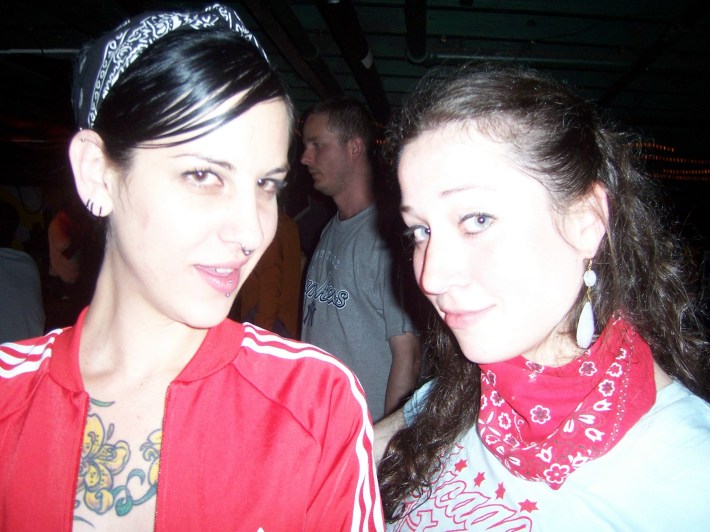
Rimstad: The DU Nation Awards were part awards show, part inside joke, part house party, and part public disaster—like a family reunion held inside a pressure cooker. It was loud, messy, hilarious, supportive, and competitive. Artists, DJs, promoters, message board personalities, photographers, random regulars, and people who absolutely should not have been handed a microphone all ended up under one roof. You never knew if the night would turn into a heartfelt speech, a freestyle battle, or someone getting roasted by the crowd.
Lansky: I battle-rapped the son of the guy who wrote “Funkytown” for an episode of MTV’s Made—this show where they would take a kid and try and make their life-dream come true. They found a white kid from the suburbs who wanted to be a rapper.
McCarty: That was on a Sunday night. Sunday night was our open-mic for music acts. I didn’t work very many Sunday nights. But yeah, I heard that was something—they were trying to turn the guy into a rapper. They had a battle up there.
Lansky: They were looking for volunteers to battle him, and nobody was raising their hand, so I was like, “I will do it.”
Dan Kane: They filmed it during the day, and they made it look like it was this big thing, but it was nothing really going on. It’s a fake kind of setup, similar to any reality show.
Lansky: I was freestyling. I remember that I rhymed “MTV Made” with “couldn’t get laid.” I did not make the episode.
McCarty: When my buddy Brian and I took it over in 2004, it was with my uncle behind the scenes. We never signed any papers—so they technically never sold it to me or Brian. They used the assets of the Dinkytowner to secure the loan for Red restaurant. Red went out of business a year into its opening. They defaulted on the loan. It took them four or five years to crawl back to the Dinkytowner: “You guys owe us all your assets, because these were put up as collateral.”
[At the same time], our landlord wanted to raise the rent 40 or 50 percent. Maybe he had a better relationship with the Blarney upstairs, so he was trying to get us out anyway.
Grey: The Blarney—a shitty Irish bar.
McCarty: And then we had the city of Minneapolis telling us, “You’ve got to do all these upgrades if you want to keep getting your liquor license.” At that point it was just like, “There’s nothing we can do.” It’s pretty sad when we closed, because we were just hitting our stride.
DJ Stage One: [The landlord] wanted to get us out of there anyway. I think that to absorb the Dinkytowner was the plan from day one.
Larson: The guy who owns the place now and owns the whole building—they finally sold out to him. The frickin’ housing market crashed.
DJ Stage One: I seen the blowback that the community was giving the owners, to hip-hop kids being outside, fighting.
Anonymous: There was a Halloween show that was sold out. At Blarney, this college-kid dance party let out at the same time as this rap show. It turned into a 50-on-50-person brawl between the rappers and what I would maybe consider bro-ish college kids. People are breaking bottles on each other’s heads. That was like the wild west.
Rimstad: The short notice was definitely shocking. The Dinkytowner was such a major gathering place for the local hip-hop community and so many other creative groups. It felt permanent in a way. What made it even stranger was that Blarney upstairs eventually took it over the space. There was a real sense of irony in that for a lot of people.
Grey: It’s always a surprise when you feel like there’s an established place that’s catering to artists—that that cycle is just going to continue.
Carnage: Yep, yep, yep. They sold us out.
Elabbady: It was just as rough as finding out when Prince died.
UnicusHarry: It was my birthday show: May 31. I did it every year. I was about to do it and they’re like, “So we’re closing.” And I was like, “Hey, what now? And they’re like, “Yeah, but you get to do your show.” [Laughs.]
Combs: It was insane. It was maybe the most people ever in there. We were fucking crowd surfing—so bananas.
Matt Helgeson, musician: The Dinkytowner was part of the last wave of that era. Now it’s Qdoba and vape stores.
Terhark: If you took a snapshot in 2001 and 2009, there would definitely be differences. But the differences would be minimal compared to 2010 and 2026.
Hartel: I mean, there’s a Target.
Terhark: It’s unrecognizable.
DJ Stage One: The Dinkytowner left a legacy of brotherhood and sisterhood amongst artists who might have never had that connection before, due to different age groups, geography, whatever.
Baumgarten: We took it for granted, but also, I think that we made the most out of it.
Safar: I talk to my friends and peers and my former colleagues about it all the time.
Holland: A lot of the people I met on that gig I’m still friends with, to this moment.
Ushio: And you could have such a good party with these people! Like, who has a venue now? Who is putting together the reunion?
Additional thanks: Kate Mather, Nate Patrin