
In brief
- A suspected case of the H5 avian flu has been detected in Western Australia.
- The deadly strain was first detected on Heard Island in October, 4000km southwest of Perth.
You May Also Like


Fears are growing a deadly avian disease that has killed millions of animals worldwide has reached the Australian mainland after the discovery of a suspected case of bird flu.
A single migratory wild seabird potentially infected with the disease had been found in Western Australia, the federal government confirmed on Friday.
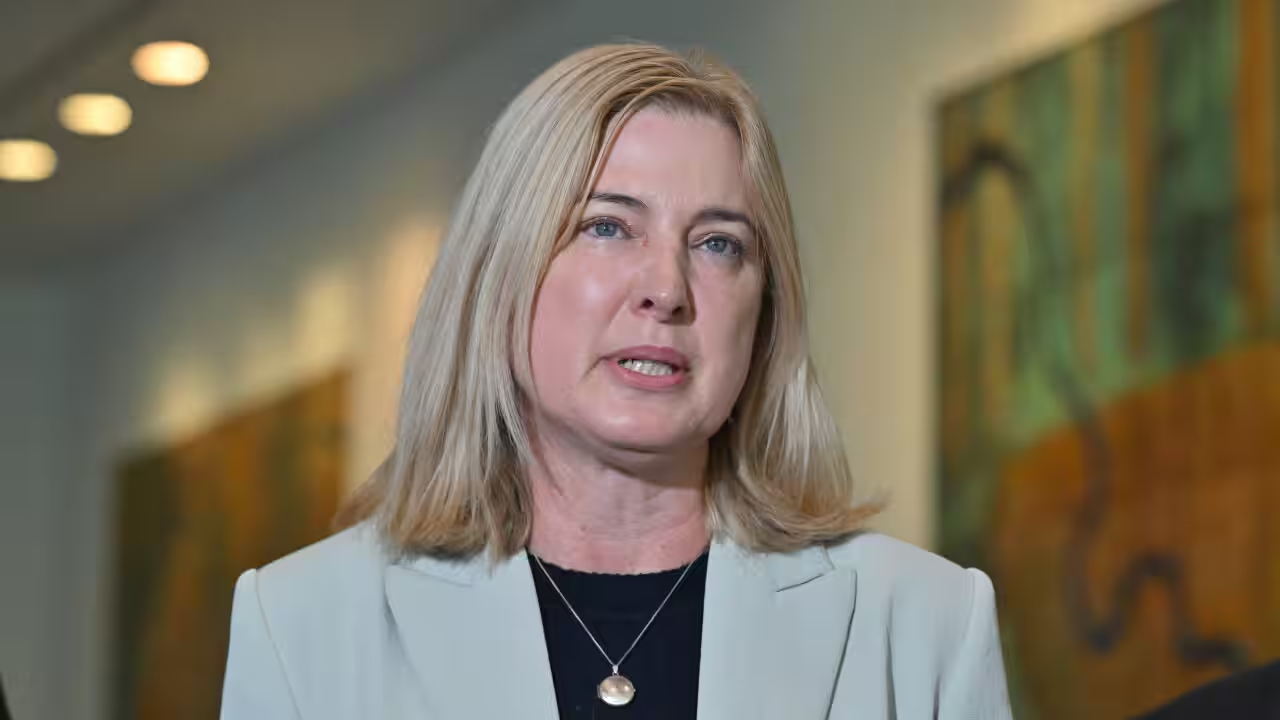
“If it is confirmed to be the H5 bird flu, this will be sobering, but not unexpected given the spread globally,” Agriculture Minister Julie Collins said.
Test results expected on Saturday will confirm whether it is the H5N1 strain that has killed millions of birds globally.
Mainland Australia is the only continent yet to detect the killer strain.
Your trusted source for staying up-to-date with the world around you. Get free daily news updates and analysis, straight to your inbox.
“There is no evidence of any mass mortality at this time, nor is there any evidence of infection in poultry,” Collins said.
The brown skua bird was found on a remote beach at the Cape Le Grand National Park near Esperance, about 700km southeast of Perth.
WA Agriculture and Food Minister Jackie Jarvis said the bird was isolated after it was located in an unwell state on Sunday and died that night.
Preliminary testing by state authorities returned a positive result for avian influenza on Thursday.
Samples were sent overnight to the CSIRO Australian Centre for Disease Preparedness in Geelong for further testing to determine the strain.
“A sick Giant Petrel was also found in the same area and, due to it also being a sub-Antarctic bird, this has also been tested, and we are awaiting results,” she said.
The deadly strain of bird flu was detected for the first time on Australian soil in October on the World Heritage-listed Heard Island, which sits some 4000km southwest of Perth.
Scientists who visited Heard Island estimated 13,359 southern elephant seal pups had died from the disease out of a total population of 17,364.
Collins insisted the strain’s arrival was inevitable and said the government had been preparing for it as a result.
She downplayed fears it could devastate Australia’s farmers, who were still reeling from the fuel crisis caused by conflict in the Middle East.
“This is a single bird, a suspected case and we are as prepared as any country can be,” Collins said.
“We have invested early, as we said we would, and those investments are now showing provision … if this is detected as a case, we will have gotten there early.”
The risk to human health would be exceptionally small, she said.
State and territory representatives and industry experts were meeting on Friday afternoon to discuss planning.
Opposition agriculture spokesman Darren Chester said the case must be investigated thoroughly to protect the poultry industry, the broader agricultural sector and export markets.
“The coalition supports a swift and co-ordinated response by state and federal authorities, working closely with industry and biosecurity agencies,” he said.
The Invasive Species Council said the development was deeply concerning, given the devastating global impacts of the H5N1 virus on wildlife.
“If H5N1 is confirmed, the government’s own risk assessment predicts potentially catastrophic impacts on native birds,” policy director Carol Booth said.
“The virus’s increasing ability to infect mammals (also) raises the prospect of severe impacts on marine mammals and other wildlife.”
For the latest from SBS News, download our app and subscribe to our newsletter.
