
Now Reading: Tesla Recruits Fleet Partners as Cybercab Expansion Model Takes Shape — BigGo Finance
- 01
Tesla Recruits Fleet Partners as Cybercab Expansion Model Takes Shape — BigGo Finance

Tesla Recruits Fleet Partners as Cybercab Expansion Model Takes Shape — BigGo Finance
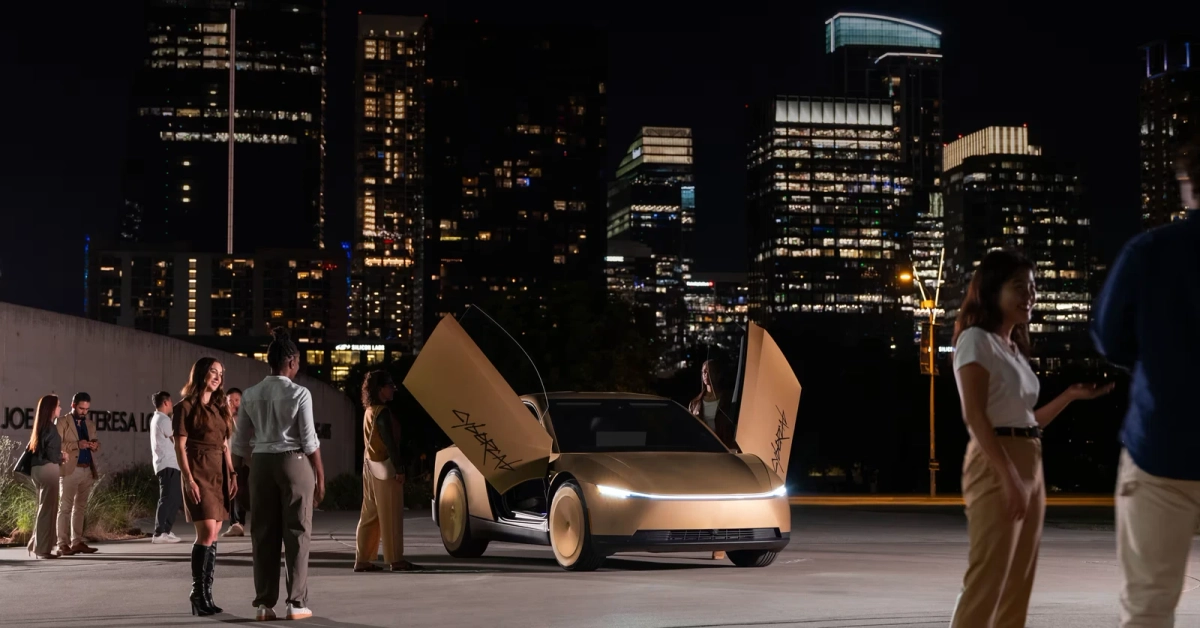
Tesla (TSLA) has begun laying the groundwork for a much larger commercial expansion less than a week after its driverless Cybercab started carrying passengers in Austin. Beyond the attention generated by the vehicle itself, Tesla has simultaneously launched a partnership recruitment program targeting entrepreneurs, hinting that it may borrow from Amazon’s logistics outsourcing model—leveraging external capital and operational muscle to accelerate the nationwide rollout of its Robotaxi network.
Tesla’s website now features a new page with a straightforward headline: “Help us build the Robotaxi network.” Prospective partners interested in “Cybercab fleet vehicle purchasing” and “mobility hub and infrastructure” development can express interest by filling out a form. However, Tesla has not yet disclosed the economic details of this partnership model, including the per-unit price of the Cybercab or how revenue would be split between fleet owners and Tesla.
This move marks a potentially significant shift in Tesla’s business model. The company has long been known for its deep vertical integration—from vehicle manufacturing and battery production to its Supercharger network, nearly everything has been controlled in-house. Introducing independent fleet owners means Tesla could shift a portion of vehicle capital expenditures and operational risk onto external entrepreneurs, while retaining control over autonomous driving technology, the ride-hailing platform, and network operations.
Amazon’s Delivery Service Partner (DSP) program offers a ready-made reference point for this model. Amazon currently relies on more than 4,000 independent businesses to handle last-mile package delivery. These local entrepreneurs operate fleets bearing Amazon branding and employ drivers, while Amazon provides customer resources, technology platforms, and logistics network support. This arrangement has allowed Amazon to build a massive delivery system without owning every vehicle or directly employing every driver.
If Tesla pursues a similar path, independent fleet owners would shoulder the capital investment for purchasing Cybercabs and bear the financial risk of vehicle idle time or underperformance relative to expectations. For Tesla, this structure would help move billions of dollars in vehicle and infrastructure costs off its balance sheet while maintaining dominance over the entire mobility network.
But Amazon’s experience also reveals the potential risks of dependence on a single platform. Recently, some Amazon DSP partners have organized to seek better financial terms, though Amazon maintains that the vast majority of its partners are profitable. In Tesla’s scenario, entrepreneurs could invest hundreds of thousands of dollars purchasing Cybercabs or building infrastructure, only to face the risk that Tesla adjusts partnership economics at any time—or even expands its own competing fleet.
Early-Operation Price Volatility and Rider Feedback
The Cybercab’s commercial launch is proceeding amid both enthusiasm and controversy. On pricing, Tesla’s previously touted low-cost advantage has shown up in real-world orders. One passenger compared quotes for the same trip to a well-known Austin bar: a Model Y Robotaxi quoted $12.10, while the Cybercab cost just $7.77—roughly 35% cheaper.
However, as operating days accumulated, the volatility of dynamic pricing began to surface. When weekend demand spiked, Cybercab estimated wait times approached one hour at one point, and quotes even exceeded those of Model Y Robotaxi and Uber. A MotorTrend journalist hailed five Cybercabs over roughly 24 hours, covering 11.5 miles at a total cost of $33.72, averaging about $2.93 per mile. Three short trips (under 2 miles) with base fares notably inflated the average; the longest trip of 6.2 miles cost $11.44, or about $1.85 per mile.
Silvio Brugada, head of Cybercab vehicle software, said dynamic pricing is currently being used to balance supply and demand, and that as the number of Cybercabs increases, wait times and average prices will continue to decline. This suggests the current fleet size is still too small to sustain stable low pricing—Tesla remains in a cost-balancing phase.
The MotorTrend journalist’s overall riding experience was largely positive: the hailing process was similar to Uber and Lyft, the butterfly doors opened automatically, and the ride was quiet and smooth. When another vehicle cut in abruptly mid-trip, the Cybercab braked and avoided it on its own. But the seats drew the most criticism—flat backrests with little lumbar support made for noticeable jostling on rougher roads. Tesla has begun collecting feedback, distributing surveys to early passengers covering vehicle availability, wait times, seat comfort, cleanliness, and other dimensions, along with a multiple-choice question: “What would you most like to add to the next version of the Cybercab?” Options include heated seats, ventilated seats, fold-out tray tables, and wireless phone charging.
Hidden Manual Controls and Regulatory Scrutiny
On the operational front, an unexpected discovery has sparked a fresh round of discussion about the Cybercab’s design logic. Multiple passengers noticed that the central screen occasionally displays an unconventional interface—a square virtual control area in the lower-left corner featuring a joystick icon in the center, with forward above and reverse below, surrounded by brake, horn, and door control buttons. Some passengers tried operating it, but the vehicle did not respond.
In fact, this virtual manual driving system was first spotted as early as August 30. At that time, a Cybercab misaligned during automatic parking at an Austin Supercharger station, and a staff member inside the vehicle pulled up the manual driving interface on the screen, drove the car out of the spot, and then backed it in again. This indicates the Cybercab is not entirely without a steering wheel and pedals—rather, these functions are embedded in software for use by testing, maintenance, and fleet operations personnel in low-frequency scenarios. Some analysts believe this interface could eventually be used by law enforcement or emergency responders, for example to move a vehicle that has lost autonomous capability out of the middle of a road.
Greater uncertainty lies on the regulatory front. The day after the Cybercab began commercial operations, the National Highway Traffic Safety Administration (NHTSA) formally opened an investigation covering up to approximately 1,000 vehicles. The U.S. auto regulatory system allows manufacturers to self-certify compliance without submitting each model for approval, but the Cybercab eliminates the steering wheel, brake pedal, accelerator pedal, and traditional rearview mirrors—while numerous existing federal motor vehicle safety standards are still written around human-driven vehicles.
NHTSA proposed rule changes in June that would remove requirements such as mandatory manual brake pedals for autonomous vehicles, but the adjustments have not yet been fully completed. Another compliance path is to apply for an exemption—under current rules, NHTSA can approve up to 2,500 vehicles per manufacturer per year to operate on roads without traditional manual controls. In July, Amazon-owned autonomous vehicle company Zoox obtained limited commercial deployment approval through this pathway. But Tesla did not apply for a similar exemption for the Cybercab, instead opting for direct self-certification of compliance. The core of NHTSA’s investigation is precisely what technical data and judgments Tesla used to determine that the Cybercab meets federal safety standards—or that certain standards do not apply to this vehicle.
Real-World Constraints on Scaling
Even if Tesla ultimately adopts some form of franchising or partnership model to expand the Cybercab fleet, its ability to scale an autonomous fleet at full capacity still faces practical constraints. Tesla currently operates only a limited fleet in Austin, with just 45 Cybercabs approved for driverless operation across the entire state of Texas.
On the production side, Tesla has stated its factory has annual capacity for 125,000 units, but in its second-quarter shareholder letter, the company explicitly noted that batteries are “the main limiting factor for near-term vehicle production growth.”
The market’s focus is on whether Tesla can fill the key gaps in its partnership proposal—particularly Cybercab pricing and the revenue-sharing mechanism between fleet owners and Tesla. If Tesla’s ultimate goal is to operate a ride-hailing network at scale, attracting thousands of external businesses to share the capital burden may be the fastest path.
Meanwhile, the Cybercab’s Asia tour has begun, with Hong Kong serving as the first stop on September 9. The gold-painted two-seat driverless vehicle is moving from Austin’s testing grounds into a broader market spotlight—and whether it can find a sustainable balance among business model viability, regulatory compliance, and user experience will determine the ultimate success of Tesla’s Robotaxi ambitions.