


Introduction
Neurochemical signatures of the sleep-gut-brain axis
Circadian rhythms of the gut microbiome
How does sleep loss affect the microbiome?
Health implications of sleep-microbiome disruption
Limitations and future directions
References
Further reading
From disrupted circadian rhythms to changes in microbial metabolites and intestinal barrier function, research is uncovering a close connection between how we sleep and the microorganisms living in our gut.
 Image Credit: Gladskikh Tatiana / Shutterstock.com
Introduction
The gut microbiota comprises a diverse community of bacteria, fungi, viruses, archaea, protozoa, and other microorganisms in the gastrointestinal tract, whereas the gut microbiome more broadly encompasses these microorganisms, their genetic material, and their functions.4,5 These microorganisms are involved in digestion, metabolism, and immune regulation. This article explores how sleep disruptions can alter the gut microbiome and its potential impact on metabolic, immune, and mental health.
Neurochemical signatures of the sleep-gut-brain axis
The sleep-gut-brain axis refers to bidirectional communication between the gastrointestinal tract and brain that can influence sleep and other physiological functions. For example, gut microbiota can influence neural signaling through microbial metabolites and neuroactive compounds, including short-chain fatty acids (SCFAs), tryptophan metabolites, and secondary bile acids.2,3 These interactions generate signals that are communicated to the brain through neural, immune, endocrine, and circulatory pathways, including signaling involving enteroendocrine cells (EECs) and enterochromaffin cells (ECCs) within the intestinal wall.3
Microbial-derived signals also influence specific biological processes that regulate sleep and circadian function. Most of the body’s serotonin is synthesized and released by ECCs in the GI tract, where it regulates intestinal motility and signaling2. Although peripheral serotonin does not readily cross the blood-brain barrier, gut-derived serotonin can indirectly influence sleep through interactions with the vagus nerve, immune signaling, and other gut-brain pathways. Gut-derived histamine produced by Escherichia coli, Limosilactobacillus vaginalis, and Morganella morganii may contribute to gut-brain signaling; histamine itself is involved in regulating the sleep-wake cycle, local immune responses, and gastrointestinal function.2
Other neuromodulators that support wakefulness include acetylcholine, dopamine, hypocretin, and norepinephrine. Melatonin, gamma-aminobutyric acid (GABA), adenosine, and glutamate are also involved in sleep regulation. Several neuroactive compounds, including serotonin, acetylcholine, norepinephrine, dopamine, melatonin, and GABA, can be produced or metabolized by gut microorganisms. Their effects on sleep can be indirect and do not require the microbial compounds themselves to reach sleep-regulating brain regions.3
Circadian rhythms of the gut microbiome
A substantial fraction of the gut microbiota exhibits daily oscillations, although estimates vary by host species, microbial group, and methods used; one review reports clear circadian variability in approximately 20% of mouse and 10% of human gut commensals.2 Species like Parabacteroides, Lachnospira, Bulleida, Roseburia, Veillonella, Haemophilus, Adlercreutzia, Eggerthella, Anaerotruncus, Oscillospira, Ruminococcus, and Escherichia have been reported to exhibit rhythmic variation.2 These rhythms are influenced by feeding-fasting cycles, which provide time-specific nutrient availability that shapes microbial growth and function.1,2
Host circadian clock genes also regulate the intestinal environment and microbial interactions, further reinforcing these daily patterns. Specifically, experimental studies reviewed in the literature associate sleep disruption with altered expression of circadian and intestinal-barrier genes, including brain and muscle ARNT-like 1 (BMAL1), cryptochrome circadian regulator 1 (CRY1), and occludin (OCLN). These changes have been linked to impaired intestinal barrier integrity and microbial dysbiosis; evidence from BMAL1 knockout models also indicates impaired epithelial function, microbial imbalance, increased susceptibility to intestinal infection, and altered lipid metabolism.2 Because sleep timing, feeding rhythms, and the host circadian clock are closely linked, short sleep and circadian misalignment can affect gut microbial communities through overlapping but distinct routes.2,6
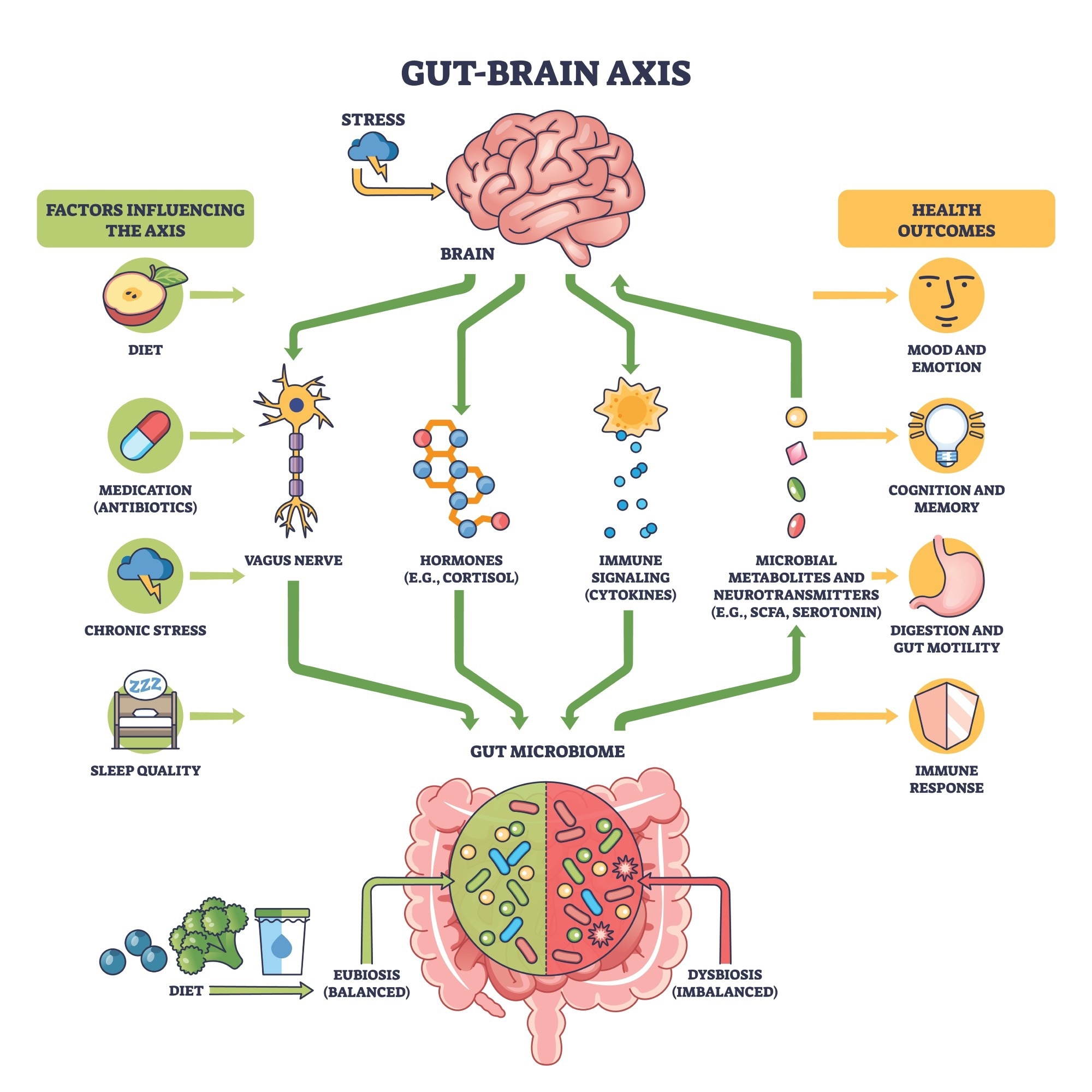 Image Credit: VectorMine / Shutterstock.com
How does sleep loss affect the microbiome?
Sleep deprivation is defined as the inability to get sufficient sleep. One review estimates that approximately 20-25% of the United States population experiences insufficient sleep and identifies factors such as diet, psychological pressure, and increased stimulation from smartphones.4 Sleep deprivation should also be distinguished from specific sleep disorders such as insomnia, narcolepsy, circadian rhythm disorders, and restless legs syndrome, although these conditions can themselves be associated with inadequate or disrupted sleep.4,5 Short sleep, repeated sleep fragmentation, circadian misalignment, and obstructive sleep apnea (OSA) represent different forms of sleep disruption and should not be assumed to produce identical microbiome changes.2,5
Experimental research indicates that sleep deprivation can alter gut microbial composition, but findings are not uniform, particularly in humans.3,4 Some studies have reported reduced α diversity, lower Bacteroidetes and higher Firmicutes, with a subsequent rise in the Firmicutes to Bacteroidetes (F:B) ratio.4 One study of 25 healthy participants undergoing 40 hours of sleep deprivation reported declining α diversity and reductions in several genera, whereas a human sleep-restriction study involving 11 healthy participants detected no change in gut microbiome composition.3,4 Microbial function may be as relevant as taxonomy: insufficient sleep has been linked to lower Faecalibacterium and butyrate-producing microorganisms in humans, while sleep-deprived mice showed reduced acetate, propionate, and butyrate concentrations.3,4 In animal models, sleep deprivation has also been associated with depletion of beneficial bacteria and increases in potentially pathogenic bacteria such as Aeromonas.4
“There is a bidirectional interaction in which sleep disturbances can lead to changes in the microbiota and vice versa.5”
Health implications of sleep-microbiome disruption
Animal experiments indicate that sleep deprivation can impair intestinal barrier integrity.4 Diminished function or expression has been reported for tight junction-associated proteins including claudin, occludin, and zonula occludens-1 (ZO-1), as well as goblet cells and mucin 2.4 Such changes can increase intestinal permeability and promote mucosal injury, although the extent to which these mechanisms occur in humans during ordinary sleep loss remains uncertain.4
Compromised barrier integrity may facilitate the translocation of microbial products, such as lipopolysaccharide (LPS), into the circulation, thereby activating inflammatory pathways, including TLR4/NF-κB signaling.2,4 Sleep loss can also alter inflammatory cytokines, including IL-1β, IL-6, TNF-α, IL-4, and IL-10. Much of the mechanistic work connecting gut dysbiosis, intestinal permeability, systemic inflammation, and neurological effects comes from animal or microbiota-transplant experiments, so a direct causal pathway in humans has not been established.2,4
Sleep fragmentation is distinct from simply sleeping for fewer hours. In mice, chronic sleep disruption has altered gut microbial composition, as well as systemic and adipose tissue inflammation and insulin resistance.5 OSA adds repeated episodes of intermittent hypoxia. Human and animal research has linked OSA with changes in microbial diversity and composition, including shifts in the F:B ratio and enrichment of several potentially pro-inflammatory taxa, although findings vary among populations and study designs.2,3,5
These observations are particularly relevant to individuals who experience chronic sleep disruption, such as night-shift workers and clinical populations with OSA. Shift work is difficult to interpret because altered sleep often occurs alongside changes in meal timing, diet, stress, and other lifestyle factors that can independently affect the microbiota.6 One review estimates that approximately 33% of employees work outside their country’s regular working hours and reports associations between rotating or night-shift work and metabolic disorders including obesity, metabolic syndrome, and type 2 diabetes.6
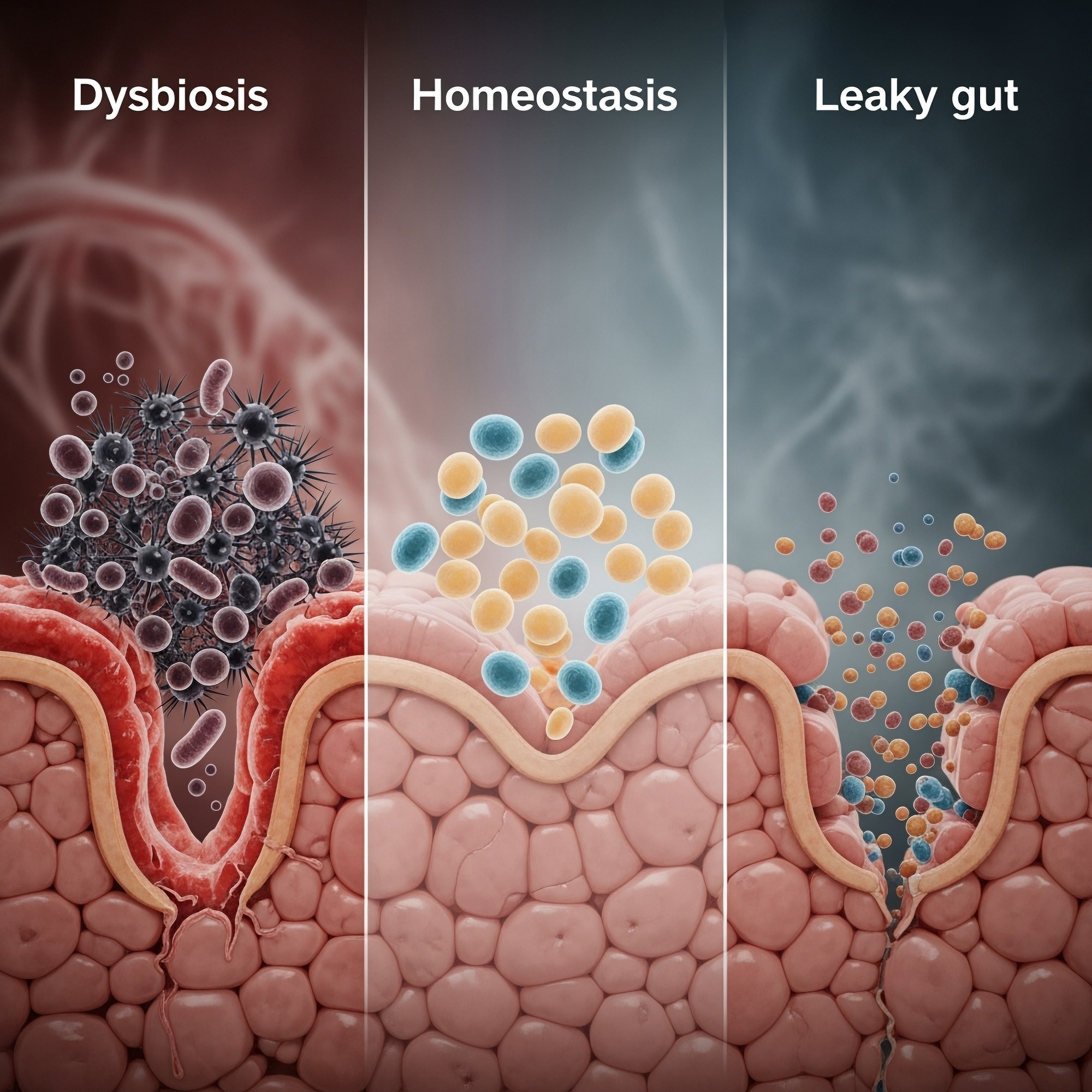 Image Credit: Shutterstock AI / Shutterstock.com
Limitations and future directions
Most evidence on the relationship between sleep and the gut microbiome has come from in vivo animal models and relatively few human studies; however, these clinical studies have small sample sizes, limiting the generalizability of the findings.2,3 Furthermore, there is a large amount of variability between studies about diet, lifestyle, and environmental exposure, as well as how these variables affect the gut microbiome. Human findings can conflict: studies summarized in the systematic review range from detectable microbial changes following sleep deprivation or restriction to no significant compositional change after sleep restriction.3
Differences in study design, sequencing methods, and how sleep patterns or microbial composition are measured similarly contribute to observed variations. These limitations support the need for larger human studies with controlled, longitudinal designs that separate sleep duration, fragmentation, circadian timing, OSA, diet, and other confounding factors.2,3,4 Research should also examine microbial function and metabolites, rather than relying mainly on changes in bacterial abundance.3,4 Probiotics, prebiotics, and other microbiome-directed interventions have produced encouraging results in some animal and human studies, but current data do not establish microbiome manipulation as a standard treatment for sleep disorders. Long-term efficacy and safety require further study.2
References
- Dicks, L. M. T. (2022). Gut Bacteria and Neurotransmitters. Microorganisms 10(9); 1838. DOI: 10.3390/microorganisms10091838. https://www.mdpi.com/2076-2607/10/9/1838
- Lin, Z., Jiang, T., Chen, M., et al. (2024). Gut microbiota and sleep: Interaction mechanisms and therapeutic prospects. Open Life Sciences 19(1). DOI: 10.1515/biol-2022-0910. https://www.degruyterbrill.com/document/doi/10.1515/biol-2022-0910/html
- dos Santos, A. & Galie, S. (2024). The Microbiota-Gut-Brain Axis in Metabolic Syndrome and Sleep Disorders: A Systematic Review. Nutrients 16(3); 390. DOI: 10.3390/nu16030390. https://www.mdpi.com/2072-6643/16/3/390
- Sun, J., Fang, D., Wang, Z., & Liu, Y. (2023). Sleep Deprivation and Gut Microbiota Dysbiosis: Current Understandings and Implications. International Journal of Molecular Sciences 24 (11); 9603. DOI: 10.3390/ijms24119603. https://www.mdpi.com/1422-0067/24/11/9603
- Neroni, B., Evangelisti, M., Radocchia, G., et al. (2021). Relationship between sleep disorders and gut dysbiosis: what affects what? Sleep Medicine 87; 1-7. DOI: 10.1016/j.sleep.2021.08.003. https://www.sciencedirect.com/science/article/pii/S1389945721004354?via%3Dihub.
- Lopez-Santamarina, A., del Carmen Mondragon, A., Cardelle-Cobas, A., et al. (2023). Effects of Unconventional Work and Shift Work on the Human Gut Microbiota and the potential of Probiotics to Restore Dysbiosis. Nutrients 15(13); 3070. DOI: 10.3390/nu15133070. https://www.mdpi.com/2072-6643/15/13/3070.
Further Reading
Last Updated: Sep 21, 2026