
Now Reading: Richland County deputies, mental health nonprofit partner to divert low-level offenders from jail
- 01
Richland County deputies, mental health nonprofit partner to divert low-level offenders from jail

Richland County deputies, mental health nonprofit partner to divert low-level offenders from jail
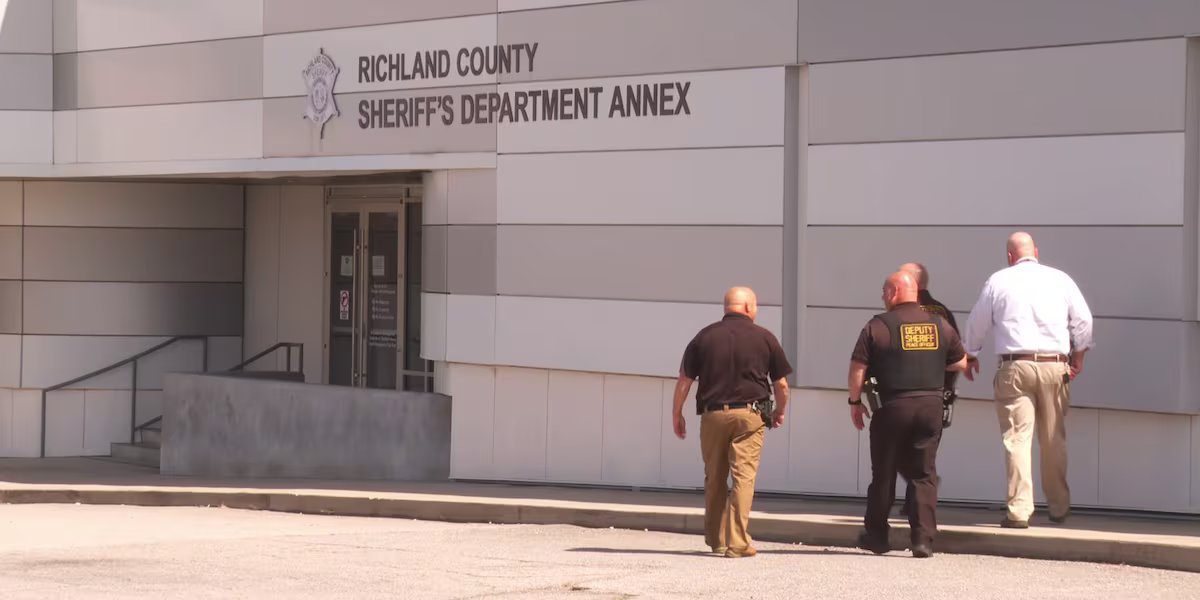
RICHLAND COUNTY, S.C. (WIS) – The Richland County Sheriff’s Department has partnered with the Mental Illness Recovery Center, Inc., known as MIRCI, to guide its Law Enforcement Assisted Deflection, or LEAD, program.
When deputies encounter low-level, nonviolent offenses such as trespassing or shoplifting, individuals are offered a direct handoff to mental health and housing services instead of arrest. Officials said the deflection removes the criminal charge entirely.
“Our initiative is deflection. The difference is that they have no charge whatsoever. So once that individual agrees to be a part of my initiative, that charge is gone. So they do not enter into the criminal justice system, which is even better because now that individual doesn’t have to worry about lost wages or an inability to get a job because it’s not on their record,” said Allison Smith, assistant director and lead coordinator of the RCSD Wellness Unit.
MIRCI provides a dedicated caseworker to assess each participant’s immediate needs within 48 hours, connecting them with housing, detox or outpatient care.
Deputies divert eligible misdemeanors into case management
Through the initiative, deputies in Richland County can divert people away from arrest for eligible misdemeanors carrying 30 days or less, such as trespassing or simple drug possession, directly into comprehensive case management.
“We know that a lot of individuals encounter law enforcement because of maybe untreated or undertreated behavioral care or those needs they have around income or income stability or housing. And so, as our case managers step in, they can do that assessment and then connect the individual with either MIRCI services or another community resource that can meet those needs,” said Dr. Lucy Easler, MIRCI president and CEO.
“By having this LEAD initiative, by having our crisis intervention team, by having those sort of units to respond to substance use and mental health related calls, the folks who are out here committing felonies and other crimes, our deputies are able to then direct their attention to those crimes and allow people to follow through the criminal justice system. Whereas the folks who are out here struggling again, with substance and mental health who have just maybe broken the law by nature of whatever illness they may be struggling with we are able to kind of divert our attention to that so that the other deputies can focus on the other crimes that need their attention,” Smith said.
Representatives from the partnership said anyone in the community struggling with mental health or substance use can also reach out for free support before encountering law enforcement.
How the deflection process works
Traditionally, a deputy’s response to a call for trespassing or shoplifting could end in handcuffs and an arrest. Officials said there is now a second option that leads directly to a caseworker instead of a booking cell.
“We can actually save a lot of money for the community and benefit this individual,” said Joseph Cerniglia, Director of Quality Assurance at MIRCI.
For years, deputies have responded to nuisance calls and booked repeat misdemeanor offenders, only to see them released 30 days later without treatment, according to Smith.
“Instead of an individual entering into a cycle of arrest, jail, arrest, jail, arrest then jail. If you could imagine the amount of money that is and the amount of time that a deputy is using responding to that home, the amount of jail resources that are being used when people are going to jail, and just the impact and costs that it has on our community,” Smith said.
For qualifying misdemeanors like trespassing, shoplifting or simple drug possession, Richland County deputies can now offer help instead of charges. MIRCI handles field case management, assigning social workers, including Tanisha Stewart, to perform clinical and housing assessments within 48 hours of a deputy’s referral.
“At first, it begins with like building a rapport with each individual, meeting them where they are, getting to know them, finding out what their needs and goals are, and helping them with the resources, which services they may need,” said Stewart, MIRCI Lead Case Manager.
Participation is voluntary. Clinicians said deflection allows them to address the root causes of homelessness, addiction and crisis without adding a criminal record.
Which charges do not qualify
Serious charges including DUI, domestic violence and felonies do not qualify for deflection.
Anyone interested in learning more can find information on MIRCI’s website here.
Feel more informed, prepared, and connected with WIS. For more free content like this, subscribe to our email newsletter, and download our apps. Have feedback that can help us improve? Click here.
Copyright 2026 WIS. All rights reserved.