

Now Reading: Rabies confirmed in a Brown County cow. MDH recommends shots for 9 people exposed
- 01
Rabies confirmed in a Brown County cow. MDH recommends shots for 9 people exposed

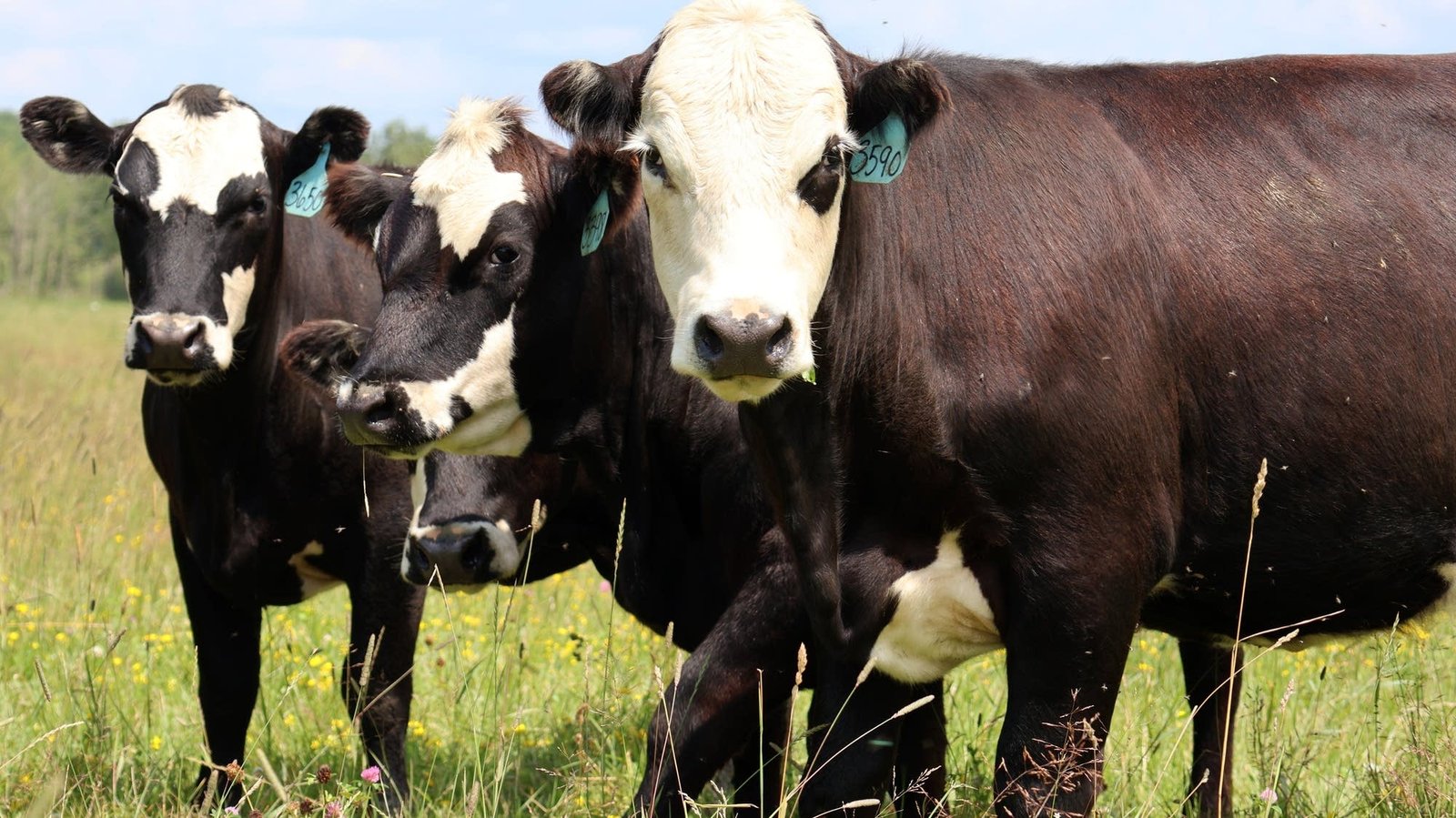
Rabies confirmed in a Brown County cow. MDH recommends shots for 9 people exposed
The Minnesota Board of Animal Health confirmed that a cow in Brown County tested positive for rabies last week after it was euthanized.
The board said the owner of the heifer noticed the animal behaving oddly on Sept. 1 as it laid flat with its head down. A veterinarian observed the animal the same day and the owner had administered oral medication with bare hands. Another veterinarian examined the animal the following day and also gave it oral medication without wearing gloves.
A third veterinarian examined the animal on Sept. 3 and observed that the cow had uncoordinated hind legs and was high-stepping, vocalizing, hypersalivating and had a high temperature.
The heifer was euthanized and the head was removed for rabies testing at the Minnesota Department of Health Public Health Laboratory. Brain tissue tested positive for the rabies virus on Sept. 8.
MPR News helps you turn down the noise and build shared understanding. Turn up your support for this public resource and keep trusted journalism accessible to all.
Public health officials recommended that nine people who came in contact with the animal and its saliva, including the owner of the dairy cow, the owner’s daughter, two minor children, two of the veterinarians who examined the animal and three assisting veterinary technicians seek rabies post-exposure prophylaxis as a preventative measure.
Experts say the disease is extremely dangerous and life-threatening to both humans and animals.
“A lot of times, it eventually travels up to the brain and will cause encephalopathy and eventually lead to death,” said Dr. Katie Cornille, senior veterinarian at the state Board of Animal Health. “It is a fatal disease, so it’s something that we take very seriously.”
The Board quarantined 13 other cows on the same Brown County farm so they can be monitored for rabies symptoms. More than 40 cattle on the property will also be watched for any signs of rabies symptoms. A horse on the property was also possibly exposed, but it is up-to-date on its rabies vaccinations, along with three vaccinated dogs. They are all under observation as well, while two unvaccinated barn cats that were likely exposed to rabies were euthanized.
Once a domestic animal is exposed, it can take anywhere from two to 26 weeks for symptoms of rabies to develop, depending on the location of the bite and the amount of the virus that enters the body. Most domestic animals that show symptoms will die within three to 12 weeks.
To help prevent spreading the virus and to reduce exposure to other animals, the Minnesota Board of Animal Health places all domestic animals that have been exposed and are unvaccinated under a 45- to 180-day quarantine.
“Every case of rabies is going to be serious,” Cornille said. “I’m sure the individuals that own the animals, they’re handling the loss of the animal, and they don’t want to lose anymore. We want to make sure that if there are any infectious animals that they don’t spread it anywhere else.”

In Minnesota, skunks and bats are the most common carriers of the rabies virus.
Dan Gunderson
Rabies is most often spread by being bitten by a rabid animal, and health officials say the cow was likely bitten by a rabid skunk or bat.
Skunks and bats are the most common natural carriers of rabies in Minnesota. Multiple skunks were observed earlier this year on a neighboring plot of land that connected to the area where the rabid cow was held.
Wild animals account for the vast majority of rabies cases reported annually in the state, and fewer than 15 percent of cases reported each year are in domesticated species. The most common domestic animals infected by rabies are cattle, cats and dogs — and the symptoms each animal may show can vary.
Rabies prevention
Rabies is a preventable viral disease that affects the central nervous system in mammals and causes encephalopathy and eventually death. It’s most commonly transmitted through the bite of a rabid animal, but can also be spread through saliva.
However, once a person displays symptoms it’s already too late to receive treatment, said Dr. Carrie Klumb, senior epidemiologist at MDH.
“With rabies, once you’re showing symptoms, there’s no treatment that’s been shown to actually work and keep people alive,” Klumb said. “What we have to do is that if you’ve had an exposure to the virus, we need to give you the rabies vaccination before you ever show any symptoms, so that you never show any symptoms and you never develop the disease.”
The situation in Brown County, Klumb said, highlights the need for biosecurity and also prevention, and she urges those caring for farm animals “to take appropriate steps to put your personal protective equipment on before you treat the animal.”

Since bats are also rabies carriers, only researchers with appropriate vaccinations are allowed to handle them. Wearing two pairs of gloves helps but is no guarantee in Itasca State Park on June 15.
Monika Lawrence for MPR News
“If you do have an ill animal that you’re caring for, remembering those basic things like: cover your eyes, nose and mouth,” Klum added. “Put some gloves on, call your veterinarian, make sure a professional can come evaluate your animal, or bring your animal into the vet to be evaluated.”
Although the case in Brown County focused on a cow, for Minnesotans Klumb said it’s more likely there will be encounters with a bat. About one percent of bats in the wild are believed to be carrying rabies. About three to four percent of bats MDH tests each year test positive for rabies.