
Now Reading: Anti-corruption sanctions: Preparing for the time after Trump – European Council on Foreign Relations
- 01
Anti-corruption sanctions: Preparing for the time after Trump – European Council on Foreign Relations

Anti-corruption sanctions: Preparing for the time after Trump – European Council on Foreign Relations
Many—perhaps most—Trump administration foreign policy initiatives find ways to make money for people selected by Trump officials. These deals unjustly enrich a chosen few.
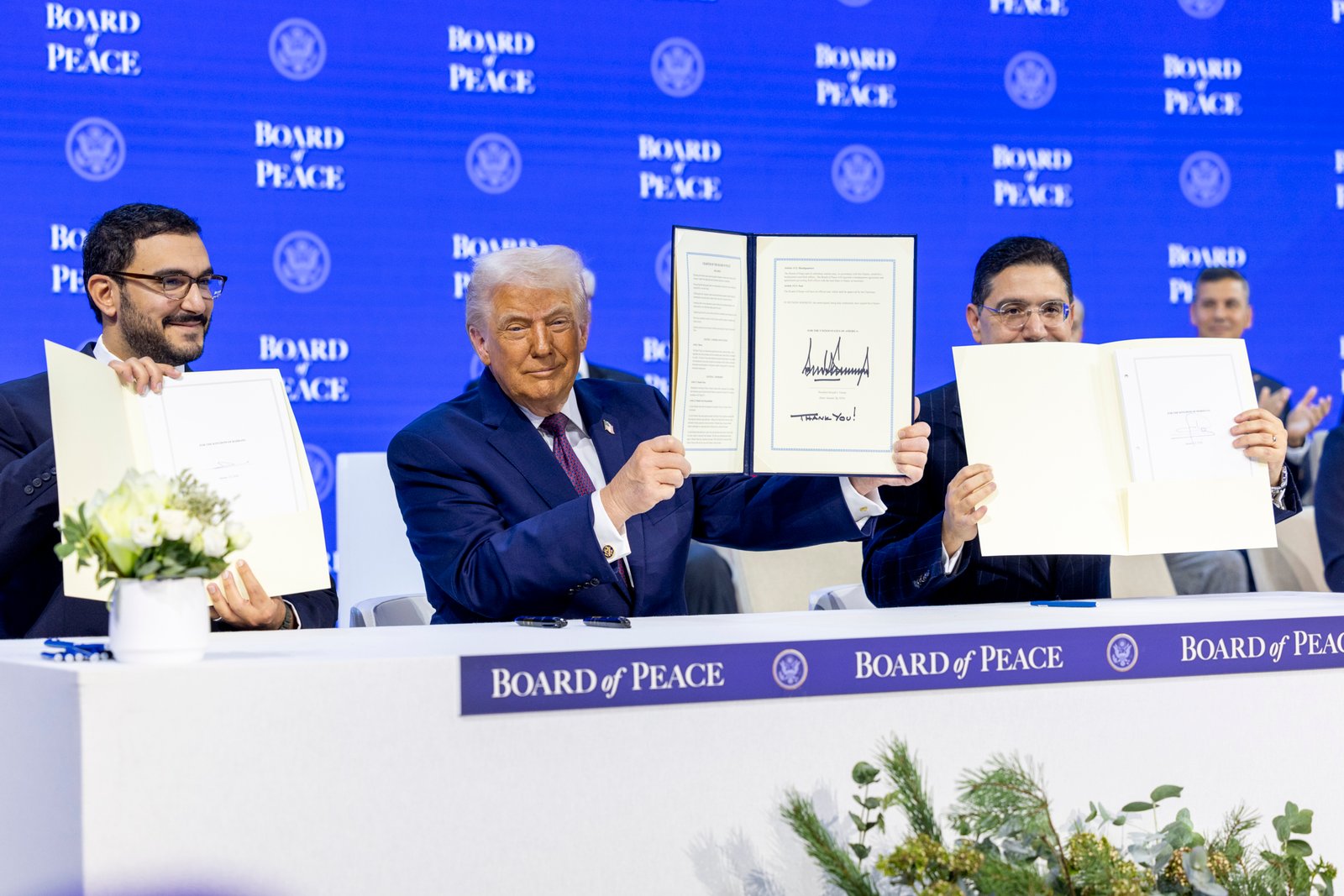
They can also create facts on the ground that could bequeath problems to the next US administration. For example, grants of property rights to friends and family by the Trump-controlled Board of Peace could decide who has land and money in Gaza. This would limit the discretion of any approach that aims to increase Palestinians’ role in the place they live in. Other peace deals contain similar long tails.
To address this threat to peace around the world, the next US administration should introduce anti-corruption sanctions from its first day in office. The new administration could bar non-US persons or institutions involved in such transactions from the US itself and from the American financial system. To do this, the administration would use the Global Magnitsky Act and related executive orders, including the Trump-issued executive order 13818.
Europeans can help this along even now. They can begin to declare their expectations that a new US administration will break from the practice of enriching chosen insiders. Such statements will influence preparations for the new administration. Over the next two years, Europeans can also preserve information about US insider dealing while publicly refusing to support or finance such deals where European interests are involved, including in the south Caucasus, Western Balkans, Gaza, Russia and Ukraine. And they can shore up their own sanctions and anti-corruption regimes.
Starting discussions about sanctions now will also send a message about the importance of professional, thorough investigations by journalists, civil society, and especially by congressional committees if Democrats take control of the House or Senate. This information can inform decisions about sanctions. Clear signalling from American and European political leaders now may deter potential foreign partners of the current administration from entering into corrupt deals over the remaining two years of the administration.
What sanctions can and cannot do
Sanctions will not provide complete answers in any situation, and they may not be appropriate in some instances. An understanding of how they work will clarify their importance and some of their limitations.
Executive order 13818 authorises sanctions against any “foreign person” (that is, not a US citizen or person) who participated in:
corruption, including the misappropriation of state assets, the expropriation of private assets for personal gain, corruption related to government contracts or the extraction of natural resources, or bribery
The commercial aspects of President Donald Trump’s foreign policy appear to fall squarely into this framework. Even if not every instance is found to involve corruption, a close look is warranted. For example, Kazakh authorities were reportedly pressed to award a valuable mineral concession to a specific American company (associated with US political insiders, including the president’s family) while the administration considered financing for the development and export of the minerals. This was not an effort to promote a fair process in which American companies could compete—a staple of US government advocacy in any administration—but an attempt to short-circuit the normal process. It appears to involve the essence of the behaviour targeted by the Magnitsky act and executive order.
In Bosnia and Herzegovina, a specific American company was newly created by two US citizens with no relevant experience but with a track record of supporting the president (and one of whom is the brother of a senior official in the first Trump administration). The US lobbied for this company to receive a lucrative concession for a natural gas pipeline, and the US demanded the resignation of a reluctant international official.
American sanctions apply only to non-American citizens. It may seem unfair to leave US beneficiaries of a scheme out of a US response. But the administration’s power to require foreign persons or institutions to provide all relevant information about suspect transactions could impede the activities that unjustly enrich American insiders.
Further, by the end of the Trump administration, many insiders (and possibly some foreign persons) are likely to be covered by presidential pardons. This could make it difficult, if not impossible, to proceed with US criminal investigations, at least not without extensive litigation while the US justice system recovers from Trump’s attacks on its capacity. This could make a new administration look feckless, and foreign partners may expect that Trumpian practices will return in future administrations. Crucially, sanctions are not subject to the pardon power, and their emphasis on non-US persons and institutions will provide some protection against charges that they are part of a partisan agenda.
Another concern may be that sanctions have generally been adopted after careful review by relevant US agencies, including the Justice Department. Given the amount of information available, a reasonable basis for a decision on sanctions can be prepared for day one of a new administration. This decision can be accompanied by a provision that reviews will follow as new information becomes available and US government agencies rebuild enough capacity to conduct them.
The investigative resources of European governments, the US Congress (or parts controlled by Democrats after the 2026 midterms), civil society and independent journalism will provide an ample, well-documented basis for sanctions in many instances. By inviting those who might be subject to sanctions to provide information, the effort will gather more information, more quickly, aiding in decisions about priorities for further sanctions or investigations by congressional or law enforcement authorities.
Significantly, early sanctions may be necessary for a new administration to deliver on promises it makes on issues of foreign and domestic policy. For example, the Trump administration is seeking to have rights to minerals critical to US industrialisation granted to its preferred partners, including in Central Asia, Ukraine and eastern Congo. Individuals holding these rights would be important stakeholders in any policy shifts, even though they may have obtained the rights through insider dealing and could be opposed to the direction a new administration would like to take on policy.
The leverage provided by a policy of using sanctions may be a key instrument of foreign policy
The same situation could occur in other locations. In addition to the examples of Gaza and the Western Balkans noted above, in Venezuela, if a democratic government emerges, it may face challenges from Trump-affiliated companies accustomed to working with Maduro-regime holdovers kept in place by Trump and Marco Rubio. Control of a key trade route from Central Asia to global markets, along with a US-taxpayer funded investment vehicle, is said to be in the process of being placed under the control of a Trump-associated individual. In each instance, more knowledge about what deals are in place and how they came to be will improve both policy and decisions on sanctions. The leverage provided by a policy of using sanctions may be a key instrument of foreign policy.
The list goes on. Even before his second inauguration, a Trump-owned business accepted a $500m investment from a fund controlled by a member of the United Arab Emirates’ ruling family; within weeks the UAE received an exemption to purchase high-end computer chips. A Chinese businessman purchased $50m in a Trump-owned crypto business (part of the president’s $1.2bn windfall from crypto in 2025); weeks later his US criminal problems were resolved by the president.
If other jurisdictions like the EU and Britain join new American sanctions efforts, the costs to the non-US individuals and institutions affected will be real. To do this, the EU might consider how its rule of law initiatives, including its investigative bodies such as OLAF or the European Public Prosecutor’s Office, could prepare to work alongside US sanctions authorities. It could propose that the EU and the US return to coordinating assistance programmes to reinforce public procurement reforms. Various European states have national anti-corruption sanctions programmes; more should consider adopting them.
Some will worry that rapid deployment of sanctions may distract from a new administration’s positive agenda. This will depend on the strength of that agenda. Europeans can help make clear that they regard this as a false choice: a break from the insider dealing of the Trump administration should be part of a new, positive plan for government. This will make it easier for a new administration to adopt sanctions policy as part of leaving Trump practices firmly in the past.
There will, of course, be difficult decisions around the application of sanctions. Not every example of insider dealing will be proven to be corrupt. Some potential targets of sanctions may be important to other US administration initiatives, and if the new administration defers sanctions it may be subject to accusations of hypocrisy. Other countries may object strongly to seeing their institutions or citizens named in sanctions documents. A new administration will face many choices like this; people who want to exercise power from Washington therefore need to prepare now and confront the choice early. It is better to start with a strong tool like sanctions rather than to disarm everywhere pre-emptively in order to avoid hard choices in a few places.
Wise observers of democratic transitions have said that democrats taking power after corrupt regimes should seek to be quick, effective and legal; but that they can be only two of the three. But sanctions might get a new administration closer to three out of three. They provide a legal tool that will help the next administration be quick and effective in stopping the insider enrichment typical of Trump foreign policy while coming with limits (no targeting of US citizens) and with the ability to adjust quickly. By taking up this tool, it will free itself of shackles that would come from those who seek to control the land and property important to peace in many parts of the world. But this will come to pass only if people begin to talk about it now. European leaders have the ability to help make sure that happens.
The European Council on Foreign Relations does not take collective positions. ECFR publications only represent the views of their individual authors.