
You May Also Like


Novisto is moving double materiality into software, giving sustainability teams a way to track decisions, evidence and disclosures in one place.
Expanding its sustainability reporting with a new tool designed to help companies manage one of the more complicated parts of ESG disclosure, Novisto’s platform will help determine what is material and document how they reached that conclusion.
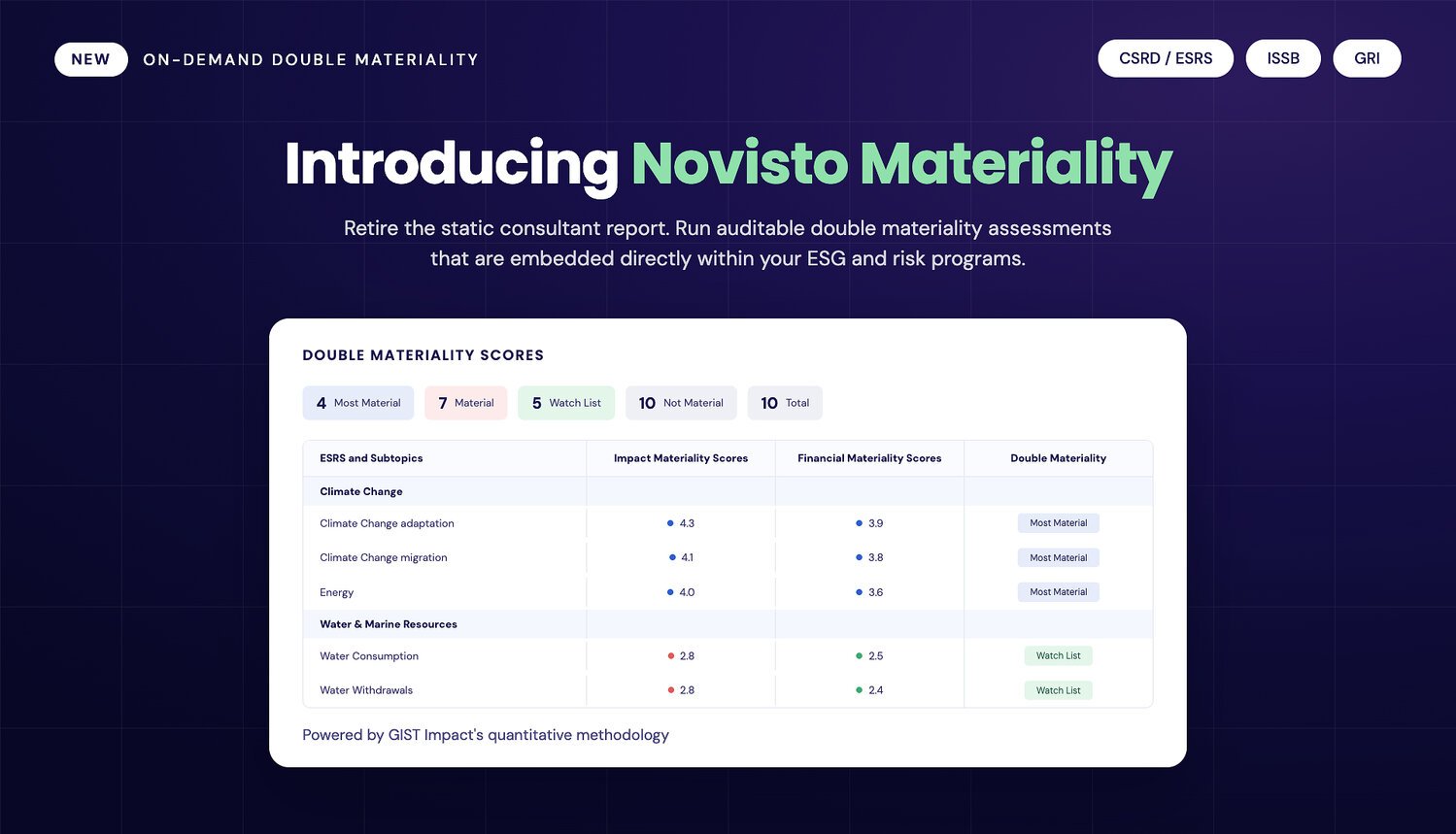
The Montreal-based sustainability performance management company has launched Novisto Materiality, a digital offering for conducting and documenting double materiality assessments. The platform combines data collection, stakeholder input, scoring and disclosure preparation, giving sustainability teams a centralized record of both their conclusions and the evidence behind them.
The launch comes as companies face growing demands to explain not just which sustainability topics they consider material, but also the methodology and judgment used to make those determinations.
For organizations subject to the European Union’s Corporate Sustainability Reporting Directive (CSRD) and European Sustainability Reporting Standards (ESRS), that includes double materiality: assessing both how sustainability matters may financially affect a business and how the business affects people and the environment.
Novisto is also positioning the product for companies using frameworks including the International Sustainability Standards Board and Global Reporting Initiative, as well as businesses looking to connect sustainability priorities more closely with risk management and corporate strategy.
From One-Off Assessment to Ongoing Materiality Management
Materiality assessments have often been treated as periodic projects. Companies gather stakeholder feedback, review business risks, work through the findings with consultants and eventually produce a report that may remain largely unchanged until the next assessment cycle.
Novisto Materiality is designed to make assessments easier to revisit. The platform includes guided workflows for collecting qualitative and quantitative information and applies a standardized methodology developed with GIST Impact to assess sustainability impacts, risks and opportunities.
The practical shift is toward a more continuous process. A company entering a new market, evaluating an acquisition or responding to an emerging environmental or social issue could update parts of an assessment instead of rebuilding the entire exercise during the next reporting cycle.
The platform also incorporates AI-supported analysis intended to assist with scoring sustainability topics and individual impacts, risks and opportunities. Users remain responsible for reviewing and refining those results.
That distinction is important. Technology may streamline the administrative side of materiality, but it cannot resolve every judgment call. Sustainability teams still have to decide which stakeholders to consult, how much weight to give competing evidence and when business context should influence a standardized assessment.
Creating a Stronger Audit Trail for Sustainability Decisions
One of the harder parts of sustainability reporting is preserving the path from underlying evidence to a final materiality determination.
Novisto’s approach keeps more of that process within the same system. Sustainability teams can collect primary information, manage stakeholder surveys, generate financial and impact materiality scores and record the reasoning used to support individual decisions.
For companies facing external assurance, that record may become increasingly important. Auditors and regulators may need more than a finished materiality matrix; they may also need to understand what information management considered, how scores were developed and where professional judgment affected the outcome.
Emirates Group ESG Reporting Lead Katherine Bruce, whose comments were included with the product launch, indicated that connecting materiality decisions with resulting disclosures could support greater transparency, traceability and consistency throughout the reporting process.
The broader question is whether platforms such as Novisto can move materiality from a standalone reporting exercise into a recurring management process.
That could expand the role of ESG software beyond storing metrics and producing disclosures. Materiality tools could increasingly become a place where sustainability teams document why certain issues matter, connect those decisions with risk and strategy, and reassess priorities as conditions change.
