
You May Also Like
A new program in Cooperstown is helping women who just gave birth in a unique and simple way – with a bracelet. More than 70 bands have been handed out in about a month.
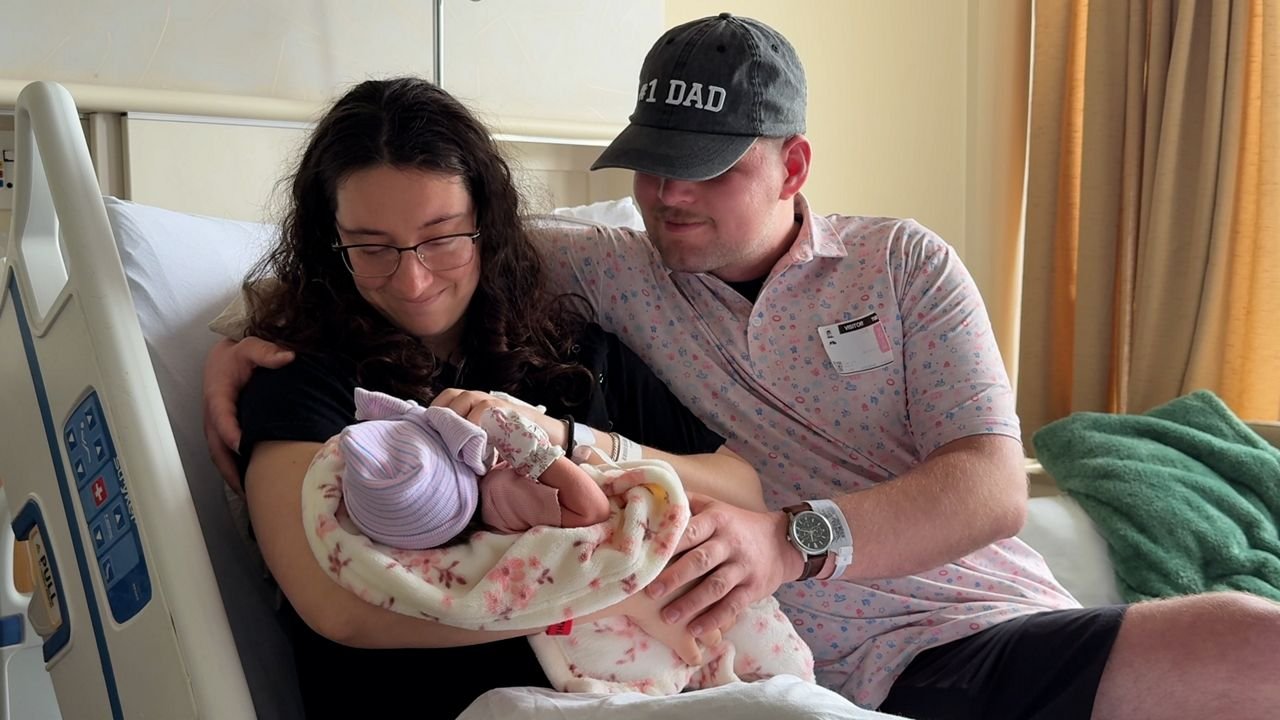
Julia Yardley and Mike Cassidy just had their little girl, Kate, at Bassett Medical Center in Cooperstown.
“I feel like I was very well taken care of. Every single staff member that stepped in the room was very welcoming and kind,” Yardley said.
The care doesn’t stop when the family leaves Bassett, thanks to a bracelet.
Yardley has agreed to be part of the Birthing Center’s Postpartum Identification Wristband Initiative. Midwife Frances Sailer said it’s an effort that supports moms whose bodies just went through pregnancy and childbirth.
“They go through the whole pregnancy and they’re the star of the show, and then they have the baby, and the focus dramatically shifts off them. And while it’s a time that culturally is invisible, it’s really a time that still is dangerous to a woman if we’re not attending to her needs,” Sailer said.
Bassett staff said research shows new mothers can face many health risks in the first six weeks after giving birth, including chest pain, shortness of breath and heavy bleeding.
Each band has a QR code for the moms or their loved ones that helps them know when to seek care.
“If we can provide a simple bracelet that is placed on their wrist, they also have access to all of the important, medical indications and medical treatment that would allow them to call for help if needed,” said Stephanie Lehenbauer, a nurse manager at the Birthing Center at Bassett Medical Center.
The bands are also meant to help providers.
“It’s going to give a list of parameters which would be outside of the normal parameters to find in a postpartum patient, be it temperature, blood pressure, bleeding, and it will help them to be able to call for help sooner,” said Sailer.
Staff at Bassett Medical Center’s Birthing Center said this effort could prove especially important in rural settings where moms may seek care at different facilities.
“We’re really hoping to empower patients to seek medical care when they do feel that it’s necessary,” Lehenbauer said.
“I thought it was a really great idea,” Yardley said. “I didn’t know too much about it at first, but knowing that, if anything were to happen, if I had a hemorrhage or something happened, you know, after the fact, when I go home, the EMTs or whoever comes to help and assess with the situation, they’ll know that I’m post-partum.”
