

Ko Minjung: “The 2030 Generation Has Turned Away, A Warning From the Public”
Woo Wonshik: “Who Does the Democratic Party Stand For?”
The Democratic Party of Korea has been shaken following the June 3 local elections. During the first year of the Lee Jae-myung administration, the party had been riding a wave of success, but now concerns are being raised, citing “a warning from public sentiment” and “the need to act like a ruling party.” There are warnings that if the current trend continues, the party could even lose power in four years.
Woo Wonshik, a Democratic Party lawmaker and former Speaker of the National Assembly, announced on June 21 via social media that he would not run in the upcoming party convention. In his post, Woo questioned, “Is today’s Democratic Party truly the party of the middle class and ordinary people that President Kim Dae-jung envisioned?” Woo cited internal conflicts within the democratic camp, livelihood issues, and the outcome of the local elections, and appealed, “Everyone must reflect.” In particular, he noted, “After enduring the hardship of the previous administration, only one year has passed, and instead of further expanding the path of a democratic government, the party was divided in Pyeongtaek during the local elections, and internal divisions have deepened to the point where it is difficult to see ahead.” He added, “We need to clearly define who the Democratic Party is for, and what purpose this party convention serves.”

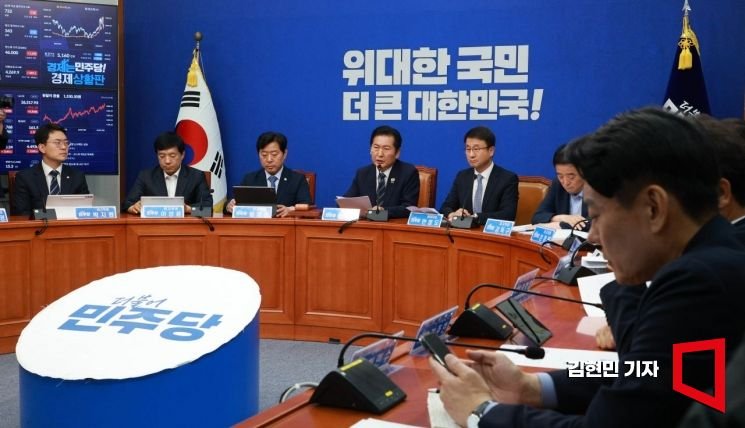
Jeong Cheongrae, leader of the Democratic Party of Korea, is speaking at the Supreme Council meeting held at the National Assembly on June 22, 2026. Photo by Kim Hyunmin
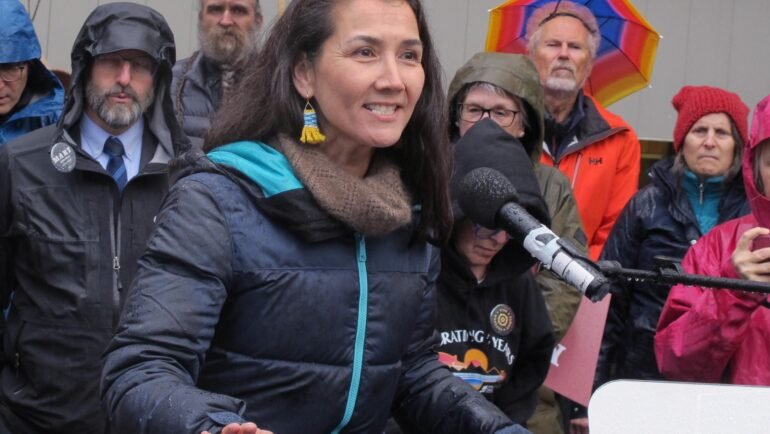
Democratic Party lawmaker Ko Minjung pointed out on social media that the 2030 generation in Seoul turned their backs on the party in the local elections, saying, “To the eyes of the 2030 generation, who thoroughly ignored the Democratic Party, the party appeared to be ‘an entrenched interest group that creates and leaves gaps unattended’ and ‘a hypocritical group that, after climbing the ladder of social mobility, kicked it away.'” She described the results of this local election as a warning from the people, arguing, “What we need now is not finger-pointing and criticism within, but healthy debate and self-reflection.” Ko also mentioned issues such as artificial intelligence (AI), the wealth gap, and gender conflict, saying, “These are precisely the issues we must tackle with utmost seriousness.”

President Lee Jae-myung is answering questions from the press during a briefing on his participation in the G7 and European tour held at the Cheong Wa Dae press center on the 19th. Photo by Yonhap News.
She further pointed out the intensifying internal conflict ahead of the party convention, stating, “We are currently preoccupied with blaming and criticizing one another.” She lamented, “Even as derogatory language spreads throughout the party, the party is indifferent. It is consumed by power struggles that seem completely irrelevant to the lives of the people.” She warned, “If this continues, not only will it be difficult to win the general election, but it will also be hard to regain power.”
Support for the ruling party has shown a downward trend, although figures vary depending on survey methods such as automated response systems (ARS) versus interviews. For example, in a regular public opinion poll released by Realmeter on June 22 (conducted at the request of Energy Economy News from June 15 to 19, surveying 2,517 people aged 18 or older nationwide via wireless phone ARS, with a margin of error of ±2 percentage points at a 95% confidence level and a response rate of 4.2%), President Lee’s approval rating was 46.7%, down 4.8 percentage points from last week. The negative evaluation rose by 5.5 percentage points to 49.7%. This is the first time since his inauguration that President Lee’s positive approval rating has fallen below the negative evaluation.
In the party support poll (conducted at the request of Energy Economy News from June 18 to 19, surveying 1,001 people aged 18 or older nationwide via wireless phone ARS, with a margin of error of ±3.1 percentage points at a 95% confidence level and a response rate of 3.3%), support for the People Power Party dropped by 2.0 percentage points to 42.3% compared to last week. Support for the Democratic Party of Korea rose by 2.1 percentage points to 40.1%. Although the gap has narrowed compared to last week, the Democratic Party of Korea continues to lag behind the People Power Party. (For more details on the poll, please refer to the website of the National Election Survey Deliberation Commission.)
This content was produced with the assistance of AI translation services.
© The Asia Business Daily(www.asiae.co.kr). All rights reserved.