
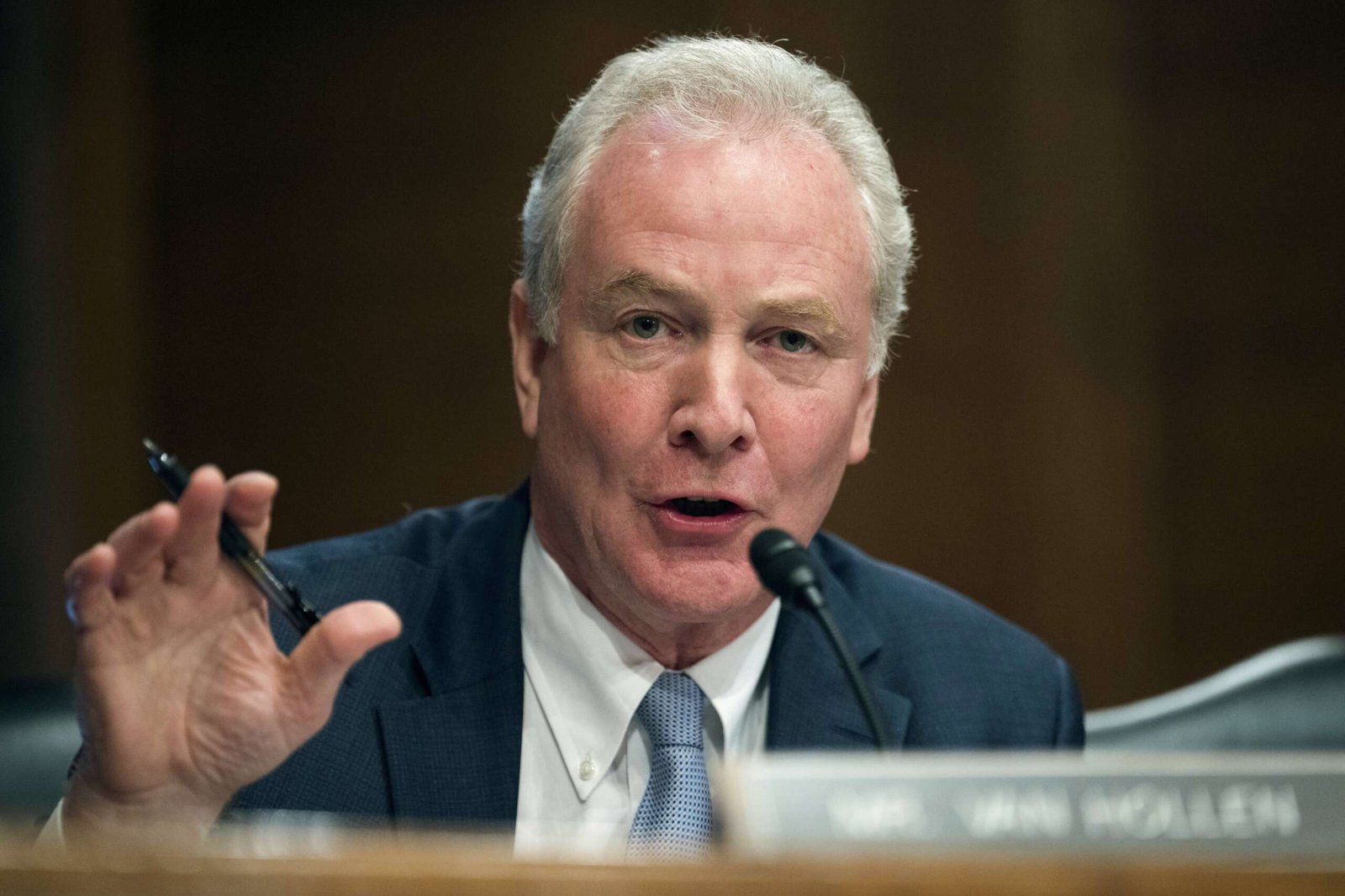
In a new amicus brief, Democrats argued that allowing the president to fire members of independent agencies like MSPB, without restriction, undermines the law.

A group of Senate Democrats is calling for the Supreme Court to hear a case involving President Donald Trump’s firing of a Merit Systems Protection Board leader early last year.
In an amicus brief filed last week, lawmakers urged the Supreme Court to overturn an appeals court decision that upheld the 2025 termination of former MSPB chairwoman Cathy Harris. The senators argued that longstanding restrictions on the president’s authority to remove independent board leaders should be maintained.
“Congress took great pains to protect the MSPB’s independence,” the senators wrote. “Congress understood, however, that these protections were mere paper guarantees without removal restrictions.”
Established in 1978 as part of the Civil Service Reform Act, MSPB is an independent agency that adjudicates appeals from federal employees who allege prohibited personnel practices by their agencies. In their amicus brief, the senators argued that allowing the president to fire leaders of independent agencies like MSPB, without restriction, undermines Congress’ intent in the 1978 law.
“Congress provided tenure protections, reflecting the same basic judgment: that officials charged with adjudicating disputes must be insulated from political pressure if they are to discharge their duties impartially. This court has repeatedly blessed that arrangement,” the senators wrote. “The MSPB sits comfortably within this tradition.”
The brief was filed by Sens. Chris Van Hollen (D-Md.), Mark Warner (D-Va.), Richard Blumenthal (D-Conn.), Tim Kaine (D-Va.), Gary Peters (D-Mich.) and Angela Alsobrooks (D-Md.). The Democrats warned that if Harris’ 2025 termination is upheld, it will weaken agencies’ independence and upend decades of precedent.
“If this court were to conclude that the MSPB exercised some quantum of excess executive power, the proper remedy would be to sever that excess power — not invalidate the MSPB’s removal restrictions,” the senators wrote. “As the CSRA’s structure and legislative history make clear, the MSPB’s independence is central to the proper functioning of the civil service system.”
In early 2025, Trump fired Democratic leaders across several independent and quasi-judicial federal agencies — including Harris from MSPB — without naming a specific reason for the terminations.
Harris, who was removed nearly three years before the end of her term, sued the president over her termination. The lawsuit argues that Harris is protected by a federal law meant to ensure MSPB’s independence from political considerations, and that the president can only remove her “for inefficiency, neglect of duty or malfeasance in office.”
A federal judge initially sided with Harris in the case. But in December, the D.C. Circuit Court of Appeals reversed course and upheld Harris’ firing in a split 2-to-1 panel decision. The majority argued the president can still “remove principal officers who wield substantial executive power.”
In March, Harris’ attorneys filed a petition with the Supreme Court, requesting a review of the appeals court decision that’s currently upholding her termination. Senate Democrats are now adding their voices to that petition and calling for the Supreme Court to hear the case, reverse the appeals court decision and reinstate Harris at MSPB.
The Supreme Court has already heard arguments in a pending case involving whether to overturn a 90-year-old ruling known as Humphrey’s Executor. The issue arose in the case of Trump v. Slaughter, involving the president’s 2025 firing of Rebecca Slaughter, a Democratic member of the Federal Trade Commission. The court’s decision in the case could expand Trump’s power to shape independent agencies.
But in her petition to the Supreme Court, Harris argued that her case involves a “distinct legal issue,” separate from the court’s review of Humphrey’s Executor.
“The whole point of the Merit Systems Protection Board is to act as an independent adjudicator in cases involving the government,” Harris said in March. “But what the government wants is to be both a party in disputes involving civil servants and be able to fire the judges deciding the case. That result would be disastrous for federal workers.”
MSPB’s three-seat board currently has two members, Henry Kerner and James Woodruff II, both of whom are Republicans. Kerner has been serving as acting chairman since Harris’ removal, but Trump recently nominated Woodruff to be the permanent replacement for Harris as MSPB chairman. The president’s nomination is pending consideration and potential confirmation in the Senate.
Separately, a March 20 decision from MSPB’s two members has also been garnering pushback from Democrats. The members’ decision last month affirmed that the president’s constitutional power to fire “inferior officers” for any reason includes immigration judges, and that MSPB does not have jurisdiction to intervene in those personnel decisions.
Many of the same Senate Democrats submitted a separate amicus brief on that MSPB decision, and are warning of a broader erosion of civil service protections if the decision is upheld.
If you would like to contact this reporter about recent changes in the federal government, please email drew.friedman@federalnewsnetwork.com or reach out on Signal at drewfriedman.11
Copyright
© 2026 Federal News Network. All rights reserved. This website is not intended for users located within the European Economic Area.
Leave a Reply