


Welcome to The Midterms, Actually. Every week I’ll be writing about two things: one big idea or trend I see forming across the 2026 primaries, and one thing I’m hearing from a voice on the ground. You can sign up here to get it in your inbox every week. Let’s get into it.
Now Reading: The Hasan Piker general election backlash, explained
1
- 01
The Hasan Piker general election backlash, explained
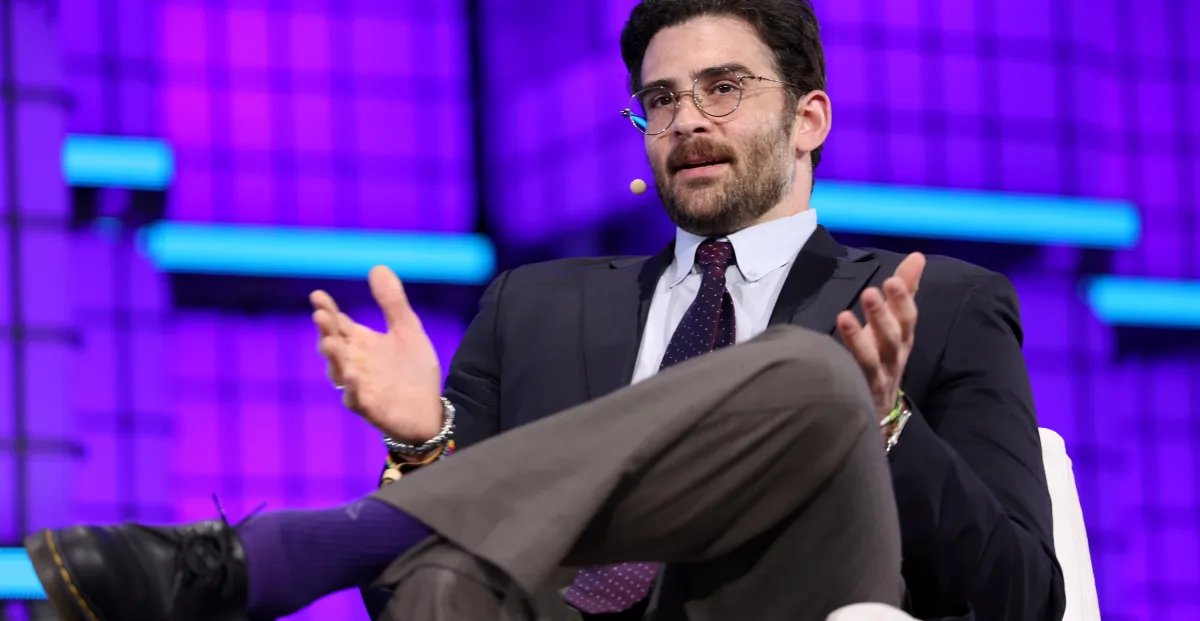
The Hasan Piker general election backlash, explained
Last month, Francesca Hong lost the Wisconsin governor’s primary in a shock result. The next day, the person who was maybe her most prominent surrogate — leftist Twitch streamer Hasan Piker — said he may have played too big of a role in her race, and that he shouldn’t have been anyone’s biggest surrogate in the first place.
Then came Angie Nixon. The Florida progressive won her Senate primary and was promptly asked about Piker repeatedly (An interview with CBS News was the wildest example). Nixon, who has never appeared on his stream, said she didn’t really know who he was. So Piker, unprompted, announced he’d be staying away from her race so as not to hurt her.
And then there’s Michigan, where Democratic Senate nominee Abdul El-Sayed — who campaigned with Piker throughout his primary race — has kept him at arm’s length and minimized his relevance as “a streamer in California” ever since Piker made controversial remarks about the relationship between Jewish institutions, Israel, and antisemitism while El-Sayed was trying to win over skeptical Jewish Democrats. Piker told Semafor the media attention was unfair, but that he understood if allied candidates needed to sometimes distance themselves from him to focus on their race, even if he might advise against it.
Taken together: That’s the ballgame in a nutshell. Six months after the Wall Street Journal published a Third Way op-ed arguing that Democrats are too cozy with Piker, he is voluntarily removing himself from campaigns he wants to win, and a Senate nominee with no connection to him at all is being asked to answer for him on CBS.
So here’s a rough timeline of how Hasan Piker Derangement Syndrome infected the Democratic Party, at least from my courtside view.
Piker gained national prominence in the 2024 election and its aftermath, initially as an anti-Trump counterweight to the manosphere. In the Biden years, Democrats became uncool on the internet and, even worse, didn’t know it. Piker remains one of the few genuinely popular streamers explicitly discussing politics and news — roughly 3 million Twitch followers, north of 20,000 people watching on an average day and many more seeing clips, No. 3 on Rolling Stone’s list of the 25 most influential creators of 2026. He was an obvious fit for a Democratic Party conducting an open search for its own Joe Rogan.
His newfound access to the mainstream rubbed some the wrong way. The New York Times ran a profile in April 2025 headlined “A Progressive Mind in a Body Made for the ‘Manosphere’.” The New Yorker made him a central figure in “The Battle for the Bros.” A GQ profile and Time’s creators list followed. And in November 2025, Crooked Media put him onstage at Crooked Con in Washington, DC, on a panel about the party’s dour image, next to Tim Miller and Symone Sanders Townsend.
That last one is what did it. When I asked Third Way president Jon Cowan in June what prompted the op-ed, he didn’t hesitate:
“The specific impetus was that the ‘Pod Save’ folks — very prominent Democrats — had featured Hasan Piker at a conference where they are officially elevating him and aligning him with Democrats. That’s what triggered this for us, and then a series of other things beyond that.”
The op-ed itself — “Democrats Are Too Cozy With Hasan Piker,” by Cowan and Lily Cohen, on March 19 — resurfaced Piker’s old controversies. Cowan read several of them to me on tape, including a decade-old bit about Miley Cyrus and this one about Asian Americans:
“There is nothing more annoying to me than fucking first-generation, second-generation, third-generation Asian motherfuckers who are dogs to white people. You are literally barking for white people.“
The piece also claimed Piker had never apologized. That part isn’t quite right.
Piker has apologized (mostly). But he does intend to agitate. Unlike a traditional journalist, his product is an hours-long stream of consciousness, entirely independent of access to elected officials. He doesn’t need campaign relationships to offer commentary. Which means the ordinary levers don’t work on him, and he knows it.
On the Miley Cyrus clip, he said on America, Actually:
“Oh my God, it’s so cringe. … Of course I’ve apologized for it. I mean, it’s nasty. It obviously doesn’t reflect my current values. … A big part of my politics and a big part of my worldview revolves around rehabilitation. … I’ve had misogynistic opinions in the past. I’ve had transphobic opinions in the past, and I’ve worked through them.”
But on the things he considers political, he does the opposite. When I pressed him on saying he’d vote for Hamas over Israel every time, he said that’s something he stands by, and is even courting the controversy on purpose:
“I am, at the end of the day, someone who is engaging in — and this is a Marxist term that a lot of people get mad at, because they don’t understand that propaganda is supposed to be a neutral term in its inception — but this is agitative propaganda. The entire point I’m making there is to cause you to second guess.”
“I’ve already tripled down on it. … No, I’m about to quadruple down on it. … I think the quadrupling and tripling down on it is also part of the process.”
The Mao suit, the tweets, the rallies — the streamer knows he’s pushing buttons. I asked him about it in August, after he wore a Zhongshan suit to address the College Democrats of America.
“But you know what you’re doing.”
Piker: “No, for sure—”
“You know good and well what you’re doing.”
Piker: “I do.”
And his influence grows with the attention. He told me the campaign against him has been, in his words, a gift. Piker also makes an argument that’s pretty undeniable: that the majority of Democrats are a lot closer to his position — on healthcare, on immigration, and on Israel — than those of Third Way:
“It was a lot lonelier on October 8, 2023, saying the exact same things I’m saying right now. It doesn’t feel so lonely anymore. And if they want to position themselves on the 10 percent side of a 90-10 issue, that’s going to be great for me. That’s going to be great for the candidates that I’m actually promoting.”
Some have likened Piker to Rush Limbaugh, and the Rogan comparison is now so standard that NPR put it to him directly. I think the better analogue is someone like The Breakfast Club’s Charlamagne Tha God: an audience inside the party, some access to elected officials, and a persistent criticism of its ideological direction, particularly — in Charlamagne’s case — on issues affecting Black Americans. Piker actually sat down with Charlamagne in June, which tells you something about the lane.
What makes Piker different is the anti-Zionism — and the corresponding fear among the Democratic establishment that his views represent an emerging wing of the party’s own base rather than a fringe of it.
Piker’s work with progressive primary candidates raised the stakes. First he helped launch Zohran Mamdani’s NYC mayoral campaign into national consciousness, then he campaigned with El-Sayed in Michigan, where Piker rallied on campuses in April and stood with him on election night. Piker supported Donavan McKinney in Michigan’s 13th District, Melat Kiros in Colorado, and Darializa Avila Chevalier in New York — all of whom won their respective primaries. And while each are united by a progressive platform — Medicare-for-all, abolishing ICE, a wealth tax, rent stabilization — they are most associated with anti-Zionism and pro-Palestinian advocacy. In recent years, that has replaced issues like the Green New Deal as the left’s foremost test of progressive credentials.
This not only made Piker’s role more significant — he wasn’t just a media figure, but a campaign surrogate whose support helped validate a candidate’s credentials on the left — but also increased scrutiny on his stream and attacks from ideological opponents.
But what’s the (real) goal here?
No one has to like Piker. And I completely get why pro-Israel advocates, or the moderate wing of the Democratic Party fending off the left, would go out of its way to make him a campaign trail liability. What I don’t understand is the repeated questions from the media, the incessant search for condemnations, and reporters pressuring candidates like Nixon to take a stance on Piker even if they’ve never associated with him. Piker’s critics also have a point that this scrutiny is rarely applied evenly, especially when it comes to the Islamophobic attacks from right-wing and sometimes Democratic figures that candidates frequently face.
When I talked to Piker — and his critics at Third Way — it was clear how this is not just a proxy battle for Israel’s place in party politics, but also a group of Washington insiders struggling with the fact that they are no longer the most relevant gatekeepers of political discourse. When I asked Third Way’s Cowan about whether he would be upset if a Democrat appeared on Joe Rogan’s podcast, or goes on Fox News (as many candidates do these days), he said he supported Democrats going “anywhere and everywhere to make their case.”
Cowan: “If you disagree with Hasan Piker, fine, go on his stream and argue against him and denounce him and expose him for the bigoted guy that he is. That’s not our beef with Piker.”
When I asked whether a Democrat appearing on Piker’s stream — as Rep. Alexandria Ocasio-Cortez has, more than once — would be disqualifying, he said no.
Cowan: “I think people throw around the word disqualifying way too easily. … Going on somebody’s stream does not disqualify you. Do I think it would be bad judgment? Do I think they’d be pushing away more voters than they’d be getting? Sure. But no, that’s not disqualifying. That’s absurd.”
Meanwhile: Six in 10 voters told Echelon Insights in April that they had never heard of Piker. In Data for Progress’s polling of the Michigan Democratic primary electorate — the one race where this was supposedly decisive — he was at 13 percent favorable, 7 percent unfavorable, with a majority unfamiliar.
So if the majority of the voting public is unfamiliar with Piker, and Third Way says it has no problem with candidates appearing on Piker’s stream, or using it as a platform to share their message when appropriate, what exactly is all the fuss about? As I said in June, I think we should read this as an effort to build an early litmus test for the 2028 presidential primary. Less of an explicit effort to “cancel” Piker, and more of an attempt to create an environment so controversial around him that his stream — and his ideas — become a net negative for progressive candidates. The goal is to both limit Piker’s own reach and open up new lines of attack against his allies, who are seeing right now they will be dogpiled with questions about any associations they have with him.
Think about it: What’s one way to make sure a candidate like AOC keeps her distance from the biggest political streamer in the world? Make it a red line in the 2026 midterms, when mostly only insiders are paying close attention.
This week, I talked to Jana Cholakovska. Jana is an investigative reporter at NJ.com, where she covers white-collar crime, criminal justice, immigration, and labor — and recently she published two stories detailing the rise of Flock cameras in the state and the growing political backlash. As Flock cameras become a bigger part of the national political discussion, I wanted to ask Cholakovska what she learned from her reporting.
Here’s our conversation, edited for length and clarity.
So what is it about Flock cameras? We’ve had police cameras, CCTV, red-light cameras for a while. What do you think is driving the specific anger at this new technology?
It’s interesting, actually, because when you drive around, they’re very noticeable because they look a little bit different than CCTV or red-light cameras, which in New Jersey were kind of outlawed. But what I think is really bothering people about ALPR cameras (automated license plate recognition) and Flock in general is just the fact that the government keeps this data for a very long time (ALPR retention is three years in New Jersey), and I think that itself is really concerning to people. Sort of this proliferation of a surveillance state or surveillance state capacity.
So is it the data? Or the cameras?
It’s interesting, because the criticism that we got after the story published was that “We have phones, we have all sorts of devices,” like they already know where you are and what you’re doing. But in New Jersey, this was all pretty much done quietly. It seems that, you know, it’s kind of done without the explicit consent of the citizens, and I think that that’s the big difference between different kinds of technology where you yourself actively participate and consent, and something like this, which is, I think, completely different.
Is there a sense that this backlash is coming from one ideological place, like are these Democrats or leftists?
It’s actually been astounding how much of a bipartisan issue this is. We live in a time where almost everything is highly politicized, and this really seems to be sort of across the board, like it’s not just the libertarians. We have people from all walks of life, people who voted for Trump, people who voted for Kamala, who are really just concerned about privacy and, you know, the principles that the country was built on. We even had a Republican state senator who said he’s looking into the issue.
Related Posts


Previous Post
Next Post


Loading Next Post...