
Key takeaways
- These strandings coincide with reports of historically high concentrations of domoic acid-producing algae along the central California coast, which researchers note is causing broad impacts on regional marine wildlife.
- UC Santa Cruz’s Marine Mammal Stranding Network led the response, which included towing the whale that washed up in Pacific Grove offshore for natural decomposition.
- While these whales appear to have succumbed to toxin exposure, they represent a small fraction of the 62 whale strandings documented along the U.S. West Coast this year, which have been attributed to various factors, including nutritional stress and vessel strikes.
You May Also Like


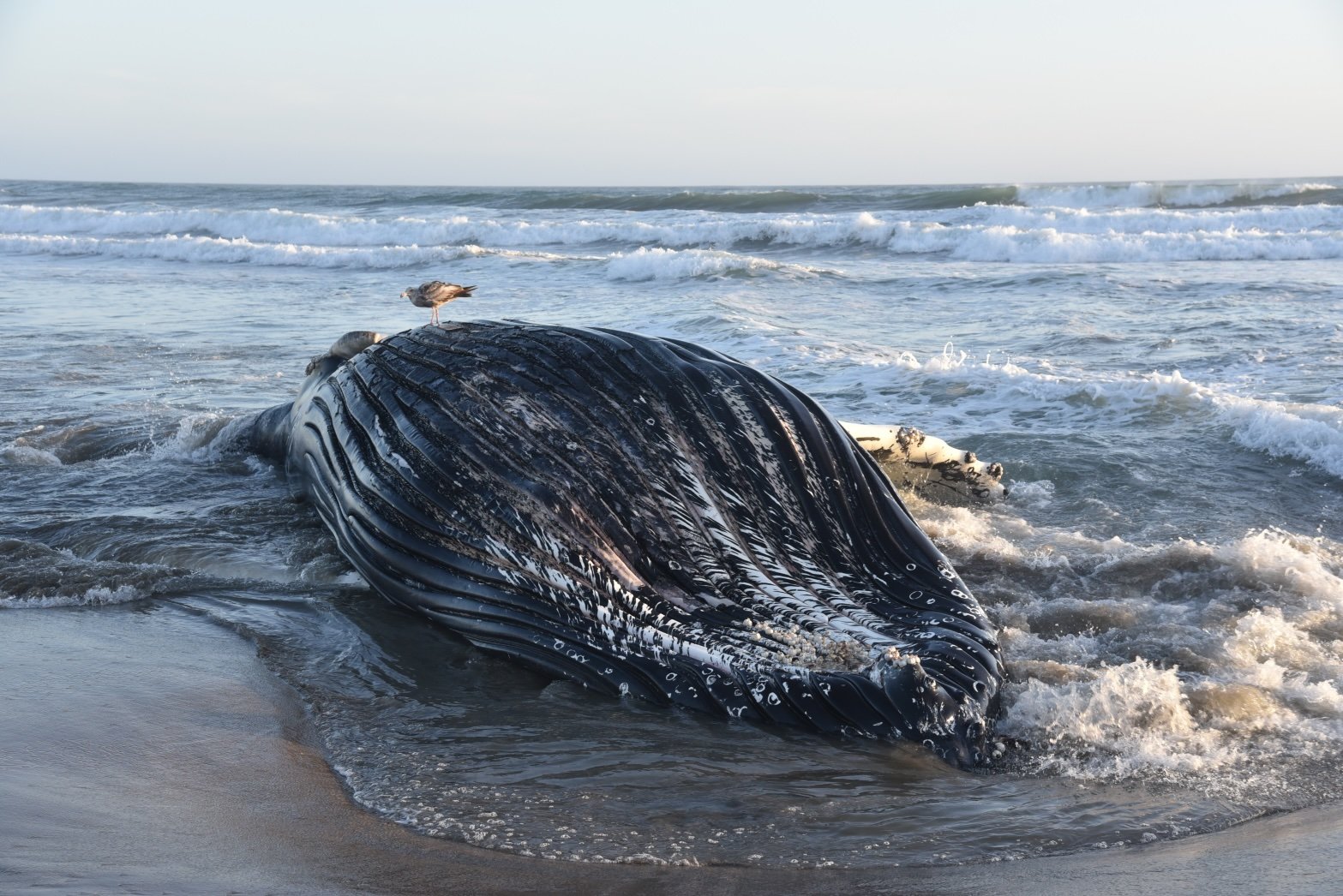
Marine mammal stranding teams have completed major response activities for two deceased juvenile humpback whales discovered less than 10 miles apart in Monterey Bay earlier this month, and issued preliminary necropsy findings.
To recount, the first whale stranded on a sensitive beach in Pacific Grove on June 3, while a second juvenile humpback whale was found stranded on June 5 at Sunset Beach, near Watsonville. Response efforts were led by the Marine Mammal Stranding Network at the University of California, Santa Cruz, and San José State University’s Moss Landing Marine Laboratories.
Response and recovery operations
On June 11, responders successfully towed the Pacific Grove whale offshore. By relocating the carcass away from the shoreline, the whale can now decompose naturally and contribute nutrients to the deep-sea ecosystem, where whale falls provide important habitat and food resources for a diverse community of marine organisms.
The Sunset Beach whale was reportedly buried on the beach by California State Parks after the carcass was necropsied on June 6. During response efforts, stranding teams collected a variety of biological samples from both whales, including fecal and stomach content. These samples were analyzed in collaboration with researchers at UC Santa Cruz.
Biotoxin exposure confirmed
Lab tests confirmed the presence of domoic acid in samples collected from both whales. Domoic acid is a naturally occurring marine biotoxin produced by certain harmful algal blooms and can accumulate in marine food webs. Exposure can cause neurological impairment, seizures, and death in marine mammals.
These findings come as Monterey Bay and the central California coast have experienced exceptionally high levels of domoic acid-producing algae, according to Robin Dunkin, director of the Marine Mammal Stranding Network. Monitoring conducted over recent weeks has measured some of the highest concentrations observed in the region, resulting in widespread impacts to marine wildlife and increased concern among researchers and resource managers.
The detection of domoic acid in both whales is consistent with the widespread impacts being observed in marine wildlife during the current harmful algal bloom event. The whale had particularly high levels of domoic acid, consistent with the toxin having played a significant role in its death. Preliminary examination of this whale revealed no obvious signs of trauma, and the animal appeared to be in relatively good nutritional condition for a stranded whale.
Domoic acid was also detected in samples collected from the Pacific Grove whale which was known to live in the area. Although toxin levels measured in that animal were lower than those found in the Sunset Beach whale, domoic acid can be rapidly cleared from the body while leaving behind significant physiological and neurological damage. As a result, the findings from both whales are consistent with domoic acid exposure having contributed to their strandings and deaths.
Additional analyses are ongoing to better understand the extent of toxin exposure and any other factors that may have played a role. Among those conducting the tests at UC Santa Cruz are ocean sciences professor Raphael Kudela, a recognized leader in the study of harmful algae blooms.
Regional stranding trends
The two humpback whales are among 62 whale strandings documented along the U.S. West Coast in 2026. Prior to these strandings, 60 whales had stranded along the coasts of California, Oregon, and Washington, including 52 gray whales and eight whales representing other species.
While no single cause has been identified across these strandings, investigations have documented a range of factors, including poor nutritional condition, vessel strikes, and exposure to marine biotoxins. Cases involving poor nutritional condition have occurred predominantly in gray whales. Researchers believe these mortalities may be linked to reduced prey availability on gray whale feeding grounds in the Arctic, where changing ocean conditions associated with climate change have altered ecosystem productivity in recent years.
The two humpback whales found recently do not appear to fit the pattern observed in many of the stranded gray whales. Instead, preliminary findings from both animals indicate exposure to domoic acid, highlighting the diversity of threats currently affecting whale populations along the West Coast. Information gathered through stranding investigations helps scientists identify emerging threats, track long-term trends, and inform conservation, management, and public health decisions.
Collaborative research and funding support
Marine mammal stranding response efforts are supported in large part through the NOAA Fisheries John H. Prescott Marine Mammal Rescue Assistance Grant Program. This program enables marine mammal stranding networks across the country to collect detailed, standardized, and long-term data that are critical for understanding marine mammal health, ocean health, and the connections between wildlife health and human health.
The Marine Mammal Stranding Network, headquartered at UC Santa Cruz’s Long Marine Laboratory, partnered on the response with NOAA Fisheries, the city of Pacific Grove, Stanford University’s Hopkins Marine Station, and other local teams.
