
Now Reading: Trump administration ends funding for Arctic climate report – THIRTEEN – New York Public Media
- 01
Trump administration ends funding for Arctic climate report – THIRTEEN – New York Public Media

Trump administration ends funding for Arctic climate report – THIRTEEN – New York Public Media
Become a member of THIRTEEN ($5 monthly or $60 annually) and get access to THIRTEEN Passport as our thanks for your support.
Members get extended access to PBS video on demand and more.
Members get extended access to PBS video on demand and more.
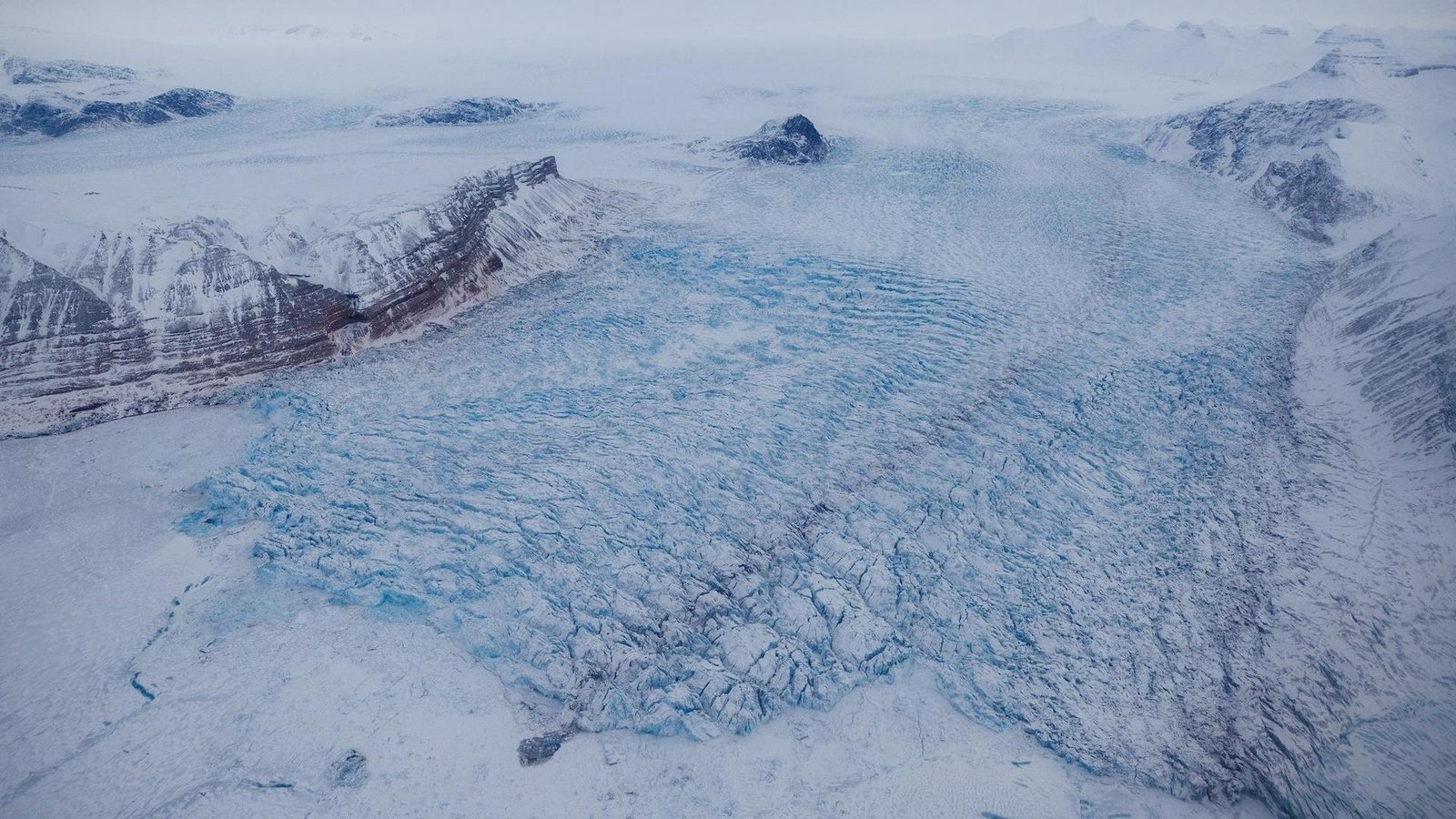
The Trump administration said it would stop funding the Arctic Report Card, the longstanding effort to collect research on how the fastest-warming place on Earth is changing. It’s the latest in a series of moves by the administration to curtail scientific research into the impacts of climate change. William Brangham discussed more with glaciologist Twila Moon, the Arctic Report Card’s editor.
WILLIAM BRANGHAM: This week, the Trump administration said it would stop funding the Arctic Report Card, a longstanding effort to synthesize the latest research about the fastest warming place on Earth.
Now scientists are scrambling to find a way to publish this major annual report anyway to continue to track how climate change is transforming the Arctic, impacting everything from glaciers to native communities to global fishing and shipping routes.
This decision is the latest in a series of moves by the administration to curtail scientific research into the impacts of climate change, which the administration argues is plagued with misinformation and alarmism.
For more on what this means, we are joined again by glaciologist Twila Moon.
She’s been a lead editor of the Arctic Report Card, and she’s the deputy lead scientist for the National Snow and Ice Data Center at the University of Colorado Boulder.
This conversation is part of our ongoing series Tipping Point.
Twila Moon, so nice to have you back on the program.
The administration argues that the underlying research will continue, will not go away, just their support of the synthesis of it into this report.
If that’s the case, what does it matter if the report goes away?
TWILA MOON, U.S.
National Snow and Ice Data Center: Well, unfortunately, the simple existence of data does not mean that people are finding that data and being able to access it, use it, and understand what it means.
So the Arctic Report Card has played a really important role in bridging the gap between raw data, which is really difficult for most people to understand or work with, towards something that can serve nonscientists so that they can be making good decisions with proper, up-to-date environmental awareness.
WILLIAM BRANGHAM: Could we step back for a second and explain why we care about what’s happening in the Arctic?
Because, to many people in the Lower 48, they might think this is just a distant place that they will never go to, and who cares really what happens up there?
Why is it going to impact me?
TWILA MOON: Well, what happens in the Arctic does not stay in the Arctic.
Changes that we see happening with permafrost or frozen ground, also changes with sea ice that forms on the surface of the Arctic Ocean, those changes actually themselves influence the weather we experience down here in the Lower 48.
But we can also see, because the Arctic is warming so quickly, we’re seeing a lot of increase in geopolitical tensions, an increased attention to security and military activity in the Arctic, and that means that the Arctic has become a U.S.
administration priority in regards to paying attention to security, international relations, changes with shipping, and also economic development in the area.
WILLIAM BRANGHAM: I mean, we have seen other instances, like these former NOAA staffers who were pushed out and then started their own independent Web site called Climate.US to maintain a repository of climate data.
Do you think that that’s something that you and your colleagues are going to have to do now here?
TWILA MOON: Well, myself, the other lead independent editors and our incredible authors — we have usually more than 100 authors from a dozen countries.
This is an international effort.
We’re going to do everything we can to get those data to the people who need them for making decisions and having environmental awareness.
But I want to point out that simply being able to do this in another space does not mean that it’s going to have the depth, all of the resources and tools that people expect.
So there’s a real loss in moving this to being something that’s no longer supported by NOAA, where we have spent two decades building tools, resources, and a really trusted resource for folks.
WILLIAM BRANGHAM: I mean, as I mentioned and as you well know, the Trump administration has taken other steps like this.
They have dismissed scientists who were working on the National Climate Report.
They put a climate change skeptic in charge of that document.
They have dismantled the preeminent atmospheric research center, NCAR, in Colorado.
They have stopped updating the federal database that tracks the cost of hurricanes and floods and things that we know are driven by climate change.
The president argues that climate change is a hoax.
Members of his administration argue that all of this work is full of alarmism and is just meant to terrify people.
As someone who does this benchmark science, what — how do you respond to that?
TWILA MOON: Well, the Arctic Report Card and all of the science that we’re reporting in it is specifically emphasizing direct observations of changes.
So, this is not a report that is projecting about the future or making inferences about what’s happening on the ground.
This is a resource that is providing real, accurate, and complete, peer-reviewed, trustworthy information about what is actually happening in place.
And there’s no arguing with reality.
It’s not a political position.
It’s a scientific resource.
WILLIAM BRANGHAM: I mean, I know you have spent a lot of time on Capitol Hill talking to legislators and their staff about the importance of this.
We have seen in the past pushback by Republicans and Democrats to certain cuts to climate research.
What is the argument that you make to legislators?
And how do they respond to you when they see substantive cuts like this going on?
TWILA MOON: I think that many representatives really, clearly understand how valuable environmental intelligence is for making decisions right now, especially in a world that is changing quickly and giving us many different risks and hazards that we have never faced before.
And so I honestly hold on to hope that we may still have a pathway to see the Arctic Report Card as a NOAA report.
But, like I say, we are going to do our darndest to ensure that this data is getting to those people who need it, because there are many people within the U.S., within states, local communities, Alaska, our Arctic state, and also folks in other countries who look to this report for getting information, making decisions, and educating their students and work force.
WILLIAM BRANGHAM: Twila Moon of the National Snow and Ice Data Center, always great to talk to you.
Thank you.
TWILA MOON: Appreciate it.
Millions of Americans turn to PBS for the solid, reliable reporting that has made PBS News Hour one of the most trusted news programs in television.
©2026 WNET. All Rights Reserved. 825 Eighth Avenue, New York, NY 10019
THIRTEEN is part of The WNET Group and is operated by WNET, a non-profit organization exempt from federal income tax under section 501(c)(3) of the Internal Revenue Code. Tax ID: 26-2810489