
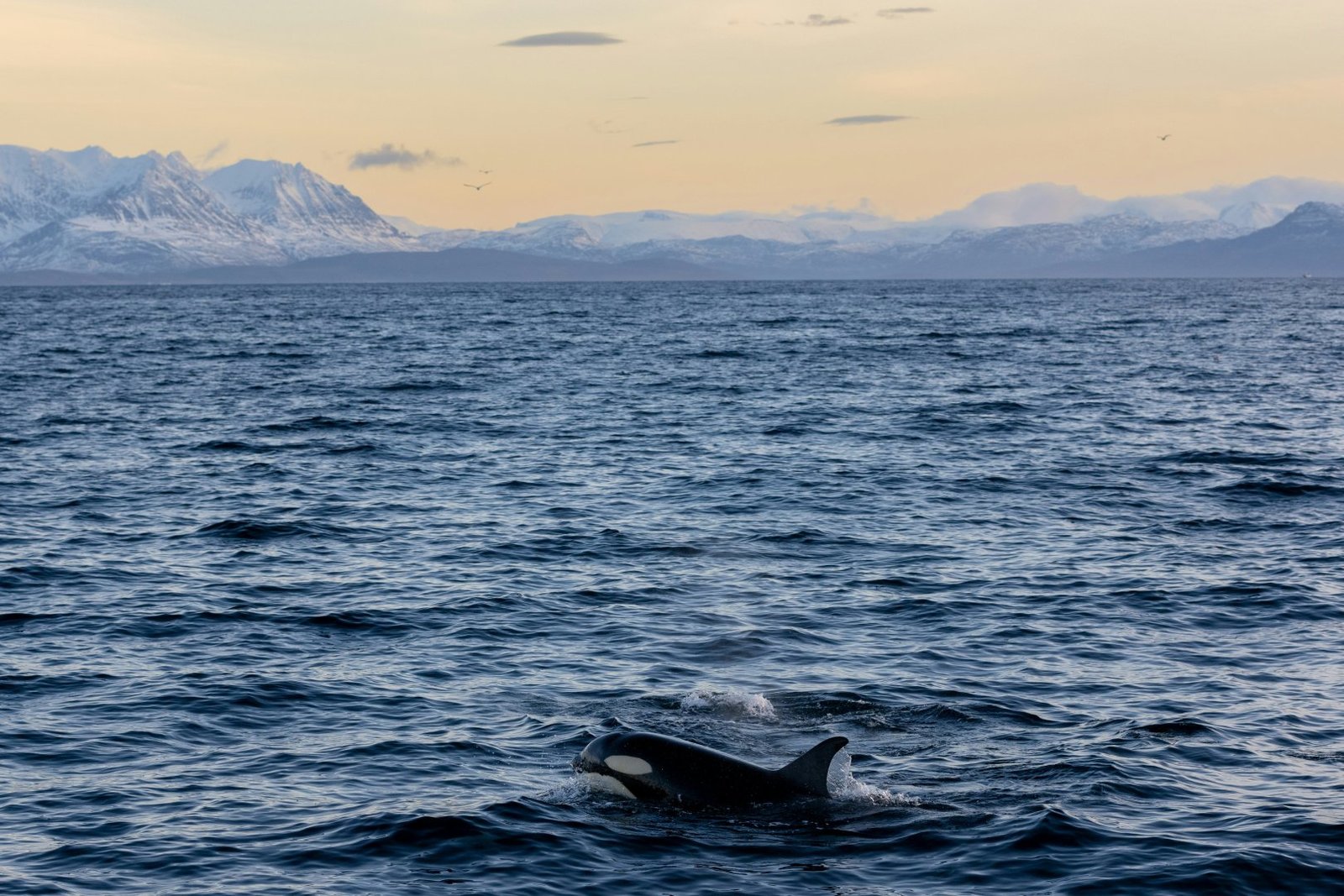
The Fascinating World of Orcas
Orcas, scientifically known as Orcinus orca, are often misinterpreted due to their common name, killer whale. Known for their striking black and white coloration, these mammals are the largest member of the dolphin family. Their size can reach up to 32 feet in length and weigh as much as 11 tons. Their prominent dorsal fin can be another distinguishing feature, especially in males, where it can rise to over six feet tall. This physical prowess allows orcas to thrive across various marine environments, making them adaptable predators in numerous ecosystems.
You May Also Like


The intelligence of orcas is particularly noteworthy, exhibiting behaviors that suggest a high level of cognition. Research indicates they can solve complex problems, use tools, and even learn from their peers, showcasing their social learning capabilities. Their social structures are intricate, often characterized by matrilineal family groups. These pods can range from a few individuals to over fifty, with strong bonds maintained among family members. Such complex social dynamics are crucial for their hunting strategies, communication, and nurturing of young calves.
Hunting techniques among orca pods are equally diverse and entirely remarkable. They display a range of strategies that highlight their adaptability and intelligence—from coordinated attacks on large prey like seals and whales to exploiting environmental features such as ice flows or tidal currents. This versatility in hunting not only solidifies their role as apex predators but also emphasizes the need for further research into their social and ecological impacts within marine environments.
Orcas are undeniably fascinating creatures, embodying a unique blend of power, intelligence, and complex social behavior. Their ecological importance and the intricate relationships they maintain make them essential to understanding marine biology and conservation efforts aimed at protecting their habitats.
The Origin of the Name ‘Killer Whale’
The term “killer whale” has a storied history that reflects both the perceptions and interactions between humans and orcas. The name itself originates from the Spanish phrase “ballena asesina,” which translates to “whale killer.” This phrase was initially used to describe the species’ hunting habits, particularly their prowess in hunting large whale species. Early seafarers observed orcas actively preying on whales, leading to a false assumption that these creatures were indiscriminate killers of all marine life.
As maritime exploration and whaling expanded, myths and fears surrounding orcas grew. Their distinctive hunting techniques and social structures were often misunderstood by those who encountered them at sea. These marine mammals were depicted in folklore as ferocious predators, reinforcing the notion that they were a threat to sailors and fishers alike. Despite their scientific name, Orcinus orca, which translates to “of the kingdom of the dead,” indicating their role in the ecosystem, the colloquial name “killer whale” has been a persistent point of confusion.
This stigma is further complicated by media portrayals, where orcas are often showcased as dangerous beasts. Such representation impacts public perception significantly, often leading to a lack of understanding of their complex behaviors and ecological importance. As the awareness of marine conservation grows, there is an essential need to shift the narrative surrounding orcas away from that of ruthless predators. Educating the public on their role as apex predators and their intelligence can foster a more respectful and informed stance towards these marvelous creatures.
The Importance of Studying Orcas in Their Natural Environment
The study of orcas, often referred to as killer whales, is crucial for understanding their behavior and ecological roles. Observing these magnificent creatures in their natural habitats allows researchers to gather authentic data that reflect their true lifestyles. Research conducted in captivity often limits insights due to artificial conditions, which can alter or inhibit normal behaviors.
One significant limitation of traditional research methods is that they often fail to account for the complex social structures and communication patterns inherent to wild orca populations. Orcas are known for their sophisticated hunting techniques and strong familial bonds, which can only be fully understood in the context of their natural environment. By studying orcas in the wild, researchers gain valuable information about their foraging strategies, social interactions, and responses to environmental changes—elements that are pivotal for the broader understanding of marine ecosystems.
Furthermore, orcas play a critical role in maintaining the health of marine biodiversity. As apex predators, they help regulate the populations of their prey, which can include fish and marine mammals. This predation is essential for balancing the marine food web. Understanding the environmental factors that influence orca populations—such as prey availability, water temperature, and pollution levels—also contributes significantly to marine conservation efforts. The insights gained from observing orcas in their natural environment can inform policies and practices that aim to protect not only the orcas themselves but also the ecosystems they inhabit.
The growing emphasis on innovative research methods, such as drone technology and remote sensing, enhances our ability to study orcas in their natural habitats without interference. These advancements in technology facilitate long-term monitoring and data collection, ensuring that our understanding of orcas and their environment is comprehensive and current.
Innovative Technologies: Using Cameras and Drones to Study Orcas
The advent of innovative technologies has opened up new avenues for studying orcas, known scientifically as Orcinus orca. Among these, underwater cameras and drones are proving invaluable for collecting data regarding orca behavior, movement patterns, and social interactions. These technologies allow researchers to observe orcas in their natural habitats without causing disturbances, thus ensuring the integrity of the environment connectz in which these creatures thrive.
Underwater cameras provide high-resolution imagery and can be deployed in areas frequented by orca pods. Such equipment is crucial for monitoring the behaviors of these marine mammals during various activities, including foraging, socializing, and mating. Researchers utilize these visuals to draw connections between orca behavior and environmental factors such as water temperature, prey availability, and habitat conditions. This real-time data aids in generating a comprehensive understanding of orca life, ultimately facilitating better conservation strategies.
Drones further enhance the research capabilities by offering aerial views that were previously unattainable. Equipped with advanced imaging technology, these drones can track orca movements across vast ocean areas. Additionally, they assist in mapping vital habitats and assessing any environmental changes that may impact orca populations. The ability to gather data from multiple perspectives allows researchers to form a more complete picture of the environment connectz that orcas inhabit and navigate.
However, it is essential to consider the ethical implications of employing such technologies. Employing cameras and drones for orca studies must be approached with caution to avoid stress or disruption to the animals and their habitats. When used responsibly, these technologies have the potential to significantly contribute to orca research and inform effective conservation efforts aimed at preserving these remarkable creatures for future generations.
