

You May Also Like


Actor John Wayne smokes during an interview with the Chronicle to promote “Hatari!” in San Francisco in 1962.
Hi, Mick: I’m 72 years old but work occasionally with people decades younger than myself. They don’t know who Carol Burnett is and think John Wayne is just an airport in Orange County, yet they all know about Marilyn Monroe and James Dean. Why is that? Would either still be in the public consciousness if they hadn’t died young?
Dave Sironen, San Francisco
Hi, Dave: The first thing to consider here is why Gen Z should know about Carol Burnett. What did she ever do for them? Despite appearances here and there, as a recurring character on the Apple TV series “Palm Royale” and most recently on the HBO hit “Hacks,” her reputation is almost entirely founded on “The Carol Burnett Show,” which has been off the air since 1978. I was a college freshman in 1978, and I’m on Medicare now. So that’s, you know, a while.
Article continues below this ad

Carol Burnett attends the world premiere of “Palm Royale” at the Samuel Goldwyn Theatre in Beverly Hills in March 2024.
And unless you’re into Westerns, you’re probably not going to run into John Wayne, except at the airport.
But James Dean and Marilyn Monroe have been style icons for decades. Did their early deaths help? Arguably. Then again, imagine how many more reasons Dean would have given us to remember him had he lived. The guy died in 1955, but he was a year younger than Clint Eastwood. He could have been a force in movies for another 50 years.
And Monroe would have found a less constrained industry in which to work once censorship ended in 1968. She would have only been 42. She could have gone on to have her best career, if not in the U.S., then certainly in Europe, which would have welcomed her.
Article continues below this ad

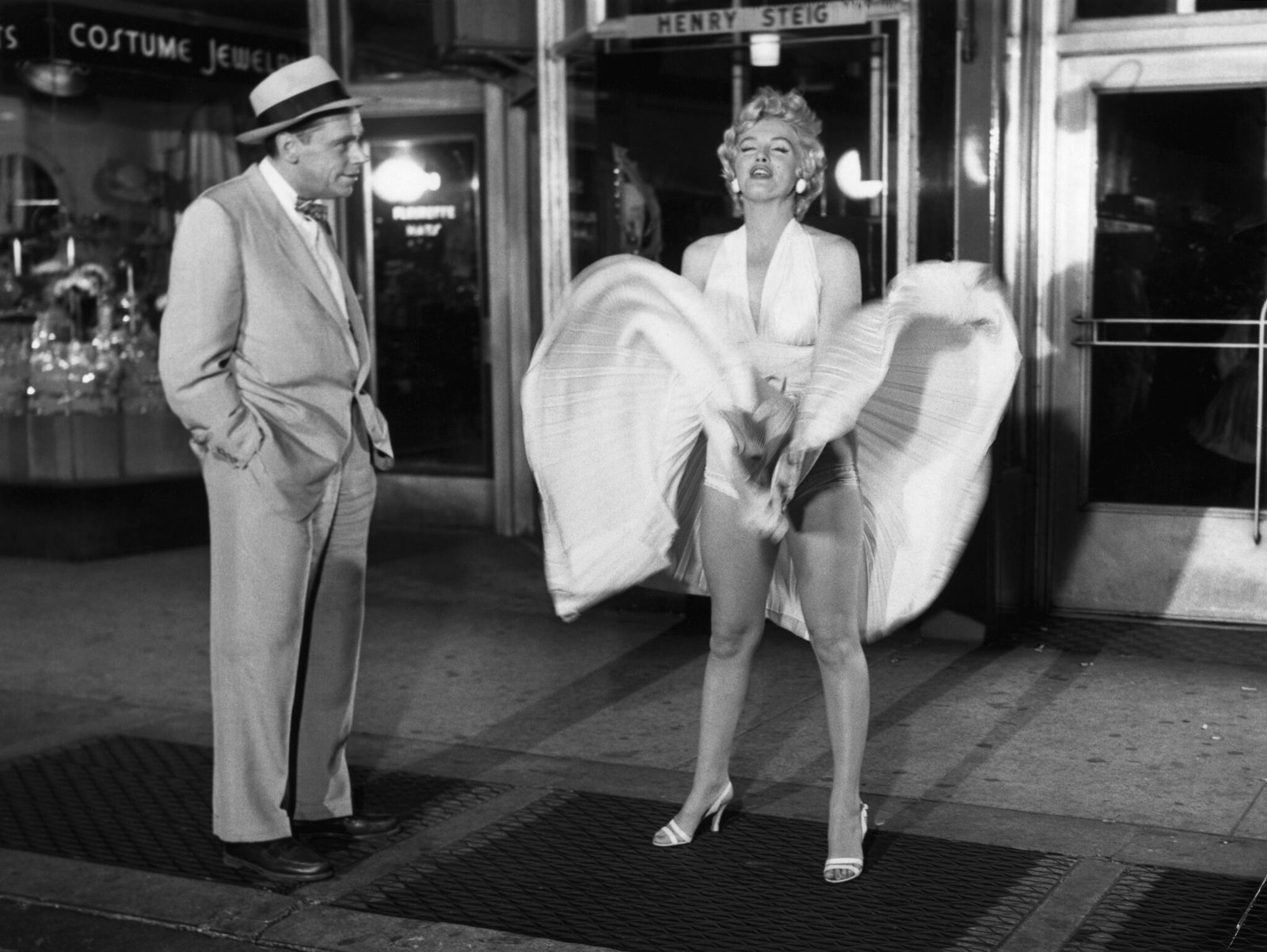
Tom Ewell, left, and Marilyn Monroe in the movie “The Seven Year Itch” (1955).
I always find it interesting to discover what young people know about, not to judge them, but because they are, in a sense, telling me which aspects of 20th century culture are going to last. Each generation aggregates tons of cultural artifacts, and then the next generation sifts through them to see what it deems useful.
Actually, if you want to feel really good, ask these Gen Z folks if they’ve ever heard “The Piña Colada Song” or of the band Three Dog Night. Or better yet, just say, “Jeremiah was a bullfrog,” and wait for them to provide the next line. If they have no idea what you’re talking about, thank them for quietly removing our generational waste.
Say, hey, Mick: The Nazis controlled Germany from 1933 to 1945. Were German filmmakers putting out whatever they wanted, or did the government have veto power? Did they have to make sure to not show Jews in a favorable light?
Article continues below this ad

James Dean sits on the ground, leaning on a picket fence in a publicity still for “East of Eden” (1955).
Say, hey, Joe: The government was in complete control of screen content. No movie could be released without the involvement of the state. Movies were produced by the government, which controlled films from first draft to finished product.
As for the portrayal of Jews, forget about showing Jews in a favorable light — showing them in a neutral light was impossible. Movies either advanced the Nazi agenda or they were light romances that didn’t deal in politics.
Also, all theaters were required by the government to show propaganda documentaries and newsreels. It was hideous.
Hi, Mick the Magnificent: Aside from “As Good as It Gets” and “Twister,” I can’t think of any other well-known film that Helen Hunt has been in. It seems a woman of her talents should have a series of movie vehicles to present her skills. Why do you suppose she didn’t?
Article continues below this ad

Sean (Atticus Woodward, from left), Trish (Jaylen Barron), Janelle (Candace Nicholas-Lippman) and Rainey (Helen Hunt) in the Starz series “Blindspotting.”
Hi, Chuck the Magnificent: She wasn’t all that keen to be a movie star. She was more interested in having a personal life, raising her daughter and taking projects that particularly interested her. That included working a lot in television, such as in the Oakland-set spinoff series “Blindspotting” and (again) most recently on “Hacks.”
If you want to see another great Hunt performance, watch her play a sex therapist in “The Sessions” (2012). Her down-to-earth directness, humanity and clarity make her very special.
Article continues below this ad
Have a question? Ask Mick LaSalle at askmicklasalle@gmail.com. Include your name and city for publication, and a phone number for verification. Letters may be edited for clarity and length.
