
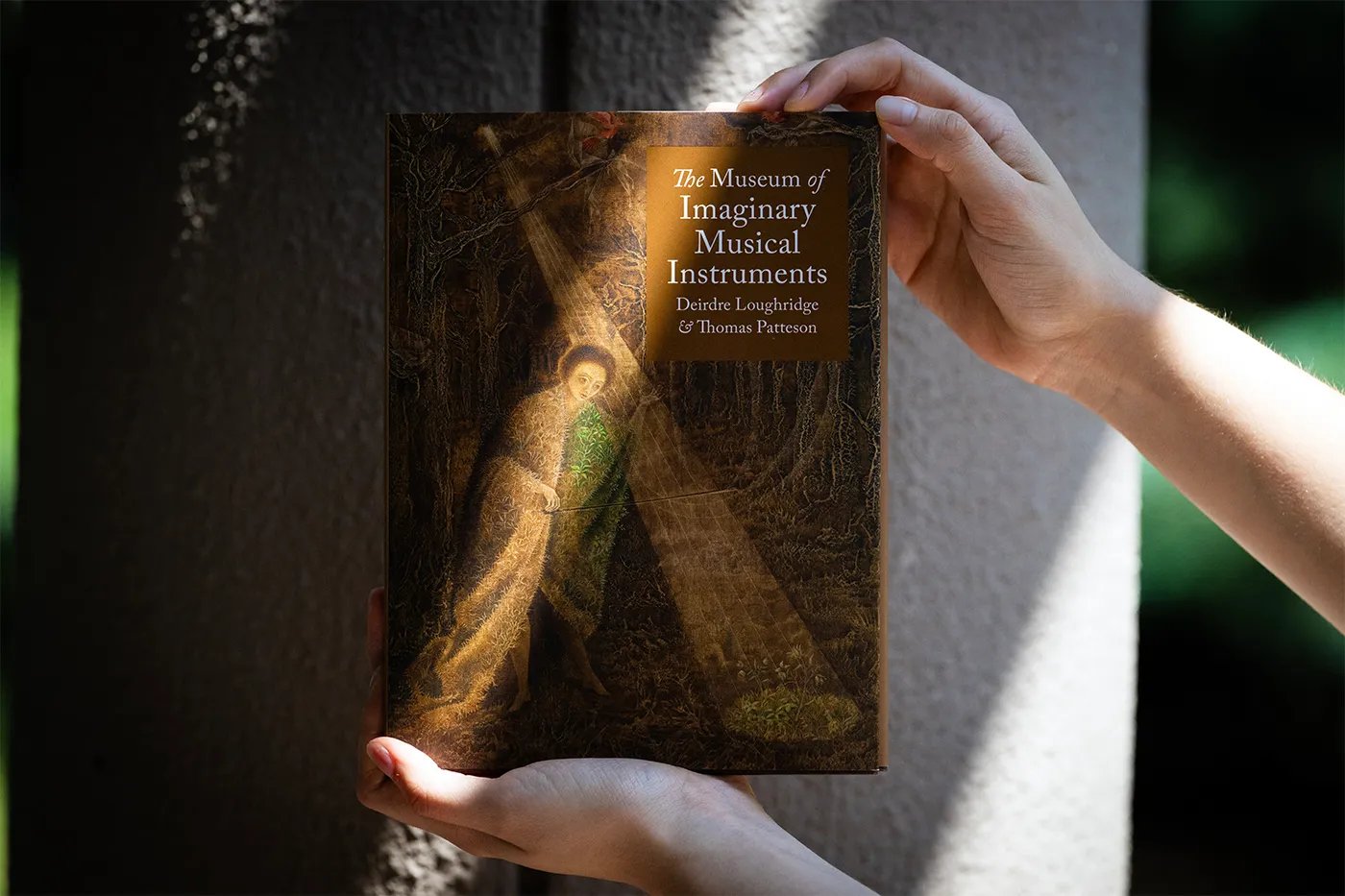
A euphonium that pours beer, a 13-bell trumpet, and a would-be piano that makes music by forcing cats to meow are among the many fantastical devices revealed in the book “The Museum of Imaginary Musical Instruments.”
Co-written by music historian and Northeastern University professor Deirdre Loughridge, the book offers a guided tour of whimsical musical curios across centuries of history, art and literature.
The imagined instruments never made a musical hum, toot, whistle or even an on-key meow in the real world. And most are all but forgotten.
But they are still part of humanity’s musical culture, said Loughridge, a professor in the department of music in the College of Arts, Media & Design on the university’s Boston campus.
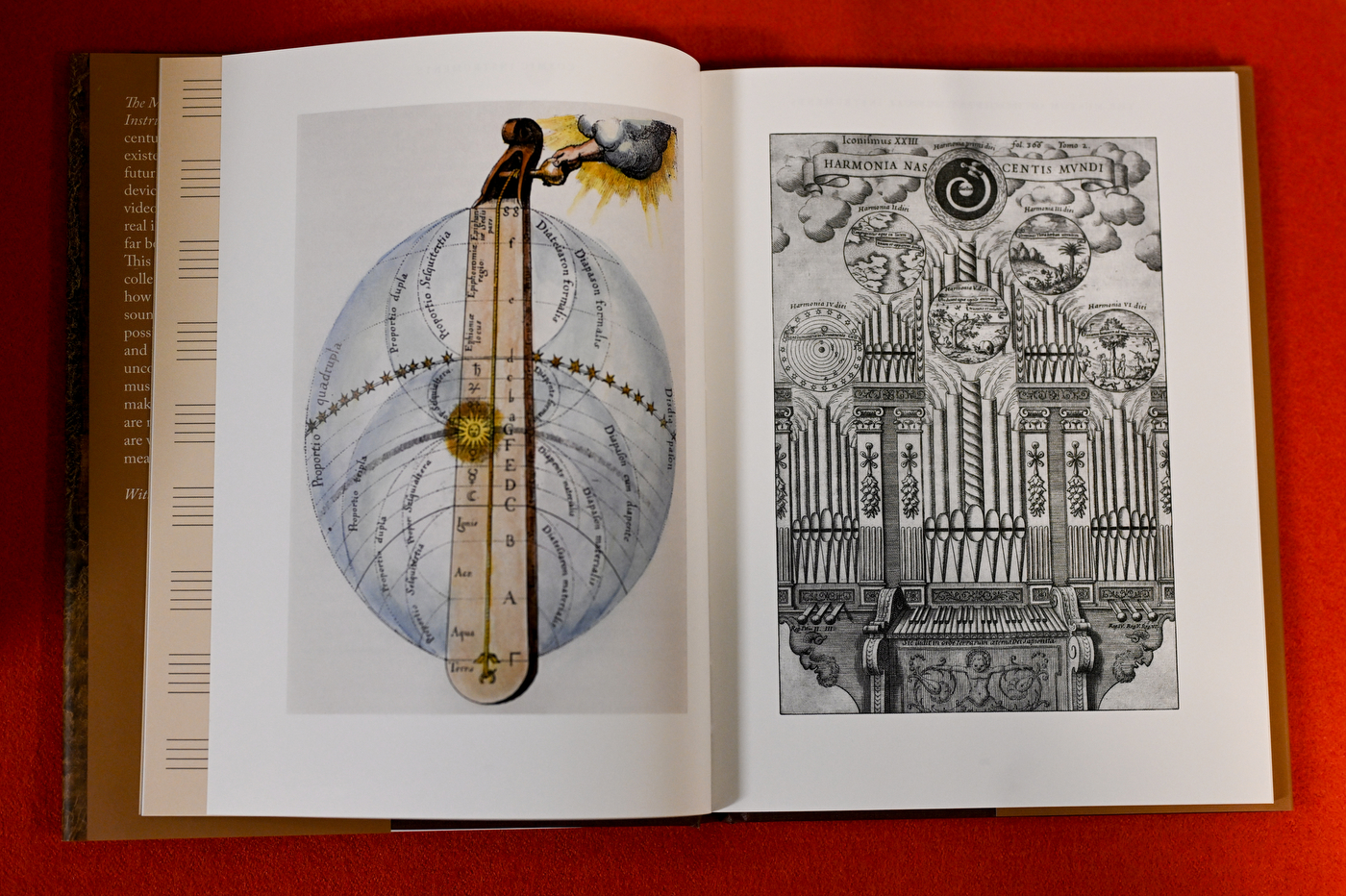
Instead of her usual academic works, “The Museum of Imaginary Musical Instruments” is written like a coffee table book with more than a score of illustrations.
“This book is really different,” Loughridge told Northeastern Global News. “We can only imagine the sounds that would be made by most of these instruments. And you might ask why do that? Why pay attention to instruments that don’t exist? Beyond the fun of it, we found a serious purpose looking at what they reveal about human imagination and sound technologies.”
She is, after all, a historian of music and technology who explores what musical tools reveal about humanity and she teaches her students that history can offer guideposts to the present and future.

Loughridge wrote the book along with her friend, Thomas Patteson – a musician and teacher in Philadelphia. The work was dreamed up about two decades ago when the two were in graduate school for music in Pennsylvania.
“He was working on early electronic music, I was working on eighteenth-century music,” Loughridge said. “In talking about our research, we realized we were both finding instruments that didn’t necessarily exist.”
They came across instruments that defied easy explanation – such as the 16th century cat piano, even though the real piano wouldn’t be invented until the early 1700s.
An illustration of the contraption shows eight felines with their heads poking through a low cabinet with a keyboard that presumably pokes the critters as they give a concert to an assortment of other animals.
To organize their discoveries, Loughridge and Patteson coined the word “fictophones” to give a new taxonomy to categorize the fictitious musical devices that have never produced sound in the real world.
“We come from a world of writing for academics,” she said. “This is for a broader audience, those who are interested in what people through history imagined.”
“We come from a world of writing for academics,” she said. “This is for a broader audience, those who are interested in what people through history imagined.”
The co-authors found more than just a few imagined instruments that tested the boundary between the possible and the impossible that Loughridge likened to speculative historic writings about the possibilities of radio in the early days of that technology.
Another fantastical instrument is a sextet horn from the mid-19th century which has stations for six people to blow into it at once. Another comes from 1743 – an ocular harpsichord which emits colored lights instead of audible music through candlelight and stained glass, representing cords.
They launched a website in 2013 carrying the same name as the book and they worked on it sporadically over the years. A few years ago an editor at Reaktion Books Limited, an independent book publisher based in the United Kingdom, reached out to them asking if their website could be made into a book.
The work is set to be released on Wednesday.
“We hope readers come away with an appreciation for how imagining instruments has been central to testing reality and the limits of the possible, and for the imagination as a fundamental part of human existence,” Loughridge said.