

Now Reading: Seventy-ninth World Health Assembly – Daily update: 21 May 2026
- 01
Seventy-ninth World Health Assembly – Daily update: 21 May 2026

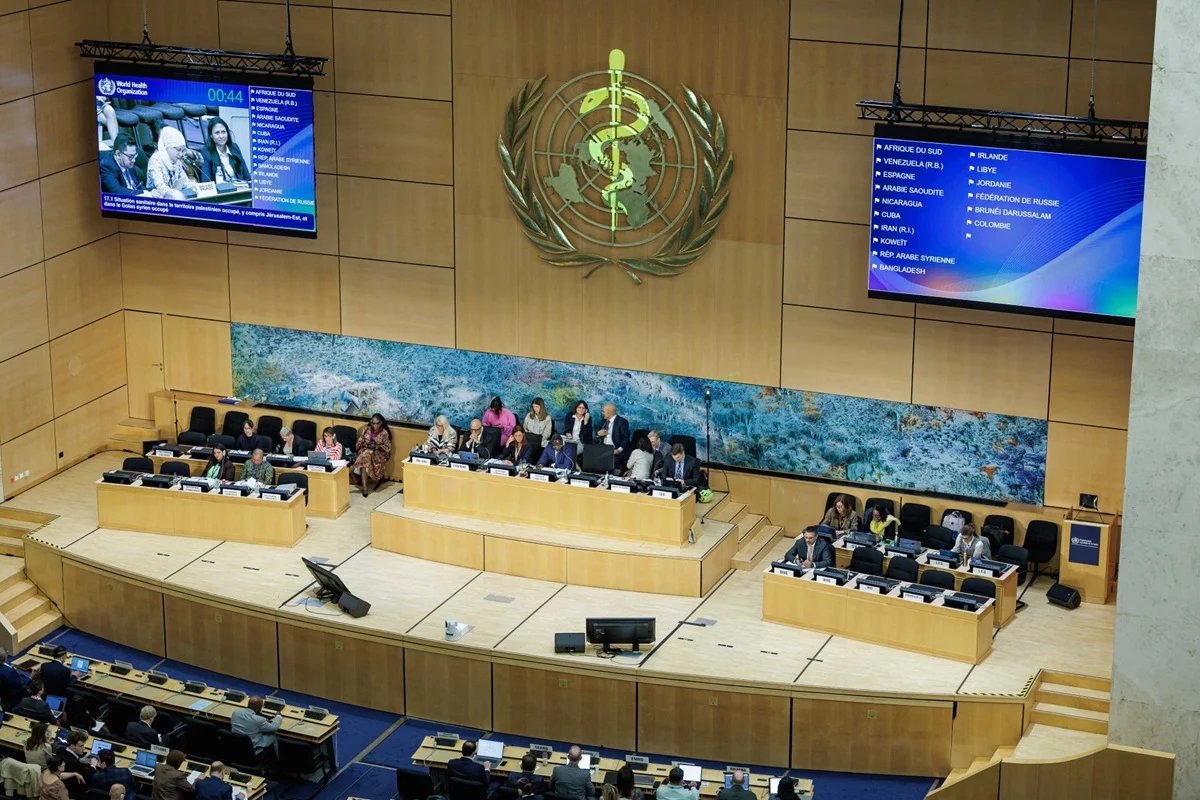
Seventy-ninth World Health Assembly – Daily update: 21 May 2026
Countries support development of a post-2030 strategy to end tuberculosis
The Assembly, today, endorsed a decision requesting the Director-General to develop a post-2030 tuberculosis (TB) strategy, in consultation with Member States and relevant stakeholders, to be submitted to the Eighty-first World Health Assembly in 2028.
The new strategy will help guide the future global TB response, considering emerging scientific advances and current epidemiological trends. The strategy will reinforce strong alignment with primary health care, advancing universal health coverage, and global health security agendas, in preparation for the 2028 United Nations High-Level Meeting on TB.
The Assembly also discussed a report on the implementation of the current End TB Strategy highlighting both progress and challenges. Between 2000 and 2024, expanded treatment of people with TB saved an estimated 83 million lives, while 2024 marked the first post-pandemic decline in TB incidence and the highest-ever recorded access levels to essential TB services.
Despite these gains, TB remains a leading infectious killer, and global targets under the End TB Strategy and the 2030 Agenda for Sustainable Development remain off track. This is due to chronic underfunding, pandemic-related disruptions, inequality, conflict, and climate-related displacement, and vulnerability.
Assembly recognizes steatotic liver disease as a major and growing NCD challenge
Today, delegates approved a resolution recognizing steatotic liver disease (SLD) as an important and growing contributor to the global burden of noncommunicable diseases (NCDs). SLD, formerly referred to as fatty liver disease, affects an estimated 1.7 billion people worldwide, and is one of the fastest-growing causes of chronic liver disease globally.
The condition is closely linked to obesity, type 2 diabetes, cardiovascular disease, and other metabolic conditions, while alcohol-associated liver disease remains an important contributor to the overall burden. Without effective prevention and care, SLD can progress to liver fibrosis, cirrhosis, and liver cancer, placing increasing pressure on health systems worldwide.
The resolution calls on Member States to integrate SLD into national NCD strategies, strengthen primary health care approaches, improve surveillance and awareness, and promote multisectoral action addressing shared NCD risk factors, including unhealthy diets, physical inactivity and the harmful use of alcohol. It also calls for strengthening access to prevention, screening, diagnosis and management services, particularly for populations at higher risk, including children and adolescents.
The resolution further requests WHO to integrate SLD into ongoing NCD prevention and control efforts, provide technical support to countries upon request, strengthen collaboration with relevant partners, and report biennially on progress as part of the broader global NCD agenda.
Related link
Countries vow support for people living with haemophilia and other bleeding disorders
Member States at the World Health Assembly today endorsed a resolution recommitting action on haemophilia and other bleeding disorders, addressing major gaps in diagnosis, treatment and care globally. It is estimated that nearly 70% of people living with haemophilia remain undiagnosed.
Haemophilia and other bleeding disorders impair the body’s ability to clot blood properly, causing prolonged bleeding after injury or surgery and, in severe cases, spontaneous bleeding episodes. Without timely diagnosis and appropriate prophylaxis, these conditions can lead to serious health complications, disability and reduced quality of life.
This resolution represents a concrete step toward closing a long-standing equity gap for a community that has often been overlooked in global health policy. It provides comprehensive recognition for haemophilia, von Willebrand Disease, and other rare clotting factor deficiencies.
Through the resolution, Member States committed to strengthening access to treatment and care for persons with bleeding disorders worldwide. Countries also pledged to integrate bleeding disorder management into their national policies on NCDs, primary health care, and maternal health policies, as well as strengthening diagnostic capacity and ensuring timely referral to specialized treatment centres.
The resolution further encourages the inclusion of life-saving therapies, including factor concentrates and novel non-factor therapies, in national Essential Medicines Lists. Member States are also encouraged to strengthen national data collection and promote awareness to help reduce stigma and improve understanding of bleeding disorders.
Related link
Global leaders unite to address health mis- and disinformation to rebuild trust in science
The Assembly held a Strategic Roundtable session today on health mis- and disinformation, bringing together a diverse and high-level group of leaders from governments, international organizations, the scientific community, civil society, youth, the private sector and the media.
The event underscored the urgency and global relevance of the issue, revealing a strong consensus that mis- and disinformation are “not just a communication challenge” but a growing public health threat that undermines the delivery of effective health interventions. Across perspectives, participants emphasized the need for multisectoral collaboration and sustained investment in resilient information ecosystems. They also highlighted the critical role of WHO in convening partners and providing normative guidance.
Participants shared practical experiences and country-level strategies to strengthen information integrity, including whole-of-government approaches, community engagement, and transparent communication to build trust. Speakers underscored the importance of empowering health workers and trusted community voices as frontline responders to mis- and disinformation, as well as leveraging scientific networks to ensure the timely and credible dissemination of evidence.
Looking ahead, key priorities include investing in quality of health information, moving beyond reactive correction of misinformation towards proactive engagement, and strengthening collaboration with key stakeholders such as technology platforms and end-user communities.
Related link