
Good morning. You’re reading the Up First newsletter. Subscribe here to get it delivered to your inbox, and listen to the Up First podcast for all the news you need to start your day.
President Trump, Iran and mediators from Pakistan say a deal has been reached to end the war between the U.S. and Iran. Trump and Pakistani Prime Minister Shehbaz Sharif, who played a key mediating role in negotiations, both said on social media that an official signing ceremony will take place on Friday. Shehbaz also said that the U.S. and Iran “declared the immediate and permanent termination of military operations on all fronts, including in Lebanon.”
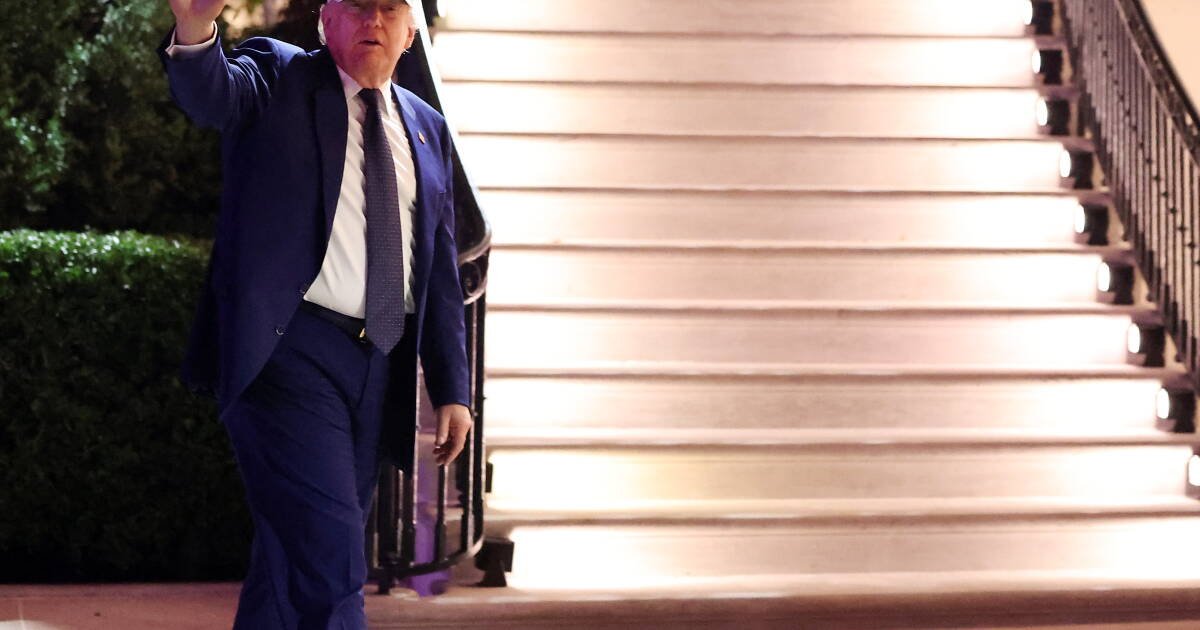
The newly reached agreement will likely dominate the conversation as Trump heads to the French Alps today for the G7 summit. Leaders from the world’s wealthiest nations are meeting this week to discuss artificial intelligence, trade, immigration, the war in Ukraine and more. French President Emmanuel Macron, who is hosting the summit, said “the objective will be to see the consequences of this agreement, its support for Lebanon, the longterm reopening of the Strait of Hormuz and of course an agreement on Iran’s nuclear and ballistic weapons.”
Trump’s trip to France also comes on the tail of a spectacle never before seen at the White House: A UFC fight on the White House Lawn to celebrate his 80th birthday — and the U.S.’ 250th. Mixed martial arts fighters went after each other in a 92-foot UFC octagon built on the lawn, hours after Trump announced the peace deal plans. Scenes of fighters warming up inside the Eisenhower Executive Office Building were streamed on Paramount+.
Twelve people are dead after a plane crashed Sunday in Missouri, killing all on board. Federal Aviation Administration (FAA) records show the plane was operated by Skydive Kansas City, which provides skydiving in several locations. The company called the crash a “devastating loss” and said it is cooperating with local and federal investigators. The National Transportation Safety Board (NTSB) and the FAA are investigating. NTSB investigators are expected to arrive today to begin documenting the scene and examining the aircraft. A preliminary report is expected within 30 days. (via KCUR)
Summer is just around the corner, and so is the deadliest of extreme weather conditions: heat. Extreme temperatures kill more people in the U.S. in an average year than hurricanes, tornadoes and floods combined. Here’s the science behind how heat kills — and how you can stay safe this summer.
☀️ Your body tries to cool down by sweating and redirecting more blood to the skin. But that means less blood goes to your gut. If this persists for a prolonged period, it could lead to multiple organ failure.
☀️ Arteries widen, and blood pressure drops as your body pumps blood to the skin, making your heart work harder. The stress can trigger heart attacks or strokes.
☀️ Sweating makes you dehydrated. If you don’t replenish your fluids, it can be hard on your kidneys and lead to kidney failure.
☀️ Drink plenty of water before you head into the heat, and every 15-20 minutes if you’re physically active.
☀️ If you start to feel overheated, wet your clothes and skin, seek shade or head to a cool spot indoors.
For more heat safety tips, check out this comic.
Living Better is a special series about what it takes to stay healthy in America.
Parents and their adult children are much closer emotionally now than they have been in past generations, according to Laurence Steinberg, a professor of psychology and neuroscience at Temple University. More than half of parents of 18- to 25-year-olds surveyed by the University of Michigan say they track their adult children using smartphone apps. Researchers say tracking to stay in touch can be healthy and supportive, but it could also cross the line. Here are some of the survey’s findings:
🔍 Most parents cited peace of mind about their child’s safety as the main reason for tracking. But about 25% of parents who track their kids said the ability to monitor their location sometimes causes more anxiety.
🔍 When parents use location tracking to micromanage their children’s lives, it can be a sign that they are having difficulty transitioning from parenting a child to a young adult.
🔍 The period of late teens to early 20s is an important time for young people to develop a sense of autonomy and independence, says Steinberg. He suggests setting up regular time to catch up rather than hovering.
🔍 Many young adults also track their friends. If you’re trying to scale back on monitoring your kids, you could ask them if they already have a peer group that’s checking in on them.
This newsletter was edited by Yvonne Dennis
Copyright 2026 NPR
You are leaving gbh.org and going to a web page that is not owned by GBH. If you are streaming, your experience will be interrupted.