Now
75°
Wed
73°
Thu
77°
by CORY SMITH | The National News Desk
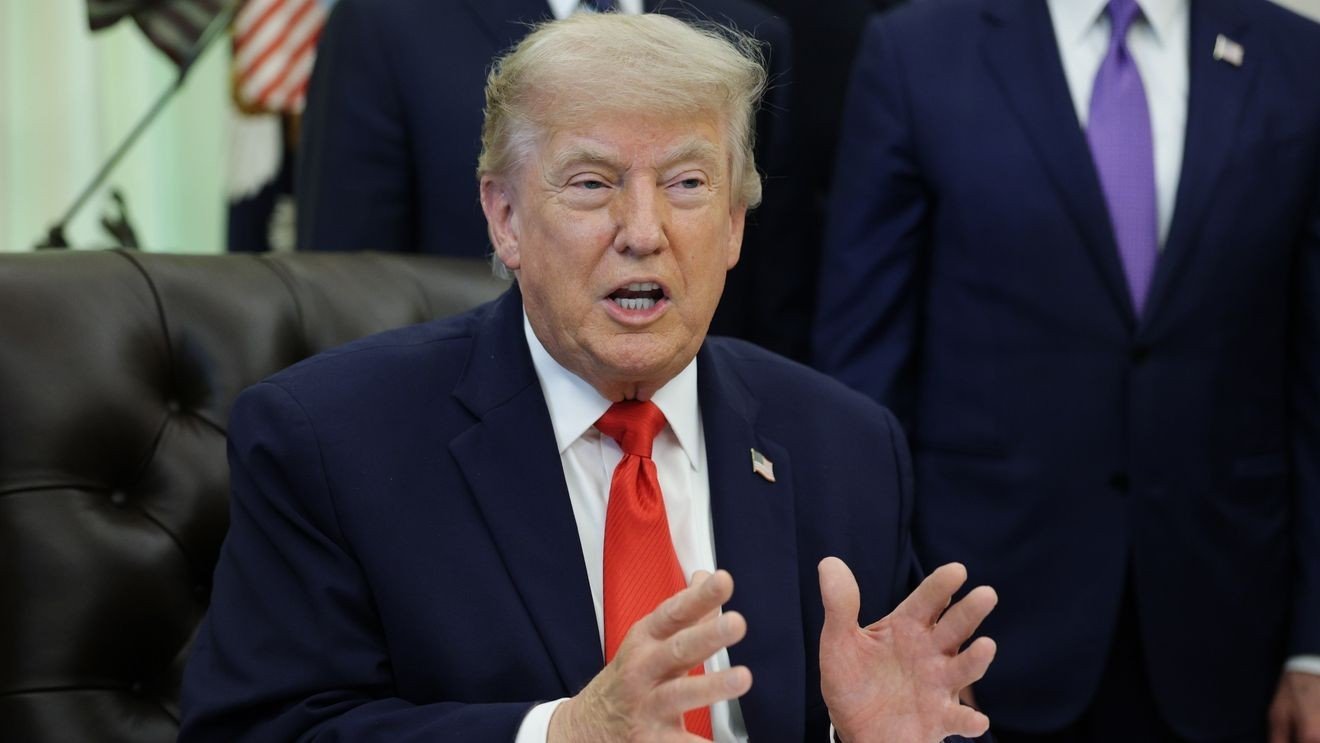
(TNND) — President Donald Trump wants a voter identification bill attached to the reauthorization of a surveillance program that's seen as vital to national security, but the GOP leader in the Senate is reportedly pushing ahead with separate bills.
“The Dumocrats want FISA because that’s what they used to go after me for three years during my First Term! I’m against FISA if it doesn’t come with The Save America Act (Full version!) firmly attached to it,” Trump said Monday on social media.
Authority for the Section 702 program under the Foreign Intelligence Surveillance Act, or FISA, lapsed over the weekend.
The 702 program allows the U.S. government to target non-Americans, reasonably believed to be outside the U.S., for foreign intelligence gathering. The intent is to guard against terrorism, weapons of mass destruction, cyber threats and the like.
Senate Majority Leader John Thune on Tuesday called the Section 702 program “the most successful tool when it comes to keeping people and this country safe.”
Authorization expired amid a partisan fight over Trump’s pick of Bill Pulte, the head of a federal housing agency with no national security background, to serve as acting director of national security.
But Trump announced last week that he’s nominating Jay Clayton, the U.S. attorney for the Southern District of New York and a former Securities and Exchange Commission chairman, to serve as the director of national security, or DNI, on a permanent basis.
Clayton seems to have some bipartisan support for confirmation, with Sen. Mark Warner, the top Democrat on the Senate Select Committee on Intelligence, calling him a “capable public servant” whom he has “known and respected” for many years.
Lawmakers have scheduled a Wednesday confirmation hearing for Clayton, seemingly putting him on a fast track to becoming DNI and potentially clearing the key hurdle in reauthorizing the FISA 702 program.
Matthew Williams, a veteran of the intelligence community who now teaches at Tulane University, told The National News Desk last week that the FISA 702 program is “invaluable” to protecting Americans.
“Considering the complexity and potential lethality of the threats the nation faces and the immense value of the 702 program is in combating those threats, intelligence authorities should not become bargaining chips in confirmation fights or petty political squabbles,” Williams told TNND.
Trump called the 702 program “very important” to the military and American safety last week. But a couple of times in recent days, he’s posted his opposition to reauthorizing the 702 program without attaching the SAVE America Act voter ID bill.
Trump referenced the “Full version” of the SAVE America Act in his posts, which includes amendments related to transgender issues in addition to the core voter-related requirements of the bill.
The SAVE America Act would require voters to show ID, show proof of citizenship to register to vote, and curtail mail-in voting.
“The base wants to see the SAVE Act passed, because the president has made it such a top priority,” Rice University political scientist Mark Jones said. “But there's no way that the Senate can actually get it passed, and attaching it to specific legislation just would ensure that that legislation, which is a top priority also for Republicans, would not pass.”
Democrats are strongly opposed to the SAVE America Act, and Jones said tethering it to the FISA legislation would simply torpedo the foreign surveillance bill.
Thune, the GOP leader, said last week that they don’t have the votes to pass the SAVE America Act. But he said Tuesday that he hopes confirmation of the DNI “unlocks” Democratic support to pass the FISA 702 authority.
“I'm sure there are many Republican senators who would be happy to get the provisions of the SAVE Act into law,” Tulane University political scientist Brian Brox said. “However, they also recognize the legislative requirements of trying to pass legislation in a narrowly divided Congress. And many of them are worried about the upcoming midterms. And so, the idea of attaching this and perhaps getting nothing is less desirable than just trying to go with FISA alone and getting it through. They need to run on a record. This is something that they see as important. And I think that sincere preferences might be taking a backseat for many senators to the practical considerations of policymaking.”
Brox said he sees Trump’s efforts to tie the two bills together as a last-ditch legislative maneuver to salvage an administration priority that lacks a path to passage.
But Jones said such a move puts Thune and Senate Republicans in a difficult position. And it sours the president’s relations with GOP lawmakers, he said.
“(Trump) certainly puts himself in a position where he'll have to either back down or veto legislation that is critical to national security,” Jones said. “And as his approval ratings continue to fall, … for Democrats, it’s sit back, eat the popcorn, and watch Republicans essentially fight among themselves at a time when things are looking increasingly rosy for Democratic prospects of not (just) taking the House, which is a virtual certainty at this point, but also for taking the Senate in November.”
Both Jones and Brox said they would expect Trump to ultimately sign off on the FISA legislation, even without the voter ID bill attached.
“Getting it through to the president's desk for him to veto it would just be terrible messaging heading into the fall campaign,” Brox said.
2026 Sinclair, Inc.