
Now Reading: $30 an hour by 2030: new pushes to increase minimum wage in New York and California | Minimum wage
- 01
$30 an hour by 2030: new pushes to increase minimum wage in New York and California | Minimum wage

$30 an hour by 2030: new pushes to increase minimum wage in New York and California | Minimum wage
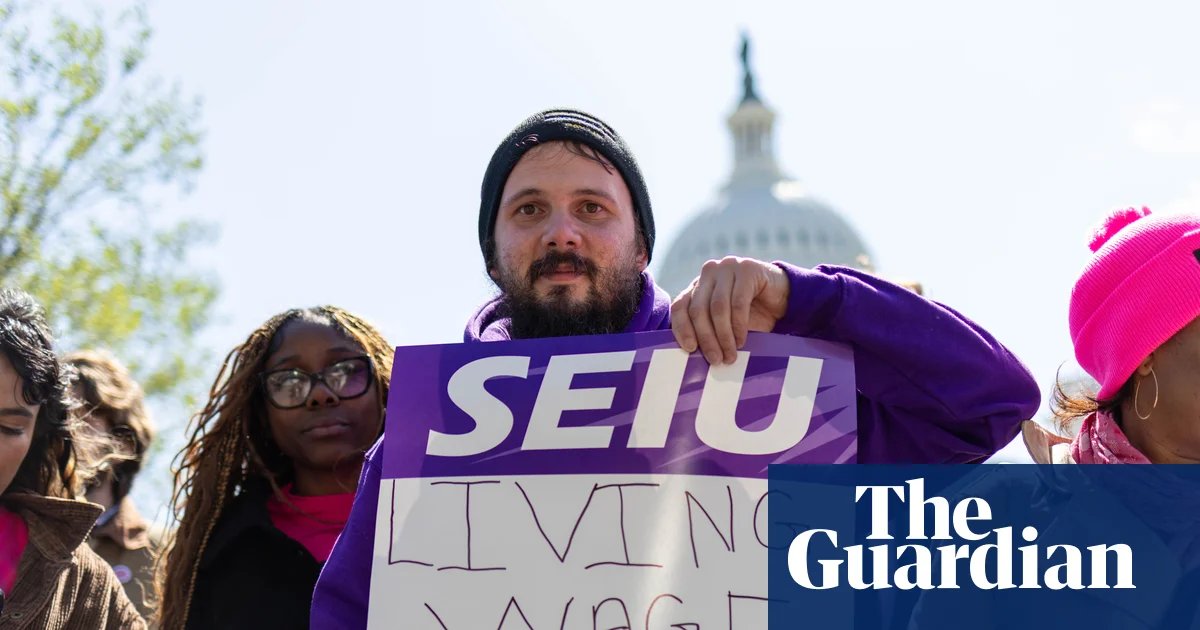
Mark Dorsey, a lifelong East Oakland resident, works two jobs to make ends meet. The 35-year-old Californian relies on manufacturing and service work through temp agencies and tries to work overtime or 10- to 12-hour shifts because “that’s the only way you can see a paycheck that’s worth something”.
Dorsey often makes minimum wage or close to it. The city of Oakland’s minimum wage is currently $17.34 an hour, higher than the minimum wage for the state of California, currently $16.90 an hour, but still not enough to support Dorsey.
Now, he is part of a campaign to almost double California’s minimum wage to $30. The drive comes as New York City has a bill tabled to increase its hourly minimum to $30 an hour, backed by Zohran Mamdani, the mayor.
The initiatives face powerful opposition from business interests and come against a background of political inaction. Despite widespread public support for minimum wage increases, the federal minimum wage still sits at $7.25 an hour, a rate last increased in 2009.
It’s been more than 10 years since the “Fight for $15” movement galvanized workers across the US to strike for a higher minimum wage. The movement helped push wages higher in 30 states. But in the meantime, inflation has hit low-wage workers hard.
The Oakland and Alameda Living Wage for All campaign, launched this month, filed two ballot initiatives for the November 2026 ballot to increase the minimum wage for the city of Oakland and Alameda county, California, to $30 an hour by 2030 for large employers.
Dorsey is a member if the Black Organizing Project, a grassroots organization that advances racial, social and economic justice for Black communities in Oakland and beyond.
“You don’t have time to do anything on your own when you’re working so hard, but this $30 an hour minimum wage would take a lot of burden and stress off of people,” said Dorsey. “I do a lot of jobs. I go to temp agencies to keep my options open so I can continue to stay above water with paying bills. I’ve been working off of 98th avenue in Oakland all this week and next week, I’ll be in San Francisco all week. I just have to go where the money is.”
Zach Norris, co-executive director of the Black Organizing Project, said the ballot initiatives to increase the minimum wage in Oakland and Alameda county are also racial justice issues. Oakland has seen a 46% decline of Black residents since 2000.
“This is about making sure that people who work here are able to afford to live here,” said Norris. “Black folks have been pushed out of the Bay Area given the extremely high cost of living. For us, this is an existential issue, not just a wage issue. It’s whether or not we can afford to stay in the Bay Area.”
He dismissed criticism of raising minimum wage by business groups, noting that small businesses backed the ballot initiatives when they were announced at Understory, a worker-owned restaurant in Oakland.
“This ballot initiative is structured such that those who can most afford to make this change are being asked to do so most immediately,” said Norris. “The largest employers are being called upon to raise wages the soonest, which puts more money into the local economy the fastest, so that increased spending power really flows directly into small businesses and neighborhoods.”
Community and labor groups are pushing for the Los Angeles county board of supervisors to take up a proposal to increase the minimum wage to $30 an hour, from the current minimum wage of $17.81 an hour, set to increase to $18.47 an hour on 1 July 2026.
Los Angeles has already passed a $30 an hour wage increase for hotel and airport service workers by 2028, in time for the 2028 Summer Olympics in Los Angeles, as business industry groups failed to stop the increase.
In New York City, Sandy Nurse, a councilmember, recently introduced a bill to increase New York City’s minimum wage to $30 an hour by 2030 for large employers, giving small businesses more time, by 2032, to catch up.
“The cost of living is crushing New York City workers,” Nurse said. “The current minimum wage is $17 an hour, and after taxes, that means those workers are trying to make do with about $500 a week, which is nearly impossible for most workers, even with shared expenses, even with cramming your life into a tiny apartment with a bunch of other people, it’s astronomically challenging.”
She cited a recent poll that found one in three New Yorkers plan to leave the state in the next five years due to the high cost of living, and noted that other US cities have higher minimum wages than New York City.
“We looked at other cities, Seattle, San Francisco, Denver, Flagstaff, Arizona, they all have taken action to raise the minimum wage, and their cities are less expensive to live in than ours. So we feel that New York is behind,” added Nurse. “We’ve done this before. We doubled the minimum wage in between 2013 and 2019 and we think it’s time to do that again.”
Mamdani ran on a platform that included raising the city’s minimum wage to $30 an hour by 2030. New York City’s minimum wage is currently $17 an hour.
The Economic Policy Institute projects 1.68 million New York City residents, 36.7% of the city’s wage-earning workforce, will earn less than $30 an hour by 2030.
According to MIT’s living wage calculator, a living wage for a single adult with no dependents in New York City is currently $31.50 an hour.
Business groups in New York City have already voiced staunch opposition against the bill, and the state government may have to approve a minimum wage increase for the city.
“This is not a raise for workers. It is a closing notice for businesses,” said Jessica Walker, president and CEO of the Manhattan chamber of commerce, in a statement on the proposed bill. “We share the goal of a city where working people can live with dignity. But the path to that goal requires a thriving private sector.”
A 2023 study co-authored by Michael Reich, a University of California, Berkeley economist, found minimum wage increases do not result in job losses or small business closures, rather the increases kill job vacancies and reduce turnover, similar to most minimum wage study findings.
Nurse dismissed the criticisms of the proposal, citing similar claims were made over previous wage increases.
“From 2013 to 2019, over a six year period, we raised the minimum wage from $7.25 to $15 an hour, more than double. New York businesses are still here,” Nurse concluded. “The fact is that every time we try to do good by workers, there’s going to be people who say we’re going to end the world. This is not true, because we’ve done it before and we are going to do it again. If we don’t have workers, you don’t have consumers, you don’t have businesses.”