Notifications can be managed in browser preferences.
Please refresh the page or navigate to another page on the site to be automatically logged inPlease refresh your browser to be logged in
Swipe for next article
A White House official said Trump’s Iran deal does not include Israel’s conditional withdrawal from Lebanon amid its conflict with Hezbollah
Removed from bookmarks
From reproductive rights to climate change to Big Tech, The Independent is on the ground when the story is developing. Whether it’s investigating the financials of Elon Musk’s pro-Trump PAC or producing our latest documentary, ‘The A Word’, which shines a light on the American women fighting for reproductive rights, we know how important it is to parse out the facts from the messaging.
At such a critical moment in US history, we need reporters on the ground. Your donation allows us to keep sending journalists to speak to both sides of the story.
The Independent is trusted by Americans across the entire political spectrum. And unlike many other quality news outlets, we choose not to lock Americans out of our reporting and analysis with paywalls. We believe quality journalism should be available to everyone, paid for by those who can afford it.
Iran on Tuesday issued a stark new warning to the United States over the fragile ceasefire agreement as G7 leaders met with Donald Trump in France to discuss next steps.
Iranian foreign minister Abbas Araghchi said that any Israeli attack or occupation of territory in Lebanon going forward would be a breach of the agreed terms, after Israel indicated on Monday it had no plans to withdraw.
“In our view, the two parties to this memorandum are the US and Israel on one side, and Iran and Hezbollah on the other,” he said, despite Israel’s exclusion from the talks that culminated in a provisional agreement this week.
With the agreement already under strain ahead of an official signing ceremony on Friday, Trump was in France on Tuesday to speak with allies about how to end the crisis and ensure stability in the Middle East.
Later in the day, they will be joined by other leaders to hold a working session on ‘forging new partnerships and rebuilding international solidarity’.
Iran’s deputy foreign minister on Tuesday outlined the nuclear issues they expect to be discussed in the next phase of talks. These were:
– The enrichment of nuclear materials
– Existing stockpiles of materials
– Iran’s civilian nuclear needs
Editorial: If the ceasefire holds, Donald Trump’s ill-starred foray into the Middle East will have left the Iranian regime stronger than it was before the conflict:
Iran’s foreign minister Abbas Araghchi warned on Tuesday that any Israeli attack on Lebanon or continued presence on Lebanese territory from now on would constitute a violation of the interim agreement with the US.
“In our view, the two parties to this memorandum are the US and Israel on one side, and Iran and Hezbollah on the other,” he said, after Israel’s defence minister said the military would aim to remain in Lebanon and continue operations.
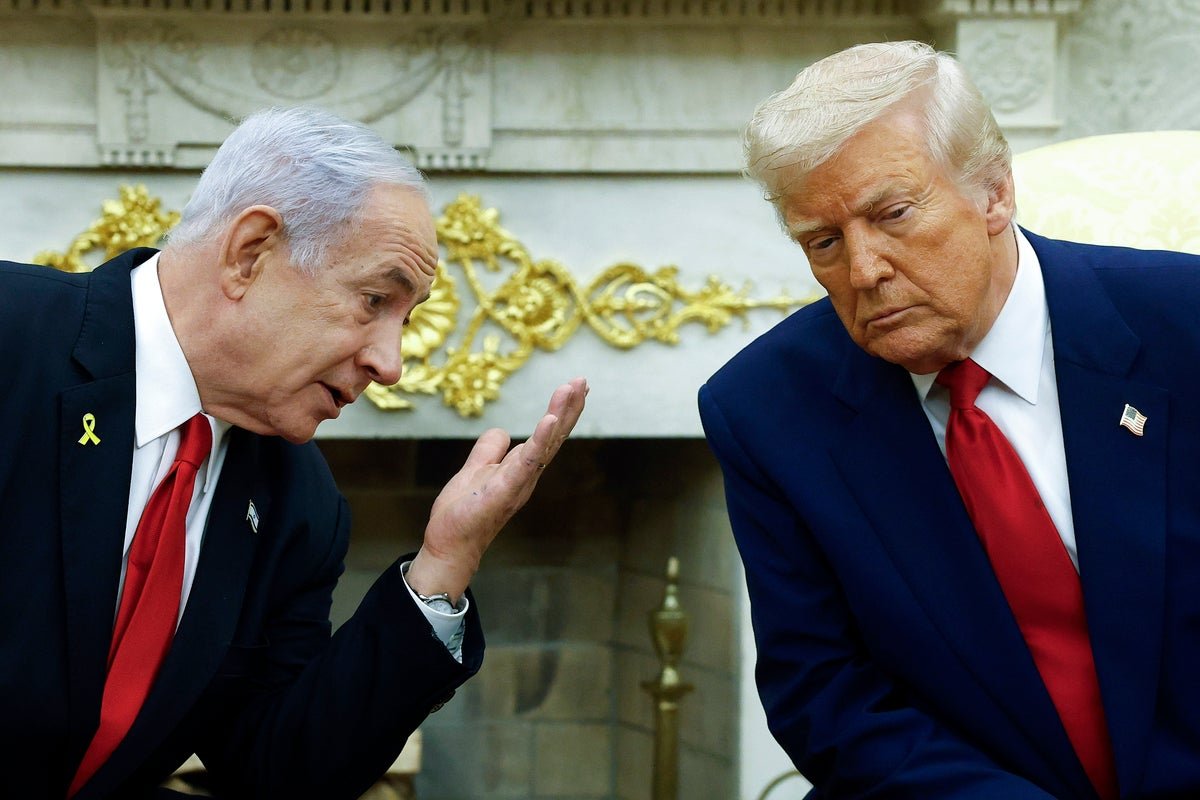
Israel, which was not involved in the bilateral talks between the US and Iran, maintains that it is not bound by the agreement, threatening to derail the tentative agreement as it stands and putting Israeli premier Benjamin Netanyahu on a collision course with Donald Trump.
Araghchi added on Tuesday that the US and Iran would start a new round of negotiations on Friday in Switzerland aimed at reaching a final agreement after the official start of an interim agreement.
JD Vance told NBC News on Monday that nuclear inspectors will “absolutely” be allowed to return to Iran as part of the deal to end the war.
The signing of a preliminary agreement should pave the way for 60 days to negotiate thorny issues like Iran’s nuclear programme and US sanctions. But Vance indicated that the US already had some assurances on the nuclear issue.
“In fact, one of the core parts of the agreement is that the (International Atomic Energy Agency) and the United States are going to help Iran destroy the highly enriched stockpile, and that’s something that’s spelled out very clearly” in the memorandum of understanding the US and Iran have already agreed to, NBC quoted Vance saying.
Shipowners will not resume crossing the Strait of Hormuz for weeks until they are confident the US-Iran deal is ‘material’, the head of Japan’s Mitsui OSK Lines said in an interview published today.
Mitsui OSK, one of Japan’s big three shipping firms has a fleet of more than 900 vessels, including bulk carriers, tankers and ferries.
“What will have to come in place is not just a simple agreement between the relevant countries, but it has to be material and translated into the real situations in the Strait of Hormuz, so that shipping lines can make themselves comfortable to go through,” Mitsui OSK’s Jotaro Tamura told FT before US President Donald Trump announced a deal to end the war in Iran.
“Given the experiences in the last couple of months, I think it’s reasonable to assume that it may take at least a couple of weeks or if not a month,” Tamura told the paper.
The agreement between Washington and Tehran being finalised had not changed Tamura’s view, the FT report said.
Iran’s national team coach said that his team were being “oppressed” due to last-minute travel changes stemming from tensions between Iran and the United States, after they were held to a draw with New Zealand overnight.
Amir Ghalenoei said the disruption had affected the team’s performance in the group stage opener in Los Angeles. Iran were the favourites to win over New Zealand, the lowest ranked team in the competition, but drew 2-2.
The Iranian football federation had negotiated a late move of the team’s base camp from Arizona to Mexico amid uncertainty over US visas and a growing sense that the squad’s presence in the United States should be kept to a minimum, Iran’s ambassador to Mexico has said.
Ghalenoei said the team had endured further disruption, with Iran expecting to remain in LA overnight but instead being required to return immediately to Mexico.
“We’re supposed to stay here tonight to recover and return tomorrow lunchtime, but they haven’t permitted us,” he said. “To be honest, I have no idea why. I think perhaps our team is the most oppressed one in the whole World Cup.”
Iran forward Mehdi Taremi said the restrictions were preventing them from playing their best at the tournament.
“It’s not good for us. I think it’s not good for football,” he said. “I think FIFA have to help us more than this.”
Taremi described a rushed atmosphere on Sunday, with travel from Tijuana to Los Angeles, then to their hotel and finally to the stadium to see the pitch. They should have had two days to settle in to LA, he added.
“It’s so bad and it affects our team and we just want peace,” said Taremi.
Asian shares mostly gained and Japan’s benchmark Nikkei 225 briefly topped 70,000 for the first time today before trimming early gains after the Bank of Japan raised its key interest rate to 1 per cent.
The quarter percentage point hike took the benchmark rate to its highest level in three decades.
By early afternoon, the Nikkei 225 was up 0.6 per cent at 69,713.05, while South Korea’s Kospi moved further into record territory, gaining 2.1 per cent to 8,721.64.
The Shanghai Composite gained less than 0.1 per cent to 4,100.53.
More here.
Belgian lawmaker Darya Safai shared a picture of her carrying Iran’s pre-revolution Lion and Sun flag into a stadium in Los Angeles despite a ban imposed by Fifa.
“I proudly carried the real Iranian flag, the historic Lion and Sun, into the stadium in Los Angeles despite FIFA’s ban,” she wrote on X.
“No ideological flag can take the place of our Lion and Sun.”
https://x.com/SafaiDarya/status/2066734627012706623
Join thought-provoking conversations, follow other Independent readers and see their replies
Please refresh the page or navigate to another page on the site to be automatically logged inPlease refresh your browser to be logged in