
Notifications can be managed in browser preferences.
Please refresh the page or navigate to another page on the site to be automatically logged inPlease refresh your browser to be logged in
Swipe for next article
It comes as the US military said it downed six Iranian missiles in the Gulf
Removed from bookmarks
From reproductive rights to climate change to Big Tech, The Independent is on the ground when the story is developing. Whether it’s investigating the financials of Elon Musk’s pro-Trump PAC or producing our latest documentary, ‘The A Word’, which shines a light on the American women fighting for reproductive rights, we know how important it is to parse out the facts from the messaging.
At such a critical moment in US history, we need reporters on the ground. Your donation allows us to keep sending journalists to speak to both sides of the story.
The Independent is trusted by Americans across the entire political spectrum. And unlike many other quality news outlets, we choose not to lock Americans out of our reporting and analysis with paywalls. We believe quality journalism should be available to everyone, paid for by those who can afford it.
Tehran has hit back after Donald Trump claimed Iran’s military has been “totally destroyed” by three months of conflict in the region.
In a preview clip of a NBC interview, the US president also claimed he knows “exactly” how many missiles Iran has left, but refused to give a figure.
“I’m moving very fast, I’m into three months,” he said. “Vietnam lasted 19 years, I’m into my third month. We have totally destroyed their military.”
On Saturday, Iran’s foreign ministry warned the US will be responsible for any consequences that emerge from its “illegal actions” in the current conflict.
It comes after the US military said it downed six Iranian ballistic missiles launched towards its Gulf allies, while a seventh missile failed to reach its target.
Iran’s Revolutionary Guard Corps said it targeted a US airbase in Kuwait and the US Navy’s 5th Fleet in Bahrain, according to Iranian state media.
The attack came on Friday just hours after the US military also shot down four Iranian attack drones headed towards the Strait of Hormuz, with US Central Command saying they “posed an immediate threat to regional maritime traffic”.
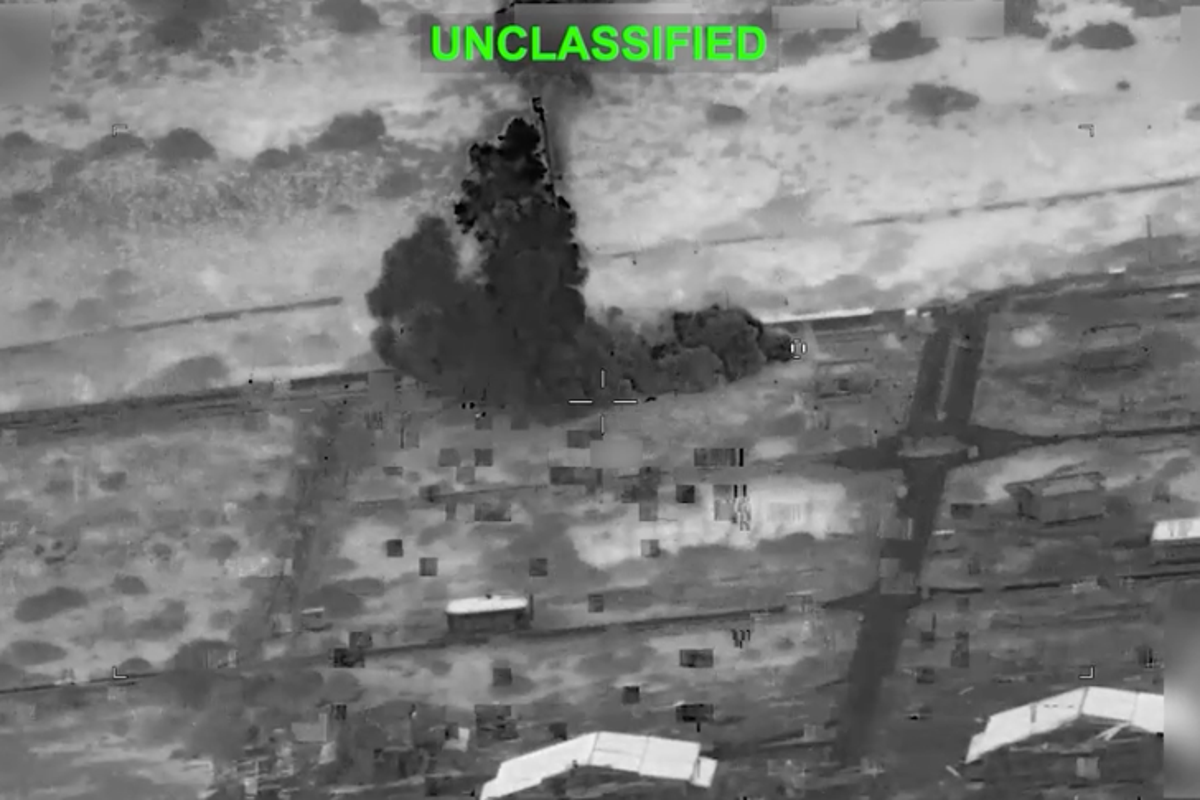
US forces struck Iranian coastal radar sites on Saturday after shooting down drones launched by Iran toward the Strait of Hormuz, further complicating efforts to end the war.
A US official said the military believed the four Iranian drones were targeting maritime traffic. Centcom said US forces then attacked Iranian surveillance sites in Goruk and Qeshm island.
Iran’s foreign ministry accused the US of breaking the ceasefire agreement, adding that recent violations showed Washington had no intention of de-escalating.
It also threatened that the United States would bear responsibility for the consequences of its “illegal actions”.
Iran’s IRGC said they had attacked US bases in Kuwait and Bahrain in response to US strikes, and fired at four tankers trying to cross the Strait without permission.
Kuwait’s army said on Saturday it engaged seven ballistic missiles that passed over residential areas, resulting in material damage but no casualties. In Bahrain, sirens sounded and residents were urged to seek shelter.
Iran said on Saturday that reported explosions on Kharg Island were linked to controlled ammunition detonations.
Similar announcements have been made in recent weeks, as the US resumes operations targeting infrastructure on other islands other islands.
Centcom said separately on Saturday that US forces had attacked Iranian surveillance sites in Goruk and Qeshm Island.
Here’s what to know about the strategically important Kharg Island:
When Donald Trump warned that ‘a whole civilization will die tonight’, millions of Iranians feared the worst, says Camelia Entekhabifard.
As an American Democrat who voted for him, I found myself questioning whether the anti-war candidate I supported had lost his way:
Benjamin Netanyahu has long portrayed himself to the Israeli public as being uniquely adept in dealing with Donald Trump, capable of winning and sustaining the president’s backing.
But an acrimonious phone call this week where the president called the prime minister “f***ing crazy”, first leaked to the media and later publicly confirmed by Trump himself, laid bare the strains that have at times emerged between the two leaders.
Read more:
Iran’s deputy foreign minister Kazem Gharibabadi said that the UN nuclear watchdog should avoid turning technical reports into “tools of political pressure” if it wanted to contribute to a diplomatic solution.
He said that the loss of the agency’s oversight at some facilities resulted from the attacks rather than a lack of cooperation by Iran, adding that the International Atomic Energy Agency was using the consequences of US and Israeli strikes on Iranian nuclear sites to create “ambiguity” about Tehran’s nuclear programme.
The Iran Football Federation is accusing the United States of “vindictive behavior” over the refusal of visas for managerial and administrative members of its World Cup traveling party.
IFF said 14 officials and staffers have been refused visas prior to upcoming matches in Inglewood, California, and Seattle. The list includes the federation’s vice president Mehdi Mohammad Nabi and secretary-general Hedayat Mombeini.
According to the IFF, the visa denials have “effectively denied the Iranian national team the opportunity for a level playing field and a competition free from discrimination.”
The Iran squad has been preparing for the World Cup in Antalya, Turkey, and was set to fly to Mexico on Saturday. The team said it has received its visas from the Mexico Embassy in Antalya.
US Secretary of State Marco Rubio said earlier this week that the Iranian traveling party would be watched closely for people with ties to the Islamic Revolutionary Guard Corps.
A source familiar with discussions tells Reuters that the US is looking to make frozen Iranian assets available to Gulf countries to support repairs for future damage caused by Iran.
The source said the US will also consider whether those assets could be used to help pay for repairs for past damages.
Treasury Secretary Scott Bessent has directed a team to assess costs for damage already inflicted on Gulf allies by Iran, they added.
Iran pounded its neighbours hosting US bases during the hot conflict, and has continued with intermittent strikes and drone attacks since the ceasefire took effect.
Two Lebanese army officers and a soldier were killed in an Israeli strike on a military vehicle in south Lebanon, the Lebanese army said, while the Israeli military said it was investigating the incident.
The Israeli military said it struck the vehicle after identifying what it described as a threat to its forces and receiving indications that Hezbollah was preparing to fire on Israeli troops from the area. Iran-aligned Hezbollah called the incident part of Israel’s continued aggression against Lebanon.
Iran has made a ceasefire between Israel and Hezbollah a condition for any peace deal with Washington.
Hezbollah leader Naim Qassem this week rejected a US-brokered pact between Israel and the Lebanese government to halt the fighting in Lebanon. The deal did not provide for an Israeli withdrawal and Hezbollah had not been party to the negotiations.
Israel has has said its forces would not withdraw or halt operations in the country amid increasing friction with the US.
Join thought-provoking conversations, follow other Independent readers and see their replies
Please refresh the page or navigate to another page on the site to be automatically logged inPlease refresh your browser to be logged in