Several Republican Indiana state senators targeted by President Donald Trump for opposing a mid-decade congressional gerrymander lost their primaries Tuesday, signaling that resistance to Trump’s agenda inside the GOP still carries some political risk.
By late Tuesday evening, at least five Trump-endorsed challengers had defeated incumbent Republican lawmakers who voted against a proposed congressional redraw that could have helped Republicans flip two Democratic-held U.S. House seats ahead of the 2026 midterms.
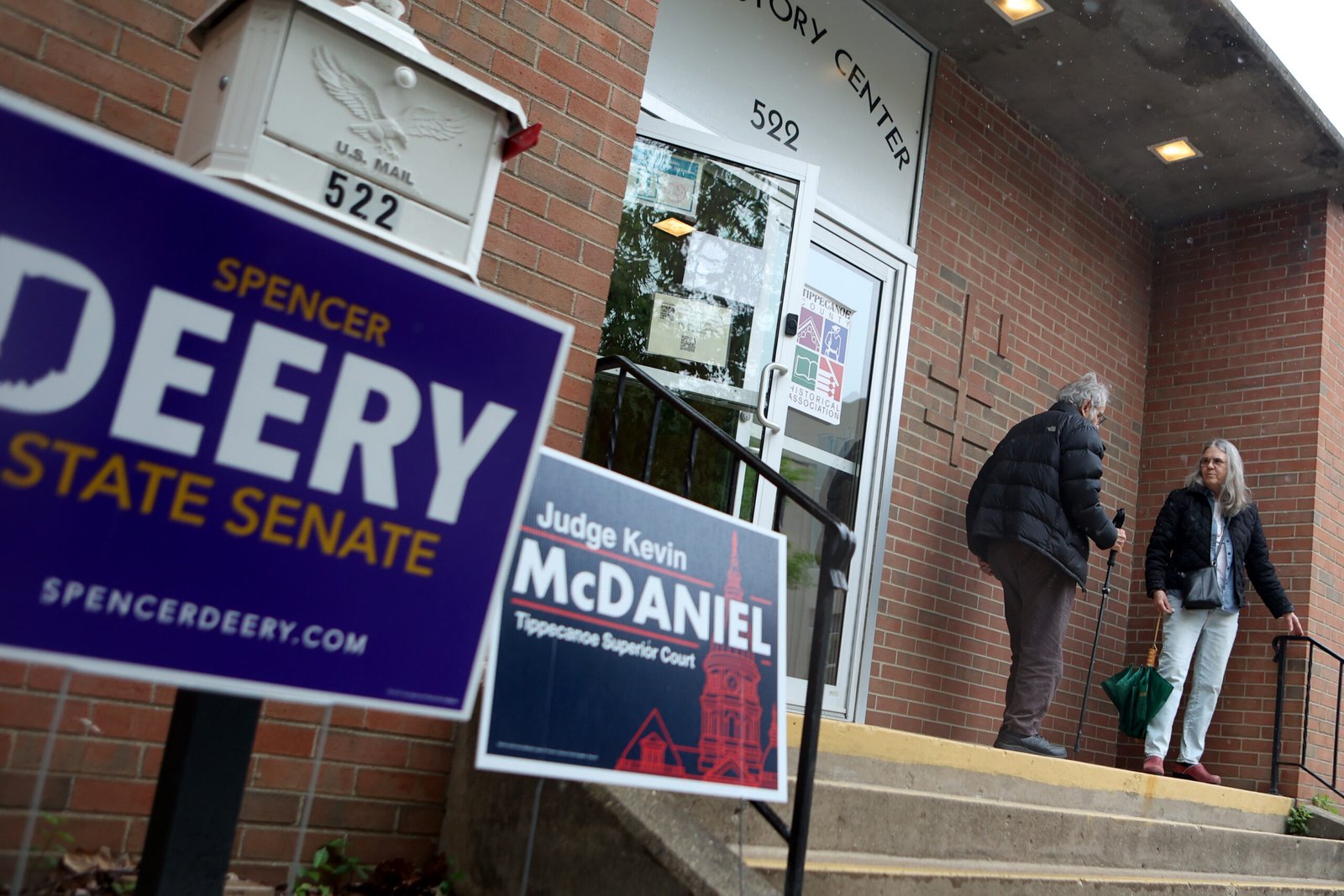
One targeted incumbent, state Sen. Greg Goode (R), survived. Another race involving state Sen. Spencer Deery (R) remained too close to call.
The results marked a show of force from Trump and his allies, who spent millions of dollars trying to punish Republicans that broke with the president over the failed redistricting push last December.
Trump had personally threatened lawmakers who opposed the proposal.
“Any Republican that votes against this important redistricting, potentially having an impact on America itself, should be PRIMARIED,” Trump wrote in November.
On Tuesday, many of those threats became reality.
Republican State senators Travis Holdman, Linda Rogers, Dan Dernulc, Jim Buck and Greg Walker all appeared headed for defeat against challengers backed by national MAGA organizations including Turning Point and Club for Growth.
The races quickly became nationalized battles over loyalty to Trump and the future of aggressive GOP gerrymandering.
The Indiana Legislature rejected the congressional redraw in December after 21 Republican state senators joined Democrats in voting no — a rare and highly public rebuke of Trump in a deep-red state.
The proposed map would likely have weakened or dismantled Indiana’s two Democratic-held congressional districts in Indianapolis and northwest Indiana, potentially expanding Republicans’ House advantage before the 2026 elections.
Voting rights advocates celebrated the proposal’s defeat at the time as a major victory against partisan gerrymandering and a sign that some Republican lawmakers were still willing to resist Trump’s pressure campaign over congressional maps.
Tuesday’s results may intensify fears among democracy advocates that Republican lawmakers elsewhere will feel pressured to support future redistricting efforts rather than risk becoming Trump’s next political target.
That concern has grown even more acute following the U.S. Supreme Court’s recent ruling in Louisiana v. Callais, which weakened a key section of the Voting Rights Act used to challenge discriminatory maps.
Critics warned the decision could make it easier for Republican-controlled legislatures to pursue aggressive congressional redraws while avoiding successful legal challenges.
Justice Elena Kagan, dissenting in the case, called the ruling a “demolition of the Voting Rights Act.”
Indiana’s primaries immediately became a test of whether Republican voters would punish lawmakers who resisted Trump’s demand for more favorable congressional maps.
The answer Tuesday appeared to be yes — though not universally.
Goode survived despite Trump-backed opposition, while Deery remained locked in a razor-thin race.
Those results could suggest that while Trump’s endorsement power remains formidable, it is not absolute.
Still, the broader message from Indiana may resonate. Republican lawmakers who defy Trump on high-priority fights over political power and congressional control may face well-funded retaliation campaigns backed by the national MAGA movement.