
You May Also Like


I found myself yesterday at the province’s media room, where the premier and ministers make themselves available for questioning by reporters after the Thursday meeting of cabinet.
This is an important part of the democratic process. A lot goes on behind the mostly closed doors of government — thousands of decisions and policy directives are made, ultimately choreographed by the cabinet. And reporters whose beat is Province House and who have experience with the inner workings of government and who have an ear to public concerns can pry into some of the details and nuances of all that governance work.
And so, the post-cabinet ‘scrums’ with reporters are part of the process of democratic accountability. That’s why it’s concerning and part of the larger trend of the dismantling of democracy when Premier Tim Houston goes long stretches without the scrums — recently, there was a five-week gap in such appearances.
I have great respect for my fellow reporters. They are truly better informed on a broad range of details than am I. Oh, I sometimes dig into great detail on specific issues — COVID was one — but I lack the broad knowledge of, and experience with, Province House that my colleague Jennifer Henderson brings to the room, and similarly with reporters from other media outlets who have been studying and interacting with ministers and their portfolios sometimes for many years.
Yet I still occasionally show up for the post-cabinet scrums. Sometimes I come with specific questions that I have in mind. Sometimes (like yesterday) Henderson can’t make the scrum, and she’ll feed me a couple of questions to ask in her stead.
But mostly I feel my role is to just keep tabs on the ministers, observe them close up from time to time to get the vibe of the place and the people running the show. I have some skill in assessing people, I think, that perhaps those involved in the day-to-day can’t; forest for the trees and all that. I usually don’t say much at the scrums, don’t ask many questions.
As is typical, yesterday Premier Tim Houston was first to appear, this time via video link. Of late, Houston sweats anger and resentment. I haven’t seem him in an unguarded moment in quite some time. No genuine smiles, no cordial pleasantries or small talk. It’s a little concerning.
On the other hand, Houston is Houston. What you see is what you get. Honestly, sometimes his dismissiveness is welcome for its brevity.
For example, yesterday I asked Houston a question relayed to me by Henderson: “Premier, yesterday the offshore regulator said it needs more consultation before it can issue calls for bids for the offshore wind projects. I’m just wondering how you think about that and is that a setback for Wind West?”
“Not a setback, part of the process,” answered Houston.
Well, OK. (You can read Henderson’s report on the regulator’s report here.)
Then came a handful of ministers, appearing in person. As I say, other reporters have more information and experience and therefore better questions about all sorts of things, from union bargaining to women’s health care, so I just sat back and listened, watched.
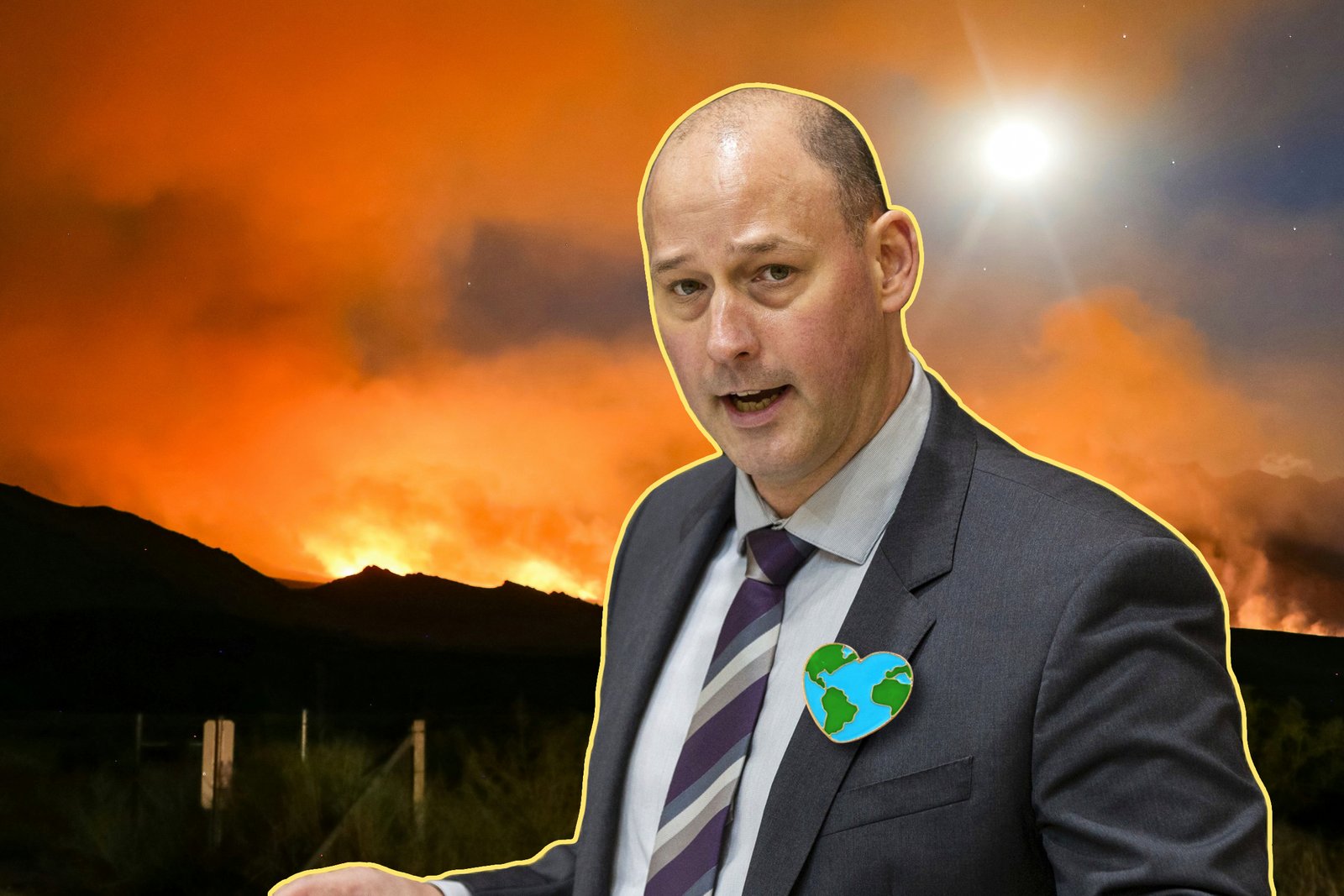
But when Environment Minister Tim Halman appeared, I was more attentive. As all of us should, I have great interest in climate change, and for some two decades I’ve been following the details of Nova Scotia’s efforts to reduce its greenhouse gas emissions. I know something about this particular file.
And as Halman was answering questions, I couldn’t help but think: This is a load of bullshit.
I need to be clear about this.
People I respect say I shouldn’t call people bullshitters. It sounds mean.
But when I say ‘bullshit,’ I have a specific philosophical meaning of the word in mind.
The analytic philosopher Harry Frankfurt presented a theory of bullshit, first in a 1986 paper and then in the 2005 book On Bullshit. (Watch the video here.)
Frankfurt made a distinction between on the one hand honest people and liars, and on the other hand bullshitters. As he wrote in the 1986 paper:
It is impossible for someone to lie unless he thinks he knows the truth. Producing bullshit requires no such conviction. A person who lies is thereby responding to the truth, and he is to that extent respectful of it. When an honest man speaks, he says only what he believes to be true; and for the liar, it is correspondingly indispensable that he considers his statements to be false. For the bullshitter, however, all these bets are off: he is neither on the side of the true nor on the side of the false. His eye is not on the facts at all, as the eyes of the honest man and of the liar are, except insofar as they may be pertinent to his interest in getting away with what he says. He does not care whether the things he says describe reality correctly. He just picks them out, or makes them up, to suit his purpose.
There are worthy critiques of Frankfurt, rooted in a criticism of analytic philosophy more generally. Were I an actual philosopher, I’d probably fall into that camp of criticism.
But I’m not a philosopher. I’m just a reporter, and whatever the shortcomings of Frankfurt’s theory of bullshit, I find the theory useful for figuring people out. Are they bullshitting me or not?
Tim Halman was bullshitting me. I’m not calling him a liar. I’m not saying he said anything false. Rather, to quote Frankfurt, Halman did not care whether the things he said describe reality correctly.
The questioning on this issue was led by Taryn Grant, one of the very good (along with Michael Gorman) CBC reporters assigned to Province House:
Grant: Minister, we got an update this week on emissions reductions and I’m wondering how you feel about the progress that Nova Scotia has made.
Halman: I’m very proud of the work Nova Scotia has achieved thus far. We still have more work ahead of us on emissions reductions, but we’re well on our way. In the summer of 2024, Nova Scotia was ranked third in Canada for our response to climate change by Pembina Institute. And two years out, we’re still leading the way on a number of files. So I’m very proud of the work my team with Environment has done working with industry. Obviously, as you know, we have an output-based pricing system in place. So, and along with that, we’ve set the conditions for companies that come here. We’re a jurisdiction that practices sustainable development. Economic growth and environmental protection are the same. They go hand in hand. So obviously, as an environment minister, Taryn, to see that result. Very pleased, but certainly not going to sit on our hands, there’s lots more work ahead.
There’s a lot to unpack there.
First, the Pembina Institute did what? I tried to verify this claim, which so far as I can tell reflects a claim Halman made in the 2024 report on the province’s progress on climate change goals, in which he wrote:
This report presents the work being done across Nova Scotia from August 1, 2023, to July 31, 2024, to respond to climate change, reduce greenhouse emissions, create a clean energy sector, protect more of our land and water, and more. Work that has helped to garner Nova Scotia a third-place spot in the Pembina’s Institute’s rating of provincial and territorial climate and energy policies. This recognition of Nova Scotia’s leadership and achievements is a testament to everyone who is working hard to ensure our province is resilient, sustainable and energy-independent. You can read the Pembina Institute report at www.pembina.org/pub/all-together-now
But I went to read the Pembina Institute report. It didn’t say, as Halman claimed yesterday, that “Nova Scotia was ranked third in Canada for our response to climate change.”
Rather, the report gave Nova Scotia props specific to its handling of equity in its climate polices:
Nova Scotia is a leader in addressing climate equity impacts. Equity is a principle of the 2021 Environmental Goals and Climate Change Reduction Act, and is applied to all commitments and actions in the climate plan. In 2023, the province appointed eight members to the new Environmental Racism Panel and conducted a comprehensive assessment of climate impacts and policies.
You’ll recall that Halman received a draft report from the panel dated June 2024, but refused to release it. Only when CBC obtained it did Halman finally release it, 17 months later, in November 2025. And even then the Houston government has refused to follow one of the report’s recommendations, which was to apologize to Mi’kmaq and African Nova Scotian communities for the long history of environmental racism they’ve experienced.
The only thing in the Pembina Institute report that could be considered a “ranking” was this bit:
Nova Scotia is the seventh-highest-emitting province in terms of absolute emissions (14.8 Mt) and the sixth-highest emitter on a per capita basis (14.5 tonnes per person). Nova Scotia achieves 15 green and yellow ratings across our 21 applicable climate policy indicators — with a near-even split between green and yellow ratings. However, its six red ratings reflect key areas of concern where the province must prioritize action.
In no way could any non-bullshitter understand this as “Nova Scotia was ranked third in Canada for our response to climate change.”

More to the point, as Larry Hughes has pointed out, the 2024 numbers released last week showed that Nova Scotia’s greenhouse emissions increased in 2024 over 2023 numbers. This is the exact opposite of progress.
Halman spoke at some length about efforts to reduce emissions from electricity generation. As Hughes pointed out, however, the easy lifting is behind us, thanks mostly to the closure of the offshore (which Houston wants to reopen), the Dartmouth refinery, and the old belching boiler at the Northern Pulp Mill.
“To reach the 53% target by 2030, emissions will have to be reduced by a further 3.34 megatonnes,” wrote Hughes. “With only six years remaining until 2030, the province would need to reduce emissions by over half-a-megatonne each year.”
Taryn Grant pulled the discussion back to transportation, the second largest categorical source of emissions in Nova Scotia. Keep in mind that there is a legislated mandate that the province achieve that 53% reduction by 2030:
Grant: So should I take that to mean that you’re expecting reductions in emissions in the electricity sector to drive us the rest of the way to the target for 2030?
Halman: I think it’s going to be multifactorial. I think the wind farms are going to be very key, very important as we move forward, along with other levers that’ll be utilized. As I’ve indicated to Mike [Gorman] in the past, I believe in the future as Wind West becomes operational, that will be impactful post 2030. So look, we’re a jurisdiction, our energy, as the premier has indicated, that our energy, it’s going to be mixed. And renewables, as you know, will be the goal is to have 80% of our grid renewable energy. So we’re doing as much as we can, where we can. Obviously, as a regulator, I’m confident we can get to where we need to be.
I don’t know how “impactful” stuff that comes on line after 2030 gets us to the 2030 target.
Grant tried again, and for the record, this is an exact transcript:
Grant: Transportation contributes significantly to those emissions as well and that category seems to be quite stagnant when you look back to, you know, over the course of the last couple of decades. How are you going to address the emissions reductions coming out of transportation and try to bring those down?
Halman: That’s an excellent question. So first off, as you probably know, it’s the federal government that regulates emissions from vehicles. Nonetheless, certainly, look, I mean, you look at Nova Scotia. We’re a growing jurisdiction, a jurisdiction very much that we know. You look at our largest city in Atlantic Canada, HRM, it’s, yeah, it can be pretty — it can test your patience to drive from one point in the city to the other. There’s a lot of cars on the road. So certainly encouraging transportation is absolutely key and and that’s why we just don’t see transportation in isolation. That’s why we’ve created that Link Nova Scotia so that transportation isn’t seen in isolation, that we’re coordinating transportation, whether it could potentially be through rail, from say Truro and Windsor to Halifax. So these are the long-term things government is thinking about and contemplating, and none of these issues are being seen in insulation.
Grant: Do you expect that reductions in transportation will contribute to getting us down to the 2030 target, or are we going to have to focus more on the other categories to get to finish them?
Halman: As I’ve indicated, I think it’s going to be multifactorial. I think as we start, as Link Nova Scotia starts to look at what mass transportation can look like, I that can be so impactful. I mean, I’ve lived in cities where the GO train or the Banlieues in Montreal, the suburban trains, it’s just incredible, right? And I think that’s where, kind of getting outside of my lane as a regulator, but I think that’s where we need to go. So I think, I think that’s absolutely fundamental, but at the end of the day I think Nova Scotians can take pride in the fact that their jurisdiction, whether it’s on emissions reductions, whether it is on circular economy, whether its on climate change policy, we’re a leader in Canada on these initiatives.
I have less restraint than does the very patient Grant, so I blurted out:
Bousquet: Are you saying we’re going to have a train in four years?
Halman: I’m not saying that, what I’m saying is that if you look at the targets we’re setting, I think that’s in the art of the possible. Why wouldn’t it be? If other jurisdictions can do that, I think Nova Scotia can as well. And certainly if you talk, you know, you talk to people from Link, Nova Scotia, [Public Works] Minister Tilley’s you know, indicated that. So look, I think this province has so much potential, you know on so many levels, as the premier’s indicated time and time again, and sort of the federal government recognizing in their ranking that we’re a leader on this I think is helpful and I think inspiring to Nova Scotians that we can build up the economy responsibly and safely, but also continue to protect the things we cherish.
AllNovaScotia reporter Brian Flinn: But to be clear, we’re not going to have a train by the end of this decade?
Halman: Look, I mean, I’m just using that as an example to highlight where we can go, and I think if you talk to Link Nova Scotia, they probably indicate there’s a realm of possibility there. And I think just given our transportation issues in this city, I think for sure, I think we need to be contemplating all means of transportation.
All of this is bullshit.
For one, we’re not going to have a train in my lifetime, and I plan to live to be a very old man. We’re certainly not going to have a train by 2030, which is the legislated target for emission reductions. Even if we did have a train to Truro or whatever, even the most fantastical ridership projections won’t reduce total car travel at all.
The one tiny bit of theoretical progress on the non-car front is the Bedford fast ferry. But that project is plagued with delays and logistical problems. I’d be shocked if a Bedford ferry is up and running by 2030.
The only real transportation ‘success’ of the Houston government, if you want to call it that, is the success in getting more gas-powered single passenger cars on the roads. That’s the result of the back-to-office mandate for government employees, the removal of the bridge tolls, the bloated capital budgets for more highway building, the defunding of the province’s Blue Route cycling network, and the antagonism towards Halifax’s bike network.
To state the obvious: Transportation-related emissions will not go down by 2030 unless the entire global oil economy collapses, which while possible, will result in such widespread calamity — famine and the death of billions of people — that talk of Nova Scotia’s transportation system would be irrelevant.
Besides transportation, it’s somewhat possible that some offshore drilling and/or onshore fracking operations, or at least explorations, will start before 2030, but again these will add to emissions, not subtract from them.
Halman didn’t want to deal with the realities of car-based transportation system and potential increases in other emissions that will take place before 2030, so he papered those issues over with sorta-truths — the Pembina Institute said one nice thing about Nova Scotia, just not the overall nice thing Halman said the institute said about Nova Scotia; trains do decrease emissions, even though we won’t have one by 2030.
It’s all bullshit.
(To send or post this item, copy the website address at the top of this page.)
THE LATEST FROM THE HALIFAX EXAMINER:
More questions than answers during public consultations on developing onshore methane

Jennifer Henderson reports:
About 80 people showed up at the Pictou County Wellness Centre Thursday night for the third public consultation on the government’s plan to drill for onshore methane (marketed as natural gas) as early as this summer.
The format was unchanged from earlier meetings where posters ringed the room explaining how the use of hydraulic fracturing (or “fracking”) to extract methane from tight layers of underground rock can be managed and regulated to reduce risks to groundwater and increasing greenhouse gas emissions.
The province has hired Dalhousie University to conduct the public engagement process under the Subsurface Energy Research and Development Investment Program (SERDIP). Dalhousie is also being paid to review the companies that could receive up to $24.2 million in public money to do exploration drilling.
Henderson addressed one of the points I raised above:
[David Risk, an earth sciences professor at St. Francis Xavier University] was unable to estimate to what extent emissions tied to accelerating climate change will increase if onshore gas is developed in Nova Scotia. Methane is a potent greenhouse gas with more than 80 times the warming power of carbon dioxide over a 20-year period in terms of trapping heat in the atmosphere.
That’s why many people who attended Thursday’s public consultation are opposed to fracking. Risk said the answer to the emissions question depends on too many variables, including the number of wells drilled and to what extent leaks can be avoided.
Too many variables, eh? Nothing to worry about then, I suppose.
Click or tap here to read “More questions than answers during public consultations on developing onshore methane.”
(Send this item: right click and copy this link)
Government
No meetings
On campus
Dalhousie
PhD Defence: Process Engineering (Friday, 9:30am, virtual) — Ghada Abdelmageed will defend “chemical Modification Approaches in Organometal Halide Perovskite Materials and Solar Cells”
Literary Events
Friday
No events
Weekend
Canadian Independent Bookstore Day (Saturday) — details here
Book launches (Sunday, 3pm, Halifax Central Library) — Jeff Miller’s Temporary Palaces, and Jaime Forsyth’s Yield
Book signing (Sunday, 10am, Halifax) — Danielle Metcalfe-Chenail, author of Children of the SS Atlantic
In the harbour
Halifax
00:15: AlgoScotia, oil tanker, moves from Pier 9 to Imperial Oil
03:30: MSC Yang R, container ship, sails from Pier 42 for Sines, Portugal
05:00: Algoma Acadian, oil tanker, arrives at Irving Oil from Saint John
05:00: Zim Pacific, container ship, arrives at Fairview Cove from Valencia, Spain
06:00: Silver Arctic, cargo ship, arrives at Pier 42 from Saint-Pierre
12:30: Radcliffe R. Latimer, bulker, arrives at Pier 25 from Montréal
13:30: Pilecki, cargo ship, arrives at Sheet Harbour from Belledune, New Brunswick
15:30: Zim Pacific sails for New York
15:30: Silver Arctic sails for Saint-Pierre
18:00: Oceanex Sanderling, ro-ro container, sails from Fairview Cove for St. John’s
18:00: Algoma Acadian sails for sea
Cape Breton
00:01: Glovertown Spirit, barge, with Lois M, tug, sails from Mulgrave for Sydney
06:30: AlgoLuna, oil tanker, arrives at Government Wharf from Halifax
11:00: Kastor, bulker, arrives at Mulgrave from Tuticorin, India
12:30: Dolphin Pearl, oil tanker, sails from EverWind for sea
13:30: High Loyalty, oil tanker, arrives at EverWind from New York
17:30: Hafnia Aventurine, oil tanker, arrives at EverWind from IJmuiden, Netherlands
18:00: AlgoLuna sails for sea
Footnotes
Here’s 10-year-old Sierra Hull performing “Lonesome Fiddle Blues” with 50-year-old Sam Bush in 2002:
Here’s 33-year-old Sierra Hull performing “Lonesome Fiddle Blues” with 73-year-old Sam Bush in 2025:
