
Now Reading: Issues of the Environment: U-M’s Digital Water Lab advances monitoring systems in the Huron River
- 01
Issues of the Environment: U-M’s Digital Water Lab advances monitoring systems in the Huron River

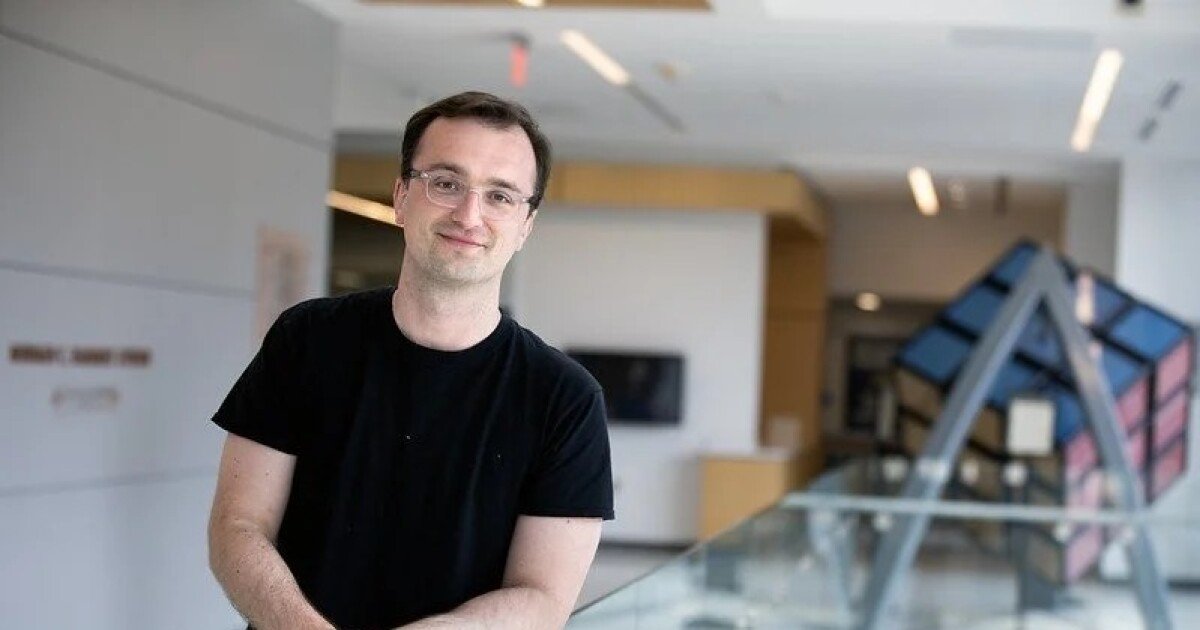
Issues of the Environment: U-M’s Digital Water Lab advances monitoring systems in the Huron River
Resources
Transcription
David Fair: This is 89.1 WEMU, and you’ve all heard the reports of severe flooding in different parts of our state. The governor declared a state of emergency for 40 counties a few weeks back, including in Washtenaw County. I’m David Fair, and this is Issues of the Environment. Climate change–it’s going to bring more severe weather events, and one of the results will be more flooding incidents and impacts on our water systems. Here in Washtenaw County, we rely on the Huron River, and we thought it appropriate to take a look at the water system and the technology serving it as Saturday is officially Huron River Day. The Digital Water Lab at the University of Michigan is using technology to improve monitoring of the river and its water systems. Our guest today is Branko Kurkez. He is the Professor of Civil and Environmental Engineering at the University of Michigan and Director of the Water Lab. Thank you so much for making time for a conversation today! I appreciate it!
Dr. Branko Kurkez: Thanks so much for having me!
David Fair: The Digital Water Lab has a project underway in which it has laid out a network of real-time sensors in the Huron River. How expansive is that network at this point?
Dr. Branko Kurkez: The story of the network goes back almost 10-plus years in the initial collaboration with the Huron River Watershed Council. So, as you’ve heard in prior segments that you had, the river has several dams along the main stem and the peripheries. So, what we’ve been doing is trying to sort of reveal what’s happening in between those segments by adding low-cost sensors and open-source sensors. So, I think, over the years, we’ve gone up to 40 or 50 stations. And just for comparison, when we first started there, was only three or four gauges, and that’s pretty common for most communities around the U.S., where they’re served federally. And so, it’s been almost like an order of magnitude increase.
David Fair: So, the tech project aims to improve water monitoring, flood response and coordination among dam operators. Beyond water levels, what exactly are you monitoring in the Huron River with this network?
Dr. Branko Kurkez: It’s a combination of a variety of factors, but I’d say the main element that we’re striving to get at are the water levels because that’s, operationally, what tends to be the most useful and that’s, oftentimes, what’s the most effective to measure at scale. And so, beyond just taking those live measurements, we’re actually studying and trying to understand what the role of water management is in this era of analytics and data. And so, it starts with water level measurements. Those are probably the most common ones. But over the years, we’ve worked with the Watershed Council to monitor a variety of water quality parameters as well. But the water level measurements just keep on giving, in terms of both demand and use. And so, that’s the primary measurement–just river gauging and stream gauging.
David Fair: So, has climate change rendered some of those older technologies you referenced insufficient for flood preparation and warnings?
Dr. Branko Kurkez: It’s less about insufficiency in technology and more about scale. And to put things into perspective, you have about 8,000 river gauges in the United States that are primarily served by the U.S. Geological Survey. This is the gold standard of how river gauging should be done, and it’s a standard we aspire to. But when you look at the fact that there’s 3,000 counties, it leaves many sparsely measured, and some have no measurements at all. And so, it’s less about the technology per se, but more about how to make the technology more accessible and how to allow you to sort of see what’s happening in between the places that are rarely, if ever, measured because the only alternative is to literally drive out in a truck and see what’s happening. So, it’s literally just trying to fill in those gaps that we presently see and that would be helpful for management.
David Fair: So, how will the data that’s collected through the monitoring network be dispersed to appropriate agencies and municipalities, so that it might help residents be better prepared for potential dam issues or flooding concerns?
Dr. Branko Kurkez: Sure. The data is really almost the secondary or tertiary component to a much more complex system. So, going back to 2012, I believe, Huron River Watershed Council did something that almost nobody to my knowledge did, which is assemble this network of dam operators to coordinate around the river to make it so that when it rains, people talk to each other to figure out what’s going on. And so, that human element is crucial, especially in this era where it seems like technology is a silver bullet for all these solutions. And so, building that network, only once you get to that point, is the technology actually sort of providing value because, again, it allows you to sort of fill in those data gaps in between. And so, as we layer that on, then we can sort of study what level of trust do folks have in the technology, what can it provide, what can’t it provide, because the reality is whenever you roll out new tech, it always comes with certain kind of challenges. And it’s been really great to study over the last 10 years together what makes data not just useful but how do we make it usable. And so, data layers on into a much more complex group of people that are managing these systems and doing their best to manage these systems.
David Fair: This is Issues of the Environment on 89.1 WEMU. And today, we’re talking technology and water systems with Branko Kurkez. Branko is Professor of Civil and Environmental Engineering and Director of the Digital Water Lab at the University of Michigan. There are roughly 100 dams through the Huron River Watershed, 19 or so on the main stem of the river. Some active, some inactive, others in various states of functionality and, as you mentioned, a good number are privately owned. How does the system not only monitor the dams but then create that communication between owners and operators, so that we are better prepared?
Dr. Branko Kurkez: The best analogy, at least I have in my head, is once a group of water managers decides to work together, they have to kind of figure out a system by which to share data. And managing a river system is really, really complex. Another analogy is almost like sharing a highway during peak conditions. The analogy here is when it rains, various operators are trying to do their best to make sure that they’re releasing water in a way that works for their communities, as well as for the various folks that are on the river, so downstream communities in particular. And so, the present analogy is that they’re doing their best, but it’s almost like trying to work together in an escape room where the lights are completely off. And so, what the data allows you to do is to sort of give everybody a little flashlight to start solving that coordination challenge, which means, for downstream communities, having river gauges up the stream that provide you sufficient insight about what’s going to come your way and also to coordinate what decisions are being made upstream, so that downstream communities know what might happen down the road. And so, it’s really just layering on this element of insight, this kind of situational awareness, along with providing a communication backbone, where folks can contact each other to start coordinating along the river.
David Fair: As we approach the annual celebration of the Huron River with Saturday’s Huron River Day, we can acknowledge some of the other challenges we have to the health of the river: water quality among them, PFAS contamination, phosphorus runoff and other pollution issues. Is this a monitoring system that is or will be able to track pollution in a meaningful way?
Dr. Branko Kurkez: The technology is to track water quality and to build towards more holistic resilience, which you’re alluding to, are definitely present. The question is how to get there because the reality for most water managers is that they have primary tasks they got to complete in the daily basis, so flooding, for example, right? Like, when it rains, we need to make sure that we have safety of physical assets of people and all the various things that comprise the river system. And once you remove the cognitive load of being able to carry out those tasks more efficiently, then you can start focusing on those other benefits and build towards the longer-term picture. And so, the example project that we have right here on the Huron River right now is part of this test bed, which was funded by the National Science Foundation, is starting to look at ecological indicators. So, once operators and water managers have the tools to make more informed decisions, then they can start considering downstream impacts ecological systems. So, Huron River Watershed Council, as well as DNR, have done studies over the last few decades showing that smallmouth bass, for example, are an indicator species that provide you an overall picture of how the river is doing. And we know that fluctuations in the river levels and flows can wash out these nests for the fish and, therefore, create habitats that are maybe not necessarily optimal. So, the question becomes how do you use the dams, this river system that you have, which are, oftentimes, labeled as liabilities, infrastructure that’s keeping up with changing times and turn them into assets that not only protect local conditions but can also sort of work towards almost restoring the river digitally to more natural conditions. So, turning liabilities into assets where you can hopefully start having the luxury, almost if you will, to start releasing water in a way that mimics natural conditions. And that is practically impossible to do without data or, as you’ve heard in prior segments, removing dams. And so, the question is: How do you use what you have in a better way?
David Fair: So, where does the research in the network system go from here to advance the entirety of the process?
Dr. Branko Kurkez: We’re really starting to scratch the surface here of not just what technologies enable us to do these kind of things but really help people engage with them. And that’s a crucial component because, right now in this era of AI, there’s the sense that technology is driving conversation. And as we sort of explore this thing, the question becomes: How do you put people in the driver’s seat to accomplish the goals they’re setting and put technology as a secondary component to sort of enable those goals? And so, the team is comprised of, first and foremost, the river operators, the various communities, the Huron River Watershed Council, we’re working with the Institute of Social Research at the University of Michigan, to really understand how water operators view data, how they trust it. And then, the engineers are sort of the final layer of how do we synthesize all this information to not just make useful tools because data is inherently useful, but actually make it usable. And we’re living in an era where we basically have a sledgehammer of technology, but the question is how do you refine that in a way that actually meets people’s workflows and they can focus on their core jobs. And so, it’s a very holistic project that’s community focused but also looking at it from a variety of scientific and research angles.
David Fair: Thank you so much for taking the time to fill us in on what you’re doing now and what the future holds! It is much appreciated!
Dr. Branko Kurkez: Wonderful! It was great talking to you!
David Fair: That is Branko Kurkez. He is Professor of Civil and Environmental Engineering and the Director of the Digital Water Lab at the University of Michigan. For more information on the work underway and what Branko and his team are doing, stop by our website at WEMU.org. We’ll get you everywhere you need to go. Issues of the Environment is produced in partnership with the Office of the Washtenaw County Water Resources Commissioner, and you hear it every Wednesday. I’m David Fair, and this is your community NPR station, 89.1 WEMU Ypsilanti.
Non-commercial, fact based reporting is made possible by your financial support. Make your donation to WEMU today to keep your community NPR station thriving.
Like 89.1 WEMU on Facebook and follow us on X (Twitter)
Contact WEMU News at 734.487.3363 or email us at studio@wemu.org