
Former Rep. Katie Porter’s experience puts her in the best position to be a governor who would pursue evidence-based solutions to California’s problems, the editorial board says.
What do Californians want in a governor?
You don’t have to be a pollster to see that this state over-indexes for charisma.
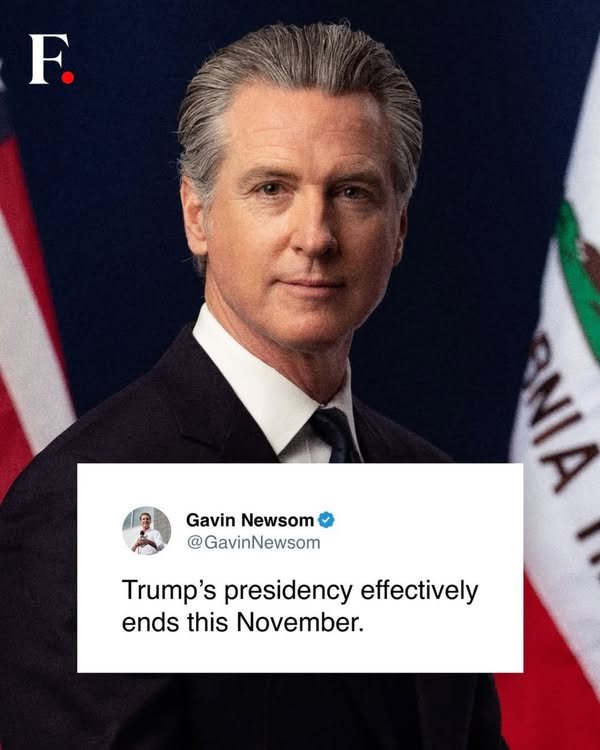
Gov. Gavin Newsom’s statewide poll numbers spike when he has something to yell at President Donald Trump about — and mostly plummet when he’s forced to focus on governing.
Article continues below this ad
Steve Hilton, a former Fox News host whose top credential might be his genteel English accent, is the current Republican front-runner. And how else to explain the earlier rise of disgraced Democratic Rep. Eric Swalwell, whose routine appearances on MSNBC were the main calling card in his otherwise shallow campaign?
California suffers from crippling housing costs, homelessness, drug and mental health crises, perennial budget woes and childhood math and reading outcomes that are worse than in Mississippi.
We don’t need an entertainer in charge. We need someone locked in on California, with the ideas, savvy and political guts to fix things.
Two candidates in the June primary election have the potential to rise to that challenge.
Article continues below this ad
Current Democratic front-runner Xavier Becerra isn’t one of them.
The former California attorney general and U.S. secretary of health and human services certainly has the best resume of anyone in the race. But, despite his experience, Becerra isn’t particularly fluent in several key policy arenas. When the editorial board asked for specific details about his housing agenda, such as how the state should regulate expensive inclusionary zoning mandates, he had few answers.
“I try to stay out of the way of the experts when it comes to the mechanics, how they actually make that machine run,” he said.
We’d find this position more believable if Becerra’s campaign weren’t loaded with the kind of populist bombshells experts hate. His biggest housing idea was down payment assistance for first-time homebuyers, which only drives up prices in a tight market like California’s. He also proposed eliminating the California Public Utilities Commission — with no thought to how to continue providing rural communities with electricity — and freezing insurance rates at a time when companies are at risk of fleeing the market.
Article continues below this ad
Since our interview, under pressure from YIMBYs, Becerra has introduced a housing plan that many experts describe as thoughtful. He’s also backed off his promise to aggressively pursue universal health insurance — in an apparent bid to win the support of the California Medical Association.
Ultimately, Becerra seems more interested in chasing votes than offering honest solutions.
Becerra shares that impulse with the other top-polling Democratic contender, billionaire Tom Steyer — whose showy, self-funded campaign is a hodgepodge of populist slop, sprinkled with some good ideas on climate change and energy.
Steyer rightly supports dense, infill housing development and promises to build 1 million homes in his first four years in office. His answer for how he’ll achieve this result, however, is unpersuasive.
Steyer argued to us that communities don’t want new housing because it represents an “unfunded mandate.” California’s Proposition 13 has starved cities of needed property tax revenue, so they “don’t want to permit housing that they can’t afford to pay the education of the people in the houses,” he said.
Article continues below this ad
By eliminating property tax protections for businesses, an idea Steyer speciously refers to as “ending the Trump tax loophole,” cities will have the funds they need to embrace new development.
This logic is faulty on two fronts: Urban school districts are hemorrhaging dollars because they don’t have enough students, not because they’re overburdened; “infrastructure” is a notorious straw man complaint. Solve for it, and housing-resistant communities will pivot to blaming traffic, noise or shadows.
Building housing — and just about every other tough issue in the state — requires policy nuance and the political sophistication and courage to take on interest groups.
Yet Steyer’s prescription for almost everything boils down to more money.
“Someone has got to bring in revenue to solve these problems,” he said.
Article continues below this ad
For all his talk of new taxation, however, Steyer has yet to mention how he’d navigate the Gann limit or Prop 98, both of which restrict how much revenue California can raise and where that money can be spent. Fiscal accountability, meanwhile, appears to be an afterthought.
Many Democratic voters will no doubt hold their nose and pick either Steyer or Becerra to avoid having two Republicans win California’s “jungle primary.”
This is indeed cause for concern.
Republican Hilton may be an eloquent critic of many California policies. But our interview with him made clear he’s a NIMBY hiding behind a thin facade of reasonableness. Hilton speaks of reforming the California Environmental Quality Act but sees it as a tool to develop distant forests and foothills — as far away from his backyard as possible.
Riverside County Sheriff Chad Bianco, meanwhile, as anyone who watched recent debates could see, lacks the ideas and the temperament to be governor.
A Hilton-Bianco all-Republican matchup in November would be devastating for California. But Hilton has been slowly consolidating conservative support while Bianco fades. At least one Democrat is sure to make the general election.
Why not take a shot on someone who can actually make a difference?

California needs a governor locked in on the needs of the state, with the ideas, savvy and political guts to fix things, the editorial board says.
One of the Democrats worth your serious consideration is San Jose Mayor Matt Mahan, a policy savant with data-driven ideas on mental health and homelessness.
Mahan has done an excellent job stewarding California’s third-largest city toward sensible solutions on homelessness by aggressively building interim housing to get people off the streets and connected with services. Importantly, he has done so while convincing his city’s wealthiest districts to take on their share of the burden. This model can and should be scaled to the rest of the state.
Mahan correctly believes California needs more state mental hospital capacity — and would seek to add beds to existing facilities.
His nuanced 15-point plan for unlocking housing production in California is also unrivaled in its granularity.
Yet for all his policy sophistication, Mahan has yet to achieve significant results in getting housing built in San Jose. His city failed to pass a compliant housing element during his first year as mayor. And when given the chance to lead from the front on zoning reform, he has punted.
Mahan is only 43 and has been mayor for less than a full term. This speaks to his primary weakness: A lack of signature accomplishments and statewide name recognition has left him dependent on Big Tech money to fund his campaign. This led to accusations of him being unduly beholden.
We believe Mahan can balance the needs of everyday Californians with those of his big-money donors.
Nevertheless, perception matters.
Just look at Insurance Commissioner Ricardo Lara, whose coziness with the industry he regulates nearly sidetracked essential reforms — and arguably created momentum for a populist backlash.
Even the best ideas still need buy-in.
Californians would have no such cause for skepticism with former Rep. Katie Porter, who brings most of Mahan’s policy chops to the table without any questions of independence. Her campaign declines corporate money, relying instead on over 46,000 small donors at last count.
Porter is largely known for two things: her aggressive questioning of CEOs using her famous whiteboard in congressional hearings and her infamous yelling at a staffer that was caught on video.
Ultimately, both are superficial reasons to support or dismiss her candidacy.
At her core, Porter is a wonk with an independent streak and a holistic view of governance and leadership. She has an evidence-based, multitiered plan to bring down housing construction costs by 20% that experts say is actually feasible. And, importantly, she has a pragmatic view of how to work with the Legislature and statewide stakeholders to effectuate her plans.
From her years representing Orange County in Congress, Porter told us she knows what it’s like “to go home to a competitive district, to a small set of people and be held accountable” — a dynamic that often makes lawmakers skittish about taking tough but important votes. Porter said she’d help legislators take necessary stands by giving them credit when things go right and taking “some of the cover when things don’t go as planned.”
This kind of political savvy will be necessary to take on groups like the building trade unions, who Porter correctly — and singularly among candidates — has called out for blocking or inserting poison pills into crucial housing efforts. She also rightly recognized that the next governor will have to do heavy lifting to rectify California’s home insurance crisis, noting the political incentive is to “hold down rates at the expense of having a functional market.”
Porter has the standing to do this, thanks to her well-earned reputation as a progressive consumer advocate. Yet she’s not hostile to the business community.
Her plan to install a progressive corporate tax on high-earning companies — unlike the proposed headline-grabbing billionaire wealth tax, which she opposes — has a successful precedent in other states such as New Jersey. Rather than a simple tax-and-spend effort, Porter believes it can also provide relief to overburdened small and medium-sized businesses.
Porter’s idea to forgo income taxes on anyone making less than $100,000, unfortunately, is cheap campaign fodder. The state can’t afford for most of its residents to stop paying taxes. But such slopulism is a rarity with Porter.
Unlike our current governor, we believe Porter would be laser-focused on Californians, not on her next job. Her combination of policy smarts, political courage and independence puts her in the best position to pursue the evidence-based solutions California needs to thrive.
Porter deserves your vote.
Other candidates we considered include former Los Angeles mayor and speaker of the California Assembly, Antonio Villaraigosa, who has the second-best resume after Becerra. Villaraigosa has shown bravery throughout his career, such as when he repeatedly took on the Los Angeles teachers union to save struggling schools. Villaraigosa, however, to his own admission, is not a “policy guy” at a time when the state needs wonky solutions to its problems.
The editorial positions of The Chronicle, including election recommendations, represent the consensus of the editorial board, consisting of the publisher, the editorial page editor and staff members of the opinion pages. Its judgments are made independent of the news operation, which covers the news without consideration of our editorial positions.
We also spoke with California schools Superintendent Tony Thurmond, a former social worker with legislative experience as a state Assembly member, who wants to build 2 million homes on excess public-school property. Thurmond is far more conversant in state policies than most candidates. But given the poor state of public education in California under his watch, we question how effective he’d be in the governor’s chair.
Finally, we interviewed Green Party candidate Rudolph “Butch” Ware, a UC Santa Barbara history professor with a legally and fiscally dubious plan to enact single-payer healthcare via emergency declaration; Libertarian candidate Tom Woodard, a retired CEO with compassionate ideas for improving the state’s mental healthcare systems, based on his experience with losing a son with severe mental illness; and Peace and Freedom Party candidate Ramsey Robinson, a school social worker who would impose severe taxes on billionaires and corporations to fund universal healthcare.
Reach the Chronicle editorial board with a letter to the editor: www.sfchronicle.com/submit-your-opinion.