
You May Also Like

The World Health Organization (WHO) has published a disease outbreak news report with more details on the hantavirus cases detected over the weekend on a Dutch cruise ship currently anchored off the coast of Cabo Verde. There are now seven (two confirmed and five suspected) cases, with three deaths.
While one patient is in an intensive care unit at a South African hospital and three passengers are dead, the other suspected case-patients are reported to have mild illness. All illnesses occurred from April 6 to April 28, and the four patients with severe illness reported fever, gastrointestinal symptoms, rapid progression to pneumonia, acute respiratory distress syndrome, and shock.
The ship left Argentina on April 1 and made multiple stops, including mainland Antarctica, South Georgia, Nightingale Island, Tristan da Cunha, Saint Helena, and Ascension Island.
3 dead, 4 others sickened
The first fatality occurred on April 11, in an adult male who developed symptoms on April 6. The body of that passenger was removed from the vessel to Saint Helena on April 24. The second fatality occurred in a female adult, the wife of the first patient. She died in a South African hospital on April 26, after going ashore at Saint Helena on April 24.
The man and woman traveled in South America, including Argentina, before boarding the ship.
The next case-patient is an adult male currently hospitalized in South Africa. He presented to the ship’s doctor with signs of pneumonia on April 24, and was evacuated from Ascension to South Africa on April 27, where he remains.
The fourth case-patient is an adult female with presentation of pneumonia who died on board on May 2.
“Three suspected cases have reported high fever and/or gastrointestinal symptoms and remain on board,” the WHO said. “Medical teams in Cabo Verde are evaluating the patients and collecting additional specimens for testing.”
Andes strain suspected
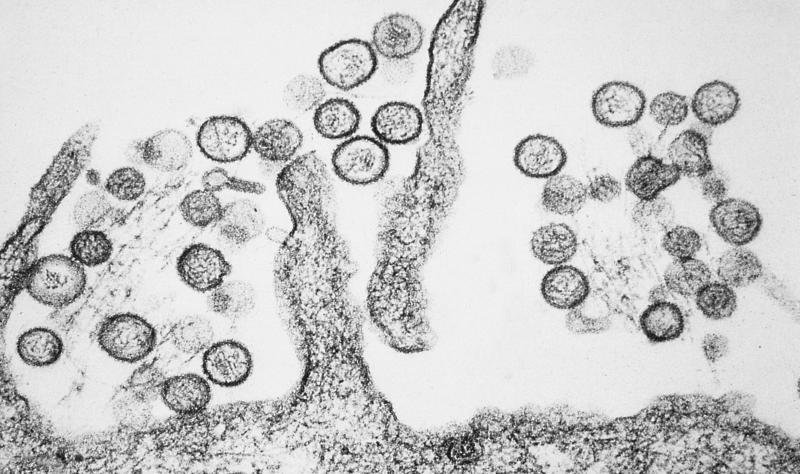
The WHO said the general risk to the public is low, as hantavirus infections are rare. Humans typically develop infections after inhaling rodent droppings, including urine. It’s not known what strain of hantavirus is infecting the passengers, with the most worrisome being the Andes strain, which is native to South America. That’s the only strain of virus with documented human-to-human transmission.
The Argentina Ministry of Health released a statement yesterday. So far this year Argentina has reported 42 hantavirus cases, but none in the province from where the boat departed. Most are from Buenos Aires.
There may be some human-to-human transmission that is happening among the really close contacts
Maria Van Kerkhove, PhD, WHO’s director of epidemic and pandemic preparedness and prevention, told the media today that the WHO believes “there may be some human-to-human transmission that is happening among the really close contacts.”
She also said the WHO suspects the first case was infected before boarding the ship.
