
Federal employee workplace disputes are coming under more scrutiny from a top committee Republican who argues that agencies have an “excessive reliance” on reaching case settlements rather than pursuing litigation.
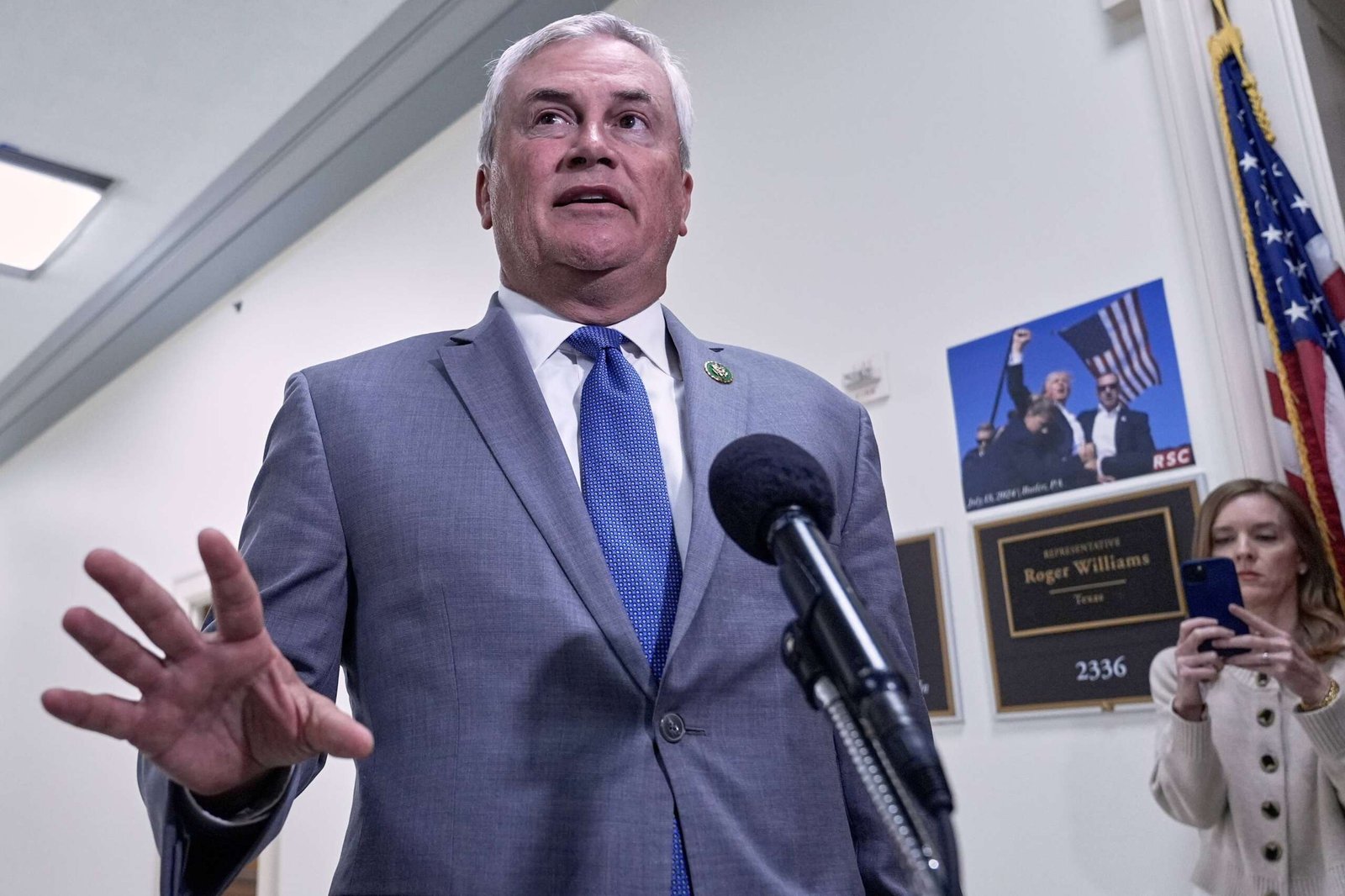
House Oversight and Government Reform Committee Chairman James Comer (R-Ky.) is raising concerns over what he described as high numbers of “sue-and-settle” cases involving federal employees. He suggested that if agencies litigated more cases, they would likely win more often.
Comer’s letter, sent this week to the Office of Personnel Management, cited Merit Systems Protection Board data from fiscal 2005 to fiscal 2015 that showed during that time, 68% of federal employee cases reached settlements. And out of cases that were litigated, more than 80% of agency adverse action decisions were upheld.
“Agencies are frequently and inexplicably settling cases with taxpayer dollars that they would otherwise win,” Comer wrote in the letter, addressed to OPM Director Scott Kupor. “This raises the question of whether cases are being settled despite a high likelihood of government success on the merits, and, if so, whether systemic incentives are driving outcomes that prioritize short-term expediency over long-term accountability and savings for taxpayers.”
Comer argued that settlements incur costs to taxpayers, limit accountability for federal employees, reduce transparency into misconduct and prevent the development of precedential decisions. He added that a tendency toward informal resolutions, rather than litigation, may incentivize federal employees to “file frivolous claims and discourage managers from disciplining employees when warranted.”
But federal employment attorneys said Comer’s letter mischaracterizes and oversimplifies how and why agencies settle cases. Michael Fallings, managing partner at Tully Rinckey, argued that the letter relies on a “mistaken assumption” that agencies are biased toward settlements. He added that “frivolous” employee claims are rare.
“Agencies don’t settle cases to avoid going to hearing; it’s a risk assessment based on the specific case,” Fallings said in an interview. “And the majority of people that are filing appeals are when they are aggrieved and receive some sort of disciplinary action. People who are filing discrimination or retaliation complaints actually feel they are retaliated against — and they have a basis to feel that way.”
Comer’s letter also argued that frequent settlements impose operational burdens on agencies and expand collective bargaining obligations without appellate review. The letter flagged other “non-monetary costs” of settlements, such as limited willingness from federal managers to discipline poor-performing employees, in the hopes of avoiding complaint filings.
“I haven’t seen, especially with this administration, any supervisor or manager be hesitant in taking disciplinary action against an employee,” Fallings said. “This cuts against the executive orders in place that have really strengthened employers’ ability to take action and, in fact, lessen the ability of employees to appeal.”
Comer is seeking more comprehensive data on federal employee disputes and their outcomes. The letter sets a May 25 deadline for OPM to submit data to the Oversight committee, dating back to January 2020, on the total number of employee cases, settlement costs, trends in dispute outcomes, alternative dispute resolution (ADR) data and more.
The requested information is expected to be reported from multiple entities involved in federal workplace cases: MSPB, the Equal Employment Opportunity Commission, the Federal Labor Relations Authority and the Office of Special Counsel, as well as OPM itself.
“This is not merely an administrative inconvenience,” Comer wrote. “The absence of consistent, reliable data on settlement patterns means that repeat offenders can accumulate costly settlement histories without triggering scrutiny or corrective action. Effective oversight requires collection, organization and reporting of this data to Congress.”
MSPB, however, has previously suggested that settlements are a way to save costs and resources for agencies. Like many federal entities, MSPB offers mediation services to help reach settlements in employee disputes. Similarly, OSC has its own resolution program focused on mediation.
The EEOC also has an ADR program that seeks to move toward settlements and avoid full litigation in employee disputes. ADR helps “avoid the cost, delay and unpredictability of the traditional adjudicatory processes while at the same time improving workplace communication and morale,” EEOC’s website states.
“There is a significant cost to fighting litigation,” said Kevin Owen, partner at Gilbert Employment Law. “Agencies have to expend man hours on preparing for defense. Oftentimes, there may be deposition transcript costs, and expert witness costs. And as cases are prolonged, if there is a finding that the employee was improperly terminated, the back pay is going to keep growing.”
Still, Comer’s letter pointed to a reported increase of settlement costs during the Biden administration. At MSPB, for instance, attorney fees accounted for about $11 million under Biden, compared with $3.6 million during the first Trump administration.
But Owen argued that the numbers are skewed due to the previous five-year lack of quorum at MSPB that began under the first Trump administration, which led to a major case backlog once quorum was restored in 2022. He also noted several significant class action settlements that were finalized during the prior administration, after years of work.
“During the first Trump administration, there was really no incentive for agencies to resolve disputes through settlement — if they got an unfavorable decision from an administrative judge, agencies would just file a petition for review to a vacant MSPB, and it would sit for years,” Owen said. “Really, a lot of the liability that agencies were resolving under the Biden administration was carryover liability from the first Trump administration.”
If you would like to contact this reporter about recent changes in the federal government, please email drew.friedman@federalnewsnetwork.com or reach out on Signal at drewfriedman.11
Copyright
© 2026 Federal News Network. All rights reserved. This website is not intended for users located within the European Economic Area.