
I’m Albert Mohler and this is The Briefing, a daily analysis of news and events from a Christian worldview.
Part I
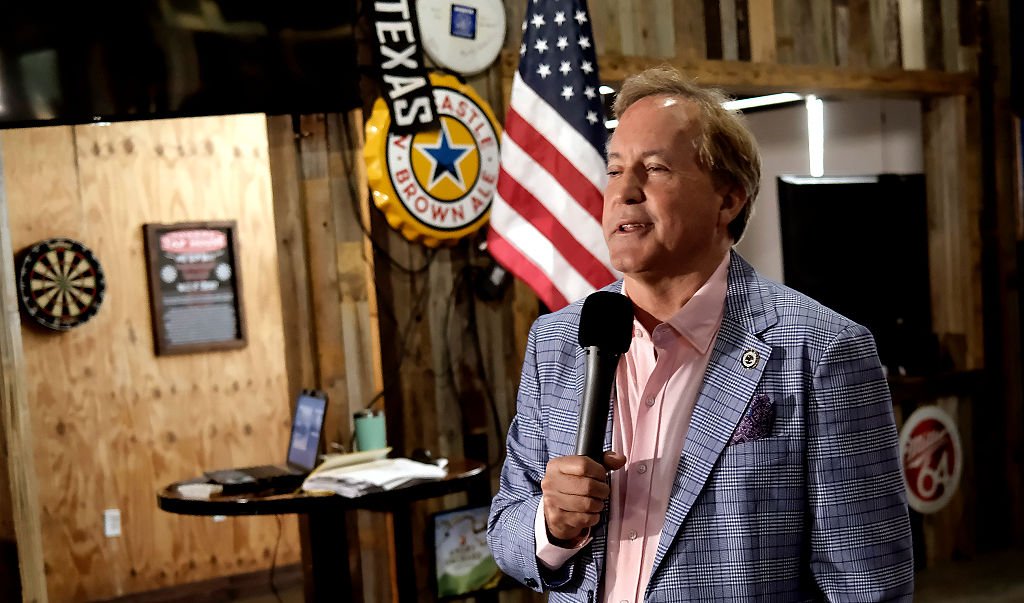
Big Shift in Texas: Attorney General Ken Paxton Defeats Senator John Cornyn in Texas GOP Senate Race
Major earthquake on the Republican landscape took place last night and that’s when the returns came in in terms of the Republican runoff election for the Senate seat in Texas that will now be vacated by current incumbent Republican Senator John Cornyn. And the reason that is such a seismic event is because it really demonstrates a major redirection of the Republican Party in the United States. Now, Texas, of course, is one of the most important states to politics in the United States, it’s one of the most important states to American culture. Both of its current United States senators are Republicans and it has been a long time since Democrats have won a statewide election there in Texas.
That, of course, is itself a reversal because for a very long time in the 20th century, the state of Texas was a predictably and reliably democratic state, but it also became a more conservative state. And then you had the changes that came on the political landscape, and the cultural landscape in the United States in the 1960s and ’70s and you had a basic reshuffling of the party identities. The Republican Party became the party of social conservatism of free markets, what was called conservative fusionism, a very clear conservative argument. The Democrats moved in a very different direction. That was not entirely predictable as far back as say 1960, but by 1964 and 1968, all of this was becoming glaringly clear.
Now you have the State of Texas, which is also being changed in the fact that it is overwhelmingly red, that is deeply conservative, deeply Republican, but there are big islands of blue and those islands have a very large population. The second complication when it comes to Texas is that, here’s the good news, so many people are fleeing liberal states like California and moving to Texas. But in this case, for conservatives in Texas, the good news is the bad news. That also means that even as they are coming to Texas because they want the lower taxes, at least on some social issues and for that matter, also some political issues, they’re bringing their liberal habits with them.
So one of the big questions about Texas is how long it will stay reliably red. But at least for the present, it does really look reliably red. But that character as reliably red is going to be tested this November in terms of the election for a highly contested Senate race. And now we know as of last night that the incumbent Republican Senator, Senator John Cornyn, is not going to be the Republican nominee. Instead, it is going to be Texas Attorney General Ken Paxton. So the big question in terms of the Senate race in the State of Texas, at least when it came to the focus of the runoff on Tuesday, it had to do with which Republican would represent the ticket in November and it also has to do with what flavor, what style, what vision of Republicanism would prevail.
And here’s the big story. It’s the big story not only in Texas, it’s the story in other states as well. Most recently it was a big story in Louisiana when you had Senator Bill Cassidy also lose a Republican primary race. It is the old Republican Party giving way to a new Republican Party. It isn’t exactly clear what the new Republican Party is, but it is far more populist than the Republican Party in the past. Now, when you’re thinking about establishment Republican political figures, you really could put John Cornyn on the stamp. He really does represent that kind of Republican identity. Just a matter of a few years ago, it would have been inconceivable that John Cornyn could lose the Republican nomination, not to mention losing it by what might be as many as 30 points, and losing it to someone like Attorney General Ken Paxton, a far more populist figure.
Let’s go back to the establishment reputation of John Cornyn. We’re talking about a man who graduated from law school and then he joined the state courts as a judge. Then he became a justice of the Texas Supreme Court. We are crying out here establishment in every way imaginable. He’s also physically imposing. He’s tall. He looks like central casting from Hollywood sent down Republican senator from the State of Texas. In terms of Texas politics, he looms large, even physically, in the way that was true of former President Lyndon Johnson, who was also United States Senator, a Democrat from the state of Texas, and also former Texas Governor John Connally, very much of a traditional Texas type, particularly in more recent decades, a traditional Texas Republican. But it was John Cornyn who left that safe seat as a justice on the Texas Supreme Court, and decided to run in 1998 for the office of the state’s attorney general.
The Attorney General of the State of Texas, which is, as you know, a major role and ironically the office held by the man who just as a matter of last night defeated him for the Republican nomination. John Cornyn was elected the Attorney General. He was a very popular attorney general in the state. He catapulted himself into national leadership when he was elected to the United States Senate and thus history will record he will serve in the Senate from 2002 to 2026. That is 24 years and that means you’re looking at four full terms in the United States Senate. He spent much of that time in the leadership in the Republican Party and at one point was among the top three leaders in the Republican leadership structure in the United States Senate, but he lost. He lost big last night. He lost by something like 30 points. And it’s a loss that redefines the state of the Republican Party, the character and identity of the Republican Party. It’s one big symbolic change.
That change was at least in part driven by President Donald J. Trump, who, of course, is the nation’s most influential Republican virtually by definition, but it’s not just by definition. Even as the national media continue to say that President Trump may be losing his grip on the Republican Party, there is no evidence on the ground that that is true. Witnesses to that fact would include US Representative Thomas Massie of Kentucky, who’s lost his seat due to opposition from President Trump, lost it in a Republican primary. And then you had Senator Bill Cassidy, as I said, of Louisiana. He lost his nomination in terms of his own party. And now the same thing is true of John Cornyn.
Many people in Texas will be saddened by this because it is the closing of a chapter and it is the turning of a page in the sense that when you look at Ken Paxton, you’re looking at a very different kind of political profile and he is certainly far more populist and less establishment than Senator Cornyn. When you look at Ken Paxton, you see a colorful figure who’s been also extremely controversial. He has been controversial for several reasons. He has been the subject of investigations. He is now in the process of a very messy divorce. The reality is that Ken Paxton was really representing the Tea Party, and that by his self-definition, when he was first elected Texas Attorney General in 2014, he was reelected in 2018, reelected in 2022. Thus, his current term would be coming to an end. At this point, he decided to challenge John Cornyn for the Republican nomination. Ken Paxton is extremely populous.
Let me tell you, he also has a reputation as one who has gotten things done. He has done things. Now, for example, we’re going to be talking on The Briefing about the fact that he forced a major medical center in Houston into reversing its policies. It had been lying on the issue as to whether or not it was performing gender transition treatments on children and teenagers. There was a whistleblower, eventually there was a state investigation, and Attorney General Paxton has brought a lot of energy from his office just against that kind of scandal. Several other major political issues. You have the Texas Attorney General weighing in and you really do have a model in Texas in terms of Ken Paxton, which is quite like that of Donald Trump as President of the United States. You can understand the affinity between the two. And both of them, of course, in their personal lives, well, it’s a bit of disruption. In their politics, it’s a great deal of disruption and that is a part of the design, it’s not a bug in the system.
Now that Attorney General Ken Paxton is almost assuredly going to be the Republican nominee, he’s going to face James Talarico basically identified often as a Presbyterian seminarian who was elected to the state legislature. James Talarico is another rather interesting political type from Texas. He is extremely liberal. As a matter of fact, both of those words can be said with equal force. He is not only liberal, he’s extremely liberal, on the trans issue, even for children and all the rest, on all kinds of issues, right down to some of his rather more colorful social media posts. It is very unlikely that James Talarico is going to be able, over a general election cycle here, over a major face-to-face cycle, it’s very unlikely he is going to be able to convince Texas voters that he is a moderate.
He is, however, a moderate in one way, not politically, not ideologically, not on the social issues, not basically on any major political issue, but where he is moderate is in his temperament. He knows how to carry himself. He is someone who is able to appeal to the granola crowd, and to the traditional base of the Texas Democratic Party while not appearing so abrasive in terms of the way some other candidates would present themselves. So he does, just if you look at the personality type, he looks quite non-threatening. It’s his ideas that matter. And this is something you just have to hope Texas voters will have very clearly in mind.
And that is because when electing a member of the United States Senate, and especially at this point, when the State of Texas has this crucial Senate seat, with the party control of the United States Senate, at least in part riding on this decision in Texas, the reality is that Texas voters better understand they are not electing a personality. They are electing a member of the United States Senate and that’s going to come with political consequences. One of the consequences right now is that Senator John Cornyn, so long one of the most respected Republican figures in the United States Senate, he’s going to be retiring. He was basically retired by the Republican voters of Texas. And there’s a sadness in that. You hate to see a major figure go out this way.
On the other hand, the Republican voters of Texas had the right to choose the individual they see is best suited to serve as their nominee for the statewide election for the seat in the United States Senate. It’s going to be very interesting and I can promise you ahead, there is a worldview collision coming between James Talarico and Ken Paxton. It’s going to be interesting to watch and I can assure you we will be watching it.
Part II
An Autopsy of the Democratic Party in 2024: Democrats are Reeling, and the 2028 Election Might Be Between Two Populist Parties
Okay. Now let’s switch to the Democratic Party at the national level. Fascinating revelations just in the last several days. The most interesting development on the Democratic side is the release of a report that had been commissioned by the Democratic National Committee. It was described as an autopsy of the Democratic campaign’s loss, specifically Kamala Harris’s 2024 loss to Donald Trump in the presidential election. All right, here’s what’s really interesting. It was the new incoming chairman of the Democratic National Committee, Ken Martin, who was supposed to be something of a political wizard who was going to help to save the Democratic Party. He commissioned this autopsy and he hired Paul Rivera as a political strategist within the Democratic universe to write the report. It came back at 192 pages.
From the beginning, Ken Martin said that he was going to release the report to the public and then he did not do so. For months, he has sat on the report. Eventually, public pressure and journalistic investigation forced the release of the report. In another very interesting parabolic twist, when the report was released, the very person who had commissioned it basically discounted it saying it wasn’t all that important and that it hadn’t met his standards. And the party apparatus put in footnotes explaining where they disagreed with the assessments of the consultant they hired to perform the autopsy. So it’s like hiring a medical examiner to do an autopsy and then jumping in the room and saying, “Nevermind, we don’t like the report. We’re not going to accept it.”
And yet they did have to release it. So it’s now out in public. So here’s the most remarkable thing about the report. I think any fair-minded person looking at the Democratic laws and the 2024 presidential election would say it had virtually everything to do with the fact that you had then-incumbent President Joe Biden who was insisting he was going to run again for a second term, even though inside and outside the administration, it was clear he was not physically or intellectually able either to make the race or to serve as president. And of course, this really brings into huge question the credibility of Joe Biden. In the last year or so, he was President of the United States. His decline is now very well documented.
And by the time that he dropped out, of course, after a disastrous debate performance against Donald Trump, he simply had to withdraw. The reality is that there wasn’t any opportunity for the Democratic Party to go through a normal nomination cycle. Instead, you had the incumbent Vice President, Kamala Harris, both claim and be given the presidential nomination untested by a primary system. And then even though she ran, what by some estimations would be a rather close race based upon where things stood at one point in the race, the reality is she lost and she lost at an even bigger loss. President Trump came back with an even bigger win than many analysts had thought possible.
So this autopsy is exactly what you would expect a national party to do. And you would also expect a national party to commission a credible researcher to write a credible report that would be credibly kept inside the leadership of the party. None of that happened and that’s why there’s a great deal of speculation that Democratic National Committee Chairman Ken Martin is going to have to resign. But here’s what’s not even mentioned in this report. The report’s supposed to be an autopsy, okay? What was the cause of the death of the Democratic prospect for the presidency in 2024? The obvious answer is Joe Biden, but his age or his decline, well, neither one of them is mentioned. It’s not even mentioned.
A piece that ran in the Wall Street Journal by Tarini Parti says this, “The main points of contention within the party and the aftermath of the 2024 election were entirely unaddressed in the autopsy. The report makes no mention of former President Joe Biden’s age and how that factored into an election in which he dropped out of the race in July after a disastrous debate performance.” The article goes on, “The report also didn’t look into the process by which then-Vice President Kamala Harris quickly secured the Democratic nomination.” The article in the Wall Street Journal goes on to say, “Democrats have debated whether an abbreviated primary instead of consolidating support around her would have helped rally voters.”
Now, the big issue here is, of course, you can’t rewrite history. So this report asks questions it can’t answer, or at least some questions it can’t answer, such as what if, what if, what if. It doesn’t address the most obvious what if, and that is, what if leaders in the party had told Joe Biden, even back in 2023, he was in no shape whatsoever to run for reelection? Of course, that would’ve raised questions about the capacity of Joe Biden to continue serving even in that first term as President. Huge issues. What we see here are issues that relate to politics and constitutional issues, of course, related to the Office of the President. Nevertheless, the big issue here is the fact that the Democratic Party has to consider what it is and where it’s going to go for the future.
Okay. So there’s some other things in this report that are likely to lead to problems for the Democratic Party. One of them is, that there is at least, in the course of the 192 pages in the report, there is some honest assessment of the fact that the Democratic Party is largely stuck on issues unpopular with the American electorate. So you can take, say, the transgender issue or the gender confusion issue when you’re talking about boys and girls’ locker rooms, on girls’ teams, et cetera. Americans aren’t going for that. And thus you have the suggestion that it just might be that the Democratic Party needs to at least attenuate or be more quiet on some of those issues. But at the same time, you recognize that the way the Democratic Party is built as a coalition of interest groups, it’s virtually impossible that that interest group is going to just agree to be quiet. No, you’re going to have a very steady push. You’re going to have a radical push in the 2028 election.
Of course, that raises other issues. And just very recently, the New York Times had run an article by Nate Cohn. The headline is: “Poll Suggest A Possible Path Forward for Democrats.” And this is coming out from a New York Times/Siena poll, which says, quote, “There’s a lot more common ground than one might expect within the Democratic Coalition, a group defined here as Democrats, Democratic-leaning independents, and independents who voted for Ms. Harris.” Listen to this, “A surprisingly clear majority of the Democratic Coalition is mostly fine with where the party stands on the issues overall. Only 20% say it’s too far to the left. Only 17% say it’s too far to the right. The dissatisfaction with the Democratic Party seems less about its ideology and more about its failures to stop President Trump, whether in the last election or once in government.” What becomes very interesting in this is that the suggestion is that a lot of Democrats or a lot of voters who vote Democratic want the Democratic Party to move in a more populous direction. And I know there’s some people who are saying, “Wait just a minute. Ken Paxton is moving the Republican Party in a more populous direction. Now you’re telling us that on the Left you have some, especially on the more progressivist base of the Democratic Party who also want the Democratic Party to embrace populism.”
Well, what sense does that make? Well, actually it makes a lot of sense. And it is because populism in this sense is a political mood that is transformed into a political strategy. It is an effort to try to say, “We are going to tap into a popular vein of sentiment, a popular vein, a political opportunity. We are going to be loud about those things in the name of the people against elites, against entrenched powers, even against intense incumbents, in many cases, in office regardless of the party.” So you can have a left-wing populism and you can have a right-wing populism. And it turns out that the recipe for 2028 might just be a collision of the two.
Of course, we also need to recognize that the problem with populism is that it often just comes down to telling people what they want to hear. And of course, there’s more to it when you look at candidates and their particular priorities, but the fact is that there are many candidates who’ve run on a populist platform who have been rather frustrating to populists when they haven’t put all those populist goals into effect. That’s one of the interesting things about Donald Trump. He seems to be quite determined to continue in a populist mode. It would be far more difficult for a Democrat to do that. That’s just the way the Democratic Party is structured. But you know what? We’re headed into a new era in both parties and that means that in worldview consideration, we’re going to have to watch both of them.
Part III
Stephen Colbert’s Last Show: Christians Should Never Underestimate the Power of Comedy on the Larger Society
All right. Now we need to turn to a different dimension and I want to turn to the fact that just last Thursday night, Stephen Colbert hosted his last episode of the CBS program The Late Show. The finale was last Thursday night, and of course, there was a lot of political and cultural attention devoted to it. You also had other late night hosts making a political issue of the fact that CBS had canceled the Stephen Colbert program. And by the way, CBS did it stating financial reasons, not political considerations, but in an honest assessment, in a fallen world, it’s very hard to separate all these things, but the fact is that CBS was able very quickly to point to the fact that the program was losing something like $40 million a year.
So there was a legitimate financial concern. But the fact is, that what we also need to note in worldview consideration is the fact that comedy or what’s popular in terms of comedy, what people find funny, that tells us a lot about a culture. And what we know right now is that particularly on the left, now on the right in a different sense, but particularly on the left, you have a very strong anti-establishment comedy that was directed personally and in a partisan way against Donald Trump. So you have Donald Trump pushing back, even using the leverage of the FCC, the Federal Communications Commission, and licensing and all the rest. And there are those who are saying, “Look, Stephen Colbert is just the latest victim of Donald Trump’s political opposition.”
Well, that’s probably not no consideration at all. But the fact is, as I say, the program is losing vast sums of money. And you’re also looking at something significant and that is that so many of these late night hosts, that includes ABC’s Jimmy Kimmel, it includes Seth Meyers, the host of NBC’s Late Night, so you really are looking at a lot of these entertainers basically coalescing in terms of an anti-Trump comedic coalition. Now, we just need to note, this really is a change in terms of television and even late night humor in the United States. You go back to, for instance, The Today Show with Johnny Carson as host. And for decades, Johnny Carson was a major fixture and he was really, at least by today’s standards, amazingly even-handed.
And thus it wasn’t easy to predict exactly where Johnny Carson would come down, except for the fact that Carson made this very interesting point and that is whoever is the incumbent President of the United States, he’s got to be funny in terms of comedic material. In other words, comedians are going to express their comedic angle at the expense of the incumbent President of the United States regardless of who it is. Johnny Carson made fun of Lyndon Johnson and Richard Nixon and Jimmy Carter and let’s remember Gerald Ford. And you also have other patterns in which this becomes very, very clear and thus the distinction between what has happened in the highly politicized late night comedy, and it’s not just late night, but it is concentrated in late night programming.
What you have in the development of the trajectories of Jimmy Kimmel, Seth Meyers, and in particular Steven Colbert, it was very calculated to be directed against Donald Trump and against Trumpism, as they would define it. And that is something that’s new and thus you did have the cultivation of a particular political class, a particular political position in terms of the audience for that kind of humor. Stephen Colbert is obviously very intelligent. He is incredibly gifted as a comedian. He has an incredible sense of timing and his face and his facial expressions almost perfectly express irony, which is so central as Christians understand, to the way humor and comedy often work.
But it also, at times, was a comedy that revealed a very dark side. And quite honestly, what you had was late night comedy, at least in so many of these programs with so many of these comedians and hosts, just turning into one very long political exercise. And that really is something that presents a challenge in terms of our culture when we think about, for instance, the public ownership of the airwaves, of course, in a digital age that means less than it used to, but we’re also looking at the freedom of speech. So there are obviously free speech rights that are incumbent in this as well. So we look at all this, we do realize, well, this is a complicated picture, but for Christians, it does remind us that what we laugh at says a great deal about us. And whether we’re able to laugh at ourselves, that’s another very interesting theological fact.
But we do understand that humor often comes with an edge. And that was certainly true of Stephen Colbert. I’ve spoken about his intelligence and about his comedic gifts. I’ll also say that he turned those on me in at least one opportunity on August the 17th of 2011, when he took me on by name. And I’ll be honest, he made the situation funny. It would be wrong of me not to have seen his ability to turn it into his own humor, but I was making a serious theological point. He was seriously seeking to undermine it by, let’s just say, his comedic effort.
All that to say, as I conclude, that Christians ought never to underestimate the ability of a comedic moment to gain cultural attention. And that can be something that’s fair or something that’s unfair. It could be something that’s honest or something that’s distorted, but the fact is that what makes America laugh can also change the way America feels and thinks, sometimes even perhaps how America votes.
And just to remind Christians how powerful this kind of comedic presentation can be, let me remind you of the 1970s on Saturday Night Live when Chevy Chase did, of course, his imitation of then-President Gerald R. Ford. Gerald Ford had been a highly decorated football player at the University of Michigan. He was not uncoordinated, but he did trip a few times. Chevy Chase made that into an ongoing act that became iconic in American comedic television history. And the really sad telling thing is this, there are many, many Americans who do not remember Gerald Ford at all, the man who was President of the United States, but they do remember Chevy Chase’s imitation of him as an act of comedy.
Christians need to keep in mind that as many parts of our culture have an impact upon us, when we look at comedy, we have to understand that in many cases, the effect of comedy just isn’t funny at all.
For more information, go to my website at albertmohler.com. You can follow me on X or Twitter by going to x.com/albertmohler. For information on the Southern Baptist Theological Seminary, go to sbts.edu. For information on Boyce College, just go to boycecollege.com.
I’m speaking to you from Washington, DC and I’ll meet you again tomorrow for The Briefing.